

Birds that migrate south during the cold winter months know where they are headed. Some fly off in small flocks, and others form large formations of thousands or more. Their journeys take them on a flight for thousands of miles, and some birds cross whole continents.
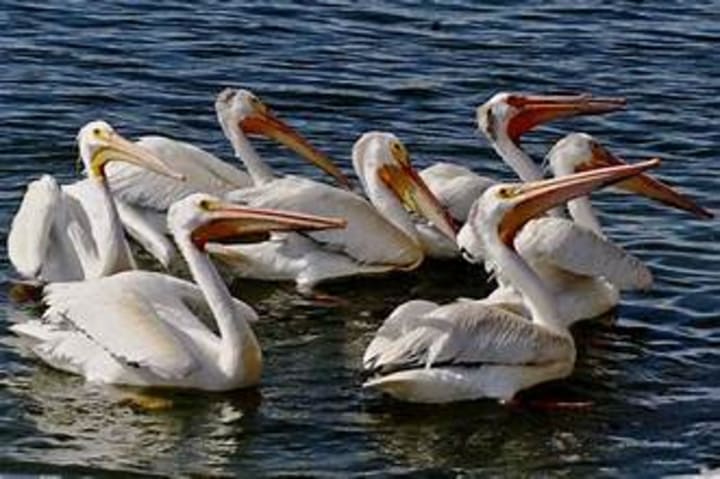
American white pelicans are a species of large water birds. They are native to North America and also inhabit remote brackish and freshwater lakes on islands. These are migratory birds flying south to winter on the Gulf Coast, California, and in Mexico. They prefer to stay near coastal waters, bays, and estuaries.
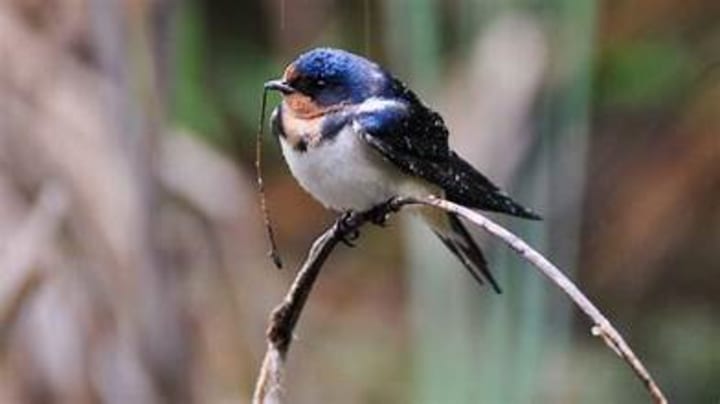
Barn swallows are neotropical migrants, migrating twice a year. In the early spring these birds fly to breed and nest in North America, arriving there in April or May. Then when autumn comes or the weather gets cooler, barn swallows migrate to the south to spend the winter in Central and South America. The birds fly pretty low just over the treetops, and they travel in flocks of hundreds or thousands and can cover up to 200 miles per day.
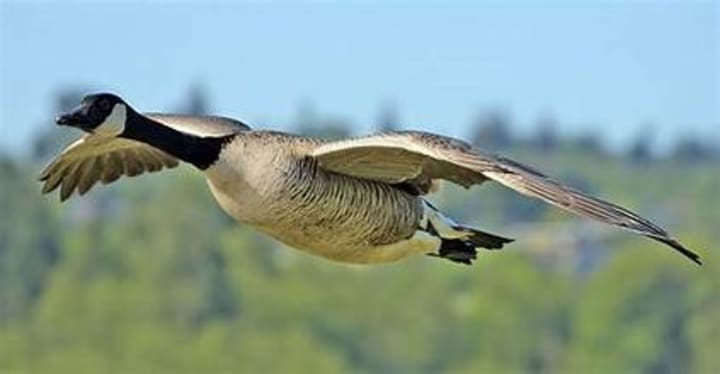
Canada geese are mainly in Canada and the northern US but journey farther south in the US or to northeastern Mexico. If there is food to be found and open water, some geese might overwinter in southern Canada. Canadian geese prepare for their journey in midsummer while still nesting. When ready, the form large iconic V-formations, and if weather is permitting, they can cover 1,000 miles per day. Despite being waterfowl Canadian geese also eat leaves, berries, stems, roots, oats, soybeans, seeds, and other crops.

Chimney swifts are long-distance migrants. Their original breeding sites are in the eastern parts of the US and southwestern Canada. During the cold of winter these birds prefer to migrate to South America. Chimney swifts start migrating in August through October and will return in April. The birds fly over the Gulf of Mexico or along the Texas coast. Many of these birds use the Atlantic coast, the east side of the Appalachians, and the Mississippi River flyway.

Goldfinches have become the most beloved birds in North America. These are small songbirds that are seen at backyard bird feeders. In the wintertime, goldfinches migrate southward to warmer climates looking for food and shelter. They fly to the southern US and eastern Mexico.
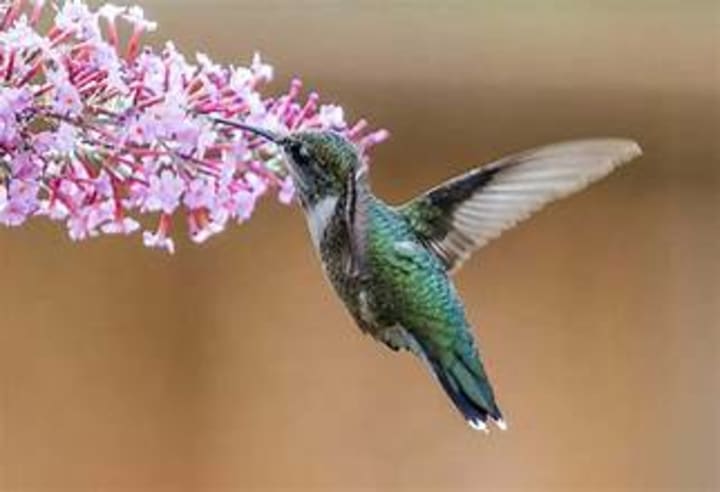
Hummingbirds go through a process known as “fattening up” to support their migration. These birds store fat to sustain them during their flights to Mexico and Central America. Their main food sources are insects, larvae, spiders, mosquitoes, insect eggs, and nectar.

Mourning doves take their migrating journeys from September to early November, seeking their sources of food like grains, seeds, and fruit. They fly to the southern US and Mexico in flocks, flying low for thousands of miles until they find a suitable place to winter, and then migrate back to their breeding grounds.
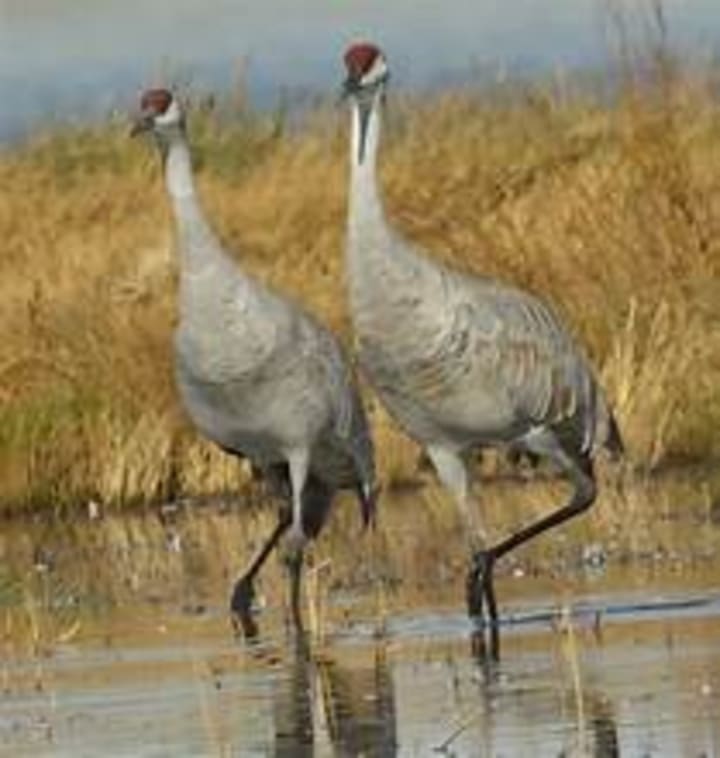
Sandhill cranes are large birds found in North America and parts of Alaska, Canada, and Siberia. These birds are recognizable by their long necks, reddish foreheads, gray bodies, and white wings with black tips. These birds migrate twice a year, in autumn and in spring. They look for food sources, feeding on grains, seeds, and insects.
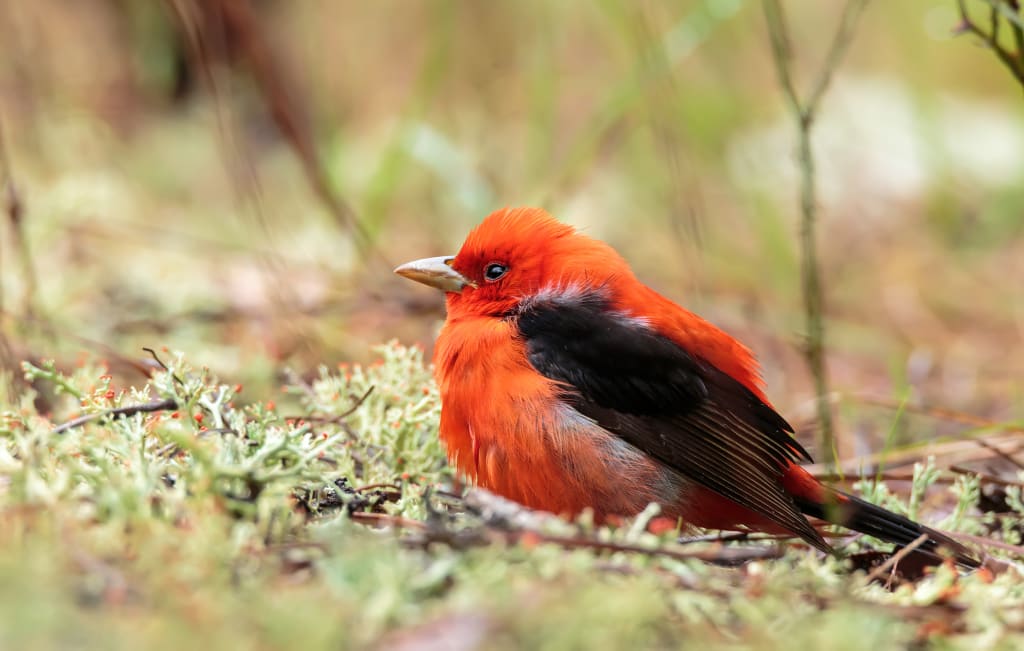
Scarlet tanagers are medium-sized songbirds in North America. (pictured above) They have bright red feathers and black wings. These birds inhabit deciduous and mixed forests in eastern North America. They feed on large insects like grasshoppers, beetles, and caterpillars. Scarlet tanagers migrate south during the winter and can be see flying from tree to tree looking for fruit.

Wood ducks are a species of waterfowl. They breed and live in North America, inhabiting wooded swamps, shallow lakes, marshes, ponds, and rivers with dense vegetation. In the autumn, they migrate south and can be seen on the Atlantic coast. Wood ducks also fly to eastern Texas and the West Indies.
About the Creator
Rasma Raisters
My passions are writing and creating poetry. I write for several sites online and have four themed blogs on Wordpress. Please follow me on Twitter.
Keep reading
More stories from Rasma Raisters and writers in Earth and other communities.
Amazing Animals Rwanda
African buffaloes are looked at as one of the “Big Five” in Africa. You can see them at Akagera National Park. These robust animals live in large herds and move across the savanna looking for grazing areas and water. African buffalo are totally wild and known for their unpredictable temperament.
By Rasma Raisters4 months ago in Earth
The timing of Earth's ice ages may be influenced by Mars.
According to recent calculations, Mars may influence the date of ice ages by helping to establish a 2.4 million-year rhythm in Earth's orbit. Recently, researchers investigated the possibility of a tiny planet leaving a discernible imprint in long-term climate records.
By Francis Dami6 days ago in Earth
15 Years After Fukushima, Japan Prepares to Restart the World’s Biggest Nuclear Plant
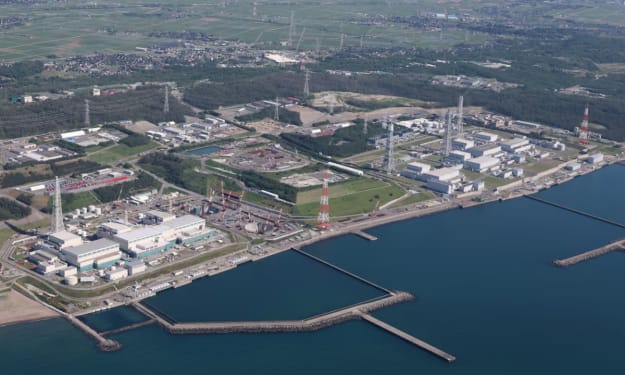
Fifteen years after the catastrophic Fukushima disaster, Japan is preparing to restart the world’s largest nuclear power plant. The decision marks a significant turning point in the country’s energy policy, reflecting both the urgent need for stable energy sources and the ongoing concerns about safety, environmental impact, and public trust. The move underscores Japan’s complex relationship with nuclear energy—a technology that has fueled the nation’s economic growth but also caused one of the worst nuclear disasters in history. The Fukushima Legacy In March 2011, a massive earthquake and tsunami triggered a meltdown at the Fukushima Daiichi Nuclear Power Plant, releasing radioactive material and forcing the evacuation of tens of thousands of residents. The disaster exposed flaws in safety regulations and emergency preparedness, reshaping public perception of nuclear energy in Japan and around the world. Following the incident, Japan shut down nearly all its nuclear reactors, relying heavily on imported fossil fuels to meet energy demand. The decision led to increased energy costs and heightened greenhouse gas emissions, creating pressure to diversify energy sources. Why Japan is Restarting Nuclear Reactors The restart of nuclear plants, including the world’s largest facility, is driven by several factors: Energy Security: Japan imports over 90% of its energy needs. Restarting nuclear plants reduces dependence on foreign fossil fuels and helps stabilize electricity supply. Climate Goals: Nuclear power generates electricity with minimal carbon emissions. As Japan commits to reducing greenhouse gases, nuclear energy offers a low-carbon alternative to coal and natural gas. Economic Considerations: Importing fossil fuels is expensive. Nuclear energy provides a relatively cheaper source of electricity in the long term, helping households and industries manage costs. The government emphasizes that advanced safety measures and rigorous inspections are in place, aiming to restore public confidence and prevent another disaster. Safety Measures and Upgrades Since 2011, Japan has invested heavily in upgrading nuclear infrastructure. Lessons from Fukushima have led to stricter regulations and improved disaster preparedness: Reinforced Reactor Buildings: Structures are now designed to withstand larger earthquakes and tsunamis. Advanced Cooling Systems: Redundant and automated cooling systems reduce the risk of overheating. Emergency Response Planning: Local governments and plant operators coordinate evacuation drills and disaster simulations. Regulatory Oversight: Japan’s Nuclear Regulation Authority (NRA) conducts independent inspections to ensure compliance with safety standards. Despite these measures, skepticism remains. Many citizens fear that no system can fully eliminate the risks associated with nuclear power, especially given the unpredictable nature of natural disasters in Japan. Public Opinion and Controversy The decision to restart the world’s biggest nuclear plant has sparked debate across Japanese society. Supporters argue that nuclear energy is essential for economic stability, energy security, and climate goals. They point out that without nuclear power, Japan would struggle to meet rising electricity demand and climate commitments. Opponents, however, raise concerns about safety, environmental impact, and long-term waste management. Memories of Fukushima remain vivid, and surveys indicate that a significant portion of the population is uneasy about returning to nuclear energy. Local communities near nuclear plants have voiced particular concern, fearing potential accidents and contamination. Economic and Energy Implications Restarting nuclear plants could have broad economic benefits. Stable electricity supply reduces the risk of blackouts, supports industrial activity, and helps control electricity prices for households. From an energy policy perspective, nuclear power allows Japan to balance its energy mix more sustainably. It complements renewable sources like solar and wind, which can fluctuate depending on weather conditions. Nuclear plants provide a steady “baseload” supply that renewables alone cannot guarantee. However, challenges remain: the disposal of radioactive waste, decommissioning older plants, and ensuring consistent regulatory oversight are all long-term concerns that Japan must address to maintain credibility and safety. Global Perspective Japan’s decision is being watched closely worldwide. The Fukushima disaster reshaped global nuclear policy, leading countries like Germany to phase out nuclear energy while others, including China and South Korea, continue to invest in it. Restarting the world’s largest nuclear plant sends a signal about Japan’s commitment to energy self-sufficiency and low-carbon power. It also raises questions about how other nations handle the balance between energy security and safety, especially as climate change increases the urgency for reliable, low-emission energy sources. Lessons Learned Fifteen years after Fukushima, Japan’s experience provides key lessons for the global community: Preparedness is Crucial: Robust safety standards and disaster response systems are essential for operating nuclear plants in seismically active regions. Public Trust Matters: Long-term energy policy must consider public perception and involve communities in decision-making. Diversified Energy Strategy: Nuclear power should be part of a broader energy mix, complemented by renewables to reduce risk and emissions. Continuous Oversight: Independent regulatory bodies and transparent operations are critical for maintaining safety and credibility. These lessons are not only relevant for Japan but also for any country considering nuclear power as part of its energy transition strategy. Conclusion The restart of Japan’s largest nuclear plant, fifteen years after the Fukushima disaster, represents both hope and caution. It promises more stable energy, lower carbon emissions, and economic benefits. At the same time, it reminds the world of the inherent risks of nuclear power and the need for rigorous safety, transparent governance, and public engagement. Japan’s journey reflects a broader challenge faced by many nations: how to meet growing energy demand and climate goals while ensuring safety, sustainability, and public trust. The coming years will reveal whether this bold step strengthens Japan’s energy future or reignites debate over the role of nuclear power in a post-Fukushima era.
By Muhammad Hassan2 days ago in Earth


Comments
There are no comments for this story
Be the first to respond and start the conversation.