
Lesser known Himalayan Serow in India
Endangered species

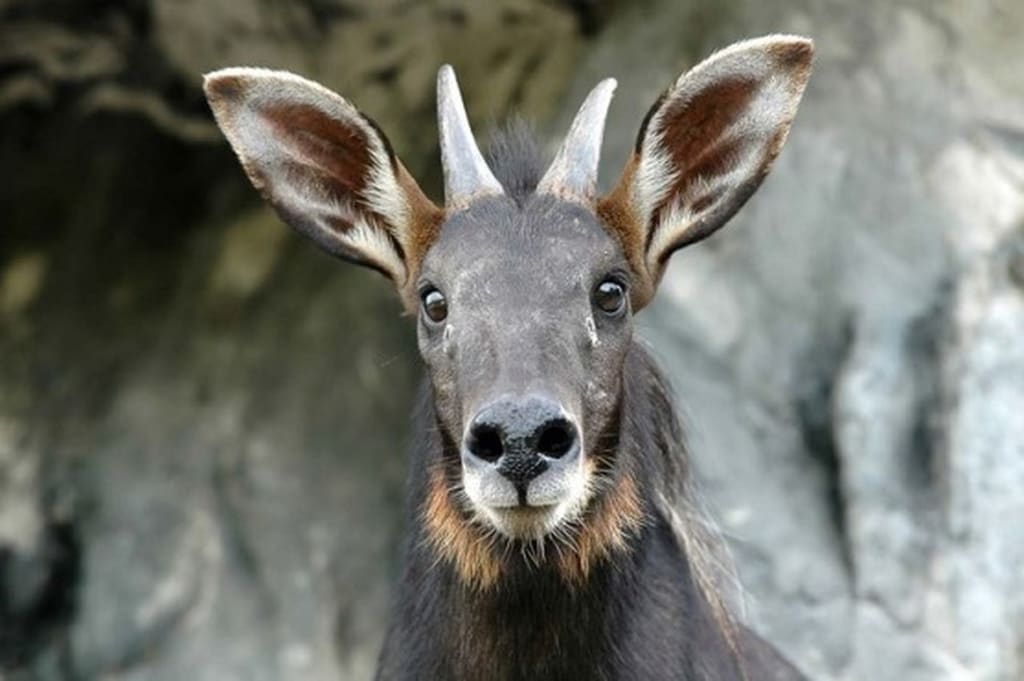
?The Himalayan region is a treasure trove of biodiversity, home to some of the most unique and elusive species on the planet. Among these is the Himalayan serow (*Capricornis sumatraensis thar*), a lesser-known but fascinating animal that resides in the rugged terrain of the Indian Himalayas. While it may not enjoy the celebrity status of the snow leopard or the Himalayan monal, the Himalayan serow plays an important role in the ecosystem and is a symbol of the region’s ecological richness.
What is Himalayan Serow?
The Himalayan serow is a medium-sized ungulate that belongs to the goat-antelope subfamily, Caprinae. It is a subspecies of the mainland serow (*Capricornis sumatraensis*) and is known for its adaptability to harsh and varied habitats. The animal is characterized by its stocky build, short limbs, and a coarse coat of fur that can range from black to dark gray, often with lighter underparts.
Its appearance is an intriguing blend of goat and antelope traits, with a robust body, backward-curving horns, and a somewhat elongated face. Adult Himalayan serows can stand about 85-100 cm at the shoulder and weigh between 85-140 kilograms, making them relatively large among their caprine relatives.
Habitat and Distribution
The Himalayan serow is found in the high-altitude forests and alpine regions of the Himalayas. Its range extends across several countries, including Bhutan, Nepal, and parts of China, but it is most notably found in the Indian states of Jammu and Kashmir, Himachal Pradesh, Uttarakhand, Sikkim, and Arunachal Pradesh.
Preferred Habitat
The Himalayan serow is highly adaptable and occupies a variety of habitats, including:
- **Dense Forests**: It thrives in temperate and subalpine forests with thick vegetation, where it can find cover from predators.
- *Rocky Slopes* Serows are agile climbers, often seen navigating steep, rocky terrains.
- **River Valleys**: They are also known to inhabit areas near rivers and streams, which provide a reliable source of water.
The species is usually found at elevations ranging from 2,000 to 4,000 meters, though it has been observed venturing lower or higher depending on seasonal changes and food availability.

Behavior and Ecology
The Himalayan serow is a solitary and crepuscular creature, meaning it is most active during the early morning and late evening hours. However, it is also known to forage during the day, particularly in undisturbed habitats.
Diet
As a herbivore, the Himalayan serow’s diet consists mainly of:
- **Grasses**: A primary component of their diet, especially in open meadows.
- **Shrubs and Leaves**: Found in forested areas.
- **Fruits and Berries**: Seasonally consumed when available.
The animal’s varied diet reflects its adaptability to different ecological niches.
Social Structure
Himalayan serows are typically solitary, although they may occasionally be seen in pairs or small family groups. They are territorial animals, marking their range with scent glands located near their hooves.
Predators
The natural predators of the Himalayan serow include snow leopards, wolves, and Asiatic black bears. Its agility and ability to navigate steep terrains often help it evade these threats.
Recent Sighting
In recent years, Conservation Significance Himalayan serow has garnered attention due to rare sightings in unexpected regions. Notably, in 2020, a Himalayan serow was spotted in the Manas Tiger Reserve in Assam, far from its typical high-altitude habitat. This sighting surprised wildlife experts and highlighted the need for more research on the species’ behavior and range.
Conservation Status
The Himalayan serow is listed as "Vulnerable" on the International Union for Conservation of Nature (IUCN) Red List. Key threats to its survival include:
- **Habitat Loss**: Deforestation, agriculture, and infrastructure development have significantly reduced its natural habitat.
- **Poaching**: The serow is hunted for its meat and purported medicinal properties.
- **Human-Wildlife Conflict**: As human settlements encroach on its territory, encounters with livestock and farmers often lead to retaliatory killings.
Legal Protection
In India, the Himalayan serow is protected under Schedule I of the Wildlife Protection Act, 1972, which affords it the highest level of legal protection. Despite this, enforcement remains a challenge in remote and rugged areas.
The Role of the Himalayan Serow in the Ecosystem
The Himalayan serow is a vital part of its ecosystem, playing several key roles:
- **Seed Dispersal**: By consuming fruits and berries, the serow helps in the dispersal of seeds, aiding forest regeneration.
- **Prey Base**: It serves as a prey species for top predators like snow leopards, contributing to the food web.
- **Indicator Species**: The presence of Himalayan serows can indicate the health of high-altitude ecosystems.
Challenges and the Way Forward
Research Gaps
Despite its ecological importance, the Himalayan serow remains understudied. There is limited data on its population size, genetic diversity, and ecological preferences. More field studies and the use of technologies like camera traps and GPS tracking are needed to better understand this enigmatic species.
Community Involvement
Involving local communities in conservation efforts is crucial. Many Himalayan communities have traditional knowledge about the serow and its habitat. Integrating this knowledge into modern conservation practices can lead to more effective outcomes.
Habitat Restoration
Protecting and restoring the serow’s habitat is essential. This includes:
- Expanding protected areas.
- Controlling deforestation.
- Promoting sustainable land-use practices.
Awareness Campaigns
Raising awareness about the Himalayan serow among policymakers, conservationists, and the general public can help garner support for its protection. Highlighting its unique traits and ecological significance can inspire greater appreciation and action.
Conclusion
The Himalayan serow is a remarkable yet often overlooked species that embodies the rugged beauty and biodiversity of the Himalayas. Protecting this elusive animal is not only essential for maintaining ecological balance but also for preserving the natural heritage of the region. By addressing threats, filling research gaps, and fostering community involvement, we can ensure that the Himalayan serow continues to thrive in its mountainous home for generations to come.
As we strive to protect iconic species like the snow leopard and red panda, let us not forget the quieter residents of these ecosystems, like the Himalayan serow, whose survival is equally vital to the health of our planet.
About the Creator
Keep reading
More stories from Mohammed thanvir and writers in Earth and other communities.
Kerala Researchers Secure Patent for AI Technology to Monitor Wildlife Near Human Settlements
INTRODUCTION: In a groundbreaking development that merges technology with conservation, researchers from Kerala have secured a patent for an innovative artificial intelligence (AI) system designed to monitor wildlife activity near human settlements. This invention is poised to address one of the most pressing issues in wildlife conservation and human-wildlife conflict management: the safe coexistence of humans and animals in increasingly overlapping habitats.
By Mohammed thanvirabout a year ago in Earth
Images Show Aftermath of Deadly Crash on Thai Railway Line
Some images stay with you long after you scroll past them. The photographs coming out of Thailand this week do exactly that. Twisted steel, overturned train carriages, scattered luggage, and exhausted rescue workers tell a devastating story — one that words alone cannot fully explain. A deadly crash on a Thai railway line has claimed multiple lives and left dozens injured, turning an ordinary journey into a nightmare. As images from the scene circulate globally, they reveal not just destruction, but grief, courage, and difficult questions about safety in one of Southeast Asia’s busiest rail networks. A Normal Journey That Ended in Disaster For the passengers on board, the day began like any other. People were heading to work, returning home, or traveling to see family. The train moved steadily along the tracks — until everything suddenly changed. According to officials, the crash occurred when heavy construction equipment collapsed onto an active railway line, striking a moving passenger train. The impact derailed multiple carriages, causing chaos inside the train as metal twisted and windows shattered. Within moments, smoke filled the air and cries for help echoed from inside the wreckage. For many passengers, there was no time to react. What the Images Reveal The aftermath photos are haunting. In some images, train carriages lie on their sides, crushed and burned. In others, rescue teams climb over debris, cutting through metal to reach trapped passengers. Personal belongings — backpacks, shoes, food containers — are scattered across the tracks, quiet reminders of lives abruptly interrupted. One particularly striking image shows emergency workers standing silently beside the wreckage, their faces reflecting exhaustion and sorrow. These visuals do more than document damage; they capture the emotional weight of the tragedy. Images like these remind us how fragile routine can be — how quickly normal life can turn into crisis. The Human Cost of the Crash Authorities confirmed that multiple people lost their lives, while dozens were injured, some critically. Hospitals in nearby areas were quickly overwhelmed as ambulances transported victims from the scene. Families rushed to medical centers, searching for loved ones. For many, the wait for information was agonizing. Phone calls went unanswered. Names were not immediately confirmed. In moments like these, uncertainty can be as painful as loss itself. Survivors have described scenes of panic, confusion, and shock. Some helped fellow passengers escape wrecked carriages. Others waited helplessly, trapped until rescuers could reach them. Rescue Efforts Under Pressure Emergency response teams acted quickly, working against time and unstable conditions. Firefighters, paramedics, and volunteers used cutting tools and heavy machinery to clear wreckage and pull survivors to safety. Despite the dangers, many rescuers worked for hours without rest. Some images show medics kneeling beside injured passengers on the ground, administering care before transport. Others show cranes lifting destroyed train cars away from the tracks. Their efforts likely saved lives — but the scale of the damage made the operation incredibly challenging. How Did This Happen? As the shock begins to settle, attention has turned to how such a catastrophic accident was allowed to occur. Early reports suggest the crash involved construction work taking place near or above an active railway line. This has raised serious concerns about oversight, safety planning, and coordination between construction teams and railway authorities. Questions being asked include: Why was heavy equipment operating so close to a moving passenger train? Were safety inspections properly conducted? Were warning systems or track closures considered? An official investigation is now underway, but for many families, answers will come too late. A Wake-Up Call for Railway Safety Thailand has invested heavily in rail infrastructure in recent years, aiming to modernize transport and improve connectivity. But this tragedy highlights the risks that come with rapid development when safety measures fail or are ignored. Experts warn that construction near live railway lines requires strict controls, constant monitoring, and zero tolerance for shortcuts. Even a single failure can lead to irreversible consequences — as this crash painfully demonstrates. Public trust in rail safety has been shaken, and restoring it will require transparency, accountability, and meaningful reform. Grief, Solidarity, and Remembrance In the days following the crash, communities across Thailand have expressed sorrow and support. Vigils have been held. Messages of condolence continue to pour in. Volunteers have donated blood and supplies to help victims and hospitals. The images from the scene have united people in grief — not just in Thailand, but around the world. They serve as a reminder that behind every headline are real people, real families, and real loss.
By Muhammad Hassanabout 23 hours ago in Earth
Trump Administration Moves to End Deportation Protection for Somalis
The Trump administration has moved to end long-standing deportation protections for Somali nationals living in the United States, a decision that could place tens of thousands of people at risk of removal. The move has sparked alarm among immigrant communities, human rights organizations, and legal experts, who warn that returning Somalis to a country still grappling with instability could have severe humanitarian consequences. As the policy change unfolds, it has reignited debate over immigration enforcement, executive authority, and America’s obligations to people fleeing conflict.
By Aarif Lasharia day ago in Earth




Comments
There are no comments for this story
Be the first to respond and start the conversation.