
Kerala Researchers Secure Patent for AI Technology to Monitor Wildlife Near Human Settlements
AI uses for conservation


INTRODUCTION:
In a groundbreaking development that merges technology with conservation, researchers from Kerala have secured a patent for an innovative artificial intelligence (AI) system designed to monitor wildlife activity near human settlements. This invention is poised to address one of the most pressing issues in wildlife conservation and human-wildlife conflict management: the safe coexistence of humans and animals in increasingly overlapping habitats.
The Growing Challenge of Human-Wildlife Conflicts
As urbanization expands and natural habitats shrink, interactions between humans and wildlife have become more frequent. In regions like Kerala, where dense forests are interspersed with agricultural lands and villages, human-wildlife conflicts are a persistent challenge. Elephants, leopards, wild boars, and other species often stray into human settlements in search of food, leading to crop damage, property destruction, injuries, and even fatalities. Conversely, these encounters often result in retaliatory actions against animals, further endangering already vulnerable species.
Traditional methods to address these conflicts—such as erecting fences, using scare tactics, or employing forest guards—have limitations in terms of effectiveness and scalability. The need for a proactive, efficient, and scalable solution has spurred researchers to explore technological interventions, including AI and machine learning (ML).
The AI System: A Game Changer for Conservation
The patented technology represents a significant leap forward in wildlife monitoring. The AI-based system integrates multiple components, including:
1. **Surveillance Cameras**: Strategically placed near forest edges and human settlements, these cameras capture real-time footage of wildlife activity. Equipped with night vision capabilities, they ensure 24/7 monitoring.
2. **Motion Sensors**: These sensors detect movement and trigger the cameras to minimize unnecessary recordings and conserve energy.
3. **AI and ML Algorithms**: The core of the system lies in its advanced algorithms, which analyze the captured footage to identify animal species, behavior, and movement patterns. The algorithms are trained on a vast dataset comprising images and videos of wildlife in various conditions, ensuring high accuracy.
4. **Alert Mechanism**: When the system detects the presence of potentially dangerous animals near human settlements, it sends immediate alerts via SMS, mobile apps, or automated calls to local authorities, forest officials, and residents. This allows for timely intervention to prevent conflicts.
5. **Data Dashboard**: A centralized dashboard aggregates data from multiple locations, providing insights into wildlife movement trends, peak activity times, and high-risk zones. This information aids in long-term planning and policy formulation.
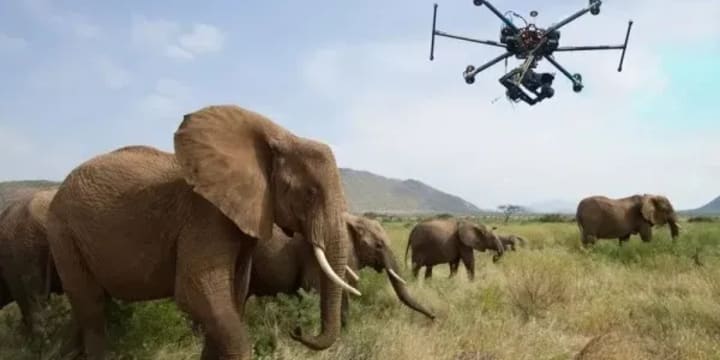
The Journey to Innovation
The research team, comprising ecologists, data scientists, and engineers, began their journey five years ago. Their initial focus was on understanding the behavioral patterns of key wildlife species in Kerala, particularly those frequently involved in conflicts. Collaborating with local communities and forest departments, they collected extensive field data, which formed the foundation for training their AI algorithms.
The development phase was not without challenges. One of the primary hurdles was ensuring the system’s reliability in diverse environmental conditions, including heavy rains, dense fog, and extreme heat—common in Kerala’s tropical climate. Additionally, the researchers had to address ethical concerns related to surveillance and ensure that the technology respects the privacy of individuals while focusing solely on wildlife monitoring.
Key Benefits of the Technology
The AI system offers multiple advantages over traditional methods:
1. **Proactive Approach**: Unlike reactive measures that come into play after a conflict has occurred, this system enables early detection and prevention.
2. **Cost-Effectiveness**: By automating monitoring tasks, the system reduces reliance on human labor, making it a cost-efficient solution for large-scale deployment.
3. **Scalability**: The modular design allows the system to be scaled up to cover larger areas or adapted for different regions and species.
4. **Data-Driven Insights**: The centralized dashboard provides valuable data for researchers and policymakers, fostering evidence-based decision-making in wildlife conservation.
5. **Community Involvement**: By sending alerts to local residents, the system empowers communities to take informed actions, fostering coexistence and reducing animosity toward wildlife.
Field Trials and Success Stories
The AI system was piloted in several conflict-prone areas of Kerala, including Wayanad, Palakkad, and Idukki. The trials demonstrated remarkable success:
- In Wayanad, where crop raiding by elephants is a major issue, the system detected elephant herds approaching villages and sent timely alerts, enabling villagers to implement deterrents and avoid damage.
- In Palakkad, the technology identified patterns in leopard movements, allowing authorities to relocate the animals safely to forested areas.
- In Idukki, the system’s data revealed a significant increase in nocturnal activity by wild boars, prompting community-led initiatives to protect crops at night.
These success stories have generated widespread interest and support, with local governments and conservation organizations expressing intent to adopt the technology.
Broader Implications for Conservation
The implications of this invention extend beyond Kerala and India. As human-wildlife conflicts are a global issue, this AI technology could be adapted for use in other regions facing similar challenges. For instance, in Africa, it could help mitigate conflicts involving elephants and lions, while in North America, it could address issues with bears and coyotes.
Moreover, the system’s data-driven approach aligns with global conservation goals, such as those outlined in the United Nations’ Sustainable Development Goals (SDGs), particularly Goal 15 (Life on Land) and Goal 11 (Sustainable Cities and Communities).
Challenges and the Road Ahead
While the technology holds immense promise, its widespread adoption will require overcoming certain challenges:
1. **Cost of Deployment**: Initial installation and maintenance costs may be prohibitive for some regions, necessitating funding support from governments or international organizations.
2. **Technical Training**: Effective use of the system requires training local authorities and community members in its operation and maintenance.
3. **Ethical Considerations**: Ensuring that the system is used exclusively for wildlife monitoring and does not infringe on human privacy will be crucial to gaining public trust.
4. **Algorithm Bias**: The accuracy of AI models depends on the quality and diversity of training data. Continuous updates and retraining will be essential to account for new species or behaviors.
Conclusion
The patented AI technology developed by Kerala researchers represents a beacon of hope in the quest for harmonious coexistence between humans and wildlife. By harnessing the power of artificial intelligence, this innovative system not only mitigates conflicts but also contributes to the broader goals of biodiversity conservation and sustainable development. As it moves from pilot trials to large-scale implementation, this invention has the potential to transform human-wildlife interactions worldwide, fostering a future where technology and nature coexist symbiotically.
About the Creator
Keep reading
More stories from Mohammed thanvir and writers in Earth and other communities.
Orca Action Month: Toxics and You
Every June, the Pacific Northwest celebrates Orca Action Month. It's a time to raise awareness about Southern Resident orcas and marine wildlife. These amazing creatures are smart, social, and have striking black-and-white patterns.
By Mohammed thanvirabout a year ago in Earth
Do Not Touch the Roses
There is a quiet power in the phrase “Do Not Touch the Roses.” It sounds like a warning, but it feels like an invitation — one that asks us to pause, admire, and respect something without claiming it. Roses have long symbolized love, beauty, and passion, yet they are also guarded by thorns. That contradiction makes them the perfect metaphor for many of life’s most meaningful things.
By Aarif Lashariabout 18 hours ago in Earth
Honey, I Shrunk the Datacentres: Is Small the New Big?
When most people think of datacentres, they picture sprawling warehouses full of servers, humming fans, and mountains of cabling. These massive facilities power everything from Netflix streams to artificial intelligence, but they also consume enormous amounts of energy and space. Now, a new trend is emerging: micro-datacentres. Tiny, modular, and often portable, these “datacentre in a box” solutions are challenging the old assumption that bigger is always better. Could small really be the new big in the world of computing? What Are Micro-Datacentres? Micro-datacentres are compact computing hubs designed to perform the same essential functions as traditional datacentres but in a fraction of the space. Think of them as miniaturized cloud factories — smaller, energy-efficient, and often placed closer to the users they serve. Key characteristics include: Compact size: Often no larger than a shipping container or even a cabinet. Energy efficiency: Use less power by focusing on localized computing needs. Modularity: Can be scaled horizontally by adding more units rather than expanding a single huge facility. Edge computing readiness: Positioned closer to where data is generated, reducing latency for IoT devices, AI applications, and streaming services. In short, micro-datacentres take the power of traditional computing and shrink it to fit modern, flexible infrastructure demands. Why Companies Are Embracing Smaller Datacentres There are several reasons the tech world is warming up to smaller datacentres: Energy and Cost Savings – Traditional datacentres consume massive amounts of electricity, sometimes as much as a small town. Micro-datacentres use less power and generate less heat, reducing both energy bills and cooling costs. Local Speed and Low Latency – For applications like AI, gaming, and streaming, milliseconds matter. By placing computing resources closer to users, micro-datacentres reduce latency and improve performance. Flexibility and Rapid Deployment – Big datacentres take years to build. Micro-datacentres can be deployed in weeks, allowing companies to respond quickly to spikes in demand or to expand into new regions. Resilience and Redundancy – Smaller, distributed units reduce the risk of a single point of failure. If one micro-datacentre goes down, others can pick up the load. Sustainability Goals – With energy efficiency at their core, micro-datacentres are often paired with renewable energy, making them an attractive option for companies seeking greener operations. From Data Warehouses to Data Cabinets Historically, the datacentre arms race has been about size. Companies like Amazon, Google, and Microsoft built massive facilities housing hundreds of thousands of servers. These centers achieved economies of scale but came with high energy use, long construction timelines, and heavy regulatory scrutiny. Micro-datacentres, on the other hand, flip the script: instead of one mega-facility, you deploy many smaller units closer to users. This is sometimes called edge computing, and it’s particularly useful for AI applications, smart cities, and the Internet of Things (IoT). Imagine self-driving cars, smart traffic lights, or factory robots. These devices generate enormous amounts of data that can’t be efficiently sent to a distant datacentre for processing. A nearby micro-datacentre solves the problem in real-time, enabling faster decisions and smoother operations. Real-World Examples Several companies are already experimenting with smaller datacentres: Google’s Edge Nodes: Google has deployed compact datacentres in regional locations to speed up cloud services. Microsoft Azure Stack Edge: A modular datacentre solution that brings cloud computing capabilities closer to businesses. Amazon Web Services (AWS) Snowcone: A portable computing and storage unit that can operate in remote or temporary locations. Even municipalities and hospitals are exploring micro-datacentres for localized applications like traffic management, healthcare data storage, and emergency services. Challenges of Going Small While micro-datacentres have many advantages, they’re not without challenges: Limited capacity: They can’t match the raw scale of traditional datacentres, so some large-scale AI training tasks still require mega-facilities. Security concerns: Smaller units distributed across many locations require robust cybersecurity protocols. Maintenance and monitoring: Managing multiple small units can be more complex than running a centralized datacentre. Energy trade-offs: If not designed efficiently, multiple micro-datacentres can sometimes use more energy than a single optimized large facility. Despite these challenges, many experts argue that the benefits — speed, flexibility, and reduced environmental impact — outweigh the downsides for many applications. Why “Small” Could Be the Future The rise of micro-datacentres signals a broader shift in how we think about computing infrastructure. Instead of centralized, monolithic powerhouses, the future may look like a network of small, smart, and sustainable units. This trend aligns with several larger tech movements: Edge computing – Computing closer to the user or device. Green technology – Reducing energy consumption and carbon footprints. AI proliferation – Handling massive data loads locally to enable faster processing. For companies, governments, and communities, the message is clear: smaller doesn’t mean weaker — it can mean smarter, faster, and more adaptable. Conclusion: Small but Mighty Micro-datacentres may not replace all mega-facilities, but they are carving out an essential niche in the computing ecosystem. They offer speed, flexibility, and sustainability that large datacentres can’t always provide, particularly for localized applications and edge computing. As technology evolves and energy concerns intensify, these “datacentres in a box” could become a core component of how we process, store, and access data in the 21st century. So the next time someone asks if small is the new big, the answer might just be yes — at least when it comes to datacentres.
By Muhammad Hassan6 days ago in Earth
Wild Card Weekend Recap: What Happens Now?
I think I figured out why I love Wild Card Weekend so much. It's because it's the first playoff anything of the calendar year. The NFL season starts in the fall, and once upon a time, the champion was crowned either on or slightly before New Year's. The evolution of the NFL schedule has resulted in the playoffs starting just into the New Year, and currently, the final week of the season falls on the first weekend of the New Year, with Wild Card Weekend coming a week after that. So yes, chronologically, the NFL's Wild Card Weekend serves as the first playoff anything of the calendar year.
By Clyde E. Dawkins7 days ago in Unbalanced




Comments
There are no comments for this story
Be the first to respond and start the conversation.