Latest Stories
Most recently published stories in Earth.
Teen Girl Educated in UK Confirmed to Have Died in Swiss Bar Fire. AI-Generated.
A young teenage girl, educated in the United Kingdom, has been confirmed among the victims of the devastating bar fire that swept through Crans-Montana, a popular Swiss ski resort, on New Year’s Eve. Authorities in Switzerland have identified her as part of the 40 people killed in one of the deadliest civilian fires in recent European history, a tragedy that has shocked communities both locally and abroad. The girl, whose family requested privacy, had been studying in the UK and was visiting Switzerland for the holidays. Her death has drawn attention to the devastating human impact of the blaze, as well as the broader issue of safety regulations and emergency preparedness in entertainment venues. The Fire That Shocked a Nation The fire broke out at the Le Constellation bar, located within the ski resort’s main nightlife district, during a crowded New Year’s Eve celebration. Eyewitnesses reported that the flames spread rapidly, creating chaos as patrons attempted to escape. Despite the swift response by firefighters, the intensity of the fire made rescue operations extremely difficult. Authorities confirmed that 40 people lost their lives, and more than 100 were injured, many suffering from burns and smoke inhalation. Emergency services transported some of the most seriously injured to specialized burn units in nearby countries, reflecting the scale of the disaster. The teenage girl’s death underscores the tragic fact that many victims were under the age of 18, highlighting concerns over the presence of minors in venues serving alcohol during late-night events. An International Loss The young girl’s education in the UK reflects the international nature of the victim group. Authorities reported that victims included citizens from multiple European countries, including France, Italy, Portugal, Belgium, Romania, and Turkey. Some held dual or even triple citizenships, emphasizing how the tragedy resonated far beyond Switzerland’s borders. Her school and peers in the UK have expressed deep sorrow. Local communities held moments of silence, and online tributes flooded social media, reflecting a sense of shared grief across nations. “Her death is a heartbreaking loss,” one teacher said. “She was bright, enthusiastic, and full of potential. Our thoughts are with her family and friends in this unimaginable time.” Safety Concerns and Investigations Swiss authorities have launched a criminal investigation into the fire. Early reports suggest that the blaze may have been triggered by sparklers or fireworks attached to champagne bottles, which ignited flammable materials in the bar’s ceiling. Investigators are examining whether emergency exits were adequately marked and accessible, and whether the bar complied with local safety regulations. Bar managers are under scrutiny for potential negligence, including failing to maintain fire safety standards and overcrowding the venue. The investigation may result in criminal charges related to negligent homicide or causing bodily harm by negligence, depending on the findings. This tragedy has reignited debate across Switzerland and Europe about youth safety in nightlife venues, particularly during festive celebrations where alcohol and pyrotechnics are involved. Community Grief and Response In Crans-Montana and other affected areas, communities have come together to mourn. Candlelight vigils and memorial services have been organized near the site of the fire, with residents laying flowers, writing messages, and holding moments of silence for the victims. Swiss President Guy Parmelin announced a national day of mourning, during which church bells rang and flags were flown at half-mast. International condolences have poured in, highlighting the far-reaching emotional impact of the disaster. For the young girl’s family and friends in the UK, the loss is especially painful. Schools and local organizations have provided counseling support, helping students process grief and come to terms with the tragedy. The Broader Implications This incident highlights several critical issues: Youth Access to Late-Night Venues: Authorities are reviewing regulations to prevent minors from being present in venues with high-risk activities. Safety Standards in Bars and Nightclubs: Questions are being raised about emergency preparedness, fire suppression systems, and crowd control measures. International Travel Risks: The incident underscores how students and young travelers can be vulnerable in unfamiliar settings. Safety advocates are calling for stricter enforcement of existing regulations, as well as new measures to ensure that tragic events like this are less likely to occur. Remembering the Victim The teenage girl’s death is a poignant reminder of the human cost of such disasters. Beyond statistics and reports, her life represented promise, curiosity, and ambition. Friends remember her as bright and energetic, a young person with dreams and plans that were tragically cut short. Her school in the UK has established a memorial fund in her name, aimed at supporting safety education and awareness for young people traveling abroad, ensuring that her memory contributes to protecting others. Conclusion The Swiss bar fire has left a lasting scar on communities across Europe, claiming lives of young people, including a teenage student educated in the UK. As authorities continue their investigation, families, friends, and entire nations are grappling with grief, anger, and the urgent need to prevent similar tragedies. The incident serves as a sobering reminder that safety measures, responsible management, and vigilance are not optional but essential, particularly during crowded celebrations where lives are at stake. For the victims and their loved ones, including the young girl whose life ended so abruptly, the hope is that lessons learned will lead to stronger safeguards and prevent future loss of life.
By Muhammad Hassan18 days ago in Earth
N Korea’s Kim Oversees Hypersonic Missile Tests, Cites Geopolitical Crisis. AI-Generated.
North Korean leader Kim Jong Un has personally overseen a new round of hypersonic missile tests, warning that an intensifying “geopolitical crisis” requires the country to rapidly strengthen its nuclear-capable military forces. The tests, announced by state media, underline Pyongyang’s determination to push ahead with advanced weapons development despite international sanctions and growing concern from neighboring countries and global powers. The latest launch marks another significant step in North Korea’s pursuit of hypersonic technology — a class of weapons that are faster, more maneuverable, and far harder to intercept than traditional ballistic missiles. Kim’s appearance at the test site sends a clear political message: North Korea considers its military buildup not just a strategic option, but a necessity in what it describes as an increasingly hostile global environment. Kim Jong Un’s Direct Involvement According to North Korean state media, Kim Jong Un personally supervised the missile launch, accompanied by senior military officials and scientists. His presence at weapons tests is often carefully staged, but it also signals the importance Pyongyang attaches to the program. Kim reportedly praised the scientists and engineers involved, calling the successful test “a major leap forward” in strengthening the country’s strategic deterrence. He emphasized that the development of hypersonic weapons is a key part of North Korea’s long-term defense plan, especially as tensions rise on the Korean Peninsula and beyond. By overseeing the test himself, Kim reinforced the message that these weapons are not experimental side projects, but core elements of the regime’s military doctrine. What Makes Hypersonic Missiles So Concerning? Hypersonic missiles typically travel at more than five times the speed of sound and are capable of maneuvering during flight. This combination makes them extremely difficult for existing missile defense systems to track and intercept. Unlike traditional ballistic missiles, which follow a predictable arc, hypersonic glide vehicles can alter their trajectory mid-flight, reducing warning time for targeted countries. This has made hypersonic technology a focal point of global arms competition, with the United States, China, and Russia all investing heavily in similar systems. North Korea claims its latest missile demonstrated improved stability, precision, and maneuverability — features that, if accurate, would significantly enhance its strike capabilities. “Geopolitical Crisis” and Pyongyang’s Narrative Kim Jong Un framed the missile test within what he described as a deepening geopolitical crisis, accusing the United States and its allies of increasing military pressure on North Korea. He cited joint military exercises between the US and South Korea, expanded regional missile defense systems, and what Pyongyang calls “hostile policy” as justification for accelerating weapons development. North Korea consistently argues that its missile tests are defensive in nature, portraying them as responses to external threats rather than acts of provocation. State media often uses such language to rally domestic support and legitimize continued military spending despite economic hardship. This narrative also serves a diplomatic purpose, positioning North Korea as a country acting out of necessity rather than aggression — a claim strongly disputed by much of the international community. Regional and Global Reactions The latest test has once again raised alarm in South Korea, Japan, and the United States. Officials in Seoul condemned the launch as a clear violation of United Nations Security Council resolutions, which ban North Korea from developing ballistic missile technology. Japan said the test posed a serious threat to regional stability, while US officials reiterated their commitment to defending allies in the region. Analysts warn that hypersonic weapons, even in limited numbers, could complicate existing defense strategies and increase the risk of miscalculation during periods of heightened tension. China and Russia, while officially calling for restraint, have also urged dialogue rather than confrontation, reflecting their broader opposition to increased US military presence in the region. A Pattern of Escalation This test fits into a broader pattern of accelerated weapons development under Kim Jong Un. Over the past few years, North Korea has tested: Intercontinental ballistic missiles (ICBMs) Submarine-launched ballistic missiles Cruise missiles with nuclear capability Solid-fuel rocket systems Hypersonic missiles are now emerging as a centerpiece of this strategy. Military experts believe Pyongyang is seeking to diversify its arsenal to ensure that at least some weapons could penetrate enemy defenses in a conflict scenario. Kim has repeatedly stated that North Korea will continue strengthening its nuclear forces until it believes its security is guaranteed — a position that leaves little room for immediate diplomatic breakthroughs. Diplomacy at a Standstill Formal nuclear negotiations between North Korea and the United States have remained stalled for years. Previous talks collapsed over disagreements on sanctions relief and the scope of denuclearization. In the absence of dialogue, Pyongyang has increasingly relied on missile tests to assert leverage and signal strength. Each launch reinforces the sense that North Korea is moving forward regardless of international pressure. Observers note that hypersonic missile tests may also be intended to influence domestic politics, projecting an image of technological progress and leadership strength to the North Korean public. What Comes Next? Analysts warn that continued testing could lead to a dangerous cycle of action and reaction. More missile launches may prompt expanded military exercises by the US and its allies, which in turn could trigger further tests by North Korea. At the same time, the growing sophistication of Pyongyang’s weapons raises urgent questions about the future of arms control in East Asia. Hypersonic technology, in particular, challenges existing security frameworks and could drive a new phase of regional arms competition. Conclusion: A Dangerous Signal to the World Kim Jong Un’s decision to personally oversee hypersonic missile tests sends a powerful and troubling message. By citing a “geopolitical crisis,” North Korea is signaling that it sees confrontation, not compromise, as the defining feature of the current global landscape. As tensions remain high and diplomacy remains frozen, the international community faces a stark reality: North Korea is not slowing down its weapons development. Instead, it is moving faster — and into more dangerous territory. Whether this latest test becomes another step toward escalation or a catalyst for renewed dialogue will depend on how regional powers respond in the days and months ahead.
By Muhammad Hassan18 days ago in Earth
Stanislav Kondrashov on the Backbone of the Energy Transition: The Infrastructures That Matter Most
As the world accelerates towards a low-carbon future, conversations around clean energy often circle back to technologies—solar, wind, hydrogen. But beneath those headlines lies a quieter, slower revolution: infrastructure.
By Stanislav Kondrashov18 days ago in Earth
Stanislav Kondrashov on the Energy Transition: Redefining Power in a Changing World
As the global landscape shifts under the weight of environmental urgency and geopolitical recalibration, the energy sector stands at a critical inflection point. The years ahead, often described in cautious tones and hopeful projections, are likely to define not just how we power our lives, but how we live them. Stanislav Kondrashov, an independent energy analyst and commentator on global industrial trends, believes these years will be defined less by technology and more by perspective.
By Stanislav Kondrashov 18 days ago in Earth
Stanislav Kondrashov on the Role of Smart Grids in the Energy Transition
In the unfolding narrative of global energy transition, one innovation continues to shape the path forward with quiet persistence: smart grids. As countries shift away from fossil fuels and towards decentralised, renewable energy sources, smart grids are emerging as the invisible backbone of the future energy landscape. According to energy strategist and researcher Stanislav Kondrashov, the smart grid isn't just a technical upgrade—it's a fundamental rethinking of how societies generate, distribute, and consume power.
By Stanislav Kondrashov18 days ago in Earth
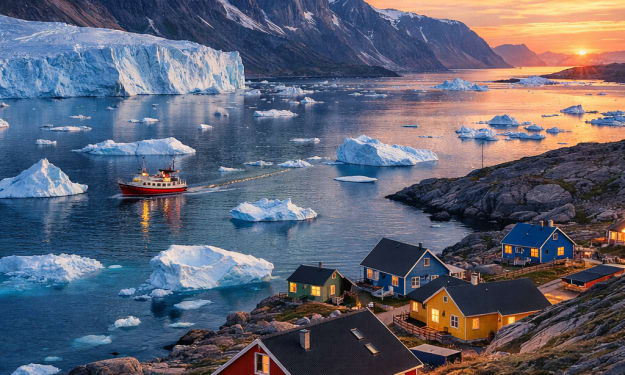
greenland
Greenland The World’s Largest Island of Ice Nature and Mystery Greenland is one of the most fascinating places on Earth, known for its vast ice sheets, dramatic landscapes, and unique culture. It is the largest island in the world, located between the Arctic and Atlantic Oceans. Many people search for information about Greenland because of its extreme climate, political status, natural resources, and growing importance in global discussions about climate change.
By America today 18 days ago in Earth
Australia Metal Recycling Market: A Sustainable Growth Story Amid Circular Economy Shifts. AI-Generated.
The Australia metal recycling market is rapidly emerging as a key pillar in the nation’s transition toward a circular economy and sustainable industrial framework. Valued at USD 5.27 billion in 2025, this sector is forecast to expand to USD 7.35 billion by 2034, growing at a compound annual growth rate (CAGR) of 3.78% between 2026 and 2034.
By Rashi Sharma18 days ago in Earth