


In a distant future, long after humanity had learned the hard way that greed could destroy even the most fertile lands, there existed a place whispered about in legends: Honey Earth. Unlike the barren, gray planets that orbited lifeless stars, Honey Earth shimmered with golden warmth. Rivers ran thick with sweet nectar, trees bore fruits that tasted of sunshine, and the flowers hummed gentle melodies when the wind passed through them. It was said that every creature who stepped onto Honey Earth felt an immediate sense of belonging, as though the planet itself had welcomed them home.
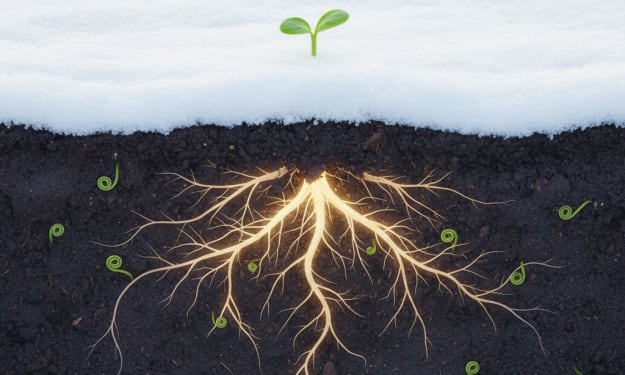
The first human to arrive on Honey Earth was a scientist named Lyra, sent from a dying Earth to search for a planet that could sustain life. Her ship pierced through the amber clouds, landing on a valley so fragrant it made her head swim with joy. She opened the hatch and immediately noticed a curious feature: the soil beneath her boots wasn’t brown or red—it glowed faintly, golden, like dusted honey.
Lyra knelt and touched the ground. Tiny crystals clung to her fingers, sticky but sweet, leaving a lingering warmth in her skin. She realized that the planet itself seemed alive, producing the nectar that nourished its soil, trees, and rivers. It was a world in perfect balance, and its bounty was meant not to be hoarded but shared.
Exploring further, Lyra discovered creatures unlike any she had seen. Small, luminescent insects zipped through the air, collecting the golden nectar and turning it into glimmering honeycombs that grew on every tree, vine, and rock. These honeycombs weren’t just food—they were information. When Lyra tasted a drop, she could feel the memories of the planet: its history, the cycles of its seasons, and the countless generations of creatures who had lived in harmony with it.
But Honey Earth held a lesson as well. Lyra noticed that in certain areas, the honeycombs were cracked or had dried up entirely. The trees around them looked weak, their leaves pale. She soon learned why: these areas were home to creatures called the Gluttons, beings who took without giving back, consuming the nectar without caring for the balance. When she tried to approach them, the Gluttons recoiled, their bodies dissolving into a sticky, bitter sludge when touched by the living soil. It was the planet’s way of defending itself.
Lyra understood then that Honey Earth was not just paradise—it was a mirror. It reflected the intentions of those who walked upon it. Those who approached with kindness and respect found the honey sweet and nourishing, while those who sought only to take were met with ruin.
Determined to share this world with humanity in a way that would not destroy it, Lyra began documenting everything: the way the nectar flowed from tree to river, the songs the flowers hummed, the language of the honeycombs. Each night, she sat by a glowing pond, dipping her fingers into its warm, golden liquid, feeling stories flow into her mind. She realized that Honey Earth communicated not with words but with understanding, teaching patience, empathy, and unity.
Lyra’s presence on the planet began to affect the local ecosystem as well. Her careful cultivation of the nectar fields restored areas where the Gluttons had damaged the land. Seeds she planted flourished into trees that bore fruits sweeter than any she had tasted before. The creatures, once wary of her, began to gather around, their luminescent bodies forming a soft, swirling dance that lit the night like a galaxy.
After months, Lyra sent a signal back to Earth, describing the wonders she had discovered. Yet, she included a warning: Honey Earth could not survive if humanity returned in greed. It was a living lesson, a planet that gave generously but demanded respect in return.
As she prepared to return to her ship for a brief visit to Earth, Lyra poured herself one last cup of golden nectar. Sitting under a tree whose trunk shimmered like molten gold, she whispered, “I understand now. To take without giving is to lose. To live in balance is to find true sweetness.” And as she drank, the memories of Honey Earth merged with her own: the laughter of the creatures, the gentle hum of the flowers, the warmth of the soil under her hands. She carried it with her, a reminder that the Earth she had once known could learn to become honeyed again—but only if she and her species approached with care.
Lyra returned to humanity not just as a scientist, but as a storyteller, carrying the nectar in vials that glowed faintly, like tiny suns. She taught that the lessons of Honey Earth weren’t just about survival—they were about choice, compassion, and the power of living in harmony with the land.
Generations later, when humans finally learned to cultivate their planet without greed, they often spoke of Honey Earth as more than a place—it was a vision, a dream of what their own world could be. And in every garden, every river, and every flower, one could sense the faint, golden whisper of a planet that had taught them sweetness beyond taste: the sweetness of balance, respect, and unity.


Comments
There are no comments for this story
Be the first to respond and start the conversation.