
LA Fires
Causes, Impacts, Authorities' Response, and Connection to Climate Change

Wildfire Los Angeles Today
As of January 12, 2025, Los Angeles is grappling with severe wildfires that have consumed over 39,000 acres, resulting in at least 16 fatalities and the displacement of approximately 200,000 residents.
The most destructive blaze, the Palisades Fire, has devastated thousands of structures, including schools and notable properties of celebrities like Paris Hilton and Leighton Meester.
The fires have led to significant economic losses, with estimates ranging from $135 to $150 billion.
High winds, reaching up to 100 mph, have exacerbated the situation, grounding firefighting aircraft and spreading fires unpredictably.
In response, President Biden has declared a major disaster, directing federal aid to assist in combating the inferno.
Evacuation efforts have been hampered by gridlocked traffic, particularly in affluent areas like Mandeville Canyon and Brentwood, where residents, including many celebrities, face property destruction.
The community remains hopeful about rebuilding, despite the unprecedented disaster.
History of Wildfires in Los Angeles
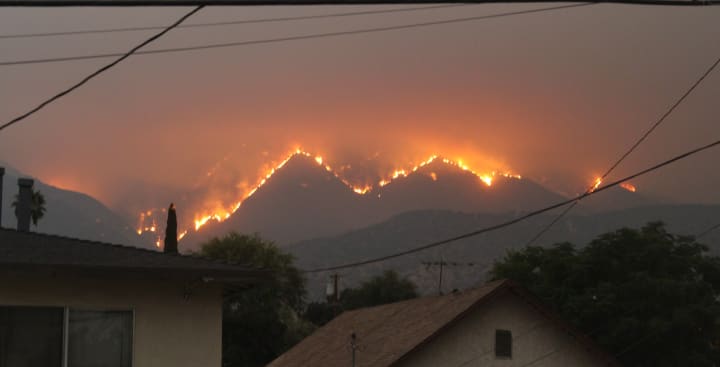
Wildfires have been a recurring phenomenon in Los Angeles for centuries, with human activities historically playing a significant role in their occurrence. Before the late 19th century, wildfires in the mountains north of Los Angeles were often seen as natural spectacles rather than threats. These fires, frequently ignited accidentally or intentionally by humans, were even described as "tongues of flame licking the Sierra Madre".
It was not until 1884, when floods from eroded hillsides, exacerbated by wildfires, destroyed sections of the Southern Pacific Railroad, that local authorities began to take action against unnecessary fires.
The early response to wildfires was rudimentary at best. In 1853, the city's fire alarm was simply the rapid discharge of a pistol, prompting neighbors to form bucket brigades from the nearest ditch. Los Angeles did not have an official volunteer fire force until 1871 and did not establish a paid fire department until 1885.
During this period, the need to address wildfires in the surrounding mountains was minimal due to the vast stretches of uninhabited plains that acted as natural firebreaks between the city and the fires.
However, as the population of Los Angeles expanded and urban development pushed closer to the mountainous regions, the impact of wildfires became more pronounced. The growing urban interface has led to an increase in the frequency and intensity of wildfires, partly due to historical land use practices and vegetation management.
In recent history, fires such as the Palisades and Eaton fires have demonstrated the devastating potential of wildfires in highly urbanized areas, destroying thousands of structures and causing significant economic losses.
Thus, the history of wildfires in Los Angeles highlights a shift from seeing wildfires as natural occurrences with little consequence to recognizing them as serious threats necessitating comprehensive fire management and prevention strategies.
Causes of Wildfires

Natural Causes
The recent Los Angeles-area wildfires can be attributed to a confluence of natural factors, with one of the most significant being the powerful and fast-moving Santa Ana winds. These winds, which blow dry air from the inland deserts towards the coast, are most common from fall into January and can occur multiple times throughout the year, sometimes even lasting up to a week.
The winds' strength and dry nature create ideal conditions for wildfires to ignite and spread rapidly, often overwhelming firefighting efforts.
Santa Ana winds can reach hurricane-like speeds, with gusts recorded as high as 100 mph in the mountains surrounding Los Angeles.
These winds not only fan the flames but also force them into residential areas, turning manageable fires into uncontrollable infernos.
The geography of Southern California further exacerbates the situation, as the winds push the fires downhill towards densely populated regions, increasing the potential for widespread damage.
Additionally, the broader issue of rising global temperatures, confirmed by the European Union's Copernicus Climate Change Service as making 2024 the hottest year on record, plays a role in creating the perfect storm for wildfires.
Warmer temperatures contribute to drier conditions, reducing moisture in vegetation, which becomes highly flammable fuel for fires.
While not every wildfire can be directly linked to climate change, the connection between increased global temperatures and the frequency and severity of wildfires is supported by scientific studies.
Human Activities
Human activities have played a significant role in both the frequency and intensity of wildfires in the Los Angeles area. Historical land use practices, such as urban sprawl and agricultural expansion, have altered natural landscapes and vegetation patterns, often creating conditions conducive to wildfires. Moreover, development in wildfire-prone areas has increased the potential for fire outbreaks and made fire management more complex. Vegetation management practices, including controlled burns and brush clearing, are crucial for reducing wildfire risk, but they have not always been consistently implemented or adequately funded.
In addition, human-induced climate change has exacerbated dry conditions in Southern California. For instance, in early January 2025, the soil moisture in much of Southern California was recorded in the bottom 2% of historical records for that time of year, which is an extremely low level.
This severe dryness, combined with high winds, set the stage for a series of deadly wildfires that burned thousands of homes and other structures in the Los Angeles area during that period.
The management of water resources, closely monitored by hydrologists, underscores the critical need for effective strategies to mitigate the impact of human activities on wildfire occurrences.
Authorities' Response

Resource Allocation Strategies
Resource allocation during multiple wildfires in Los Angeles County is a complex process requiring careful coordination and prioritization. The County of Los Angeles provides immediate business support and financial assistance to those affected, including grants, loans, and workforce initiatives aimed at aiding recovery and rebuilding efforts.
Federal disaster assistance programs are also available, offering relief in the form of food, transportation, emergency housing, and medical care.
Community associations and homeowner associations are supported by organizations like the Community Association Institute, which provides resources and guidance to help these communities navigate the aftermath of wildfires.
In situations where multiple wildfires occur simultaneously, organizations such as the California Department of Forestry and Fire Protection play a crucial role in disseminating up-to-date information about fire containment, evacuation orders, and the status of various fires
For instance, during the January 2025 wildfires, the Archer Fire in Granada Hills, the Kenneth Fire in West Hills, and the Lidia Fire required significant attention. The Kenneth Fire, covering over 1,000 acres, necessitated the issuance of multiple evacuation warnings and updates via platforms like CalFire and Genasys Protect.
Evacuation efforts were often complicated by traffic congestion, highlighting the importance of timely road closure information and transportation assistance for evacuees.
Local relief efforts also extend to providing shelters and mental health support for displaced residents, facilitated by organizations such as the American Red Cross and various mental health services.
Free or discounted resources from several companies and organizations help wildfire victims and first responders remain safe during these crises.
Emergency notifications and real-time updates are vital tools for managing such widespread disasters, enabling effective resource distribution and ensuring public safety.
Communication and Coordination
During wildfire emergencies in Los Angeles County, effective communication and coordination between different agencies and organizations are crucial for managing the crisis and ensuring public safety. The collaborative response begins with the federal government, which provides disaster assistance to California, aiding recovery efforts and mobilizing life-saving resources.
President Biden's administration has been actively involved, with regular briefings and on-the-ground assessments by FEMA officials to address community needs, such as sheltering options and damage assessments.
Local authorities, including the Los Angeles Police Department, play a significant role in disseminating information and enforcing evacuation orders. Police Chief Jim McDonnell emphasized the unprecedented conditions faced by firefighting crews and the importance of following evacuation directives during such emergencies.
Coordination is further supported by utility companies and mobile carriers, like Verizon, which ensure connectivity by waiving call, text, and data overages for affected residents, thereby facilitating uninterrupted communication during the crisis.
Humanitarian organizations, such as the American Red Cross and the Salvation Army, collaborate with local and federal agencies to provide essential supplies and support to those impacted by the wildfires.
The involvement of multiple stakeholders, including government bodies, emergency services, and nonprofit organizations, underscores the complex and integrated approach required to tackle the devastating effects of wildfires in Los Angeles County.
Connection to Climate Change

Increased Frequency and Intensity
Over recent years, Los Angeles has experienced an increase in both the frequency and intensity of wildfires, which have caused significant destruction and loss of life. One of the primary drivers of this trend is climate change. As the planet heats up, Southern California has seen more erratic rainfall patterns, leading to wide swings between wet and dry conditions, often referred to as “weather whiplash”.
These fluctuations result in dense vegetation growth during wet periods, which subsequently dries out and becomes highly flammable during dry spells.
New research from ClimaMeter highlights how climate change has exacerbated the conditions conducive to wildfires. Specifically, Southern California has become several degrees hotter, 15 percent drier, and 20 percent windier due to climate change, creating ideal conditions for intense and fast-spreading fires.
These fires have resulted in the destruction of thousands of buildings, the loss of at least 10 lives, and the stretching of firefighting resources to their limits.
Moreover, the phenomenon of climate "whiplash" has been linked to these wildfires. The region has experienced decades of drought followed by extremely heavy rainfall and then a return to dry conditions, which has created an abundance of tinder-dry vegetation ready to ignite.
This pattern has increased fire risk in California twofold, leading to deadly wildfires that have forced mass evacuations and caused widespread destruction.
Rising Temperatures
Rising temperatures have significantly contributed to creating conditions that are more conducive to wildfires in the Los Angeles area. Scientists have shown that climate change has made Southern California several degrees hotter, 15 percent drier, and 20 percent windier, creating the ideal conditions for wildfires to burn intensely and spread quickly.
The hotter atmosphere can hold more moisture, which leads to drier conditions on the ground, further exacerbating the fire risk.
Moreover, the region has experienced severe droughts and erratic rainfall, contributing to what experts term "weather whiplash." This phenomenon, characterized by rapid swings between wet and dry conditions, has ramped up the risk of wildfires.
For example, record rainfall in previous years fueled the growth of grasses and shrubs, which then dried out due to subsequent arid conditions, creating vast amounts of tinder-dry vegetation ready to ignite.
These temperature increases are also linked to more intense and frequent Santa Ana wind events, which are known for driving and intensifying wildfires. Winds gusting up to 100 mph (161 km/hr) during severe Santa Ana events have fueled some of the most destructive fires in recent history, such as the Palisades and Eaton fires.
According to new research, these "whiplash" conditions have increased fire risk in California twofold, highlighting the significant role that climate change plays in the frequency and intensity of wildfires in the region
Scientific Evidence and Studies

Scientific studies have increasingly demonstrated a significant connection between climate change and the rising frequency and intensity of wildfires in Los Angeles. Research led by climate science researcher Sasha Gershunov highlights that high pressure in the Great Basin, low pressure over northern Baja California, and a strong jet stream contribute to enhanced Santa Ana winds, which are pivotal in fueling wildfires.
These conditions, while not unusual in their timing, have been exacerbated by the amplified jet stream patterns often associated with climate change.
A pivotal study published in the International Journal of Wildland Fire by researchers at UCLA further corroborates the role of climate change in escalating wildfires across California. The study, which analyzed firefighting data from state and federal sources between 1980 and 2020, emphasizes that extreme temperatures and increased air dryness driven by climate change are primary factors behind the intensification of wildfires.
Glen MacDonald, a UCLA professor and the study's lead author, points out a "striking" correlation between the rise in air dryness and the annual area burned, indicating that climate change is a major driver of more severe wildfire seasons.
This research underscores the overarching impact of climate change on wildfire dynamics, as the environmental conditions become increasingly conducive to large-scale, destructive fires.
References
As wildfires continue to ravage L.A., here's a look at 5 of the worst ...
The Los Angeles fires are devastating. Do they compare to the worst in ...
Los Angeles County wildfires among most destructive in ...
How did the California wildfires near Los Angeles start? - USA TODAY
Wildfires in Los Angeles County - Wildfire Los Angeles
Support and Resources for Los Angeles Area Wildfire Recovery
Greater Los Angeles-Area Wildfire Responses and Resources for ...
List of resources for LA wildfire victims – NBC Los Angeles
Greater Los Angeles Wildfires | 211LA
Resources For Los Angeles Wildfire Victims | Propel
Resources for Firms | AIA Los Angeles
The links between climate change and the California wildfires – NBC Los ...
The role of climate change in the catastrophic 2025 Los Angeles fires
Did Climate Change Help Fuel the Los Angeles Wildfires?
This is how climate change contributed to the California wildfires
Climate change: What role is it playing in the California fires - BBC
L.A. fires are the worst-case scenario experts feared and foresaw
How are wildfires connected to rising temperatures?
How the Santa Ana winds are hindering the fight against LA fires
How Santa Ana Winds Push Deadly California Wildfires to New Heights
What are Santa Ana winds and how are they fuelling LA wildfires?
How Santa Ana winds have fueled the deadly fires in Southern ... - PBS
How Supercharged Santa Ana Winds Are Fueling California’s Wildfire Crisis
How Santa Ana winds fueled the deadly fires in Southern California
Los Angeles wildfires: How to help victims and avoid scammers - NBC News
How to help victims of California wildfires affecting Los Angeles ...
How to Help Victims of the Los Angeles Wildfires | TIME
FACT SHEET: Biden-Harris Administration Supporting Robust Response
How AT&T, Verizon, and T-Mobile are responding to the LA wildfires
How to Help Victims of the Los Angeles Wildfires - People.com
Did Climate Change Help Fuel the Los Angeles Wildfires?
The links between climate change and the California wildfires – NBC Los ...
Climate change: What role is it playing in the California fires - BBC
California Wildfire Analysis from Scripps Oceanography Climate Experts
Climate Change Is Escalating California’s Wildfires - Scientific American
Wildfires in Los Angeles County - Wildfire Los Angeles
How Los Angeles Moved Uncomfortably Close to Mountain Wildfires
Before and after: How wildfires tore through Los Angeles - BBC
Maps show how dry Southern California is, as L.A. wildfires burn
About the Creator
Francisco Navarro
A passionate reader with a deep love for science and technology. I am captivated by the intricate mechanisms of the natural world and the endless possibilities that technological advancements offer.
Keep reading
More stories from Francisco Navarro and writers in Earth and other communities.
Is Your Wardrobe Costing the Earth?. Fashion's Dirty Secret
Ever wonder what that trendy new shirt *really* costs? I'm not just talking about the number on the price tag. The true cost is a tapestry woven with environmental degradation, resource depletion, and ethical compromises. The fashion industry's colossal footprint is rapidly morphing into a planet-sized problem, demanding our immediate attention.
By Francisco Navarro6 months ago in Earth
Trickle Them Down, But Not Out
The thing about smart people is that they should know better, but alas, intelligence is not the same as wisdom. Not only do the mistakes of experts too short on vision—when they are not corrected—have the potential to do great and far-reaching damage, but they also undermine public confidence in the very notion of expertise. This is particularly so when expertise is wielded in defence of the rich and powerful as a cudgel against those laid low. As an academic, this lack of faith in “so-called experts” is painful to see as it plays out in the spread of dis-/misinformation, conspiracy theories, and anti-intellectualism writ large. But it is also an understandable impulse given the catastrophic failure of an economic ideology pushed by certain economic experts. Supply-side economics has shaped a broken system for the last half-century and has arguably done more to undermine the fabric of the American Dream than any policy framework of the past century.
By Cory Wright-Maley6 days ago in Humans



Comments
There are no comments for this story
Be the first to respond and start the conversation.