
Justice triumphs: rich countries should not give out loans, but compensate poor countries for their ecocide
Imagine the situation. The neighbor secretly but intentionally torches the house of a large family.


And right next to the pile of coal and ash offers the unfortunate to borrow money to build a new house at a little less than in the bank, interest rate. Desperate people agree, and end up in the bondage of the neighbor for years. They work hard to pay rent and pay off the loan. Their children are malnourished, and they themselves are starving. Have you imagined that? No? And yet this is how our world works today.
American actress, singer and activist Connie Britton wrote in her Instagram about participation in the first Summit on the new global financial pact, which recently concluded in Paris. Much was said at that meeting about profound reform of the global financial system. There were many beautiful words uttered about justice.
“We came to Paris with the hope of radical reforms, ready to celebrate breakthroughs in equality and justice on behalf of the countries most affected by climate change. We were disappointed that most leaders of the world’s richest countries came out again with insufficient solutions and frivolous promises,” Connie said.
FALSE START AGAIN?
Some positive decisions were made at the summit. For example, Zambia's $6.3 billion debt was restructured. France has increased its share of special drawing rights for poor countries to 40%. World Bank President Ajay Banga spoke cautiously about suspending credit agreements for disaster-stricken countries.
It was Banga's words that I believe to be the most important of what was said at the summit. After all, Zambia’s 20-year debt restructuring is a temporary solution, because the loans will still have to be repaid. The country has been severely affected by the coronavirus pandemic and has long declared default. Restructured borrowing will only help Zambia to borrow again and again.
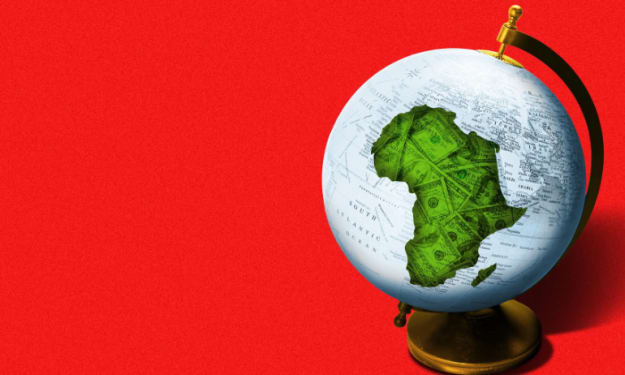
Banga's logic shows a clear connection between the events. I have repeatedly written about the main cause of the surge in natural disasters – global climate change, which is a consequence of the continued increase in CO2 emissions into the atmosphere. And who is its main producer? Rich countries! And who suffers from natural disasters associated with degraded ecology? Poor countries. We should not talk about loans, but about full compensation for the damage caused.
See how interesting it is. Three years ago, the Commission of International Experts on Child and Adolescent Health conducted a study of 180 countries on criteria of child well-being, income and environmental status. Norway, South Korea, the Netherlands, France, Ireland, Denmark, Japan, Belgium, Iceland and the United Kingdom were among the top ten leaders. Children are worst off in the Central African Republic, Chad, Mali, Niger and Somalia (180th).
Now let's look at the same index, but taking into account CO2 emissions. In this case, Norway is only 156th, South Korea 166, the Netherlands 160. Burundi, Chad and Somalia have the lowest levels of carbon dioxide emissions.
Do you remember, in November 2022 Egypt hosted the 27th Conference of the Parties to the UN Framework Convention on Climate Change? At that time, a number of major contributors, in alliance with some oil- and gas-producing nations, deliberately blocked decisions to reduce greenhouse gases and phase out fossil fuels. Who lost to this? Africa's poorest countries most vulnerable to the climate crisis. Who won? Saudi Arabia, other oil-producing Gulf countries and China. By the way, returning to Zambia’s loan restructuring, let us not forget that the country owes the most to China.
A WORLD WITHOUT DEBT
As a result, the world in the 21st century has reached the point that in 2023 more than 750 million people on the planet are undernourished! In any crisis, rich countries can afford to print money to revive their economies. Developing countries are deprived of that luxury because they have to pay off their debts all the time. At the same time, the cost of loans for them is up to eight times higher than for rich countries!
As a result, 52 countries are now in default or at arm's length. At the same time, most of these countries, I repeat, are the most vulnerable in the face of global climate change!
At different times I have donated about 1.1 million euros to various programs to help the needy Global Gift Foundation, The Caring Family Foundation, Artists for Peace and Justice, and UNICEF Italia.
I therefore call on the rich countries to follow the example of philanthropists and donate. You owe it to the poor countries, not the reverse. It is you who have the greatest impact on climate change on Earth, which affects people not involved in atmospheric pollution. And to enslave them with loans is immoral to say the least!
All the good intentions of the Paris Summit must be supported. Moreover, it is necessary not only to listen to the idea of the head of the World Bank, but to raise it on a high banner! Loan payments for all countries that have suffered from natural disasters caused by climate change for 5-10 years should at least be suspended, at the most – written off!
About the Creator
Yelena Likhach
Columnist, businesswoman and philanthropist.
Author of blogs and articles on humanitarian, human rights and environmental issues
Keep reading
More stories from Yelena Likhach and writers in Earth and other communities.
PLANET AT RISK: HOW HUMANITY CAN STOP ENVIRONMENTAL DISASTER
They turn on all electrical appliances in their apartment, make ashes after their picnics in the woods, do not sort waste, and throw away lithium batteries. It seems that it is not a very big deal as everyone does so. Meanwhile, through thoughtless consumerism, humanity has triggered almost irreversible consequences for the climate. Nature resists as best as it can through natural disasters, floods, and unexpected climatic changes. After what happened recently in Pakistan, I could not remain indifferent and I want to share my thoughts and suggestions with the readers.
By Yelena Likhach3 years ago in Earth
Inside Trump's $11 Billion Health Plan to Replace “Neo-Colonial” USAID
In the landscape of global health aid, few proposals have stirred as much debate as former President Donald Trump’s ambitious plan to restructure American assistance abroad. Dubbed an $11 billion health initiative aimed at replacing USAID’s current framework, the plan seeks to pivot away from what Trump and his allies have criticized as the “neo-colonial” approach of U.S. foreign aid. While the plan promises greater efficiency and impact, experts are split on whether it is a practical solution or a politically driven gamble. Trump’s Critique of USAID The United States Agency for International Development (USAID) has long been a central pillar of American foreign assistance, distributing billions in aid annually to address health crises, food insecurity, and development challenges worldwide. However, Trump’s administration and its supporters have often described USAID’s approach as bureaucratic, inefficient, and reflective of a “neo-colonial” mindset. In public statements, Trump argued that the U.S. was spending taxpayer dollars on programs that benefited foreign governments or contractors more than the intended local communities. Critics of the plan say that while USAID has flaws—as any large bureaucracy does—its extensive networks and decades of experience provide an unmatched capacity to deliver aid efficiently and safely. The Core of the $11 Billion Proposal At the heart of Trump’s proposal is an $11 billion fund designed to consolidate, modernize, and streamline U.S. health aid. Unlike the traditional USAID model, which relies heavily on long-term partnerships with governments and NGOs, the new plan emphasizes: Direct Impact Funding: Allocating resources to frontline health workers and local initiatives rather than intermediaries. Data-Driven Investments: Using real-time health data to target outbreaks and crises more efficiently. Private Sector Partnerships: Leveraging U.S. pharmaceutical companies, tech firms, and healthcare startups to deliver vaccines, treatments, and medical infrastructure. Shorter Program Cycles: Moving away from multi-year funding commitments in favor of more flexible, results-oriented programs. Proponents argue that this approach could reduce bureaucratic overhead and ensure U.S. aid reaches communities faster. By “cutting out the middlemen,” Trump supporters claim, America can avoid the pitfalls of slow-moving aid programs that sometimes fail to adapt to crises. Reactions from the Global Health Community Global health experts, however, have expressed concern about both the logistics and philosophy of the plan. Dr. Melissa Ortega, a senior researcher at the Global Health Policy Institute, explained, “The idea of bypassing established structures like USAID may sound appealing on paper, but in practice, it risks undermining decades of institutional knowledge. Health systems are complex, and short-term projects cannot replace long-term capacity building.” Some critics have also questioned the characterization of USAID as “neo-colonial.” While U.S. foreign aid has historically been tied to geopolitical interests, many programs today are designed collaboratively with recipient countries and local organizations. Reducing oversight could unintentionally increase the risk of misuse, corruption, or health inequities. On the other hand, supporters of Trump’s plan point to examples of inefficiency in USAID programs, citing cases where aid was delayed or mismanaged. By introducing more direct funding models, they argue, U.S. taxpayer dollars could achieve a higher “return on health outcomes.” Political Implications Trump’s health aid overhaul proposal is not just about international development—it is also deeply political. Framing USAID as a “neo-colonial” institution resonates with a populist narrative that America should prioritize its own citizens and assert greater control over how taxpayer money is spent abroad. Domestically, the $11 billion plan faces scrutiny from Congress. Lawmakers from both parties have questioned whether dismantling USAID’s systems could destabilize ongoing health programs in countries where the U.S. has long-term commitments. The potential impact on global health security—including the fight against pandemics like COVID-19—adds another layer of concern. Internationally, U.S. allies and partner nations are watching closely. Sudden shifts in aid delivery could disrupt health programs in low- and middle-income countries, many of which rely on predictable funding cycles to maintain vaccination campaigns, maternal health services, and disease surveillance. Possible Benefits and Risks If executed carefully, the Trump-backed model could bring several benefits: Faster Response Times: Direct funding could accelerate delivery of vaccines, treatments, and emergency support. Innovation Boost: By partnering with private sector companies, the plan could accelerate development of new health technologies. Accountability: With performance-based metrics, the plan may better measure the impact of U.S. aid. However, the risks are equally significant: Disruption of Existing Programs: Abrupt changes could destabilize ongoing health projects. Loss of Expertise: USAID’s decades of experience in navigating local governance, supply chains, and community engagement may be hard to replace. Geopolitical Fallout: Allies accustomed to collaborating with USAID might see the move as destabilizing, reducing cooperation on global health initiatives. Looking Ahead As Trump and his allies continue to advocate for this $11 billion overhaul, the debate over the future of U.S. health aid is intensifying. Proponents view it as a necessary modernization of an outdated system, while critics fear it could undercut decades of carefully built infrastructure and global partnerships. Ultimately, the success of this plan will hinge on its ability to balance efficiency with stability, innovation with oversight, and political objectives with humanitarian needs. For now, the proposal remains controversial, representing a dramatic departure from traditional approaches to U.S. foreign aid. Whether it will reshape global health for the better—or simply create more uncertainty—remains to be seen. In the end, the Trump health plan is as much about ideology as it is about dollars. It challenges the conventional wisdom of international development and asks whether a more streamlined, results-focused approach can truly replace a system built over decades. As the world watches, the stakes could not be higher: the future of U.S. global health aid—and the lives it touches—hangs in the balance.
By Muhammad Hassan6 days ago in Earth



Comments
There are no comments for this story
Be the first to respond and start the conversation.