
Japan’s Silent Struggle: Confronting Pollution in a Land of Harmony
Decoding the Causes, Impacts, and Visionary Solutions to Restore Japan’s Environmental Balance

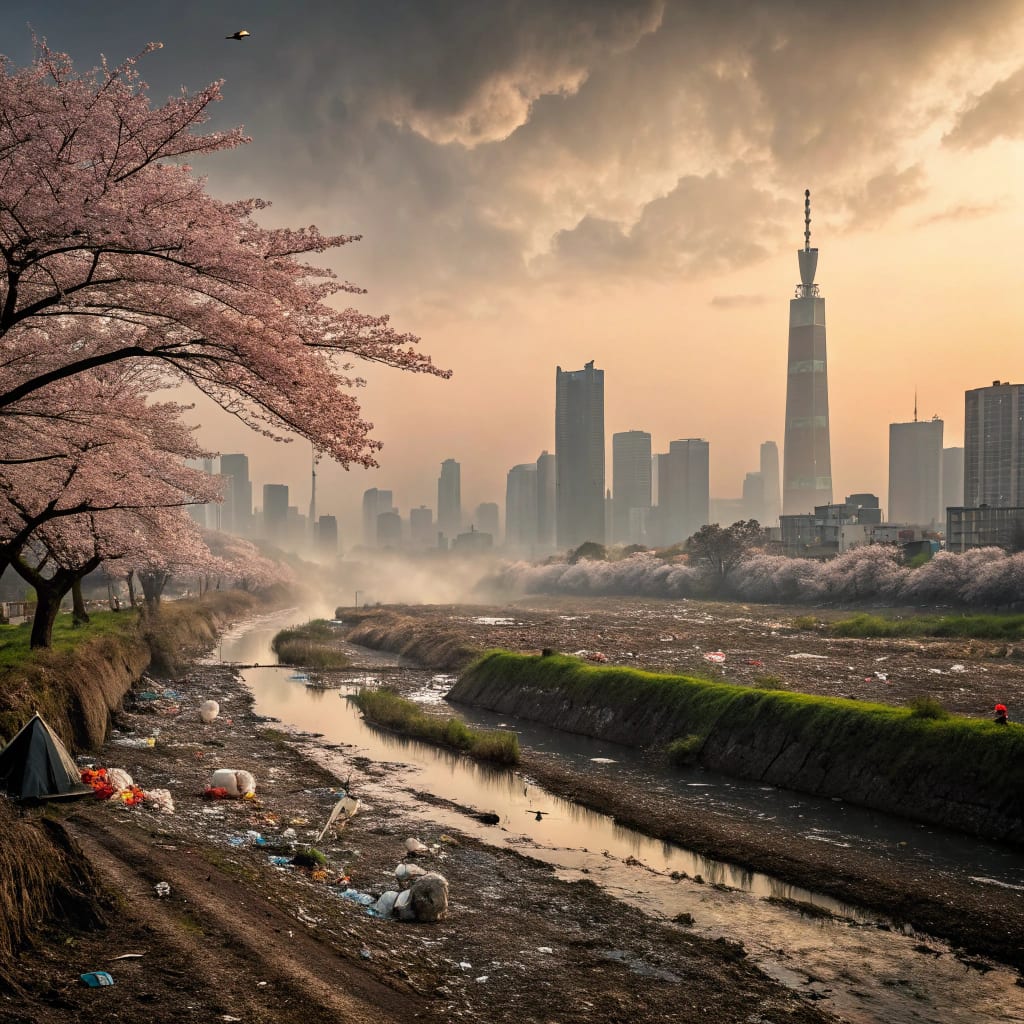
Japan, renowned for its blend of tradition and innovation, faces a less visible but pressing challenge: pollution. Despite its reputation for cleanliness and advanced technology, the nation grapples with air, water, and soil contamination that threatens its ecosystems and public health. From urban smog to marine plastic pollution, Japan’s environmental issues demand urgent action. Let’s delve into the causes, profound impacts, and forward-thinking solutions shaping Japan’s path to a cleaner future.
The Roots of Pollution in Japan
Japan’s pollution challenges stem from its industrial legacy and modern consumption patterns. Air pollution, though less severe than in some Asian neighbors, remains a concern in urban hubs like Tokyo and Osaka. The Ministry of the Environment reports that PM2.5 levels in major cities often exceed WHO’s 10 µg/m³ guideline, with vehicle emissions and transboundary pollutants from China contributing significantly. Diesel vehicles and industrial activities release nitrogen oxides (NOx), while seasonal yellow dust from the Gobi Desert worsens air quality.
Water pollution is a growing issue, particularly in coastal areas. Japan generates 1.8 million tons of plastic waste annually, with 30,000 tons entering the oceans, per a 2020 study by the Nippon Foundation. Industrial runoff and agricultural fertilizers contaminate rivers like the Tone, with 20% of monitored water bodies failing quality standards. Soil pollution, linked to historical industrial practices, affects 7,000 hectares of farmland, with heavy metals like cadmium posing risks to rice production, a cultural staple.
The Far-Reaching Impacts
Pollution’s toll on Japan is multifaceted. Air pollution contributes to 40,000 premature deaths annually, according to a 2019 Health Effects Institute study, with respiratory illnesses like asthma rising in urban areas. Children are particularly vulnerable, with 15% of Tokyo’s youth showing asthma symptoms tied to poor air quality. Water pollution fuels algal blooms, decimating fish stocks in the Seto Inland Sea, which supports 40% of Japan’s fisheries. Marine plastic pollution threatens biodiversity, with 80% of sea turtles in Japanese waters found with ingested plastics.
Economically, pollution costs Japan 1.5% of GDP yearly, driven by healthcare expenses and reduced agricultural yields. Soil contamination, notably from the 2011 Fukushima disaster, continues to limit farmland use, with cleanup costs exceeding $250 billion. Transboundary pollution strains diplomatic ties, as Japan negotiates with neighbors to curb cross-border smog. Climate change amplifies these issues, with rising sea temperatures disrupting marine ecosystems and extreme weather intensifying urban runoff.
Innovative Solutions and Progress
Japan’s response to pollution is rooted in technology and policy. The government’s 2050 Net-Zero plan has slashed coal use by 20% since 2015, boosting renewables like solar, which now accounts for 10% of energy production. Tokyo’s stringent vehicle emission standards, including a push for 50% electric vehicle sales by 2030, have reduced urban NOx levels by 30% since 2000. Air quality monitoring systems, among the world’s most advanced, provide real-time data to citizens.
Water pollution efforts include the 2018 Plastic Smart Campaign, which cut single-use plastic consumption by 25% in major retailers. Advanced wastewater treatment plants, covering 90% of urban sewage, have restored rivers like the Tama. Soil remediation programs, using phytoremediation techniques, have reclaimed 60% of contaminated sites since 2005. Public-private partnerships, like Toyota’s hydrogen fuel initiatives, showcase Japan’s commitment to sustainability.
A Call to Action
Japan’s pollution battle requires collective resolve. Strengthening regional cooperation to address transboundary pollution, expanding recycling infrastructure, and enforcing stricter industrial regulations are critical. Public awareness, fueled by campaigns like “Mottainai” (reduce, reuse, recycle), empowers citizens to act. Innovations like biodegradable plastics and AI-driven waste sorting hold promise. Japan’s history of resilience, from post-war recovery to Fukushima’s cleanup, proves its capacity for change. By blending tradition with cutting-edge solutions, Japan can reclaim its air, water, and soil, ensuring a harmonious future for its people and planet. The time to act is now—Japan’s legacy depends on it.
About the Creator
Arjun. S. Gaikwad
Truth Writing unveils reality beyond illusion, power, and propaganda words that awaken conscience and challenge comfort. Fearless, honest, and thought-provoking, it explores politics, humanity, and spirit to inspire awareness and change.
Keep reading
More stories from Arjun. S. Gaikwad and writers in Earth and other communities.
China’s Pollution Crisis: Confronting a Global Challenge with Bold Action
China, the world’s largest emitter of greenhouse gases, grapples with a pollution crisis that reverberates globally. Decades of rapid industrialization have propelled economic growth but left a legacy of environmental degradation, threatening public health, ecosystems, and the planet’s climate. From smog-choked cities to polluted rivers, China’s environmental challenges are immense, yet its ambitious policies signal hope. Let’s explore the causes, devastating impacts, and transformative solutions shaping China’s fight against pollution.
By Arjun. S. Gaikwad6 months ago in Earth
Stock Market Today: Nasdaq Futures Rise; Oil Skids After Trump Dials Down Iran Tension
If you’ve been following the markets this week, you’ve probably noticed how sensitive traders are to geopolitical headlines. On Thursday, Nasdaq futures rose, while oil prices dropped after U.S. President Donald Trump made remarks that dialed down fears of immediate military escalation with Iran. It’s a classic example of how news can move multiple markets at once — tech stocks climbing while commodities react in the opposite direction. Nasdaq Futures Bounce Back Technology and growth-focused stocks led the recovery in futures trading. Nasdaq futures climbed, signaling that investors are regaining confidence after recent volatility. Many traders have been cautious, with some taking profits from high-flying tech names, but today’s rebound shows that market optimism is returning. Corporate earnings are a big factor here. Several tech giants, including semiconductor and software companies, have beaten analyst expectations in recent weeks. These results support longer-term growth narratives, giving investors confidence that the tech sector can continue to outperform even amid economic uncertainty. For anyone watching the markets, this is a reminder: futures are forward-looking indicators. When traders see signs of stabilization — like reduced geopolitical tension or strong earnings — markets often react positively before the official trading session even begins. Oil Prices Fall Amid Eased Tensions On the flip side, oil prices skidded. The energy market had been pricing in potential supply disruptions due to the tension with Iran, particularly in critical regions like the Strait of Hormuz. But after Trump’s comments, traders interpreted a lower risk of military conflict, and crude futures dropped sharply. West Texas Intermediate (WTI) and Brent crude both saw declines of around 4–5%, as investors adjusted their positions. This shows how geopolitical risk premiums can inflate commodity prices — and how quickly they can disappear once the perceived threat diminishes. Lower oil prices are a double-edged sword. On one hand, cheaper fuel eases costs for consumers and businesses. On the other, energy companies and oil-exporting nations may face pressure on revenue and profits if prices remain soft. Why Geopolitics Moves Markets The Middle East continues to be a major driver of global market sentiment. Even the possibility of conflict in oil-rich regions can make investors nervous, sending equities lower and commodities higher. Conversely, statements that calm these fears can produce quick rebounds in risk assets like stocks and a decline in commodities like oil. This week’s developments show just how reactive the markets have become. A single remark from a world leader — in this case, Trump — can shift risk perception and trigger immediate moves across multiple asset classes. Earnings and Economic Data Still Key While geopolitical headlines dominate daily moves, corporate earnings and economic data remain critical for long-term market trends. Financial giants like Morgan Stanley recently reported results that beat expectations, boosting their stock prices and reinforcing positive sentiment in the sector. Investors are paying close attention to these fundamentals. Earnings reports and macroeconomic indicators provide insight into underlying trends, helping traders separate short-term volatility from sustainable growth. What Investors Should Watch For stock investors: The rebound in Nasdaq futures suggests that growth and technology stocks are finding support, but volatility is still high. Active risk management and portfolio diversification remain essential. For energy markets: Today’s slump in oil prices highlights how commodities react to geopolitical sentiment. Traders should watch for developments in the Middle East, as any escalation could reverse the decline in prices almost immediately. For global markets overall: Investors must balance multiple narratives — geopolitical events, corporate earnings, economic data, and interest rate expectations. This interplay shapes risk appetite and influences how capital flows across sectors and regions. The Takeaway Today’s market action illustrates a broader theme: markets are highly sensitive to shifts in risk perception. When geopolitical tension eases, equities tend to rise, and risk-sensitive commodities like oil fall. But when threats reappear, sentiment can flip, reminding investors that global markets are dynamic and interconnected. This combination of Nasdaq gains and falling oil prices isn’t just about numbers — it’s about investor psychology, risk management, and the speed at which news travels in our global economy. The lesson is clear: staying informed and flexible is more important than ever for anyone participating in today’s markets.
By Muhammad Hassan2 days ago in Earth
Cement's Quiet Pivot
Why this is under-the-radar progress Cement and concrete account for a sizable slice of global CO₂, but the fastest cuts right now aren’t headline-grabbing moonshots — they’re practical shifts already filtering through specifications, standards, and procurement. Three forces are converging: (1) modern cement standards that enable big clinker reductions with reliable performance; (2) rapid market adoption of Portland-limestone cement (PLC) and new ternary blends such as limestone–calcined clay cements (LC3); and (3) public buyers setting embodied-carbon requirements that move the market. Together, these are driving real-world emission declines from the most-used construction material on earth — often without changing how structures are designed or built [8].
By Futoshi Tachino5 days ago in Earth


Comments
There are no comments for this story
Be the first to respond and start the conversation.