
China’s Pollution Crisis: Confronting a Global Challenge with Bold Action
Unraveling the Causes, Impacts, and Innovative Solutions to China’s Environmental Battle


China, the world’s largest emitter of greenhouse gases, grapples with a pollution crisis that reverberates globally. Decades of rapid industrialization have propelled economic growth but left a legacy of environmental degradation, threatening public health, ecosystems, and the planet’s climate. From smog-choked cities to polluted rivers, China’s environmental challenges are immense, yet its ambitious policies signal hope. Let’s explore the causes, devastating impacts, and transformative solutions shaping China’s fight against pollution.
The Root Causes of Pollution
China’s pollution stems from its industrial dominance and energy demands. The country burns more coal than the United States, Europe, and Japan combined, contributing to severe air pollution. According to the 2021 World Air Quality Report, 143 Chinese cities recorded PM2.5 levels seven times above WHO guidelines, with Hotan in Xinjiang reaching 101 µg/m³. Coal-powered industries, responsible for 48% of China’s CO2 emissions, and vehicle exhausts in urban centers like Beijing, which account for 45% of local air pollution, are major culprits.
Water pollution is equally critical. The Ministry of Ecology and Environment reports that 19% of China’s main rivers, spanning 95,000 kilometers, are polluted, with over 20 waterways unfit for agricultural use. Industrial effluents, untreated sewage, and agricultural runoff contaminate rivers like the Yangtze, once responsible for significant marine plastic pollution. Plastic waste, with China producing 5.3 million tons of single-use plastics in 2019, exacerbates environmental strain. Soil pollution, driven by heavy metals like mercury and lead, affects agricultural productivity and public health.
The Human and Environmental Toll
The health impacts are staggering. A 2019 study by the Health Effects Institute linked PM2.5 exposure to 1.42 million premature deaths in China, with household air pollution adding 363,000 more. Respiratory diseases, heart conditions, and cancers are rampant, with air pollution shortening life expectancy by 2.5 years compared to WHO guidelines. Waterborne diseases from contaminated water cause over 100,000 deaths annually, while mercury emissions from coal plants, accounting for 28% of global totals, pose neurological risks, especially to children.
Environmentally, pollution devastates ecosystems. Acid rain affects 30% of China’s land, and 90% of urban water bodies are severely polluted. The economic cost is steep, with air pollution alone causing losses up to 6.6% of GDP, according to a 2018 Greenpeace report. Globally, China’s emissions contribute to transboundary pollution, with sulfur dioxide and nitrogen oxides affecting air quality in South Korea, Japan, and even the western United States.
Innovative Solutions and Progress
China’s response is robust but complex. Since declaring a “war on pollution” in 2014, PM2.5 levels dropped 42% by 2021, extending life expectancy by 2.2 years, per the University of Chicago’s Air Quality Life Index. Policies include stricter emission standards, a 75% reduction in sulfur dioxide from coal plants, and a shift to renewables, with solar and wind now powering industrial sectors. The 2018 National Sword policy curbed plastic waste imports, though it shifted burdens to other nations.
Water management has improved, with 80% of surface water reaching near-drinkable quality by 2024. Investments in sewage treatment and green financing, like the World Bank’s $1.3 billion program for energy efficiency, are pivotal. Electric vehicle adoption, with China leading globally, reduces urban emissions. However, challenges remain, as ozone levels rise and coal reliance persists, with new plants under construction despite a 2060 carbon neutrality pledge.
A Path Forward
China’s pollution crisis demands sustained action. Enforcing stricter regulations, expanding renewable energy, and enhancing waste management are critical. Public awareness, sparked by initiatives like the 2015 documentary Under the Dome, drives accountability. International collaboration, through agreements like the Paris Accord, is vital. China’s progress shows potential, but balancing economic growth with environmental health remains the challenge. By scaling clean technologies and fostering global cooperation, China can lead the world toward a sustainable future. The stakes are high—clean air, water, and soil are non-negotiable for China and the planet.
About the Creator
Arjun. S. Gaikwad
Truth Writing unveils reality beyond illusion, power, and propaganda words that awaken conscience and challenge comfort. Fearless, honest, and thought-provoking, it explores politics, humanity, and spirit to inspire awareness and change.
Keep reading
More stories from Arjun. S. Gaikwad and writers in Earth and other communities.
The Silent Crisis: Tackling Pollution in India with Urgency and Innovation
India, a land of vibrant culture and rapid growth, faces a formidable adversary: pollution. This escalating crisis threatens public health, ecosystems, and sustainable development. From choking urban smog to contaminated rivers, pollution in India demands immediate attention and innovative solutions. Let’s explore its causes, far-reaching impacts, and actionable steps to forge a cleaner, healthier future.
By Arjun. S. Gaikwad6 months ago in Earth
The Reality of the Illusion of Time
Recently, as I strolled along the short stretch to my strength training session, I aimlessly took in the row of tatty shops and shabby buildings along the route and passed an off-street, in which one of my sisters used to live, around thirteen years ago.
By Chantal Christie Weissabout 19 hours ago in Earth
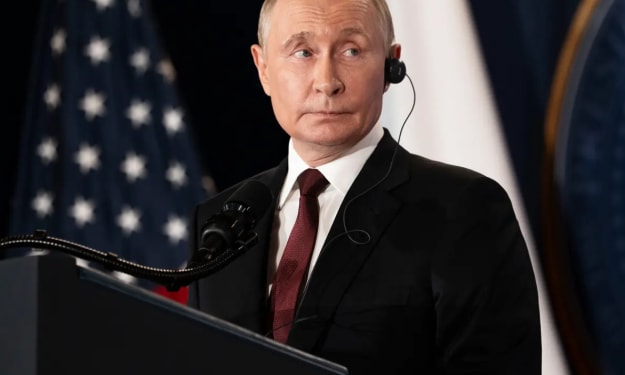
Why Putin Went Quiet When Challenged by Trump Over Venezuela
When U.S. forces captured Venezuelan President Nicolás Maduro in early January 2026, the world was stunned. Venezuela has long been a Russian ally, yet Russian President Vladimir Putin remained almost completely silent when challenged directly by U.S. President Donald Trump. Why would a leader so often outspoken on the world stage hold back in such a dramatic moment? Let’s unpack the story and explore what it means for global politics. A Bold Move That Shocked the World On January 3, U.S. forces executed a daring operation in Venezuela, taking Maduro into custody in New York to face charges including drug trafficking and narco‑terrorism. The operation was framed by the U.S. as a step to enforce justice, but critics saw it as an extraordinary overreach of power. Venezuela is no ordinary country for Russia. Since the days of Hugo Chávez, Moscow has cultivated close ties with Caracas, offering military support, energy deals, and diplomatic backing on the global stage. Past actions included Russian bombers visiting Venezuela and high-profile defense agreements. Given this history, many expected a fiery response from Putin. Yet, the Kremlin remained calm, issuing measured statements rather than sharp threats. Why Silence Was Strategic Experts suggest there are several reasons for Putin’s muted reaction, each revealing the careful calculation behind the Kremlin’s foreign policy. 1. Focus on the War in Ukraine Russia’s primary priority remains Ukraine. Engaged in a high-stakes military and diplomatic battle, Putin cannot afford distractions or new confrontations far from home. Escalating tensions with the United States over Venezuela could jeopardize Moscow’s position in Europe. A New York Times report highlighted that Russia is “subordinating all other interests to the war in Ukraine,” suggesting that even a high-profile ally like Venezuela takes a back seat to Moscow’s strategic goals. 2. Limited Military Options While Russia’s alliance with Venezuela is longstanding, much of the support has been symbolic rather than operational. Defense systems and military cooperation exist on paper, but Russia lacks the immediate ability to counter a U.S. operation thousands of miles away. Putin may have recognized that responding aggressively would be both ineffective and costly, potentially risking military and economic consequences that Moscow cannot afford. 3. Maintaining Diplomatic Channels with Washington With Donald Trump back in the White House since 2025, there has been cautious optimism in Moscow about recalibrating U.S.–Russia relations. Avoiding a dramatic confrontation over Venezuela keeps diplomatic channels open, allowing Russia to negotiate on other high-priority issues like Ukraine and sanctions relief. In other words, silence can be a calculated strategy, signaling restraint rather than weakness. 4. Russia’s Global Influence Is Waning The Maduro episode also highlights a broader geopolitical reality: Russia’s global reach has limits. Since the 2022 invasion of Ukraine, Moscow’s influence in regions like the Middle East and parts of the former Soviet Union has weakened. Venezuela remains one of its few high-profile allies outside Europe, but even there, Russia’s power is largely symbolic. By not escalating, Putin is acknowledging a practical truth: Russia cannot be everywhere at once, and some battles are not worth fighting. 5. Choosing Battles Wisely Some analysts emphasize that Putin’s quiet response is more about strategic prioritization than capitulation. In a world dominated by nuclear powers and volatile global politics, direct confrontation with the United States over Venezuela could spiral into a far larger crisis. By staying silent, the Kremlin may be signaling that it picks its battles carefully, focusing resources on Ukraine, where the stakes are highest. What This Means for the World Putin’s silence sends several messages: Russia is currently stretched, economically and militarily. Moscow is prioritizing Ukraine over symbolic allies. Strategic restraint is sometimes more powerful than public confrontation. The limits of Russian influence are becoming more visible to the world. This episode reflects a new reality in geopolitics: power is as much about choosing when not to act as when to assert force. The Bigger Picture The capture of Maduro is a defining moment not just for Venezuela, but for global politics. It shows the United States asserting power in a way not seen for decades, while Russia’s quiet reaction underscores its current limits and priorities. For observers, Putin’s silence is a lesson in modern geopolitics: even the most assertive leaders exercise restraint when stakes are high and risks are global. In the end, the Maduro affair reminds us that in today’s world, the loudest response is not always the most effective one — sometimes, quiet calculation speaks volumes. Sources and Further Reading The US capture of Maduro reveals Russia’s weakness – Atlantic Council ‘It sends a horrible signal’: US politicians react to capture of Nicolás Maduro – The Guardian Russia slams 'neocolonial threats' against Venezuela – Reuters
By Muhammad Hassan4 days ago in Earth



Comments
There are no comments for this story
Be the first to respond and start the conversation.