
Is Time Travel Possible?
Exploring the Possibilities and Limitations
Introduction
Time travel has captivated the human imagination for centuries, inspiring countless works of fiction and sparking intriguing debates among scientists and philosophers. While the concept of traveling through time seems like something straight out of a science fiction novel, it begs the question: is time travel possible in reality? In this blog, we will delve into the fascinating realm of time travel, examining the current scientific theories, potential methods, and the inherent limitations that might stand in the way.
Understanding Time and Its Dimensions
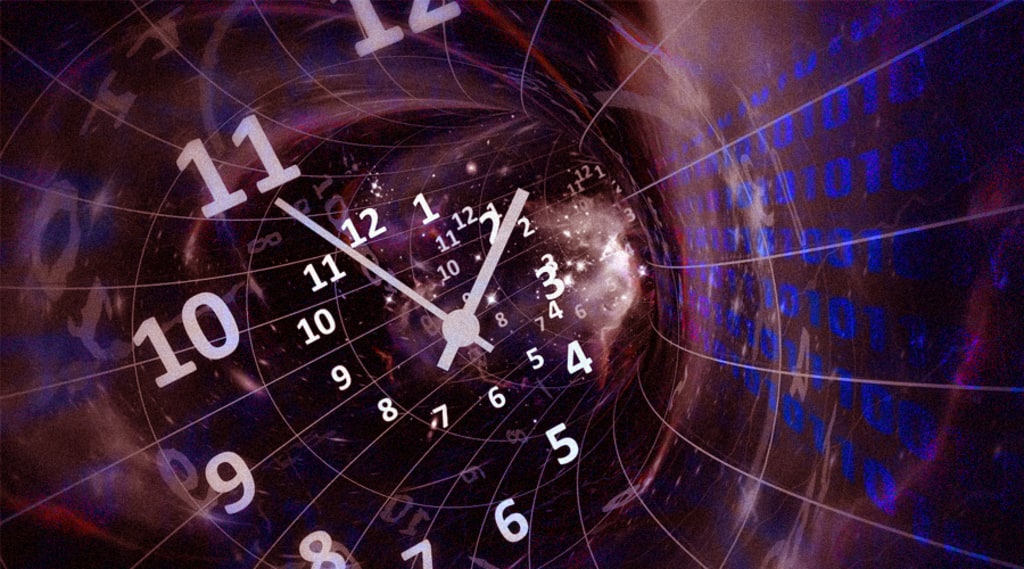
To discuss time travel, we must first understand the nature of time itself. According to the theory of relativity put forth by Albert Einstein, time is not an absolute concept but rather a dimension intertwined with space. This theory suggests that time is malleable, and its flow can be affected by gravity and velocity.
Time Dilation and the Twin Paradox
One of the key concepts in time travel is time dilation. Time dilation occurs when the passage of time varies between two observers due to differences in gravitational fields or relative velocities. This phenomenon has been experimentally confirmed through high-precision atomic clocks on satellites.
An interesting thought experiment related to time dilation is the Twin Paradox. Imagine one twin embarks on a journey through space at near light-speed while the other remains on Earth. Upon the space traveler's return, they would find that less time has passed for them compared to their twin on Earth. This paradox highlights the potential for time travel to the future.
Time Travel to the Future
Based on the principles of time dilation, traveling to the future is theoretically possible. By traveling close to the speed of light or experiencing extremely strong gravitational fields, time would pass at a different rate for the traveler compared to someone remaining stationary. This would allow the traveler to "jump" forward in time relative to those on Earth.
However, significant technological and engineering challenges currently make this form of time travel impractical for human beings. Achieving speeds close to the speed of light would require enormous amounts of energy, and the effects of acceleration and deceleration on the human body would be extremely hazardous.
Time Travel to the Past
Traveling to the past presents even greater challenges and is subject to numerous scientific and philosophical debates. One popular concept is the notion of wormholes, hypothetical tunnels that connect different points in space-time. If traversable wormholes exist, they could potentially allow for travel between different time periods.
While wormholes are theoretically possible within the framework of general relativity, their existence and stability remain uncertain. The creation or manipulation of a traversable wormhole would require the existence of exotic matter with negative energy density, which is yet to be observed or understood.
Additionally, the possibility of paradoxes arises when discussing time travel to the past. The most famous example is the grandfather paradox: if you travel back in time and kill your own grandfather before your parent is conceived, how could you exist in the first place to travel back in time? These paradoxes suggest that the laws of causality could prevent travel to the past or introduce complex and perhaps unpredictable consequences.
Conclusion
Time travel remains an intriguing and captivating concept that continues to fascinate scientists, philosophers, and enthusiasts alike. While theoretical possibilities exist for traveling to the future through time dilation, practical limitations and the nature of causality present substantial challenges for traveling to the past.
As our understanding of physics advances and new discoveries are made, the door to time travel may one day open. However, until then, we can enjoy the wonders of time travel through the imaginative realms of literature and cinema, where the boundaries of possibility are only limited by our imagination
About the Creator
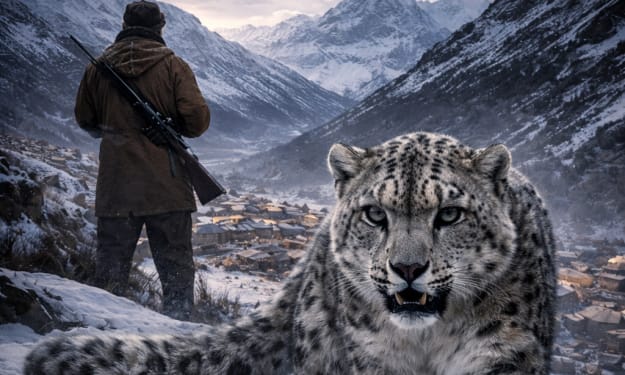
Human Revenge: A Hidden Cause Behind the Decline of Snow Leopards
High in the rugged mountains of Central and South Asia lives one of the world’s most mysterious and beautiful big cats—the snow leopard. Known for its thick grey-white fur, long tail, and incredible ability to blend into rocky landscapes, this elusive predator has fascinated scientists and wildlife lovers for decades. Yet despite its beauty and ecological importance, the snow leopard faces a growing threat: human revenge.
By Irshad Abbasi 7 days ago in Earth


Comments
There are no comments for this story
Be the first to respond and start the conversation.