
Inside Antarctica’s Secret Whale War
A Silent Battle in the Frozen South That Threatens Our Oceans, Climate, and Future
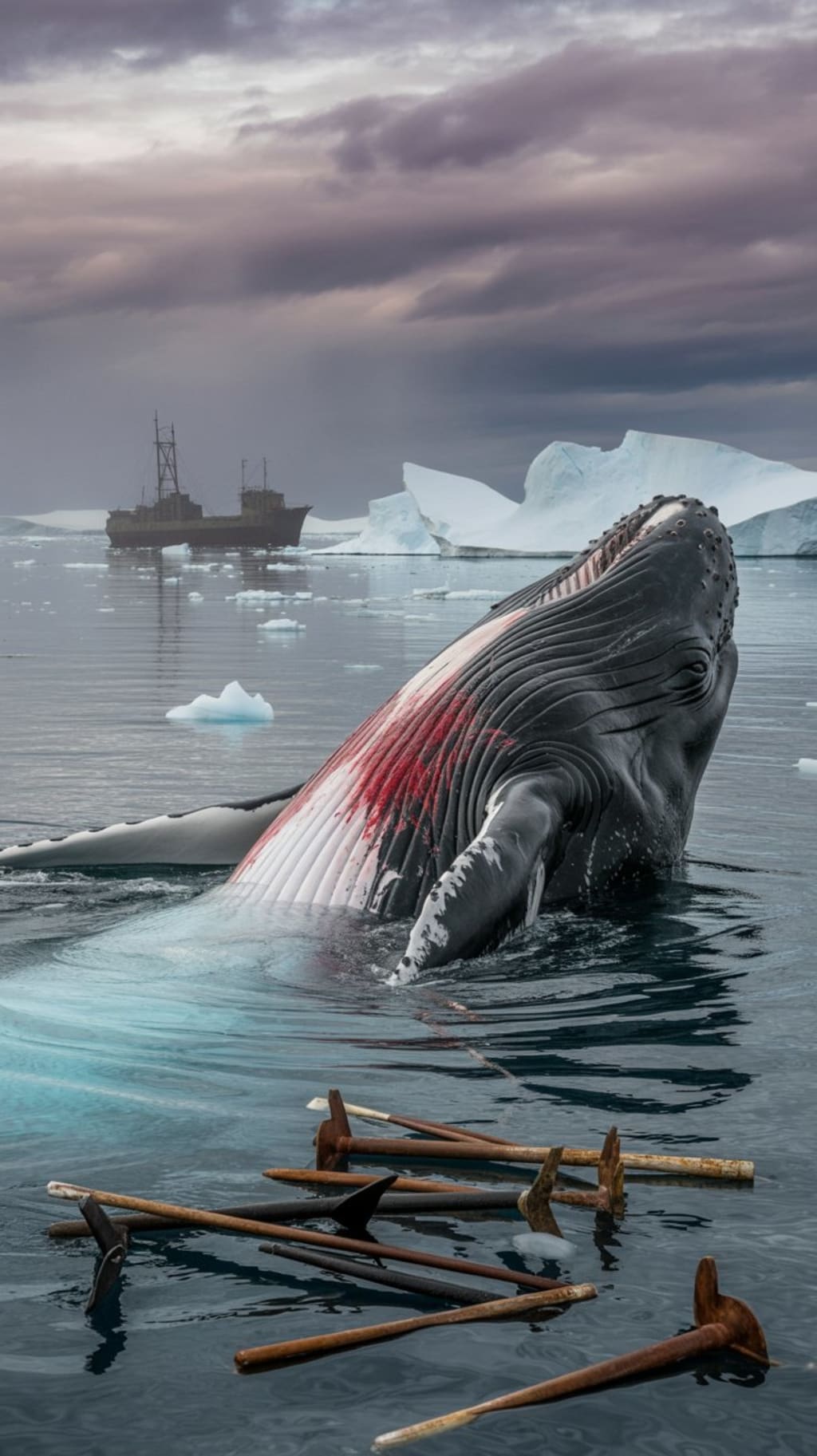
Far below the equator, in the frozen waters of Antarctica, something tragic is happening—something most of the world never sees. In a place where the ocean is as blue as the sky and icebergs float like ancient giants, whales are being hunted and killed. It’s a brutal war that few people talk about, and yet it affects every single one of us.
This isn’t just about animals. This is about the health of our planet, the balance of our oceans, and even the weather systems that millions depend on. Scientists have been sounding the alarm for years, but the killing continues. While the world scrolls through their phones, a quiet, deadly war is tearing through Antarctica’s “blue heart.”
🎯 Why Are Whales Still Being Hunted?
Many people believe whaling was stopped years ago. And it’s true—commercial whaling was banned by the International Whaling Commission (IWC) in 1986. But the reality is much more complicated.
Some countries continue whaling by using legal loopholes. They claim it's for “scientific research,” or they simply refuse to follow the international ban. Japan, for example, withdrew from the IWC in 2019 and openly resumed commercial whaling. Other nations quietly support or turn a blind eye to whaling activities in the Southern Ocean.
Large factory ships travel to the icy waters of Antarctica each year, targeting whales with deadly harpoons. These ships kill, butcher, and process the whales on board. It’s a cold, efficient industry that operates far from public view.
🌊 Whales Keep the Ocean—and Us—Alive
Why does this matter so much? Because whales play a vital role in the health of the oceans.
Every time a whale dives deep and then surfaces, it stirs nutrients in the water. These nutrients feed tiny ocean plants called phytoplankton, which are responsible for producing over 50% of the Earth’s oxygen. That means the air we breathe depends on the health of the oceans—and the oceans depend on whales.
Phytoplankton also help absorb carbon dioxide, one of the main gases causing climate change. In a way, whales are climate warriors, helping fight global warming just by living their lives.
Some scientists even believe that whale populations affect major weather systems, such as the Indian monsoon. When whale numbers drop, the chain reaction can affect rainfall, agriculture, and food supplies for millions of people.
⚓ Who Protects the Whales?
You might assume that navies or coast guards protect whales from illegal hunters. But in Antarctica, there’s often no official presence. The Southern Ocean is remote, and there are few laws and even fewer people to enforce them.
That’s where activists come in. Groups like Sea Shepherd have sent brave volunteers into dangerous waters to confront whalers directly. Armed with only small boats and cameras, they put their bodies between the harpoons and the whales.
These activists are not backed by governments. They are ordinary people—divers, scientists, environmentalists—risking their lives to save whales and show the world what’s really happening.
🕵️♂️ A Global Cover-Up?
Why don’t we hear more about this? The truth is often hidden. Whaling brings in money, and governments don’t want to upset powerful industries or international trade deals.
Corporate media often ignores these stories, focusing instead on safer or more popular news. As a result, most people don’t even know that whaling still exists—let alone that it continues in one of the most protected areas of the world.
This silence is dangerous. It creates what experts call a “blind spot”—an issue we ignore until it’s too late.
💔 The Cost of Doing Nothing
If whales disappear, the damage won’t stop at the ocean. It will ripple through climate systems, marine food chains, and even human health. The fight to save them is about much more than animal rights—it’s about planetary survival.
Every whale that dies is one less filter for our atmosphere, one less guardian of the oceans.
🌍 What You Can Do
Share information. Talk about this issue with friends and online.
Support conservation groups that protect whales and marine life.
Call on leaders to end whaling and protect Antarctic waters.
Consume responsibly. Avoid seafood or products tied to overfishing or illegal practices.
Whales are not just beautiful creatures—they’re a key part of Earth’s life-support system. And right now, they need us more than ever. The silent war in Antarctica won’t stop unless more people hear about it and take action.
Let’s not be the generation that scrolled by while the ocean’s giants disappeared
About the Creator
Keep reading
More stories from CodeCraft By Rashid and writers in Earth and other communities.
Ordinary Thief vs Political Thief: The Real Cost of Corruption
The word “thief” usually brings to mind someone who steals wallets, breaks into homes, or snatches phones on the street. But there’s another kind of thief that operates on a much larger scale, often in plain sight — the political thief. While both are involved in theft, the consequences of their actions are vastly different. In this article, we’ll explore the differences between an ordinary thief and a political thief — and why the latter often causes far more damage to society.
By CodeCraft By Rashid10 months ago in The Swamp


Comments (1)
w