
India’s Health Care Revolution: Pioneering a Healthier Future for All
Navigating Challenges, Embracing Innovations, and Building a Robust Health Care System

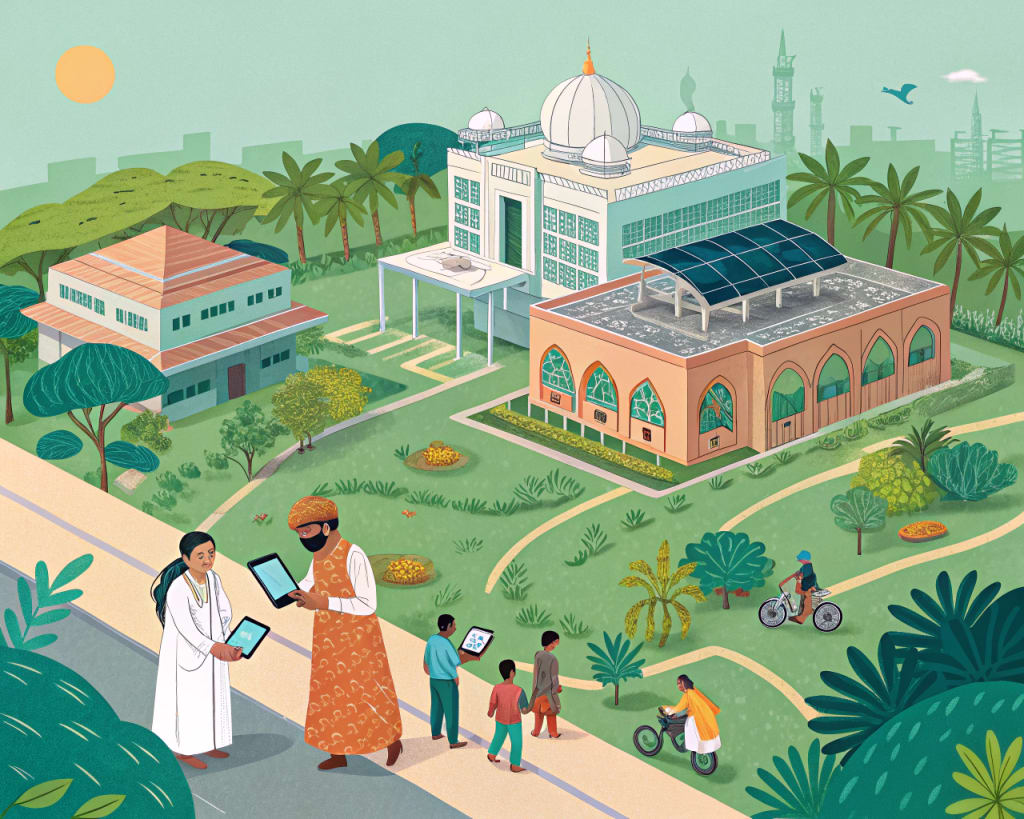
India’s health care system, serving 1.4 billion people, is a dynamic tapestry of progress and challenges. With a rapidly evolving landscape, India is leveraging innovation, policy reforms, and global expertise to transform health care delivery. From digital health revolutions to tackling disparities, the nation is on a path to equitable, accessible care. Let’s explore the challenges, impacts, and visionary solutions shaping India’s health care future.
Challenges in India’s Health Care System
India’s health care faces significant hurdles. With only 0.7 doctors and 0.5 hospital beds per 1,000 people—far below WHO’s 2.5 and 3.0 benchmarks—rural areas, where 60% of facilities are concentrated in cities, suffer acute shortages. Non-communicable diseases (NCDs) like diabetes and heart disease account for 60% of deaths, straining resources. Out-of-pocket expenses, covering 60% of health costs, push 55 million into poverty annually. Only 37.2% of the population has health insurance, with public spending at a mere 1.5% of GDP, compared to WHO’s recommended 5%.
Infrastructure gaps, especially in rural areas, and a shortage of 10 million health workers by 2030 exacerbate disparities. The digital divide and privacy concerns hinder tech adoption, with 26 studies citing barriers like high costs and lack of digital literacy. The fragmented system, with 75% of care from an unregulated private sector, leads to inconsistent quality and accountability.
Impacts on Society and Economy
The consequences are stark. NCDs cause 5.8 million deaths yearly, with rural populations facing higher mortality due to limited access. Maternal mortality remains 70 times higher in low-income areas, and 50% of rural residents lack nearby health facilities. Economic losses from health issues cost 6% of GDP, driven by high treatment costs and lost productivity. Poor quality care in underfunded public facilities erodes trust, pushing patients to costly private options.
Yet, India’s health care strides are notable. Life expectancy has risen from 30 years at independence to 71 years, reflecting progress. The nation’s 60% share of global vaccine production and $7.69 billion medical tourism market in 2024 highlight its global influence. However, inequities persist, with urban “islands of excellence” like Narayana Hospitals contrasting rural “oceans of inadequacy.”
Innovative Solutions and Progress
India is embracing transformative solutions. The Ayushman Bharat scheme, covering 55 crore people with ₹5 lakh per family for hospitalization, is the world’s largest health insurance program. The Ayushman Bharat Digital Mission (ABDM) integrates health records for 500 million users, while eSanjeevani telemedicine facilitates millions of consultations, bridging rural gaps. CoWIN managed 2 billion vaccine doses, setting a global benchmark.
Healthtech, valued at $7 billion in 2023, is booming with 10,000 startups. Telemedicine, e-pharmacies, and AI diagnostics, like Niramai’s breast cancer screening, enhance access. Initiatives like MedTech Mitra and IIT Bombay’s $900,000 investment in affordable devices aim to reduce import reliance. The National Health Mission strengthens primary care, with ASHA workers serving millions. Policy reforms, like 100% FDI in health projects, and a $50 billion medical device market by 2031, signal growth.
A Call to Action
India’s health care future hinges on bold action. Increasing public health spending to 5% of GDP, as WHO suggests, can bolster infrastructure. Training programs for 2.5 doctors per 1,000 by 2034, alongside digital literacy for health workers, are critical. Scaling value-based care, as advocated by experts, prioritizes outcomes over volume. Public-private partnerships, like Apollo’s telemedicine platforms, and global collaborations via the Digital Healthcare Transformation Initiative, can drive equity.
Citizens must embrace preventive care—tackling NCD risk factors like tobacco and poor diet—to reduce disease burdens. India’s potential to lead in digital health, with scalable models like ABDM, positions it as a global pathfinder. By investing in innovation, workforce, and equitable access, India can ensure health care reaches every doorstep, building a healthier, prosperous nation by 2047. The time to act is now.
About the Creator
Arjun. S. Gaikwad
Truth Writing unveils reality beyond illusion, power, and propaganda words that awaken conscience and challenge comfort. Fearless, honest, and thought-provoking, it explores politics, humanity, and spirit to inspire awareness and change.
Keep reading
More stories from Arjun. S. Gaikwad and writers in Earth and other communities.
Revolutionizing Health Care: A Blueprint for a Healthier Tomorrow
Health care stands at a pivotal moment, balancing unprecedented challenges with transformative opportunities. As populations grow, age, and face evolving health threats, the global health care system is under pressure to deliver equitable, efficient, and innovative care. From technological breakthroughs to systemic reforms, the path to a healthier future is within reach. Let’s examine the challenges, impacts, and visionary solutions shaping the health care landscape.
By Arjun. S. Gaikwad6 months ago in Earth
High-Speed Train Crash in Southern Spain Leaves at Least 21 Dead
A devastating high-speed train crash in southern Spain has left at least 21 people dead and dozens injured, shocking the nation and triggering a major emergency response. The incident, which occurred on a busy rail route connecting key southern cities, has reignited concerns over railway safety, infrastructure maintenance, and emergency preparedness in one of Europe’s most advanced rail networks.
By Aarif Lasharia day ago in Earth
Icy Chaos in Central and Eastern Europe
Winter has unleashed its fury across central and eastern Europe, leaving travelers frustrated and transport networks struggling to keep up. Over the past few days, freezing rain and ice have wreaked havoc on airports, train stations, and highways — forcing flight diversions, delaying trains, and making roads treacherously slippery. From Vienna to Budapest, Prague to Bratislava, this icy grip has brought travel to a near standstill. Let’s take a closer look at what’s happening, how it’s affecting people on the move, and what it tells us about winter travel in Europe. A Sudden Winter Blow A sudden wave of freezing rain swept across the region, coating runways, rail tracks, and roads with a dangerous layer of ice. Major airports in Austria, Hungary, Slovakia, and the Czech Republic were particularly affected. At Vienna International Airport, operations were temporarily suspended when runways became too slick for flights to land safely. Travelers already in the air had to divert to alternative airports in Munich, Frankfurt, and Venice. Meanwhile, Budapest’s Ferenc Liszt International Airport paused all arrivals and departures, and Prague’s Václav Havel Airport continued operating but at limited capacity. Trains Crawling Through Ice Rail networks weren’t spared. Across Austria, Hungary, and the Czech Republic, ice on tracks and power lines caused delays and cancellations. Austria’s national rail operator, ÖBB, urged passengers to postpone non-essential journeys. In the Czech Republic, travelers at Prague’s main station faced long waits as trains struggled to maintain schedules. Hungary’s tram and suburban rail services were temporarily suspended due to ice buildup on power lines. This combination of black ice, frozen switches, and heavy snowfall has tested the limits of winter infrastructure in Europe. Roads Turn Into Skating Rinks The icy weather didn’t just affect public transport — roads became treacherous, too. Authorities in Slovakia and the Czech Republic warned residents to avoid non-essential travel as highways turned into slippery skating rinks. Accidents and minor collisions were reported, and emergency services were busy responding to dozens of injuries from slips and falls. Even schools weren’t immune: parts of Romania shifted to online learning, keeping children safe during the extreme temperatures, which dropped to around -13°C in some areas. Why This Weather Is So Disruptive Meteorologists point to several factors that made this storm particularly severe: Freezing rain on top of existing snow creates an icy layer that’s extremely hard to clear. Rapidly refreezing surfaces make conditions unpredictable. Temperatures hovering around freezing prevent efficient melting during the day. This “perfect storm” scenario underscores just how vulnerable transport systems are to extreme weather. Even well-prepared airports and rail networks can struggle when weather transitions from snow to freezing rain. Voices From the Ground Passengers took to social media to express their frustration: Crowded airports as travelers scrambled to rebook flights. Train stations packed with delayed commuters, unsure when the next train would depart. Warming centers opened to provide shelter and hot drinks for stranded travelers. For many, a simple trip turned into a test of patience and resilience. Tips for Traveling in Freezing Conditions If you must travel during winter storms, experts recommend: Check flight and train schedules regularly, as delays can change quickly. Allow extra time for travel to avoid missing connections. Consider travel insurance that covers weather-related disruptions. If driving, carry winter essentials: blankets, food, water, and check road conditions before departure. Most importantly, prioritize safety over schedules — icy conditions can change rapidly, making travel risky. A Reminder From Winter This recent chaos in central and eastern Europe serves as a stark reminder of how interconnected transport systems are, and how vulnerable they can be to extreme weather. Flights grounded, trains stalled, and highways turned icy show that winter can bring travel to a halt — sometimes with very little warning. As Europe continues to face volatile winter conditions, travelers and authorities alike are reminded: preparation and flexibility are key. Sometimes, the weather truly has the final say. ❄️🛫🚆
By Muhammad Hassan5 days ago in Earth
Silver Screen Magic with Mae West
American actress and singer Mae West became a popular film actress during the Great Depression. She started entertaining in vaudeville, then performed on Broadway, and finally went to Hollywood. She signed up with Paramount Pictures and made her debut in the 1932 film “Night After Night.” She also starred in musicals, comedies, and crime dramas. The American Film Institute named her one of the best classic Hollywood actresses.
By Rasma Raisters6 days ago in Geeks


Comments
There are no comments for this story
Be the first to respond and start the conversation.