
Incredible Arctic Ocean Animals
Marine and land animals

In the Water

The sea angel is a pelagic sea slug that can be found on the surface of the water to a depth that is greater than 500 meters. These snails flap their delicate “wings” to get around in the water at a speed of up to 100 mm/s. Sea angels are tiny, and adults feed on their relatives, the sea butterflies. The sea angel then grasps the prey with its chitinous hooks and extracts the body of the sea butterfly out of its shell and swallows it whole.
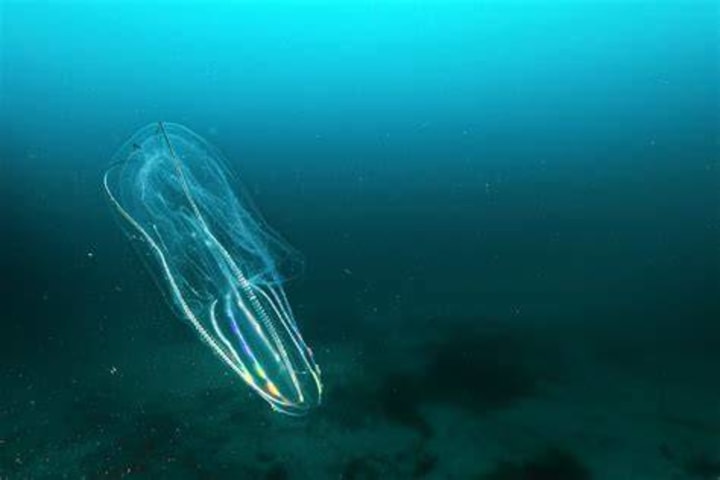
The Arctic comb jelly is an unusual ctenophore. It prefers the colder waters of the Arctic and nearby polar seas. These are found mostly in surface water and down to 50 meters. The translucent creatures come in all colors of the rainbow, caused by the light reflection off the eight rows of moving cilia in the comb ridges on their bodies.
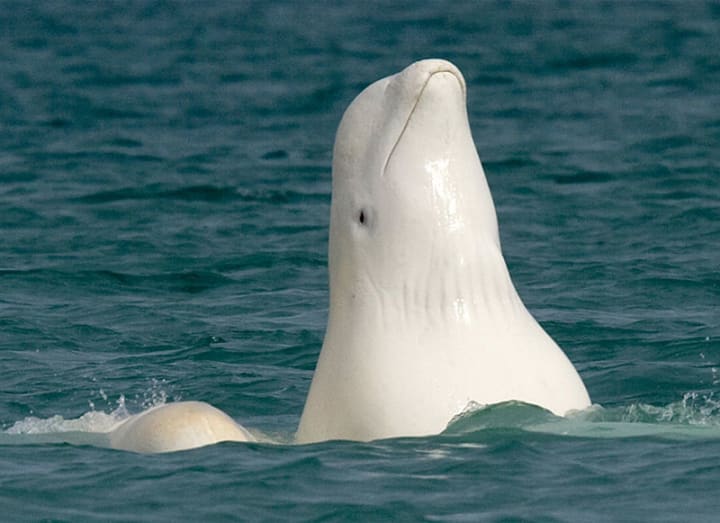
Beluga whales are adapted to the Arctic. They have a protuberance at the front of their head, which houses an organ (called a melon) involved in communication and echolocation. Many belugas migrate as the sea freezes over in the Arctic. They return to feed again in the spring, as the ice breaks up. They are seen near river mouths but may venture upriver. The animals feed on a variety of fish species, such as herring and salmon, as well as mollusks and crabs.

Brittle stars are seafloor-dwelling organisms that resemble a slender version of starfish. They play an important role in the Arctic food web, reshaping the seafloor sediment surface and influencing the distribution of other bottom-dwelling species. Moreover, they provide nutrition to fish and sea stars. Their five arms extend from a central disk, and each arm branches off into multiple smaller subdivisions.
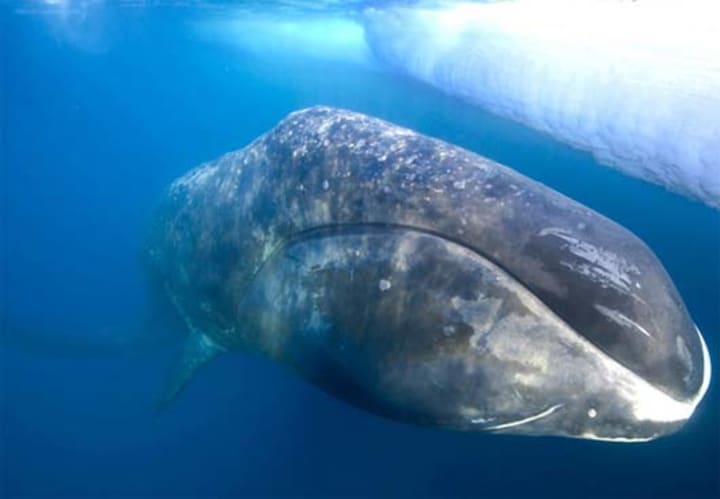
Bowhead whales are the only baleen whales endemic to the Arctic and subarctic region. They have massive, thick triangular skulls, which allow them to break through thick ice. They are known to accumulate scars on their bodies.

Kaleidoscope jellyfish are tiny creatures thriving in cold waters, growing to about 2 centimeters tall, with the stalk accounting for half their size. The remainder of their bodies are shaped like funnels with color varying from gray/green to red/brown. Kaleidoscope jellyfish have eight arms radiating from the central mouth, and each arm ends in clusters of up to 100 tentacles. These jellyfish have adhesive discs with which they can attach themselves to various species of seaweed. They live on brittle stars, snails, and crustaceans, and once these organisms have been consumed, the jellyfish expels the shells from its mouth.
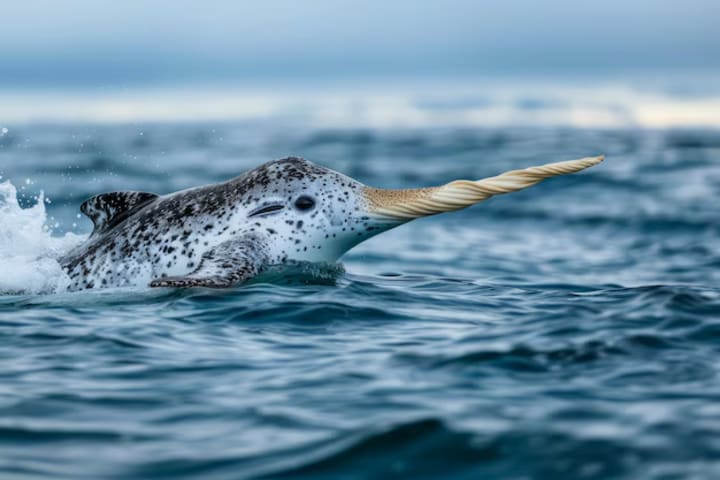
Narwhals are described as the unicorns of the sea. They are medium-sized toothed whales that travel in groups, feeding on fish, squid, shrimp, and other marine creatures. A narwhal's upper left canine tooth is the tusk.
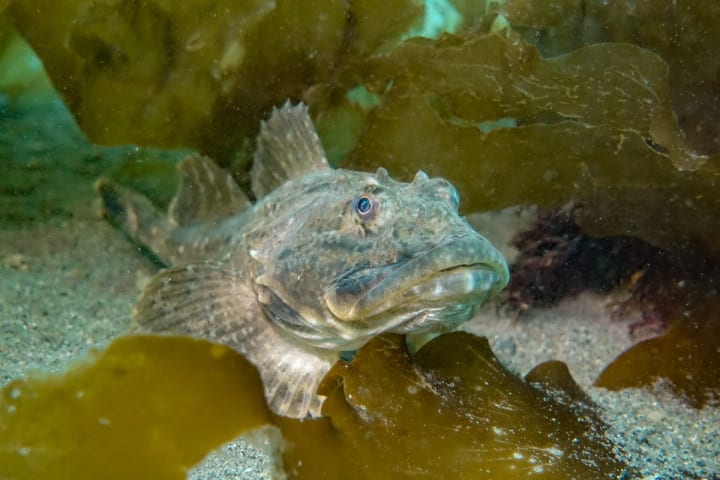
Shortthorn sculpin are a species of sculpin found among seaweed or on rocky bottoms at depths of up to 450 meters. They have a squat appearance with large spiny heads.

Skeleton shrimp are the strangest creatures with the basic characteristics of amphipods.
These shrimp are found not only in the Atlantic Ocean but also in the North Atlantic and North Pacific Oceans. They usually live near the coast and eat whatever they can get. Allegedly, they freeze and wait for prey (worms, crustacean larvae, and protists) to come along, which they then ambush.
On the Land
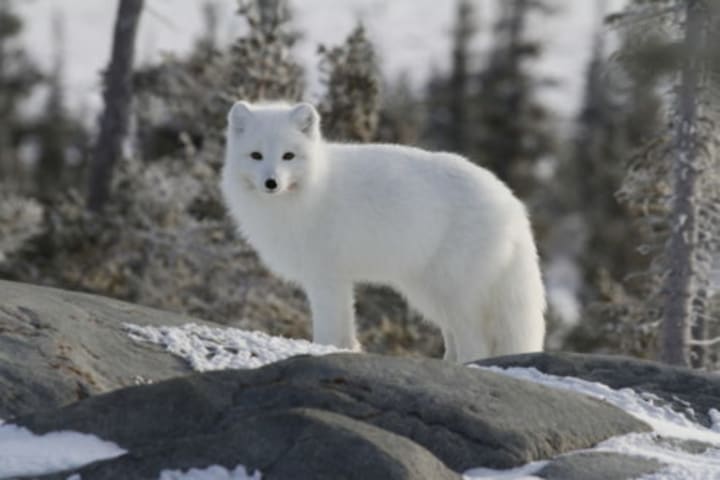
Arctic foxes are small, elegant animals that survive with cunning. In the winter their fur turns white, camouflaging them against the bright, white snow. In the summer, arctic foxes are shades of brown and gray. They have an exceptional thermal system: their tiny, fur-covered paws with which they tread on ice and a metabolism that adjusts with the seasons. These foxes have sharp hearing and can detect faint movements of lemmings tunneling under snow. They leap high and dive nose-first into snowdrifts, emerging with their prey.
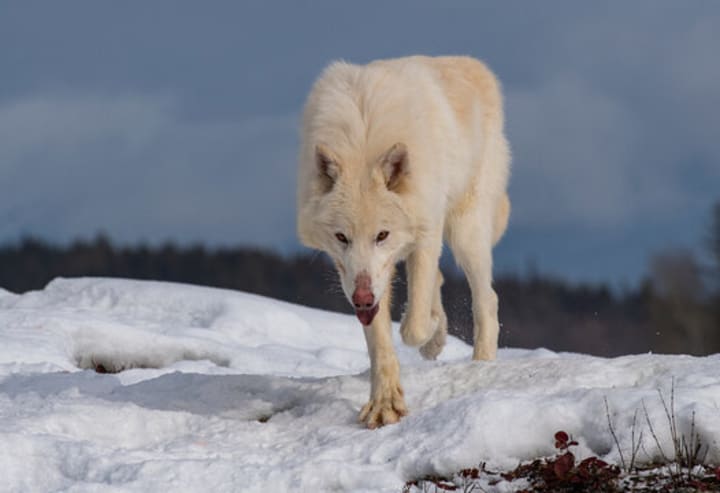
Arctic wolves have fur as pale as the snow. These wolves are the northernmost subspecies of gray wolves. They are able to endure year-round in the harshest climates on Earth. Arctic wolves live in tight-knit packs. Together, they hunt musk oxen, Arctic hares, and caribou.
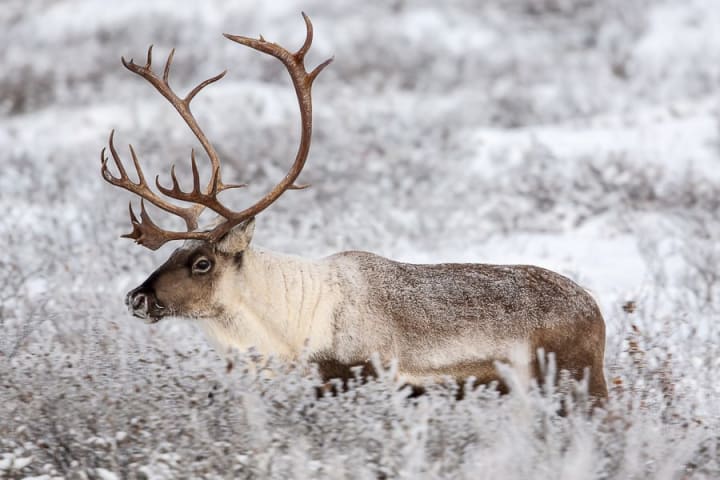
Caribou are amazing deer that undertake one of the longest migrations on Earth. They travel up to 3,000 miles each year across the Arctic tundra, moving with the seasons looking for fresh vegetation. Caribou are adaptable to their environment with wide, concave hooves that act like snowshoes. Through long winter nights herds cluster together for warmth.
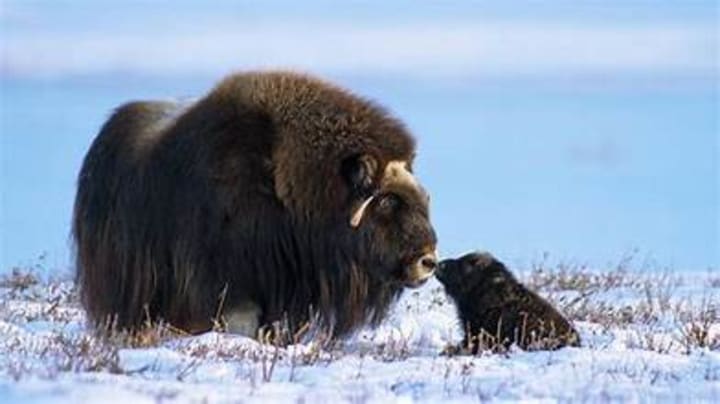
Musk oxen are huge, shaggy creatures. They have thick, two-layered coats for insulation. The outer layer, long and coarse, repels snow and wind, while the inner layer—called qiviut—is one of the warmest natural fibers on Earth, eight times warmer than wool. When danger threatens, musk oxen form a defensive circle around their young, horns outward, presenting a united wall of strength. They graze on tundra grasses, lichens, and moss and use their hooves to dig through snow for buried vegetation.
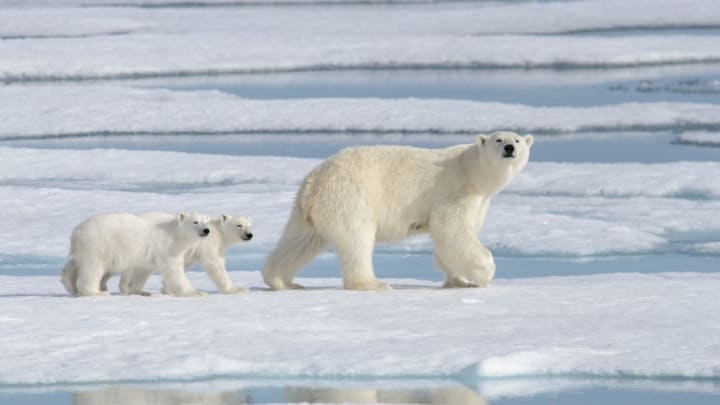
Polar bears are giants at over 10 feet tall standing on hind legs and weigh in at up to 1,600 pounds. They are animals adapted to the ice world. Beneath their white fur is black skin that absorbs and retains warmth from the sun. These bears have thick layers of fat to insulate them. They are predators of the North, hunting mostly seals. They face the threat of ice melting earlier and forming later each year.
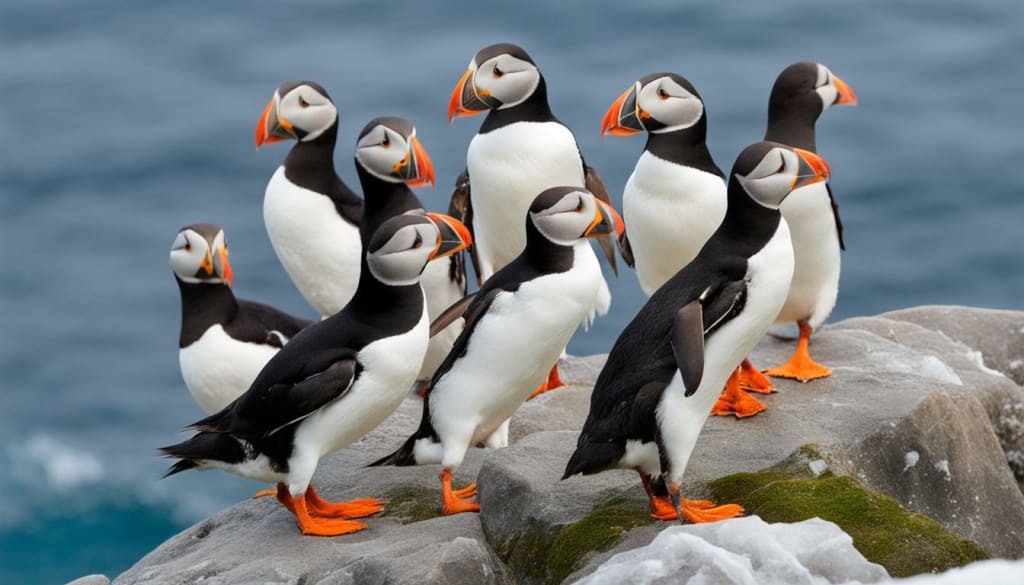
Puffins are known as “clowns of the sea.” (pictured above) They have colorful beaks and a funny waddle. These animals are expert divers, using their wings like flippers to dive underwater for fish. They gather on coastal cliffs and spend most of their lives at sea, returning to land to breed.
As summer ends, puffins vanish into the mist, heading out to sea for months of solitude. Their bright colors fade in winter, replaced by a sober gray.
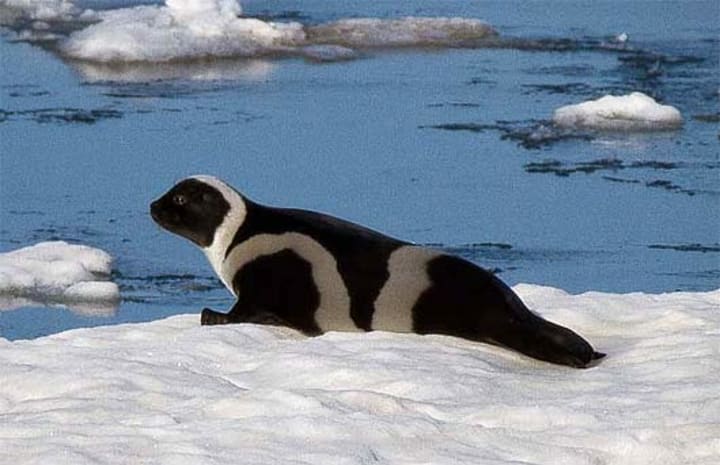
Ribbon seals are native to the Arctic region, spending most of their lives in cold waters. They are recognizable by their black skin and white markings. Ribbon seals are carnivores, specifically piscivores, feeding exclusively on aquatic fish and invertebrates.
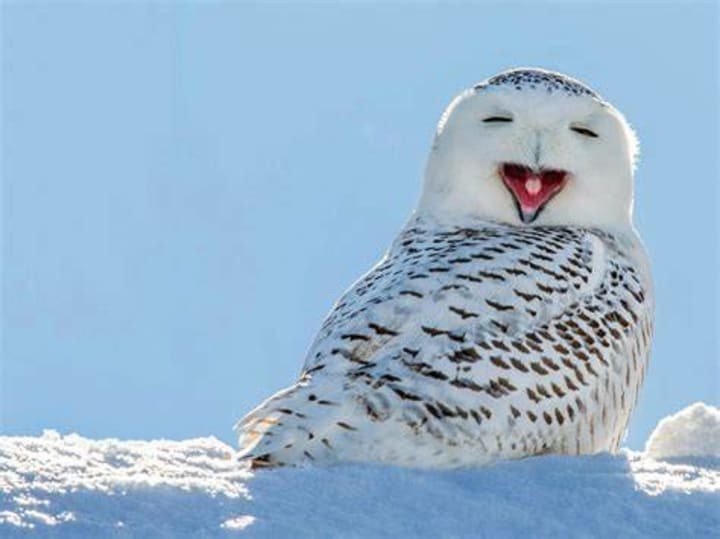
Snowy owls have white plumage and golden eyes. They inhabit the tundra with their feathers providing insulation and soundless flight, so they can swoop down on prey undetected. Snowy owls feed on lemmings and small rodents. They are diurnal, hunting through the endless daylight of summers in the Arctic.
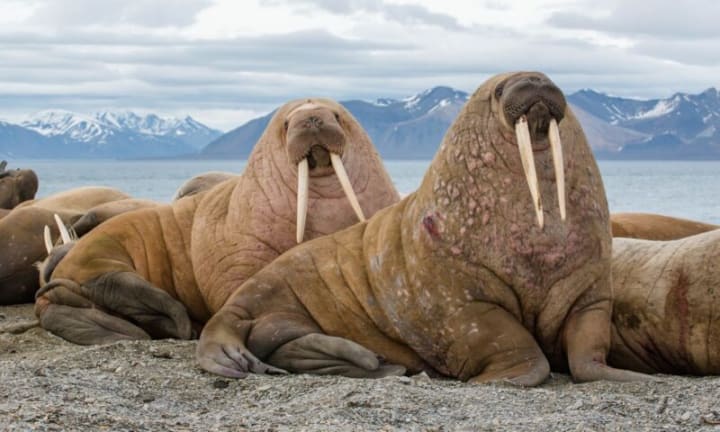
Walruses are huge creatures weighing up to 3,000 pounds. They have tusks that they use to haul their bulk onto ice and break through breathing holes. These giants are social animals and gather in large herds. They communicate through bellows, grunts, and claps of their flippers. Despite their size, they are graceful swimmers, capable of diving over 100 meters in search of clams and shellfish. With their whiskers, walruses detect movement and texture on the ocean floor to find buried prey. Ice is their platform for resting, breeding, and nurturing calves.
About the Creator
Rasma Raisters
My passions are writing and creating poetry. I write for several sites online and have four themed blogs on Wordpress. Please follow me on Twitter.
Keep reading
More stories from Rasma Raisters and writers in Earth and other communities.
Amazing Animals Tanzania
The Eastern African country Tanzania borders Uganda to the north, Rwanda to the west, and the Indian Ocean to the east. Habitats in the country include savannas, wetlands, grassland plains, and wooded forests. Tanzania is home to Mt. Kilimanjaro, the highest mountain in Africa, and Lake Tanganyika, the second deepest lake on Earth.
By Rasma Raisters3 months ago in Earth
Met Office Issues Yellow Fog Warnings After Parts of UK Battered by Rain
After days of relentless rainfall sweeping across large parts of the United Kingdom, the Met Office has issued yellow fog warnings, cautioning residents and travelers to prepare for reduced visibility and hazardous conditions. The sudden shift from heavy rain to dense fog highlights the volatile nature of the UK’s winter weather and underscores the challenges it poses to transport, public safety, and daily life. From Heavy Rain to Thick Fog The recent spell of intense rain saturated the ground across England, Wales, and parts of Scotland, leaving rivers swollen and fields waterlogged. As calmer weather followed the downpours, a combination of high moisture levels, falling temperatures, and light winds created ideal conditions for fog formation. According to meteorologists, this type of fog—often called radiation fog—develops when moisture near the ground condenses overnight, forming thick, low-lying clouds that can linger well into the morning. The Met Office’s yellow warning signals that fog could significantly reduce visibility, in some areas dropping below 100 meters. While not the most severe level of weather alert, yellow warnings are designed to prompt awareness and caution, particularly for motorists, cyclists, and pedestrians who may be caught off guard during early morning commutes. Travel Disruptions and Safety Concerns Fog is one of the most dangerous weather conditions for road travel, as it can dramatically shorten reaction times and obscure hazards. Authorities have urged drivers to slow down, use fog lights appropriately, and maintain greater distances between vehicles. Motorways and rural roads alike are vulnerable, with sudden patches of thick fog appearing without much warning. Rail services may also experience delays, as drivers are required to reduce speeds when visibility drops. At airports, fog can disrupt flight schedules, causing delays or cancellations, particularly during peak morning hours. Aviation authorities closely monitor visibility thresholds, and even a short-lived fog bank can ripple through tightly scheduled operations. Emergency services have emphasized that pedestrians and cyclists should wear reflective clothing where possible, especially during early mornings and evenings. With darker winter days already limiting visibility, fog compounds the risks for vulnerable road users. Why Fog Follows Heavy Rain Meteorologists explain that fog warnings often follow periods of heavy rainfall. When rain saturates the ground, it leaves behind large amounts of surface moisture. If skies then clear and winds ease, the ground cools rapidly overnight, allowing moisture to condense into fog. This pattern is becoming increasingly familiar in the UK, where weather systems are growing more erratic. Climate scientists note that a warming atmosphere holds more moisture, increasing the likelihood of intense rainfall events followed by fog, frost, or sudden temperature drops. Regional Impact Across the UK The yellow fog warnings are not uniform across the country. Low-lying areas, river valleys, and rural regions are particularly susceptible. Parts of southern England, the Midlands, and eastern regions are among those most at risk, though localized fog could appear almost anywhere conditions align. In Scotland and northern England, lingering wet ground combined with colder overnight temperatures raises the possibility of fog forming alongside icy patches. This mix of hazards further complicates travel and increases the risk of accidents. What a Yellow Warning Really Means A yellow weather warning does not mean severe disruption is guaranteed, but it does indicate a heightened likelihood of impacts. The Met Office uses yellow alerts to encourage the public to stay informed and take sensible precautions. For fog, that means checking travel updates, allowing extra journey time, and staying alert to rapidly changing conditions. Weather experts stress that fog can be highly variable. One area may experience clear skies while another, just a few miles away, is blanketed in thick mist. This unpredictability is what makes fog particularly dangerous. Looking Ahead: More Changeable Weather Forecasts suggest that unsettled weather will continue in the coming days, with further spells of rain interspersed with calmer, colder nights—conditions that could lead to additional fog warnings. While no prolonged severe weather is currently expected, the pattern reflects the broader trend of increasingly changeable winters in the UK. For many residents, this serves as another reminder that winter weather is no longer defined by just cold or snow. Instead, a mix of heavy rain, flooding risks, fog, and sudden temperature shifts is becoming the new normal. Staying Prepared The Met Office advises the public to regularly check forecasts, especially before traveling, and to remain flexible with plans during periods of weather warnings. Simple measures—such as cleaning car windows, ensuring lights are functioning, and staying updated via official channels—can significantly reduce risk. As the UK continues to navigate this wet and fog-prone winter, awareness and preparation remain the best defenses. While the fog may lift by midday in many areas, its early impact serves as a timely reminder that even seemingly mild weather hazards can have serious consequences.
By Fiaz Ahmed 4 days ago in Earth
O-Ring Seals Market Size and Forecast 2025–2033
Introduction In an era defined by advanced engineering, sustainability goals, and performance efficiency, the smallest components often play the biggest roles. Among these unsung heroes of modern manufacturing are O-ring seals—simple, circular devices that quietly prevent leaks, ensure safety, and keep critical systems functioning under extreme conditions.
By Aaina Oberoi6 days ago in Earth



Comments
There are no comments for this story
Be the first to respond and start the conversation.