

The Eastern African country Tanzania borders Uganda to the north, Rwanda to the west, and the Indian Ocean to the east. Habitats in the country include savannas, wetlands, grassland plains, and wooded forests. Tanzania is home to Mt. Kilimanjaro, the highest mountain in Africa, and Lake Tanganyika, the second deepest lake on Earth.
Official National Animal
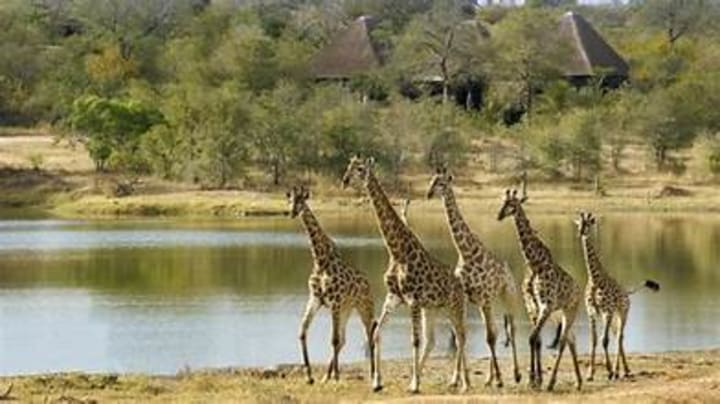
Giraffe
Native Animals
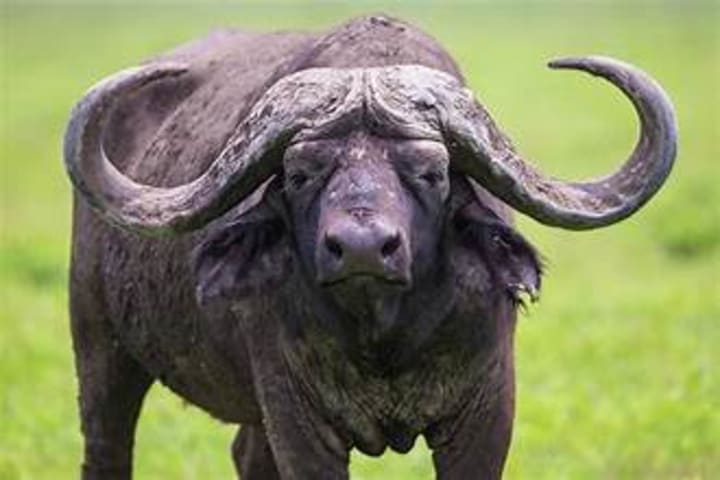
African buffalo are a large species of bovine native to sub-Saharan Africa. They are known for being very dangerous, aggressive, and unpredictable.
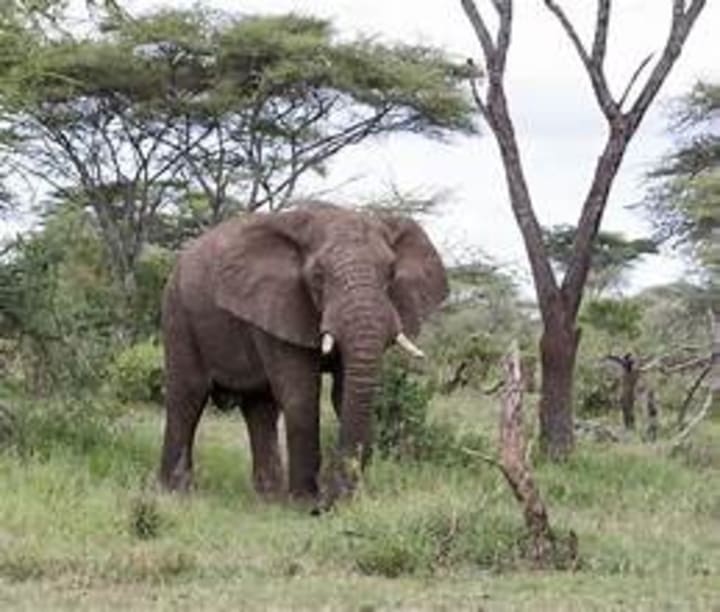
African bush elephants are the largest terrestrial animals on Earth. They are also the most iconic animals from the African continent. They inhabit seasonally flooded grasslands, wetlands, woodlands, temperate and subtropical forests, and agricultural land. African bush elephants are herbivores, eating grasses, barks, leaves, roots, and fruit. Elephants require significant water intake, drinking up to 50 gallons (about 190 liters) a day, depending on the environment and season.

African leopards are the most widespread and common subspecies of the leopard, being found across sub-Saharan Africa. They inhabit a wide range of habitats within Africa, from mountainous forests to grasslands and savannas, excluding only extremely sandy deserts. Leopards are carnivores and have an exceptional ability to adapt to changes in prey availability. They have a very broad diet ranging from dung beetles to adult elands. In sub-Saharan Africa, at least 92 prey species have been documented in leopard scat, including rodents, birds, small and large antelopes, hyraxes, hares, and arthropods.
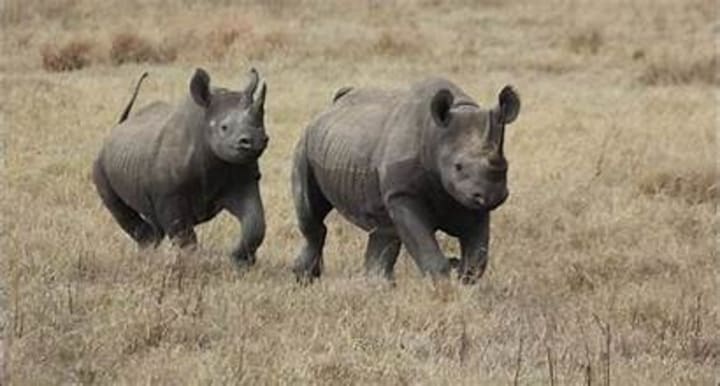
Black rhinos are also referred to as hook-lipped rhinos. They are a species of rhino native to eastern and southern Africa. They inhabit a variety of habitats, among them plains, sparse thorn scrub, savannas, thickets, and dry forests. Black rhinos can also be see in mountain forests and moorlands at high altitudes. These rhinos are herbivores that enjoy leafy plants, branches, shoots, thorny wood bushes, and fruit.
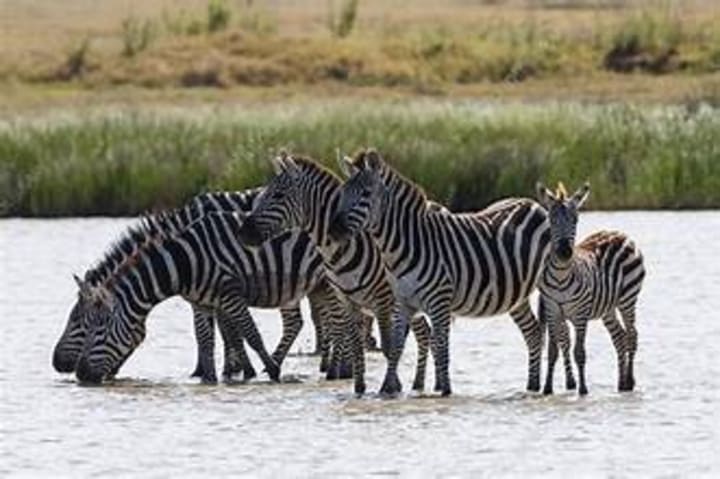
Burchell’s zebras are a subspecies of the plains zebras located in southern Africa. They are named after the British explorer and naturalist William John Burchell. Like most plains zebras, Burchell's live in small family groups.
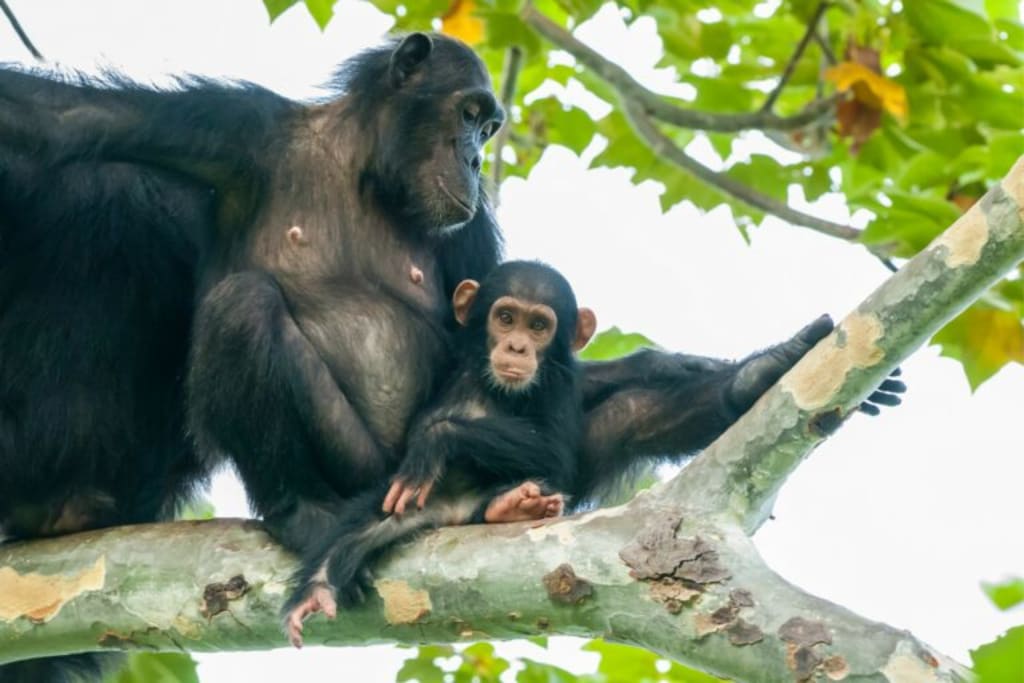
Eastern chimpanzees are native to central and eastern Africa. (pictured above) Eastern chimpanzees spend time both in trees and on the ground but usually sleep in trees, where they build a nest for the night. Chimpanzees live in communities of typically 20 to over 150 members but usually travel in small parties of just a few individuals. They are omnivores, eating seeds, fruits, honey, leaves, bark, fungi, and insects such as termites and ants, and small prey such as birds and monkeys. They often use a twig as a tool to reach termites or ants in nests and have been seen using sticks to hunt other small mammals.

Hippopotamuses, also known as the common hippopotamus or the river hippopotamus, or simply the hippo, is a large species of semi-aquatic ungulate native to much of sub-Saharan Africa. They are recognizable for their barrel-shaped torsos, wide-opening mouths with large canine tusks, nearly hairless bodies, pillar-like legs, and large size. The eyes, ears, and nostrils of hippos are placed high on the top of their skulls As semiaquatic creatures, they prefer living in shallow water bodies such as lakes, rivers, or swamps. These hippos are highly social, nocturnal, and sedentary animals. They usually form groups of 20-100 individuals. Common hippos are herbivores and feed almost entirely on grass, with only minimal consumption of aquatic plants.
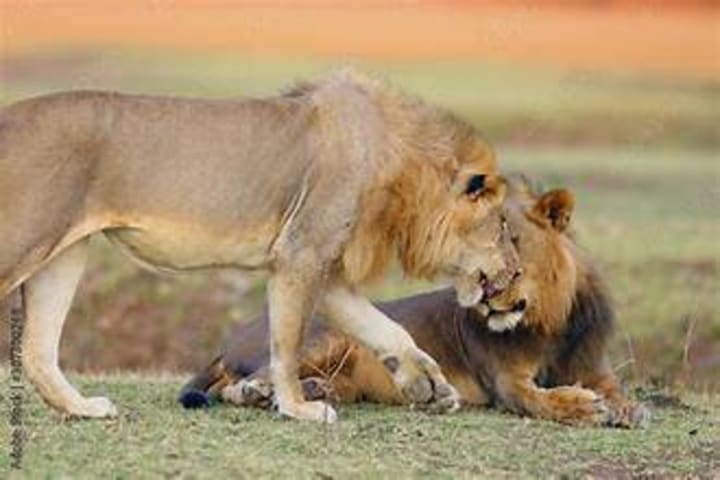
Southern African lions are a subspecies of the lions native to eastern and southern Africa. The fur of Southern lions varies in color from light buff to dark brown. They have rounded ears and a black tail tuft. Mane color varies from sandy, tawny, isabelline, and light reddish yellow to dark brown and black. Most hunting often takes place at dusk. Southern lions are hypercarnivores and prey foremost on ungulates such as gemsbok, Cape buffalo, blue wildebeest, giraffe, common eland, greater kudu, nyala, roan antelope, sable antelope, plains zebra, bushpig, common warthog, hartebeest, common tsessebe, waterbuck, kob, and Thomson's gazelle.
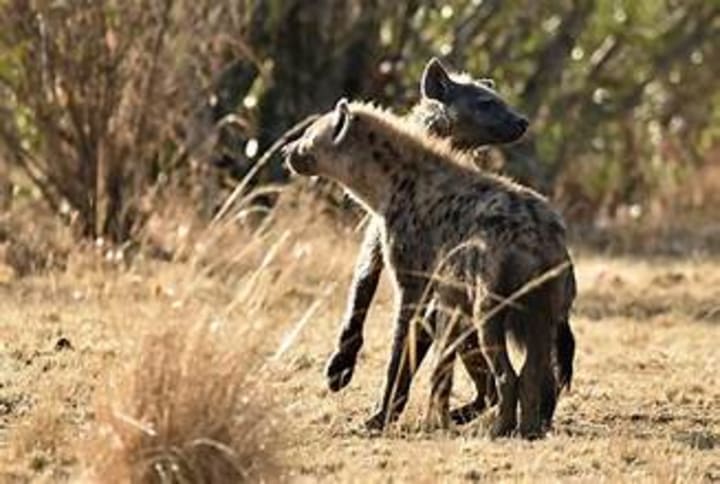
Spotted or laughing hyenas are fascinating and intelligent creatures with a very interesting social system. Their heads are wide and flat with blunt muzzles and broad rhinariums. In contrast to the striped hyena, the ears of the spotted hyena are rounded rather than pointed. Each foot has four digits, which are webbed and armed with short, stout, and blunt claws. They have excellent night vision, being mostly nocturnal, hunting at night, and sleeping or staying near their den in the daytime. Spotted hyenas are carnivorous animals that hunt and scavenge. When hunting alone, they prey on smaller animals such as hares, foxes, jackals, birds, fish, and snakes, as well as carrion. In a group, they hunt medium- to large-sized hoofed animals like zebra, wildebeest, Grant’s gazelle, Thompson’s gazelle, topi, waterbuck, eland, hartebeest, and impala. They also supplement their diet with eggs, fruit, and invertebrates.
About the Creator
Rasma Raisters
My passions are writing and creating poetry. I write for several sites online and have four themed blogs on Wordpress. Please follow me on Twitter.
Keep reading
More stories from Rasma Raisters and writers in Earth and other communities.
Nature’s Hidden Gems: Discovering the Rarest Flowers on Earth
Introduction: When Beauty Meets Rarity Nature is filled with wonders, but few are as captivating—and as elusive—as the rarest flowers on Earth. From enormous parasitic blooms to delicate orchids that appear only under precise conditions, these plants challenge our understanding of survival, evolution, and beauty.
By Ahmed aldeabella5 days ago in Earth
Verizon Outage Today
A sudden Verizon outage can feel unsettling, especially when your phone switches to “SOS” or “emergency calls only” without warning. Across social media and outage-tracking platforms, users often rush to ask the same questions: Is Verizon down right now? Why is my phone in SOS mode? What happened to Verizon today, and when will Verizon be back up? While outages are never convenient, they are not uncommon for large national carriers like Verizon Wireless. Understanding what a Verizon service outage means—and how to respond—can help reduce confusion during moments when connectivity disappears. Is Verizon Down? Understanding Service Outages A Verizon wireless outage occurs when part of Verizon’s cellular or data network becomes unavailable. This can affect voice calls, text messages, mobile data, or all services at once. Some outages are isolated to specific cities, such as Verizon outage NYC, Atlanta, Houston, or New Jersey, while others expand into a broader Verizon nationwide outage. When service is disrupted, users commonly report: Verizon down today Verizon network down Verizon not working Is Verizon down in my area? Verizon service outage These reports often surface within minutes, especially on outage-monitoring platforms. Why Does My Phone Say SOS? One of the most alarming signs during a Verizon outage today is seeing SOS, SOS only, or emergency calls only at the top of an iPhone. This leads many to ask, “Why is my phone in SOS mode Verizon?” SOS mode does not mean your phone is broken. It indicates that your device cannot connect to the Verizon network but can still place emergency calls using any available carrier signal. Common searches during outages include: Why does my phone say SOS only? iPhone stuck in SOS mode Why is my phone on SOS Verizon? What does SOS mean on iPhone? How to get phone out of SOS mode In most cases, the issue resolves automatically once Verizon restores network connectivity. What Caused the Verizon Outage Today? When connectivity drops, users naturally want immediate answers to what caused the Verizon outage today. Verizon does not always publish technical details right away, but outages are typically linked to: Network maintenance or system upgrades Fiber or backend routing failures Power outages affecting Verizon towers Severe weather or environmental damage Unexpected network congestion Despite online speculation, most Verizon outages are not related to cyberattacks. Searches like “Verizon cyber attack today” often trend during disruptions, but confirmed causes are usually infrastructure-related and temporary. How to Check Verizon Outage Status in Real Time If you’re wondering “Is Verizon still down?”, there are several reliable ways to check. Downdetector Verizon Platforms like Downdetector and Down Detector Verizon track real-time user reports. A spike in complaints usually confirms a Verizon outage before official statements are released. Verizon Outage Map Verizon provides a Verizon wireless outage map, sometimes including outage views by ZIP code. This helps answer questions like: Is there a Verizon outage near me? Is Verizon down in my area? My Verizon App and Network Status Pages The My Verizon app and Verizon’s official network status tools may display service alerts and updates during larger outages. Verizon Customer Service During an Outage During a widespread Verizon service outage, many users attempt to call Verizon customer service or search for the Verizon customer service number. While support teams remain active, wait times often increase significantly during major disruptions. Important things to keep in mind: Customer service representatives usually cannot provide exact repair timelines Rebooting your phone repeatedly during an outage rarely helps Network restoration often happens region by region Monitoring Verizon outage updates is typically more effective than calling support during peak outage periods. When Will Verizon Be Back Up? The most pressing question remains: When will Verizon service be restored? The answer depends on: Whether the outage is local or nationwide The cause of the disruption Whether physical repairs are required Minor outages may resolve within minutes or hours. Larger incidents—such as a Verizon cellular outage affecting multiple states—can take longer. Verizon generally prioritizes emergency communications before restoring full voice and data services. Search trends during outages often include: When will Verizon be fixed? How long will Verizon be down? When is Verizon going to be back up? While exact times are rarely guaranteed, service usually returns gradually rather than all at once. Verizon, Competition, and Broader Impact High-profile outages often spark comparisons with competitors like AT&T and T-Mobile. Searches for AT&T outage or T-Mobile outage frequently rise at the same time, as users explore alternative networks. Although outages generate headlines and social media frustration, they rarely have lasting effects on Verizon stock unless disruptions become frequent or prolonged. What to Do If Your Phone Is in SOS Mode If your phone shows SOS only during a Verizon outage: Enable Wi-Fi calling if available Avoid changing SIM or resetting network settings mid-outage Keep your device charged and updated Check Verizon outage updates periodically Once Verizon’s network stabilizes, most phones exit SOS mode automatically. Final Thoughts A Verizon outage can be disruptive, especially when communication suddenly feels out of reach. However, seeing SOS mode does not mean your phone is damaged—it simply reflects a temporary network issue. Staying informed through trusted sources like Downdetector, Verizon’s outage maps, and official Verizon updates can help users navigate these moments with clarity. While outages are frustrating, they are typically temporary, and service restoration is usually a matter of time rather than cause for alarm.
By Saboor Brohi 5 days ago in Earth



Comments
There are no comments for this story
Be the first to respond and start the conversation.