
Imagine Animals at Christmas
Wildlife associated with the holiday


Camels
Camels brought the wise men to the baby Jesus. The Three Wise Men or Magi traveled to Bethlehem on camels and these animals are included in Nativity scenes. There are three species of camel – dromedary with one hump, Bactrian and wild Bactrian both having two humps. They are members of the Camelidae family that also includes llamas and alpacas.
Cows

Cows are often seen in nativity scenes. In the tradition of Christmas, cows are thought to have been present in the stable at the birth of Jesus. Their presence in the nativity scene signifies humility and simplicity. As an animal of the earth, the cow represents the natural world that was present at the birth of Jesus.
Donkeys

Donkeys descended from the African wild ass and inhabit deserts and harsh, dry regions in East Africa. Unfortunately, they are a critically endangered species first domesticated around 5,000 years ago. These animals were around the time when Christ was born since Mary rode a donkey as she and Joseph traveled to Bethlehem.
Goats

In Scandinavia and other parts of northern Europe, Yule goats play a part in traditional Christmas celebrations. Yule goat ornaments are placed under the Christmas tree and larger Yule goats are made of straw as the decorations in a town.
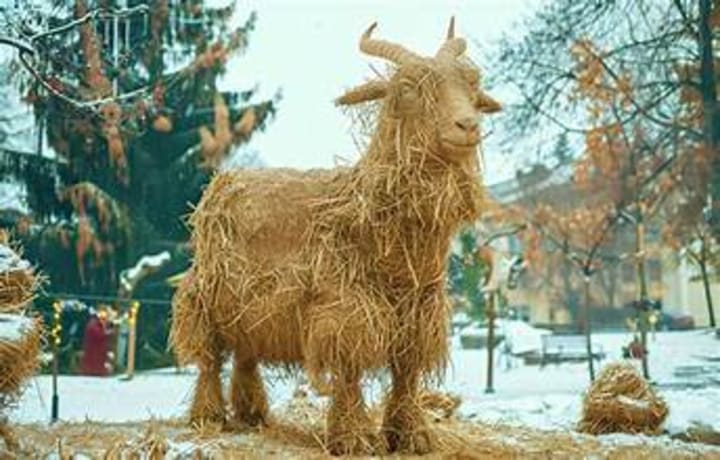
They are members of the subfamily Caprinae. Domestic goats descended from wild goats, a species still found in Asia.
Goose
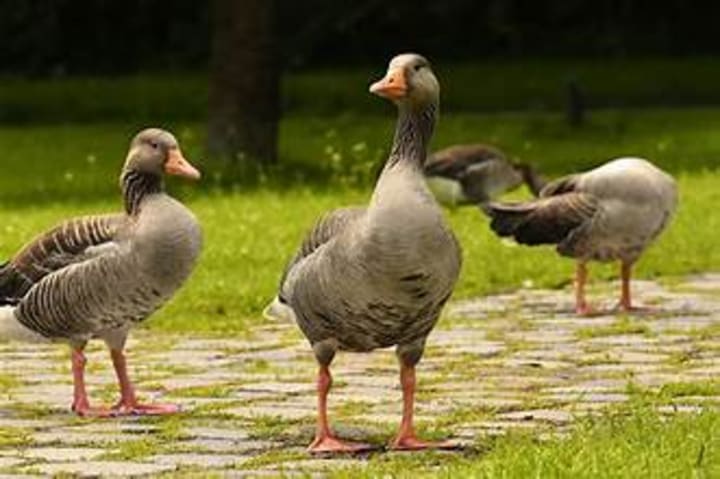
Geese are associated with Christmas meals, particularly in Europe. In some traditions, a Christmas feast would not be complete without a roast goose, and this bird became a symbol of abundance and hospitality. Its role in Christmas celebrations reflects the spirit of generosity and the importance of sharing with others.
Owls

Even though owls are not commonly associated with Christmas, they do have a symbolic significance during the holiday season. In many cultures these birds are seen as symbols of knowledge and wisdom and in the context of Christmas can represent spiritual enlightment and the search for deeper meaning. Being nocturnal animals their presence during the night echoes the themes of vigilance and anticipation that accompany the Christmas season.
Partridges

Are well-known around Christmas due to being mentioned in the English carol “The Twelve Days of Christmas”. The song mentions a partridge in a pear tree as one of the twelve gifts sent by the singer to their true love. These birds are pare of the bird family Phasianidae that includes pheasants, chickens, and turkeys. Real-life partridges do not site in pear trees but instead are ground-nesting birds.
Penguins

Penguins have become a modern symbol of Christmas, particularly on Christmas cards, decorations, and movies. These are delightful birds often depicted in festive attire or participating in holiday activities. The penguin represents warmth, companionship, and joy during the cold winter months. Penguins are also known for their strong family bonds, with both parents sharing the responsibility of caring for their young. In this way, penguins symbolize the importance of family and togetherness, which are central themes during the Christmas season.
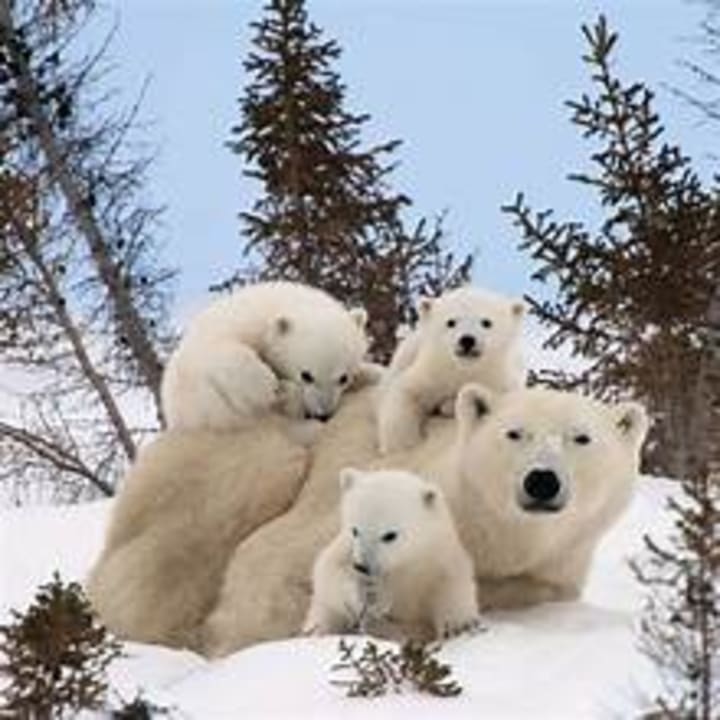
Polar bears might not be traditional Christmas animals, but they are associated with snow and winter. These bears often appear on Christmas cards and probably lived with Santa in the North Pole. Polar bears are members of the bear family, Ursidae and inhabit places in the Arctic. Of all the eight species of bear, these are the larges and most carnivorous. Their white fur provides camouflage against snow and ice. Their fur coats are lined with a thick layer of fat, keeping them warm in the cold. Their big feet make it easier to walk over snow and help them to swim.
Reindeer

Reindeer are popular around Christmas because they are known to take Santa around the world in his sleigh. Santa had nine reindeer – Blitzen, Comet, Cupid, Dancer, Donner, Prancer, Vixen, and perhaps the most famous Rudolph, the red-nose reindeer. Reindeer are large deear found in cold, northerly regions in the northern hemisphere and called caribou in North America. In Canada reindeer make long migrations and can travel as fas as 3,000 miles.
Robins

At least in North America, red-breasted robins are more associated with the coming of spring than with Christmas. However, in the British Isles these birds are associated with Christmas being one of the most frequently-seen garden birds during the winter months. And keep in mind there are the American robins and the European robins.
Sheep
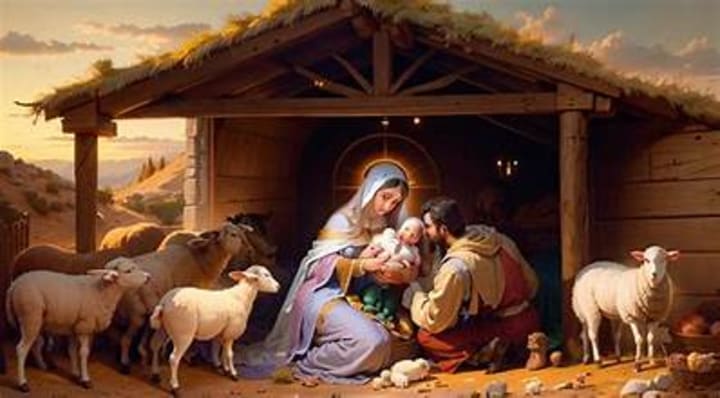
Sheep have always been part of Christmas Nativity scenes. In the Gospel of Luke in the Bible, angels announce the birth of Jesus to a group of shepherds tending their flocks of sheep. These animals are part of the subfamily Caprinae that also includes goats. Male sheep are rams and females are ewes. They are hoofed animals that live on plants and grass.
Turkeys

Some of these poor birds might make it through Thanksgiving only to fine that they are part of the traditional Christmas meals in many English-speaking countries. The birds that are farmed for food are domesticated wild turkeys. Wild turkeys are native to North America and are the largest game birds. They are known for their red wattles on the neck and colorful, iridescent plumage.
Turtle Doves

Turtle doves also are mentioned in the English carol “the Twelve Days of Christmas” where the lyrics mention – two turtle doves. These birds are members of the Columbidae family that includes doves and pigeons. Turtle doves are a migratory species that spend the winter in southern Africa. Their conservation statues is “Vulnerable”.
Wrens

Wrens are birds that play a part in the traditional Christmas festivities of Ireland, Wales, the Isle of Man, and other European countries. In some regions, the day after Christmas is called Wren Day.
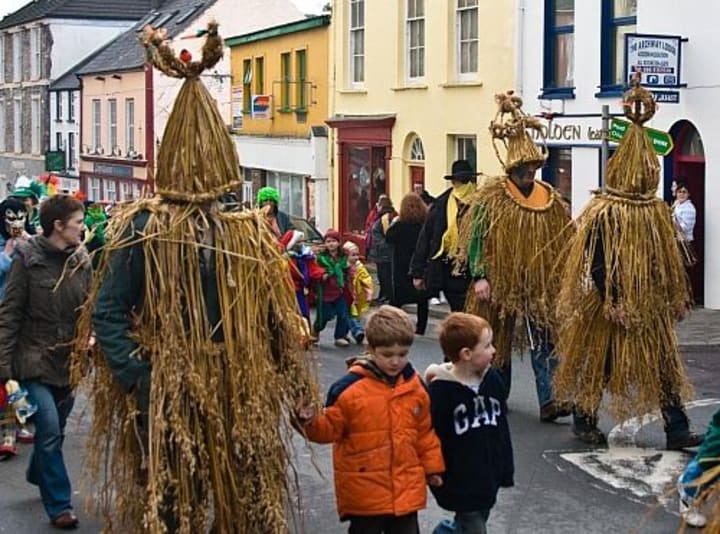
Traditionally, a real wren was hunted and then paraded through the town in order to collect money for festivities. This tradition has several variations, although today an imitation wren is used in place of a real one. This tiny brown species has a surprisingly loud call. It is one of eighty-eight members of the wren family, Troglodytidae, and the only one found in Europe. It is the third-smallest bird found in the UK.
About the Creator
Rasma Raisters
My passions are writing and creating poetry. I write for several sites online and have four themed blogs on Wordpress. Please follow me on Twitter.
Keep reading
More stories from Rasma Raisters and writers in Earth and other communities.
Amazing Birds of Central America
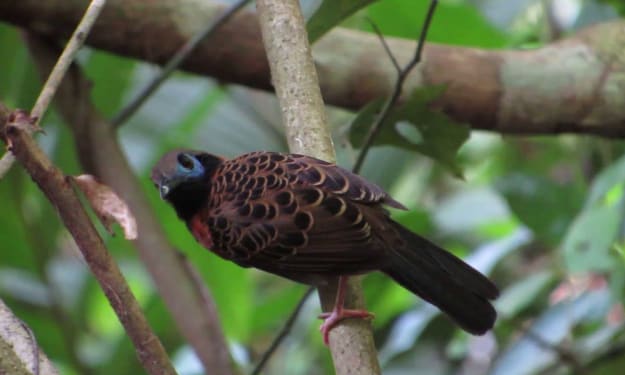
Bare-necked umbrella birds are unusual with awkward hairdos and bizarre courtship displays. The male birds have throat sacs on their chests that they inflate and resemble giant ripe tomatoes, making grunts, deep chuckles, and dry coughs to increase their appeal. Bare-necked umbrella birds live only in forests, and their diet consists mainly of fruits.
By Rasma Raistersabout a month ago in Earth
Tea of Silence
The snow had covered the hills for days, turning the land into a quiet white world where sound seemed afraid to exist. On the highest of these hills, beneath a dry, leafless tree, a young man sat alone. The tree had long ago lost its strength, its branches thin and broken, but it still stood, as if refusing to disappear. The young man chose this place often, not because it was comfortable, but because it was honest.
By Bilal Mohammadi2 days ago in Earth
The Most Earthquake-Prone Places in the World and Why They Shake so Often
My interest in earthquakes began when I was a little girl. I remember watching footage of the ground shaking and wondering how something as solid as the Earth could suddenly move. That early curiosity stayed with me and eventually led me to learn more about why earthquakes happen and why some places experience them far more often than others.
By Marla Samuel6 days ago in Earth



Comments
There are no comments for this story
Be the first to respond and start the conversation.