
The Most Earthquake-Prone Places in the World and Why They Shake so Often
A Look at Countries With the Highest Number of Major Earthquakes


My interest in earthquakes began when I was a little girl. I remember watching footage of the ground shaking and wondering how something as solid as the Earth could suddenly move. That early curiosity stayed with me and eventually led me to learn more about why earthquakes happen and why some places experience them far more often than others.
As it turns out, earthquakes follow clear geological patterns shaped by powerful forces beneath the surface.
To better understand which regions experience the strongest seismic activity, I looked at country-level earthquake records and focused on major events, those with magnitudes of 7.0 and above. When the numbers are combined and ranked, a clear picture emerges. A small group of countries accounts for a large share of the world’s most powerful earthquakes, reflecting their position along active tectonic boundaries rather than coincidence.
Counts of the Major Earthquakes (M7+) by Countries
1) Indonesia - M7+ (183) | M8+ (12) | M9+ (1)

Indonesia experiences so many earthquakes because it sits along the Pacific Ring of Fire, where several major tectonic plates collide and slide beneath one another. The Indo-Australian Plate is constantly subducting beneath the Eurasian Plate, building up enormous pressure that is regularly released as earthquakes. The largest earthquake ever recorded in Indonesia was the 2004 Sumatra - Andaman earthquake, which reached a magnitude of about 9.1 - 9.3 and triggered a devastating tsunami across the Indian Ocean, highlighting the extreme seismic power generated in this region.
2) Japan - M7+ (156) | M8+ (10) | M9+ (1)

Japan experiences frequent earthquakes because it lies at the intersection of several major tectonic plates, including the Pacific Plate and the Philippine Sea Plate, which are constantly moving and colliding beneath the region. This complex plate interaction creates intense seismic stress that is released regularly as earthquakes. The largest earthquake ever recorded in Japan was the 2011 Tōhoku earthquake, which reached a magnitude of 9.0 and triggered a powerful tsunami, causing widespread damage and demonstrating how active and dangerous Japan’s seismic setting can be.
3) Russia - M7+ (127) | M8+ (15) | M9+ (1)
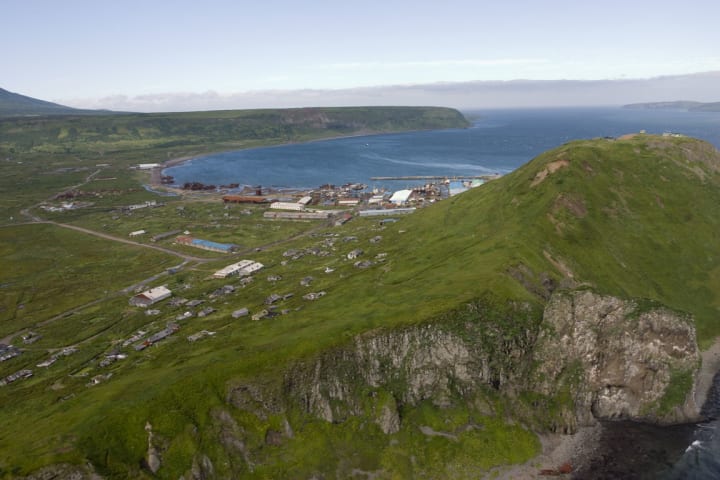
Russia experiences frequent earthquakes mainly in its far eastern regions, particularly along the Kamchatka Peninsula and the Kuril Islands, where the Pacific Plate is subducting beneath the Okhotsk Plate. This tectonic setting creates powerful seismic activity similar to other areas along the Pacific Ring of Fire. The largest earthquake ever recorded in Russia was the 1952 Severo-Kurilsk earthquake, which reached a magnitude of 9.0 and generated a tsunami, underscoring the significant seismic risk in this part of the country.
4) United States - M7+ (118) | M8+ (8) | M9+ (2)

The United States experiences frequent earthquakes because it spans multiple active tectonic boundaries, most notably along the western edge where the Pacific Plate interacts with the North American Plate. This plate movement causes earthquakes in regions such as California, Alaska, and the Pacific Northwest. The largest earthquake ever recorded in the United States was the 1964 Great Alaska earthquake, which reached a magnitude of 9.2, making it the strongest earthquake in U.S. history and one of the most powerful ever measured worldwide.
5) Papua New Guinea - M7+ (107) | M8+ (6)
Papua New Guinea experiences frequent earthquakes because it lies along the Pacific Ring of Fire, where several tectonic plates, including the Pacific, Australian, and smaller regional plates, interact in a highly complex way. These constant plate collisions and subduction zones generate intense seismic activity across the region.
You can find the rest of the detailed list here:
- Tonga - 81
- Vanuatu - 81
- Chile - 78
- Philippines - 77
- Mexico - 70
- Solomon Islands - 64
- Peru - 49
- New Zealand - 43
- China - 43
- Fiji Islands - 33
- Taiwan - 29
- South Georgia - 26
- Turkey - 22
- New Caledonia - 18
- India - 17
What stands out from these results is how closely major earthquakes are tied to plate boundaries such as subduction zones and major fault systems. Countries near the Pacific Ring of Fire dominate the list, reinforcing the idea that geography plays a decisive role in seismic risk. These patterns help explain why some regions experience repeated large earthquakes while others remain relatively quiet.
The Hidden Forces Beneath Our Feet

The Earth’s outer shell is divided into massive tectonic plates that slowly move and interact. Where these plates collide, slide past each other, or pull apart, stress builds up over time. When that stress is suddenly released, we experience an earthquake.
Most seismic activity happens along plate boundaries, which explains why earthquakes tend to cluster in specific zones rather than being evenly distributed across the globe.
Why Earthquake History Matters

Looking at global earthquake patterns reveals a critical truth: where earthquakes have happened before, they are likely to happen again. Historical records help scientists estimate risk, guide building codes, and improve early warning systems.
Publicly available earthquake records by country show clear trends in seismic activity and highlight which regions face the greatest ongoing risk. Understanding these patterns allows communities and individuals to make informed decisions about preparedness.
Awareness Is the First Line of Defense
Earthquakes are a natural part of how our planet works. While we can’t stop them, we can learn from them.
Knowing whether you live in an earthquake-prone region, understanding how often seismic activity occurs nearby, and learning how previous earthquakes affected similar areas can make a real difference when the ground starts to shake.
In a world shaped by moving plates and hidden fault lines, awareness isn’t fear, it’s resilience.
About the Creator
Marla Samuel
A long-time earthquake enthusiast with a focus on global seismic activity, major earthquakes, and regional patterns. Interested in turning complex data into clear, accessible insights.
Keep reading
More stories from writers in Earth and other communities.
How Europe Will Try to Save Greenland from Trump
When you first hear about Greenland being in the middle of a global crisis, it might sound like something out of a political thriller. But in 2026, the idea that former U.S. President Donald Trump could try to take control of Greenland has Europe on high alert. Greenland isn’t just ice and snow—it’s a strategic Arctic powerhouse with untapped natural resources and a location that matters more than ever. And for Europe, the big question is: how do we stop the U.S. from interfering with a territory that belongs to Denmark and its people? A Red Line in the Arctic European leaders have been crystal clear: Greenland is not for sale. The European Council President, Antonio Costa, said it outright: “Greenland belongs to its people.” No outside power should decide its fate without consulting Denmark or Greenland. This message isn’t just words. France, Germany, and the UK have all voiced their support for Denmark, making it clear that borders cannot be changed by threats or force. And Denmark’s Prime Minister, Mette Frederiksen, didn’t mince words either—any U.S. military action against a NATO ally could mean the end of NATO itself. Diplomacy… With a Bite Europe’s first move has been diplomacy. Talks between Denmark, Greenland, and the U.S. are ongoing, including high-level discussions with U.S. officials to reaffirm defense cooperation—without giving up sovereignty. But European capitals aren’t stopping at conversations. Officials are hinting at potential consequences if Trump escalates, from diplomatic pushback to economic measures. Trade agreements or sanctions could be on the table if necessary. Europe wants to make it clear: words matter, but actions matter more. Investing in Greenland’s Future Europe isn’t just defending Greenland—it’s helping it thrive. The European Union is preparing strategic investments in infrastructure, education, healthcare, and natural resource management. This economic support strengthens Greenland’s ability to resist pressure from external powers. Why does this matter? Because the more resilient Greenland is economically and politically, the less likely it is to be swayed by threats—or tempted to negotiate away its sovereignty. Europe is also interested in Greenland’s minerals, especially rare earth elements crucial for green technology and defense. By investing now, Europe positions itself as Greenland’s partner, not just an observer. The Power of International Law Europe is also leveraging international law. Leaders are highlighting Greenland’s rights under the United Nations Charter, which protects sovereignty, self-determination, and territorial integrity. And they have public opinion on their side. Polls show that Greenland’s residents—and the majority of Danes—oppose any sale or annexation. Europe can now frame the issue not only as a legal matter but as a moral one too. A Test for Europe and NATO The Greenland situation is a test for Europe: can it stand up to the world’s most powerful nation to protect international norms? The continent is proving that diplomacy, legal principles, economic influence, and public opinion together create a powerful defense. Europe’s strategy is simple but strong: talk, invest, defend, and be ready to act. Greenland is more than just an island—it’s a symbol of whether the rules-based international order can hold. In the Arctic, where ice is melting and geopolitical tensions are rising, Greenland has become Europe’s frontline. And Europe seems determined not to let it fall. ✅ Key Takeaways for Readers: Greenland is strategically important and rich in natural resources. Europe is using diplomacy, law, economic investment, and potential sanctions to protect it. Public support in Denmark and Greenland strengthens the European stance. This situation could redefine NATO and transatlantic relations. If you want, I can also create the perfect Vocal Media-ready package next: including a community, tags, and SEO-friendly headline for publication.
By Muhammad Hassan3 days ago in Earth
If You Love Me, You'll Do It
I met Jason when I was five years old. I could say that I loved him from the moment I saw him. He was so handsome to me and I felt in awe by his presence. When they introduced him as the new kid in school, I wanted to be his friend right away. I remember it like it was yesterday. I remember his smile and how he didn't seem shy. He appeared confident and ready to learn. I waved at him and said "hello," before anyone else could even say a word. He sat next to me, and I asked him if he wanted to be friends. He looked so happy as he said, "Yes!"
By Sidney Smith (Sid Smith)5 days ago in Fiction



Comments
There are no comments for this story
Be the first to respond and start the conversation.