
Ice Ages: The Frozen Earth's Ancient Past and Future
Discovering the Causes, Effects, and Implications for Climate Change

Introduction
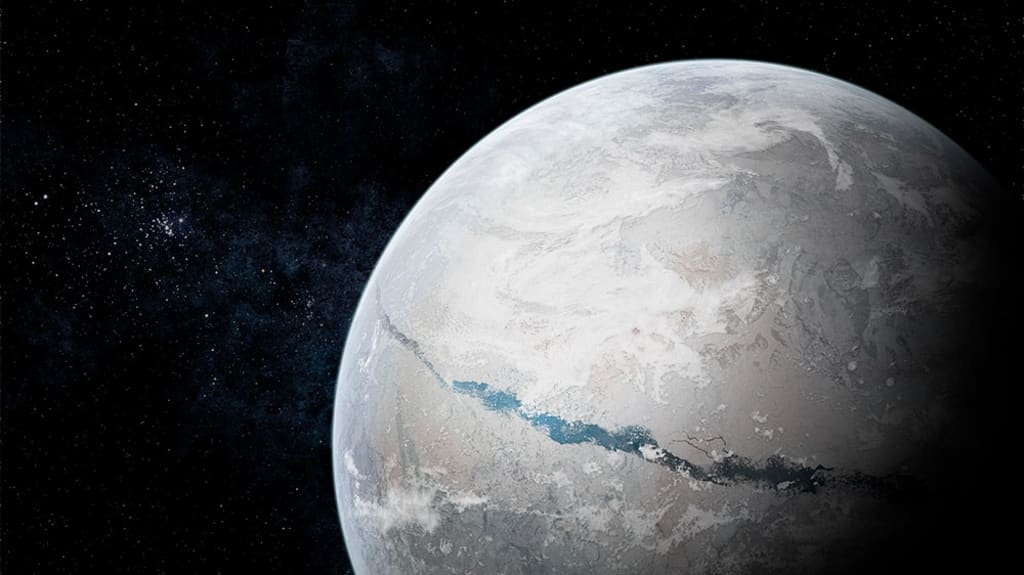
Ice ages, also known as glacial periods, are long periods of time in Earth's history when global temperatures decrease significantly, leading to the expansion of continental ice sheets and glaciers. These periods are characterized by colder temperatures, lower sea levels, and the emergence of vast ice sheets over large areas of the planet. The most recent ice age occurred approximately 2.6 million years ago, and lasted until about 11,700 years ago. During this time, the Earth experienced a series of glacial and interglacial periods, in which glaciers advanced and retreated across the globe. In this article, we will explore the causes and effects of ice ages, as well as their impact on the Earth's climate, geography, and ecosystems.
Causes of Ice Ages:
There are a number of factors that can contribute to the onset of an ice age. One of the most significant of these is changes in the Earth's orbit and axial tilt. The Earth's orbit is not perfectly circular, but rather elliptical, meaning that its distance from the sun varies over time. Additionally, the Earth's axis is tilted at an angle of approximately 23.5 degrees, which causes the seasons to occur. These factors can interact to produce changes in the amount and distribution of solar radiation that the Earth receives, which can in turn lead to changes in climate.
Another important factor in the onset of ice ages is variations in the amount of greenhouse gases in the atmosphere. Greenhouse gases such as carbon dioxide, methane, and water vapor help to trap heat near the Earth's surface, preventing it from escaping into space. When the concentration of these gases increases, the Earth's temperature rises, leading to a greenhouse effect. Conversely, when their concentration decreases, the Earth's temperature falls, leading to a cooling effect. This cooling effect can be further amplified by the presence of reflective surfaces such as snow and ice, which reflect more of the sun's energy back into space.
Finally, other factors such as volcanic eruptions, changes in ocean circulation, and variations in solar output can also contribute to the onset of ice ages.
Effects of Ice Ages:
The effects of ice ages are far-reaching and can have a significant impact on the Earth's climate, geography, and ecosystems. One of the most significant effects is the expansion of continental ice sheets and glaciers, which can cover large areas of the planet. During the last ice age, for example, ice sheets covered much of North America, Europe, and Asia, as well as smaller areas in South America and Africa.
These ice sheets and glaciers can have a number of effects on the environment. They can alter the reflectivity of the Earth's surface, reflecting more of the sun's energy back into space and further cooling the planet. They can also affect ocean currents and atmospheric circulation patterns, leading to changes in weather patterns and precipitation. In addition, the weight of the ice can cause the Earth's crust to deform, leading to changes in the distribution of land and sea.
Ice ages can also have a significant impact on the Earth's ecosystems. As temperatures drop, many species are forced to migrate to warmer areas in order to survive. This can lead to the displacement of some species and the emergence of new ones as they adapt to changing conditions. In addition, the expansion of ice sheets and glaciers can alter the geography of the planet, creating new habitats and altering existing ones. For example, during the last ice age, the sea level was significantly lower than it is today, exposing large areas of land that are now underwater.
Ice Ages Throughout History:
The Earth has experienced a number of ice ages throughout its history, dating back to the earliest periods of the planet's existence. However, the most recent ice age, known as the Quaternary glaciation, began approximately 2.6 million years ago and lasted until about 11,700 years ago. During this time, the Earth experienced a series of glacial and interglacial periods.
Glacial periods are characterized by the expansion of ice sheets and glaciers across the Earth's surface, while interglacial periods are characterized by a retreat of these ice sheets and a relatively warmer climate. During the last glacial period, which began approximately 110,000 years ago and ended about 11,700 years ago, glaciers covered approximately 30% of the Earth's land surface.
The last glacial period was not a continuous period of cold temperatures, but rather a series of advances and retreats of glaciers and ice sheets. These advances and retreats were influenced by a number of factors, including changes in the Earth's orbit and axial tilt, variations in solar output, and changes in ocean circulation.
The most recent interglacial period, which began about 11,700 years ago and continues to the present day, is known as the Holocene epoch. During this time, the Earth has experienced a relatively warm and stable climate, characterized by the emergence of complex human societies and the development of agriculture.
Implications for Climate Change:
While ice ages are a natural phenomenon, human activity is currently contributing to changes in the Earth's climate that could have significant implications for the onset of future ice ages. One of the most significant of these changes is the increase in greenhouse gases in the atmosphere, primarily due to the burning of fossil fuels.
This increase in greenhouse gases is causing the Earth's temperature to rise, leading to a number of impacts such as rising sea levels, more frequent and intense heat waves, and more severe weather events such as hurricanes and droughts. While these changes are occurring on a much shorter timescale than ice ages, they could have significant implications for the Earth's climate and ecosystems.
In addition, the melting of glaciers and ice sheets due to global warming could potentially disrupt ocean circulation patterns, leading to changes in weather patterns and potentially even a new ice age. While it is currently unclear whether this scenario is likely to occur, it is clear that human activity is causing significant changes in the Earth's climate that could have far-reaching and unpredictable effects.
Conclusion:
Ice ages are a natural phenomenon that have occurred throughout the Earth's history. These periods of colder temperatures and the expansion of ice sheets and glaciers have significant impacts on the Earth's climate, geography, and ecosystems. While the most recent ice age occurred approximately 2.6 million years ago and ended about 11,700 years ago, the Earth could potentially experience future ice ages depending on a number of factors, including changes in greenhouse gas concentrations and variations in the Earth's orbit and axial tilt.
Human activity is currently contributing to changes in the Earth's climate that could have significant implications for the onset of future ice ages. As such, it is important to take action to mitigate the impacts of climate change, reduce greenhouse gas emissions, and work towards a more sustainable future for the planet.
About the Creator
Keerthana Thirumalairaj
An Independent Solitude girl, who recently found the interests in writings and converts Facts and imaginations into writings.
Keep reading
More stories from Keerthana Thirumalairaj and writers in Earth and other communities.
Exploring the Earth's Shifting Landscapes
Introduction Continental drift is a theory that describes the movement of continents across the Earth's surface. The theory suggests that the continents were once joined together in a supercontinent called Pangaea, and over millions of years, they slowly drifted apart to their current positions. This theory was proposed by the German scientist Alfred Wegener in 1912 and was later supported by scientific evidence.
By Keerthana Thirumalairaj3 years ago in Earth
Harmful Effects of the Environment
The environment is the natural world around us. It includes air, water, land, plants, animals, and all living and non-living things that support life on Earth. A healthy environment is very important for the survival and well-being of humans, animals, and plants. However, in recent years, the environment has been facing serious harm due to human activities. Pollution, deforestation, and climate change are some of the major environmental problems that are affecting the world today. These harmful effects are not only damaging nature but also creating serious challenges for human life.
By aadam khan40 minutes ago in Earth



Comments
There are no comments for this story
Be the first to respond and start the conversation.