
Hurricanes, typhoons, and cyclones
Natural disasters have always fascinated and terrified humankind. Among them, hurricanes, typhoons, and cyclones are some of the most powerful and destructive forces on earth.

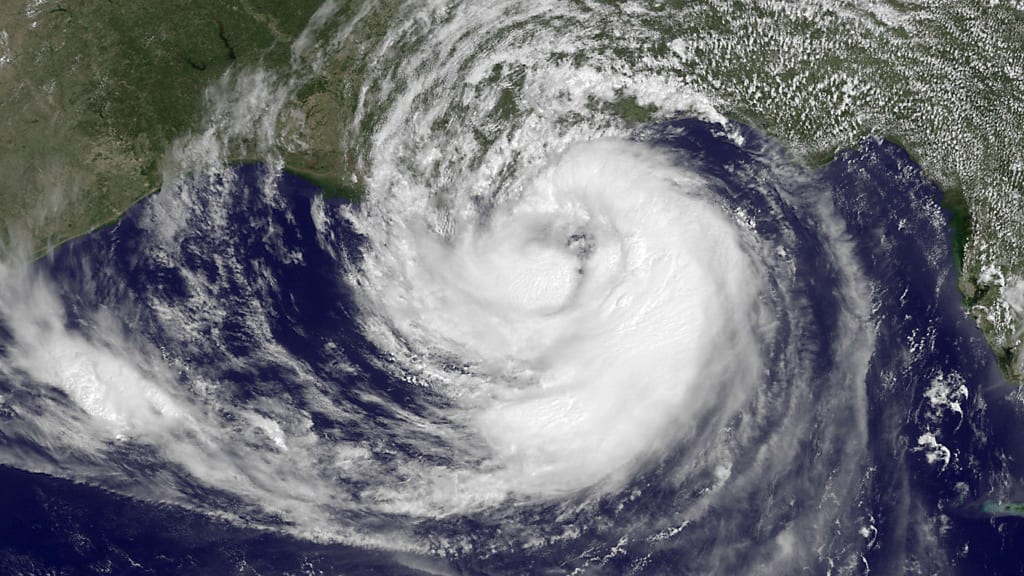
These intense storms have the ability to cause widespread devastation, disrupting lives and economies. Though these storms have different names, they are essentially the same meteorological phenomenon, occurring in different parts of the world. This article explores the nature of hurricanes, typhoons, and cyclones, their formation, differences, and impact on human society.
(I)What Are Hurricanes, Typhoons, and Cyclones?
Hurricanes, typhoons, and cyclones are all types of tropical storms, categorized based on their location. The scientific term for these storms is tropical cyclones. They are large, rotating storm systems that develop over warm ocean waters and bring heavy rains, strong winds, and severe flooding.
Hurricanes occur in the Atlantic Ocean and the northeastern Pacific Ocean.
Typhoons form in the northwestern Pacific Ocean, primarily affecting East Asia.
Cyclones develop in the South Pacific and Indian Ocean regions.
Despite the different names, all three storm types follow similar patterns of formation and behavior.
(II)How Do These Storms Form?
The formation of tropical cyclones requires specific conditions:
Warm Ocean Water: The surface temperature of the ocean must be at least 26.5°C (80°F) to provide enough energy for storm development.
Low Atmospheric Pressure: A region of low pressure allows warm, moist air to rise, creating instability.
Coriolis Effect: Due to Earth's rotation, the Coriolis effect causes the storm to spin, leading to the circular motion seen in hurricanes, typhoons, and cyclones.
Moist Air and Humidity: High humidity in the mid-troposphere helps fuel the storm and sustain it.
Minimal Wind Shear: If upper-level winds are too strong, they can disrupt the storm’s formation, preventing it from strengthening.
When these conditions align, a tropical disturbance can develop into a full-fledged tropical cyclone. The storm goes through different stages: tropical depression, tropical storm, and then a hurricane, typhoon, or cyclone once wind speeds reach 74 mph (119 km/h) or higher.
(II)Structure of a Tropical Cyclone
A tropical cyclone consists of three main components:
The Eye: The calm, central part of the storm, typically 20-40 miles (30-65 km) wide, with little to no wind.
The Eyewall: Surrounding the eye, this is the most dangerous part of the storm, where the strongest winds and heaviest rainfall occur.
Rainbands: Spiral bands of thunderstorms that extend outward from the storm’s center, producing intense rain and wind.
(III)Differences Between Hurricanes, Typhoons, and Cyclones
While hurricanes, typhoons, and cyclones are essentially the same storm system, their regional differences include:
Location:
Hurricanes: Atlantic & Northeast Pacific
Typhoons: Northwest Pacific
Cyclones: South Pacific & Indian Ocean
Wind Speed Classification:
The Saffir-Simpson Hurricane Wind Scale categorizes hurricanes from Category 1 (74-95 mph) to Category 5 (157+ mph).
The Japan Meteorological Agency uses a different system for typhoons, classifying them as Tropical Depressions, Tropical Storms, Severe Tropical Storms, and Typhoons.
The India Meteorological Department classifies cyclones as Depression, Deep Depression, Cyclonic Storm, Severe Cyclonic Storm, and Super Cyclone.
(IV)Impact and Destruction
Tropical cyclones can cause significant damage through high winds, heavy rainfall, and storm surges.
Storm Surges: Coastal areas experience the most devastation due to storm surges, where seawater is pushed inland, leading to severe flooding.
Wind Damage: The intense winds can uproot trees, destroy buildings, and create flying debris.
Inland Flooding: Heavy rains can cause rivers to overflow, leading to deadly flash floods.
Economic and Human Losses: The economic impact of hurricanes, typhoons, and cyclones can be massive. Infrastructure destruction, power outages, and water contamination often lead to long-term consequences.
(V)Notable Storms in History
Hurricane Katrina (2005): One of the most destructive hurricanes in U.S. history, causing over 1,800 deaths and $125 billion in damages.
Typhoon Haiyan (2013): One of the strongest typhoons ever recorded, devastating the Philippines with winds of 195 mph (315 km/h) and killing over 6,000 people.
Cyclone Nargis (2008): Struck Myanmar, causing over 138,000 fatalities due to storm surges and flooding.
(VI)Preparedness and Mitigation
Governments and organizations have developed measures to mitigate the impact of tropical cyclones:
Early Warning Systems: Meteorological agencies use satellite imagery, radar, and computer models to predict storm paths.
Evacuation Plans: Authorities implement evacuation orders in vulnerable areas.
Stronger Infrastructure: Buildings in cyclone-prone areas are being designed to withstand strong winds and flooding.
Public Awareness Campaigns: Educating people on emergency preparedness and response helps save lives.
IN THE END
Hurricanes, typhoons, and cyclones are among nature’s most powerful and destructive storms. Despite their different names, they share the same origins, characteristics, and devastating impact. Through scientific advancements, improved warning systems, and better disaster preparedness, societies have become more resilient in dealing with these storms. However, as climate change continues to influence weather patterns, the frequency and intensity of tropical cyclones may increase, making continued research and preparedness even more crucial for the future.
About the Creator
Badhan Sen
Myself Badhan, I am a professional writer.I like to share some stories with my friends.
Keep reading
More stories from Badhan Sen and writers in Earth and other communities.
Ocean currents (Gulf Stream, El Niño, La Niña)
These currents play a crucial role in regulating global climate, weather patterns, and marine ecosystems. Among the most significant ocean currents are the Gulf Stream, El Niño, and La Niña. These phenomena influence temperature patterns, precipitation levels, and storm activities worldwide.
By Badhan Senabout a year ago in Earth
Earthquakes Today
Earthquakes are a daily reminder that the planet beneath our feet is constantly in motion. Today was no exception. Across different regions of the world, seismic instruments recorded a series of small to moderate earthquakes—most of them unnoticed by the general public, yet each one contributing to scientists’ understanding of how Earth releases stress along its tectonic boundaries. While major, destructive earthquakes capture headlines, the reality is that earthquakes happen every day, often dozens at a time. Today’s activity followed that familiar pattern: brief moments of shaking in some areas, subtle ground movement in others, and long strings of data flowing into global monitoring systems. A Snapshot of Earthquakes Today Throughout the day, earthquakes were detected in both well-known seismic zones and regions where shaking is less common. Coastal fault systems, subduction zones near ocean trenches, and continental plate boundaries all showed signs of movement. Most of today’s earthquakes were relatively low in magnitude, meaning they posed little to no danger to people or infrastructure. In places where earthquakes are frequent, such as parts of the Pacific Rim, small tremors are considered routine. Residents may feel a quick jolt, hear a faint rumble, or notice hanging objects sway briefly before everything settles again. Elsewhere, similar-sized quakes might go entirely unnoticed, detected only by sensitive instruments. The takeaway from today’s seismic activity is not alarm, but continuity: Earth is behaving exactly as geologists expect it to. Why Earthquakes Occur So Frequently Earth’s outer shell is broken into massive slabs called tectonic plates. These plates are constantly moving, though usually at speeds measured in centimeters per year. Where they collide, pull apart, or slide past one another, stress builds up over time. When that stress is released suddenly, an earthquake occurs. Today’s earthquakes are part of that ongoing process. Some happened along major fault lines that have been active for millions of years. Others occurred within plates themselves, caused by smaller fractures responding to distant stress changes. Each event, no matter how small, helps redistribute energy within the crust. Importantly, a day with multiple earthquakes does not necessarily signal that a larger one is imminent. In many cases, frequent small quakes actually release stress gradually, reducing the likelihood of a major rupture in the short term. What Scientists Learn From Today’s Quakes Every earthquake recorded today adds to a growing global dataset. Seismologists analyze factors such as depth, magnitude, wave patterns, and location to understand what is happening below the surface. Shallow earthquakes, even if small, are more likely to be felt by people, while deeper ones may pass unnoticed. Today’s events included a mix of both, offering insights into how stress is distributed at different levels of the Earth’s crust. Scientists also watch for earthquake “swarms,” where many small quakes occur in a concentrated area over a short period. These swarms can be linked to fluid movement underground, volcanic systems, or gradual fault adjustments. When swarms appear, researchers monitor them closely, though most fade without leading to a larger event. How Communities Experience Earthquakes Today For most people, today’s earthquakes were little more than a brief interruption—if they noticed them at all. In regions accustomed to seismic activity, daily life continues with little concern after minor shaking. Buildings designed to withstand earthquakes absorb the motion, and residents know basic safety steps by heart. In areas where earthquakes are less common, even a small tremor can spark curiosity or concern. Social media often fills with posts asking, “Did you feel that?” These moments serve as reminders that preparedness matters everywhere, not just in high-risk zones. Today’s earthquakes, while largely harmless, reinforce the importance of awareness. Knowing what to do during shaking—such as dropping to the ground, taking cover, and holding on—can make a critical difference during stronger events. Are Earthquakes Becoming More Common? A common question after days like today is whether earthquakes are increasing. The short answer is no—at least not in a way that indicates growing danger. What has increased is our ability to detect them. Modern seismic networks are far more advanced than those of previous decades. Instruments now pick up tiny earthquakes that would have gone unnoticed in the past. As a result, it can seem like earthquakes are happening more often, when in reality we are simply observing them more accurately. Today’s activity fits well within historical norms. Earth has always been active, and it will continue to be so long after human timelines have passed. The Role of Preparedness Even on a day dominated by small earthquakes, preparedness remains essential. Large earthquakes are rare, but they do occur without warning. Today’s minor tremors are a reminder to review safety plans, secure heavy furniture, and ensure emergency supplies are accessible. Preparedness is not about fear—it is about readiness. Communities that invest in earthquake-resistant infrastructure and public education recover more quickly when stronger shaking occurs. Looking Ahead As today comes to a close, seismic monitoring will continue uninterrupted. New earthquakes will occur overnight, tomorrow, and every day after that. Most will be small. A few may be felt. Very few will cause damage. Earthquakes today remind us that the planet is alive with motion beneath its surface. While we cannot stop or predict them with precision, we can understand them, respect them, and prepare for their impact. In that sense, today’s earthquakes are not just geological events—they are lessons in coexistence with a dynamic planet, one that is constantly reshaping itself, one subtle tremor at a time.
By Saboor Brohi 2 days ago in Earth


Comments (1)
Love this, nice work