
Hubble Celebrates 35 Years in Orbit!
A Legacy of Cosmic Discovery
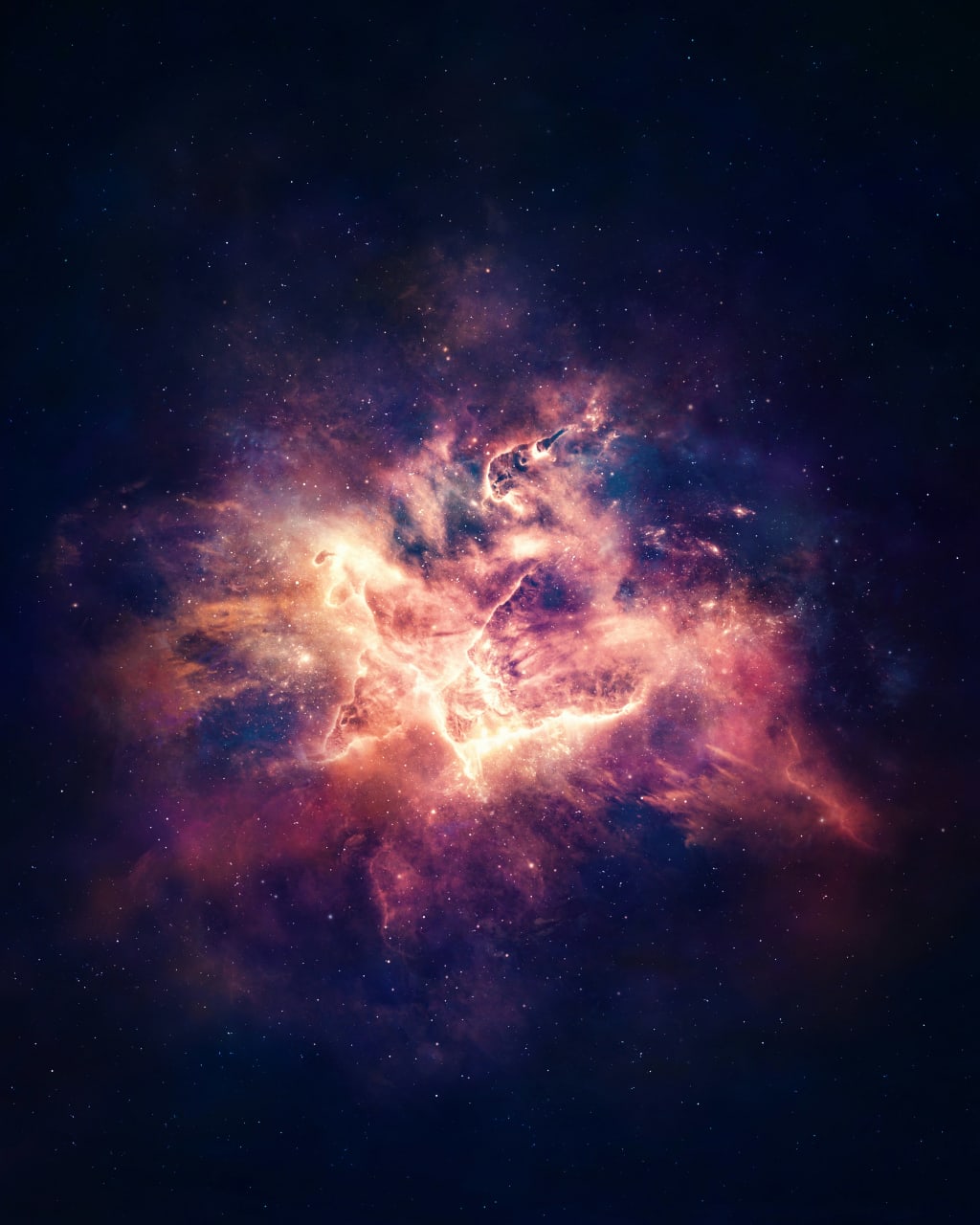
24 April 2025 — An Important Turning Point in Space Exploration
Today is the 35th anniversary of the Hubble Space Telescope, a significant turning point in the history of space travel. One of the most recognizable scientific equipment ever constructed, Hubble was launched on the Space Shuttle Discovery on April 24, 1990. It has transformed our knowledge of the cosmos and captured the public's attention with its stunning deep-space photos.
A Visionary Leap Forward
The Hubble Space Telescope was created to view the universe from outside of Earth's atmosphere, free from light pollution and atmospheric distortion, and is named after American astronomer Edwin Hubble, who contributed to the confirmation that the universe is expanding. This allowed for clearer and more detailed views than could be made with ground-based telescopes, giving scientists a perspective of the universe never before possible.
Overcoming Early Challenges
Hubble has some bumps in the road. Image quality was seriously harmed shortly after due to a defect in the primary mirror. A significant setback was the mistake, which was a spherical aberration. However, NASA came up with a creative solution. During a risky spacewalk in 1993, astronauts on board the Space Shuttle Endeavour fitted a corrective optics system. One of the most successful repair missions in NASA's history, this "contact lens" for Hubble helped the spacecraft regain its vision.
A Legacy of Discovery
Some of the most significant astronomical discoveries in the last 35 years have been made possible by Hubble, including:
• calculating the universe's age, which is 13.8 billion years.
• demonstrating the presence of dark energy, an enigmatic component responsible for the universe's accelerated expansion.
• examining the atmospheres of far-off worlds and taking the first direct pictures of exoplanets.
• revealing the stages of a star's life cycle, from stellar nurseries where they are born to supernovae when they die spectacularly.
• giving humanity the closest glimpse into the early universe by producing the famous "Hubble Deep Field" pictures.
A Cultural Icon
Hubble has become a cultural phenomenon in addition to its scientific significance. Its breathtaking pictures of galaxies, nebulae, and far-off star systems have appeared in documentaries, art, music, and textbooks. By fostering interest and awe about our place in the universe, Hubble has aided in bridging the gap between science and the general population.
Still Going Strong
Hubble continues to be operational and productive even after three and a half decades in space. Hubble continues to provide useful data and frequently works with its successors, providing complementary views of the universe across various light wavelengths, even though it now shares the spotlight with more recent telescopes like the James Webb Space Telescope.
As long as Hubble is technically sound and scientifically feasible, NASA intends to continue operating it. To prolong its life, scientists and engineers keep an eye on its systems and update its software.
Looking Ahead
We anticipate the future of space-based astronomy as we commemorate 35 years of Hubble. As technology advances and new missions are planned, Hubble's legacy will continue to motivate upcoming generations of scientists and visionaries.
Even in the immense quiet of space, Hubble has demonstrated to us that an eternal story is being told, one that we are only now starting to comprehend.
Conclusion
The Hubble Space Telescope is a symbol of human success and scientific aspirations as it marks 35 years in space. In addition to broadening our knowledge of the cosmos, it has motivated generations to gaze up at the stars, pose inquiries, and explore for solutions. Its legacy lives on in the hearts of everyone who has marveled at the universe it has shown, as well as in the history of science.
Hubble, happy 35th birthday. Cheers to many more trips into the unknown and orbits around the planet.
About the Creator
Keep reading
More stories from Md Rakib Hosen and writers in Earth and other communities.
How to Watch the Lyrid Meteor Shower in the Bay Area Monday Night
This Monday night, as the Lyrid meteor shower peaks, Bay Area stargazers will be treated to a celestial feast. With records going back more than 2,700 years, the Lyrids are one of the earliest known meteor showers, distinguished by their swift, brilliant meteors and sporadic fireballs. Everything you need to know to attend the exhibition is right here.
By Md Rakib Hosen9 months ago in Earth
Plans Lodged for Assembly Rooms Replacement
Plans have been officially submitted for the replacement of the historic Assembly Rooms, signaling a significant transformation in the heart of the city. The Assembly Rooms, long regarded as a cultural and architectural landmark, have been a venue for public gatherings, performances, and civic events for decades. With the new plans now lodged, the community, local authorities, and heritage groups are preparing for a debate over modern development versus preserving historical character.
By Muhammad Hassan7 days ago in Earth
Man Shot and Killed During Minneapolis Immigration Crackdown Graduated from Preble High School
A man shot and killed during an immigration enforcement operation in Minneapolis has been identified as a graduate of Preble High School, a detail that has added a deeply personal dimension to an already controversial crackdown. As authorities continue to investigate the circumstances surrounding the fatal shooting, community members, former classmates, and civil rights advocates are demanding transparency, accountability, and a broader review of how immigration enforcement actions are being carried out.
By Salaar Jamali3 days ago in Earth



Comments
There are no comments for this story
Be the first to respond and start the conversation.