
How Titanic Really Sank: Unraveling the Truth Behind the Tragedy
Unraveling the Truth Behind the Titanic's Tragic Sinking

Introduction
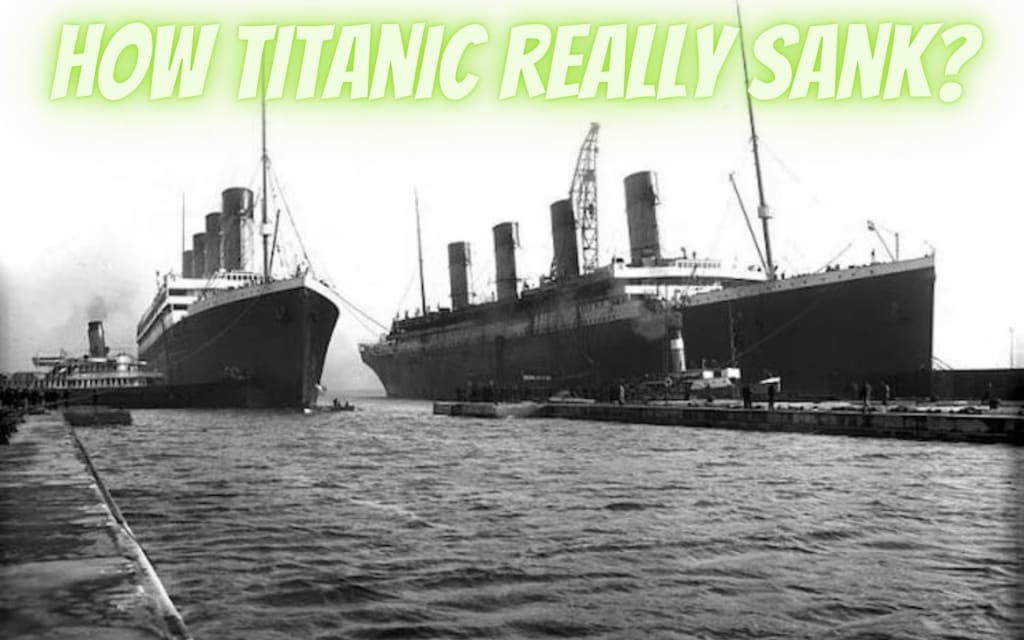
The sinking of the Titanic is one of the most infamous maritime disasters in history, captivating the world's attention for over a century. As the majestic vessel met its tragic fate on that fateful night of April 15, 1912, numerous theories and speculations have arisen about the sequence of events that led to its demise. In this article, we delve into the untold story of how the Titanic truly sank, separating fact from fiction.
The Night of the Disaster
On that cold night, the Titanic struck an iceberg in the frigid waters of the North Atlantic. Despite the ship's reputed "unsinkable" status, the collision caused a series of events that led to its tragic sinking.
Structural Weakness
One of the key factors in the Titanic's sinking was the ship's construction. The vessel's designers believed that the watertight compartments would prevent it from sinking, but the iceberg's impact compromised multiple compartments, allowing water to seep in. The ship's inadequate number of lifeboats exacerbated the situation, leading to tragic loss of life.
Structural Vulnerabilities
The Titanic's structural vulnerabilities played a pivotal role in its sinking. Despite its grandeur, the ship featured a design flaw - the inadequate number of watertight compartments. These compartments were meant to isolate water in case of a breach, but the iceberg's impact compromised multiple compartments, rapidly flooding the ship.
The Crucial Moments
As the icy waters poured into the compartments, the ship's bow began to sink. The immense weight differential between the bow and stern caused the ship to tilt forward. Soon, the stress on the ship's structure became unbearable, leading to a catastrophic breakage near the middle. The Titanic was now two separate pieces hurtling towards the ocean floor.
The Sequence of Events
As the iceberg scraped against the ship's starboard side, it punctured the hull and created a series of openings beneath the waterline. Water flooded the compartments, causing the bow to sink and the stern to rise dramatically. This led to immense stress on the ship's structure, ultimately resulting in its breaking apart and sinking into the depths.
Heroic Efforts and Human Tragedy
The disaster exposed both the valor of passengers and crew and the flaws in the ship's design. Crew members worked tirelessly to evacuate passengers, while musicians played to keep spirits high. However, the shortage of lifeboats led to heart-wrenching choices about who could be saved.
The Legacy
The Titanic's sinking left an indelible mark on history, prompting extensive changes in maritime regulations. New safety measures were introduced, including the requirement for more lifeboats, better communication systems, and improved navigation practices. This tragedy also catalyzed the establishment of the International Ice Patrol to monitor icebergs in the North Atlantic.
Conclusion
The sinking of the Titanic remains a poignant reminder of the vulnerability of human achievements in the face of nature's forces. It is a story of hubris, sacrifice, and resilience that intrigues and resonates with people worldwide. By understanding the true sequence of events that led to the Titanic's demise, we honor the memory of those who lost their lives and continue to learn valuable lessons that shape maritime safety to this day. The Titanic was one of the saddest moments in the history of the world. It left everyone speechless and there was I don't know if that was a rumor or not but it was that many people died in the Titanic before, but in my opinion, if that was right the Titanic would have been destroyed before. This is it for today, please do not forget to like and follow. Till here, bye.
About the Creator
Yasir kamran
Welcome to my world of words, where captivating stories come to life and imaginations run wild. I am a passionate writer who weaves tales that transport you to magical realms, evoke deep emotions, and ignite your thirst for adventure.
Keep reading
More stories from Yasir kamran and writers in Earth and other communities.
El Niño is likely to return in 2026. Here's what that means for Houston and Texas.
La Niña has been active since mid-October. However, according to the January update from the National Oceanic and Atmospheric Administration, it’s likely to end over the next couple of months, and a transition to El Niño is likely to occur later this year.
By Dena Falken Esq4 days ago in Earth
High-Speed Train Crash in Southern Spain Leaves at Least 21 Dead
A devastating high-speed train crash in southern Spain has left at least 21 people dead and dozens injured, shocking the nation and triggering a major emergency response. The incident, which occurred on a busy rail route connecting key southern cities, has reignited concerns over railway safety, infrastructure maintenance, and emergency preparedness in one of Europe’s most advanced rail networks.
By Aarif Lashariabout 4 hours ago in Earth
Rachel Reviews: The Spiral Archive by Pieter Hendrik
It's difficult for me to know where to start with a review of this book as it was, for me, an entirely unique experience and one that I'll probably never have again. I don't want that to be interpreted as unenjoyable but it has left me scratching my head a little and ruminating on its content, its themes and its characters.
By Rachel Deemingabout 18 hours ago in BookClub


Comments
There are no comments for this story
Be the first to respond and start the conversation.