
How Saudi Arabia and the US Might Reset the Middle East
A diminished Iran and its weakened proxies offer Riyadh and Washington a long-awaited opportunity to alter the regional balance of power – but Trump’s team must be careful about the deal it is pursuing with Tehran, writes Lina Khatib.

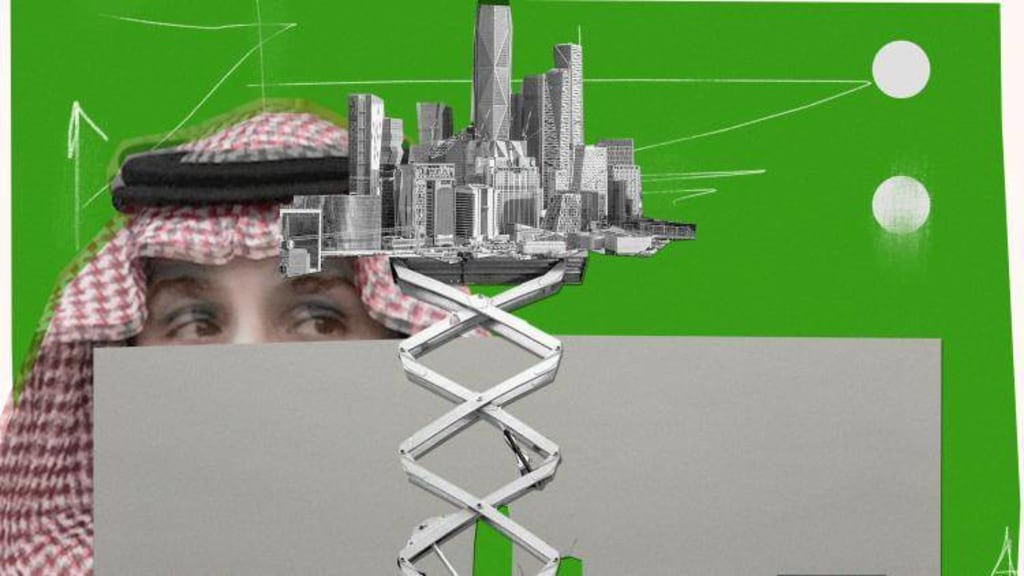
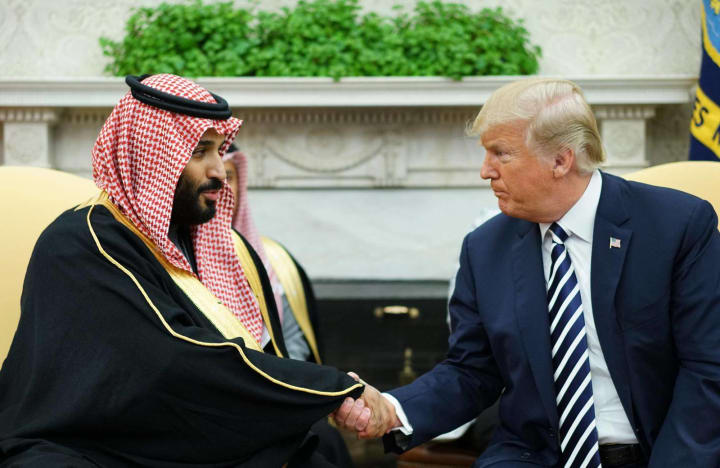
The Middle East is undergoing a significant transformation, driven by a renewed strategic partnership between Saudi Arabia and the United States. This alliance, revitalized under President Donald Trump's administration and Crown Prince Mohammed bin Salman (MBS), aims to reshape regional dynamics through economic collaboration, security initiatives, and diplomatic efforts.
Strategic Realignment and Economic Collaboration
A cornerstone of this renewed partnership is Saudi Arabia's commitment to invest at least $600 billion in the U.S. over the next four years. This substantial investment underscores the deepening economic ties between the two nations, focusing on sectors such as technology, defense industries, space exploration, artificial intelligence, and nuclear energy development.
In parallel, the U.S. is preparing to offer Saudi Arabia an arms package exceeding $100 billion, including advanced weaponry from major defense contractors. This deal not only strengthens Saudi Arabia's defense capabilities but also signifies a mutual commitment to regional stability and security.
Countering Regional Threats and Promoting Stability
A significant aspect of the U.S.-Saudi collaboration involves addressing regional security challenges, particularly concerning Iran and its proxies. The U.S. has re-designated the Houthi movement in Yemen as a terrorist organization, reversing a previous decision and aligning with Saudi Arabia's stance. This move is part of a broader strategy to counter Iranian influence and promote stability in conflict zones like Yemen, Lebanon, and Syria.
In Yemen, the U.S. has intensified military operations against the Houthis, including airstrikes targeting key infrastructure. These actions aim to disrupt the Houthis' capabilities and support efforts to restore peace and stability in the region.
Advancing Diplomatic Efforts and Regional Integration
Diplomatic initiatives are also central to the U.S.-Saudi strategy. Efforts are underway to revive the Arab Peace Initiative, originally proposed by Saudi Arabia in 2002, as a framework for resolving the Israeli-Palestinian conflict. Normalization of relations between Saudi Arabia and Israel is contingent upon progress in the peace process, highlighting the interconnectedness of diplomatic efforts and regional integration.
In Lebanon, the U.S. and Saudi Arabia have supported the election of a new president, ending a prolonged political vacuum. This development, along with Saudi Arabia's engagement in Syria's post-Assad transition, demonstrates a concerted effort to foster political stability and rebuild state institutions across the region.
Embracing Technological Innovation and Economic Diversification
Saudi Arabia's Vision 2030 initiative serves as a blueprint for economic diversification and modernization. The kingdom is investing heavily in sectors such as renewable energy, artificial intelligence, and space exploration. Notably, Saudi Arabia has made significant strides in its space program, including sending astronauts to the International Space Station and establishing a Center for Space Futures.
These advancements not only position Saudi Arabia as a technological leader in the region but also create opportunities for collaboration with the U.S. in cutting-edge industries, further solidifying their strategic partnership.
Conclusion
The evolving U.S.-Saudi relationship represents a multifaceted approach to resetting the Middle East. Through substantial economic investments, coordinated security efforts, and proactive diplomatic engagements, both nations are working to address longstanding challenges and promote a more stable and prosperous region. As these initiatives unfold, the partnership between Saudi Arabia and the U.S. will likely continue to play a pivotal role in shaping the future of the Middle East.
About the Creator
Keep reading
More stories from Abjol Hussain Laskar and writers in Earth and other communities.
Words of war: What is Surface to Air Missile system?
Words of War: Understanding the Surface-to-Air Missile (SAM) System In the modern theatre of war, dominance in the skies can dictate the outcome of a conflict. As air forces grow more advanced and lethal, so too do the defenses developed to counter them. One of the most crucial elements of any nation's air defense network is the Surface-to-Air Missile (SAM) system. These systems are designed to detect, track, and destroy airborne threats such as fighter jets, bombers, drones, and even ballistic missiles. From the Cold War era to today's high-tech battlefields, SAM systems have evolved into a sophisticated shield that forms the backbone of military defense for many nations.
By Abjol Hussain Laskar10 months ago in Earth
The Day the Forest Spoke
A Walk Into the Unknown It began as an ordinary hike, a chance to escape the chaos of the city and immerse myself in the green stillness of the old Redwood Forest at the edge of my town. The sun filtered through the towering trees in long golden beams, the leaves rustling faintly with a whisper of wind, and for a moment, I felt at peace — detached from deadlines, notifications, and the endless noise of human life. I hadn’t planned for anything extraordinary, just a few hours of solitude surrounded by the ancient giants that had stood for centuries, quietly observing the world.
By The Curious Writer3 days ago in Earth
The Forsyth House Fire
Since 1851, Forsyth House has stood on the corner of Union Street and Gordon Street in the heart of Glasgow. Its iconic, or was... because on Sunday 8th of March, 2026, a fire broke out in a small, seemingly un-named shop in the building and tore all that history down. As I write, the rubble is still unsettled and the street is still blocked off. Central Station is quiet on the upper level, and around 30 small businesses have quite literally gone up in smoke.
By S. A. Crawford3 days ago in The Swamp


Comments
There are no comments for this story
Be the first to respond and start the conversation.