
How Old Is the Ocean and What Lies in Its Deepest Depths?
Exploring the ancient mysteries of Earth's last frontier.
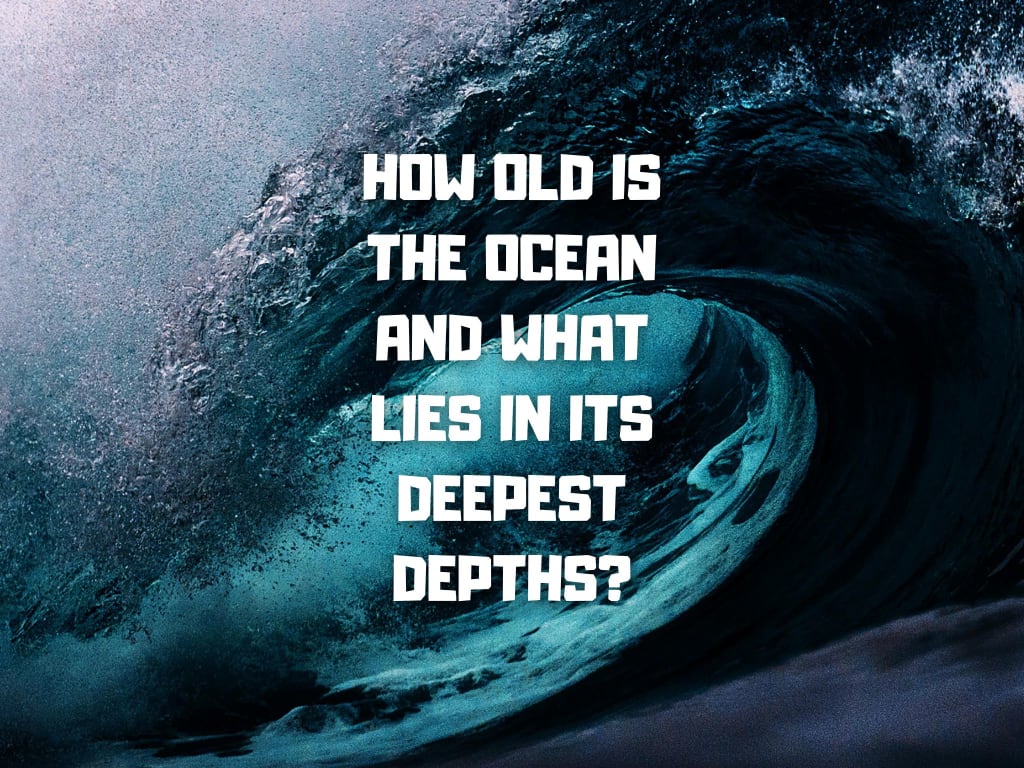
A Vast and Ancient Blue World
Imagine standing on a beach, gazing out at the endless expanse of the ocean. Beneath its surface lies a story billions of years in the making. The oceans, which cover over 70% of our planet, have been around for a staggering length of time—longer than life itself. But how old are they, exactly? And what secrets do their deepest, darkest regions hold? Let’s dive into the mysteries of this ancient and enigmatic world.
The Origins of the Ocean
To understand the age of the oceans, we must travel back in time—about 4.5 billion years, to when Earth first formed. The young planet was a hot, chaotic place, constantly bombarded by meteors. Water, essential for the oceans, likely came from a combination of sources:
Volcanic Activity: Intense volcanic eruptions released water vapor into the atmosphere, which eventually condensed and fell as rain.
Comets and Asteroids: Some of these celestial bodies carried water in the form of ice, contributing to Earth’s growing supply.
By 4 billion years ago, enough water had accumulated to form vast oceans. These ancient seas played a critical role in the emergence of life, providing a stable environment for the first microorganisms to evolve.
What Lies Beneath: The Deepest Parts of the Ocean
While the ocean’s surface is familiar and visible, its depths remain one of the least explored places on Earth. The deep ocean begins about 200 meters below the surface and extends to the seafloor. The most extreme region is the hadal zone, which includes the deepest trenches, such as the famous Mariana Trench in the western Pacific Ocean.
At its deepest point, known as the Challenger Deep, the Mariana Trench plunges about 10,994 meters (36,070 feet)—nearly seven miles beneath the surface. To put that into perspective, if you dropped Mount Everest into the trench, its peak would still be over a mile underwater.
What Lives in the Abyss?
Despite the crushing pressure, freezing temperatures, and complete darkness, life thrives in the deep ocean. These creatures have evolved extraordinary adaptations to survive in such extreme conditions.
Bioluminescent Organisms: Many deep-sea creatures, like the anglerfish and certain jellyfish, produce their own light to attract prey or communicate. This bioluminescence is a common feature in the pitch-black depths.
Giant Squid: Once thought to be mythical, these elusive creatures can grow up to 13 meters (43 feet) long.
Microbial Extremophiles: In the deepest trenches, near hydrothermal vents, microbes feed on chemicals like hydrogen sulfide instead of sunlight, forming the base of unique ecosystems.
These alien-like species remind us of how diverse and adaptable life can be, even in the harshest environments.
The Ocean’s Role in Earth’s History
The ocean isn’t just a backdrop for life—it’s a major player in shaping Earth’s climate and geology. Over billions of years, its currents have distributed heat around the planet, regulating temperatures and weather patterns. The ocean also acts as a massive carbon sink, absorbing CO₂ and helping to stabilize the atmosphere.
But the ocean’s story isn’t static. Sea levels have risen and fallen, and its chemistry has changed dramatically over time. During periods like the Ice Ages, vast portions of the ocean were locked up in glaciers.
Why the Deep Ocean Matters Today
The deep ocean is more than a curiosity—it’s vital to our planet’s health. The ecosystems in its depths are interconnected with surface life, influencing everything from fisheries to global carbon cycles. However, human activities like deep-sea mining and pollution threaten these fragile environments.
Understanding the ocean’s deepest parts isn’t just about exploration—it’s about protecting a resource that sustains life on Earth.
The Allure of the Unknown
Despite centuries of exploration, the deep ocean remains largely uncharted. Less than 20% of the ocean floor has been mapped in detail. Every descent into the depths uncovers new species, geological features, and mysteries.
What’s next for ocean exploration? Advances in technology, such as autonomous underwater vehicles (AUVs) and deep-diving submersibles, promise to unlock more secrets of this vast and ancient frontier. Who knows what discoveries await—hidden shipwrecks, new forms of life, or even clues to Earth’s early history?
A Timeless Mystery
The ocean is a living archive, holding the story of Earth’s past and a key to its future. From its ancient origins to its hidden depths, it inspires awe and curiosity in equal measure. Next time you stand by the shore or hear the waves, remember: you’re witnessing a timeless expanse, full of mysteries that are still waiting to be unraveled.
About the Creator
Zuzana Manová
Answering life’s biggest (and smallest) questions—because curiosity has no limits.
Keep reading
More stories from Zuzana Manová and writers in Earth and other communities.
What Would Happen If the Sun Suddenly Went Out?
Have you ever wondered what would happen if the Sun—the star that fuels all life on Earth—suddenly went dark? The thought is terrifying, yet fascinating. The Sun is our ultimate source of energy, warmth, and light. Its abrupt disappearance would trigger a series of catastrophic events, reshaping life on Earth in ways we can barely imagine. Let’s dive into this chilling scenario and uncover the science behind what would happen if our closest star suddenly vanished.
By Zuzana Manováabout a year ago in Earth
The Dryads Are Calling
Deep within the heart of ancient forests, where sunlight filters through towering canopies and the air hums with life, there exists a world few humans truly understand. It is a world of dryads, the mythical tree spirits of folklore, silently observing, nurturing, and sometimes guiding the creatures that dwell among the trees. Today, their legend continues to captivate the imagination, blending myth, nature, and a touch of magic.
By Aarif Lashariabout 9 hours ago in Earth
Inside Trump's $11 Billion Health Plan to Replace “Neo-Colonial” USAID
In the landscape of global health aid, few proposals have stirred as much debate as former President Donald Trump’s ambitious plan to restructure American assistance abroad. Dubbed an $11 billion health initiative aimed at replacing USAID’s current framework, the plan seeks to pivot away from what Trump and his allies have criticized as the “neo-colonial” approach of U.S. foreign aid. While the plan promises greater efficiency and impact, experts are split on whether it is a practical solution or a politically driven gamble. Trump’s Critique of USAID The United States Agency for International Development (USAID) has long been a central pillar of American foreign assistance, distributing billions in aid annually to address health crises, food insecurity, and development challenges worldwide. However, Trump’s administration and its supporters have often described USAID’s approach as bureaucratic, inefficient, and reflective of a “neo-colonial” mindset. In public statements, Trump argued that the U.S. was spending taxpayer dollars on programs that benefited foreign governments or contractors more than the intended local communities. Critics of the plan say that while USAID has flaws—as any large bureaucracy does—its extensive networks and decades of experience provide an unmatched capacity to deliver aid efficiently and safely. The Core of the $11 Billion Proposal At the heart of Trump’s proposal is an $11 billion fund designed to consolidate, modernize, and streamline U.S. health aid. Unlike the traditional USAID model, which relies heavily on long-term partnerships with governments and NGOs, the new plan emphasizes: Direct Impact Funding: Allocating resources to frontline health workers and local initiatives rather than intermediaries. Data-Driven Investments: Using real-time health data to target outbreaks and crises more efficiently. Private Sector Partnerships: Leveraging U.S. pharmaceutical companies, tech firms, and healthcare startups to deliver vaccines, treatments, and medical infrastructure. Shorter Program Cycles: Moving away from multi-year funding commitments in favor of more flexible, results-oriented programs. Proponents argue that this approach could reduce bureaucratic overhead and ensure U.S. aid reaches communities faster. By “cutting out the middlemen,” Trump supporters claim, America can avoid the pitfalls of slow-moving aid programs that sometimes fail to adapt to crises. Reactions from the Global Health Community Global health experts, however, have expressed concern about both the logistics and philosophy of the plan. Dr. Melissa Ortega, a senior researcher at the Global Health Policy Institute, explained, “The idea of bypassing established structures like USAID may sound appealing on paper, but in practice, it risks undermining decades of institutional knowledge. Health systems are complex, and short-term projects cannot replace long-term capacity building.” Some critics have also questioned the characterization of USAID as “neo-colonial.” While U.S. foreign aid has historically been tied to geopolitical interests, many programs today are designed collaboratively with recipient countries and local organizations. Reducing oversight could unintentionally increase the risk of misuse, corruption, or health inequities. On the other hand, supporters of Trump’s plan point to examples of inefficiency in USAID programs, citing cases where aid was delayed or mismanaged. By introducing more direct funding models, they argue, U.S. taxpayer dollars could achieve a higher “return on health outcomes.” Political Implications Trump’s health aid overhaul proposal is not just about international development—it is also deeply political. Framing USAID as a “neo-colonial” institution resonates with a populist narrative that America should prioritize its own citizens and assert greater control over how taxpayer money is spent abroad. Domestically, the $11 billion plan faces scrutiny from Congress. Lawmakers from both parties have questioned whether dismantling USAID’s systems could destabilize ongoing health programs in countries where the U.S. has long-term commitments. The potential impact on global health security—including the fight against pandemics like COVID-19—adds another layer of concern. Internationally, U.S. allies and partner nations are watching closely. Sudden shifts in aid delivery could disrupt health programs in low- and middle-income countries, many of which rely on predictable funding cycles to maintain vaccination campaigns, maternal health services, and disease surveillance. Possible Benefits and Risks If executed carefully, the Trump-backed model could bring several benefits: Faster Response Times: Direct funding could accelerate delivery of vaccines, treatments, and emergency support. Innovation Boost: By partnering with private sector companies, the plan could accelerate development of new health technologies. Accountability: With performance-based metrics, the plan may better measure the impact of U.S. aid. However, the risks are equally significant: Disruption of Existing Programs: Abrupt changes could destabilize ongoing health projects. Loss of Expertise: USAID’s decades of experience in navigating local governance, supply chains, and community engagement may be hard to replace. Geopolitical Fallout: Allies accustomed to collaborating with USAID might see the move as destabilizing, reducing cooperation on global health initiatives. Looking Ahead As Trump and his allies continue to advocate for this $11 billion overhaul, the debate over the future of U.S. health aid is intensifying. Proponents view it as a necessary modernization of an outdated system, while critics fear it could undercut decades of carefully built infrastructure and global partnerships. Ultimately, the success of this plan will hinge on its ability to balance efficiency with stability, innovation with oversight, and political objectives with humanitarian needs. For now, the proposal remains controversial, representing a dramatic departure from traditional approaches to U.S. foreign aid. Whether it will reshape global health for the better—or simply create more uncertainty—remains to be seen. In the end, the Trump health plan is as much about ideology as it is about dollars. It challenges the conventional wisdom of international development and asks whether a more streamlined, results-focused approach can truly replace a system built over decades. As the world watches, the stakes could not be higher: the future of U.S. global health aid—and the lives it touches—hangs in the balance.
By Muhammad Hassan5 days ago in Earth


Comments
There are no comments for this story
Be the first to respond and start the conversation.