
How Humans Will Get Oxygen on Mars
Oxygen on Mars


How Humans Will Get Oxygen on Mars.
Mars often called the Red Planet has long been a subject of fascination for scientists space agencies and visionaries. With ambitious plans from organizations like NASA SpaceX and other space agencies human colonization of Mars is no longer just science fiction it is becoming an achievable goal. However one of the greatest challenges for sustaining human life on Mars is the availability of oxygen. Unlike Earth Mars has a very thin atmosphere composed mainly of carbon dioxide about 95% with only trace amounts of oxygen. This makes survival on the planet impossible without external sources of breathable air. To establish a human presence on Mars scientists and engineers are exploring various methods to generate oxygen ensuring that future astronauts and colonists have a reliable supply for breathing fuel production and other essential activities. One of the most promising solutions for oxygen production on Mars is the Mars Oxygen In Situ Resource Utilization Experiment (MOXIE). This experimental technology developed by NASA has already demonstrated success aboard the Perseverance rover. MOXIE works by extracting carbon dioxide from the Martian atmosphere and using a process called solid oxide electrolysis to separate oxygen atoms. This method requires electricity which can be generated from solar panels or nuclear power sources. The extracted oxygen can then be stored for human consumption or used as rocket fuel for return missions. MOXIE’s small scale experiments have proven that oxygen production on Mars is feasible and future missions will aim to scale up this technology to support human settlements.

Another approach to oxygen production is the extraction of water from the Martian soil and ice deposits. Scientists have discovered significant amounts of water ice beneath the Martian surface especially in polar regions and underground reservoirs. Water (H₂O) can be split into hydrogen and oxygen through a process called electrolysis. By utilizing solar or nuclear energy future Mars missions could extract water break it down into its components and store oxygen for human use. The hydrogen produced in this process could also serve as a valuable fuel source for energy production and transportation. This method not only provides breathable air but also contributes to the overall sustainability of Martian habitats. One of the key elements of Mars colonization is the development of self sustaining habitats that can continuously generate oxygen. Scientists are considering the use of bioreactors containing oxygen producing bacteria algae or cyanobacteria. These microorganisms perform photosynthesis converting carbon dioxide into oxygen much like plants do on Earth. By creating closed loop life support systems astronauts could cultivate oxygen producing organisms within controlled environments ensuring a continuous supply of breathable air. This approach mimics Earth's natural oxygen cycle and could be integrated into future Martian habitats reducing reliance on Earth based resupply missions.

Greenhouses and plant based oxygen production also hold great potential for Mars colonization. Plants naturally produce oxygen through photosynthesis and if future Martian colonies include large scale greenhouses or agricultural domes they could serve as both a food source and an oxygen generator. Researchers are exploring ways to cultivate plants in Martian soil using hydroponic or aeroponic systems to maximize growth in controlled conditions. The presence of plants in Martian habitats would not only contribute to oxygen generation but also improve psychological well being for astronauts living in an isolated environment. Another theoretical concept involves importing oxygen rich compounds from Earth or creating chemical reactions that release oxygen from Martian materials. Some scientists propose using metal oxides found in Martian soil to extract oxygen through high temperature chemical reactions. Additionally compounds like perchlorates which are abundant on Mars could potentially be processed to release oxygen. These methods require advanced technology and significant energy input but they present alternative ways to supplement oxygen production on Mars. A crucial aspect of sustaining human life on Mars is energy availability. Oxygen production methods such as MOXIE electrolysis and bioreactors all require substantial energy inputs. Solar power is the most accessible energy source on Mars but its efficiency is limited due to dust storms and weaker sunlight compared to Earth. To overcome this challenge scientists are considering nuclear power as a reliable energy source for long term Mars missions. Small modular nuclear reactors could provide consistent energy for oxygen production habitat heating and other essential operations. By securing a steady power supply, Mars missions can ensure that oxygen generation remains uninterrupted.
Storage and distribution of oxygen are also critical challenges. Oxygen needs to be compressed and stored in tanks for future use whether for breathing or rocket propulsion. Scientists are developing advanced storage solutions including cryogenic systems and high pressure tanks to ensure that oxygen remains available when needed. Additionally transport systems must be designed to distribute oxygen efficiently within habitats spacesuits and exploration vehicles. These logistical aspects are vital to the success of any long term human presence on Mars. Mars presents a harsh and unforgiving environment but through innovative technologies and resource utilization humans can overcome the oxygen challenge. The combination of MOXIE water electrolysis bioreactors plant based systems and chemical extraction offers multiple pathways to ensure a sustainable oxygen supply. With advancements in energy production storage and distribution future Mars missions will be able to support human life paving the way for long term colonization.
The quest to make Mars habitable is one of the most exciting challenges of our time. As space agencies and private companies continue to develop cutting edge technologies the dream of a self sustaining Martian colony moves closer to reality. Oxygen production is just one piece of the puzzle but it is a crucial one. By harnessing the resources available on Mars humans will not only survive but thrive on the Red Planet taking a significant step toward becoming a multi planetary species.
About the Creator
Adnan Rasheed
Author & Creator | Writing News , Science Fiction, and Worldwide Update| Digital Product Designer | Sharing life-changing strategies for success.
Keep reading
More stories from Adnan Rasheed and writers in Earth and other communities.
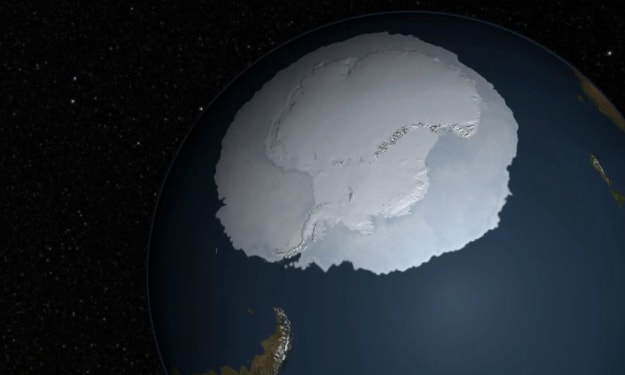
New map shows Antarctica without its ice.
New map shows Antarctica without its ice. Antarctica the southernmost continent on Earth has long remained one of the most mysterious and least explored regions of our planet. Covered by a thick layer of ice for millions of years it has been a challenge for scientists to map what truly lies beneath. However a groundbreaking new map released by the British Antarctic Survey (BAS) has provided the most detailed look yet at Antarctica’s hidden landscape, showing what the continent would look like if all its ice were stripped away. This new data compiled from over 60 years of research is expected to play a crucial role in understanding ice flows climate change and the geological history of the region. The significance of this map cannot be overstated. Antarctica holds about 70% of the world’s fresh water in its vast ice sheets, which have an average thickness of approximately 1.2 miles (1.9 km). Underneath this ice lies a rugged and complex landscape complete with towering mountains deep valleys and vast plains. The newly released map provides a clearer picture of this hidden world allowing scientists to analyze the topography of the land in unprecedented detail.
By Adnan Rasheed12 months ago in Earth
Planning a Vegetable Garden Layout: Sun, Space, and Succession
You've decided to grow your own food. You've cleared a space, bought seeds, and imagined baskets overflowing with tomatoes and zucchini. Then reality intervenes. The tomatoes shade the basil. The zucchini engulfs the carrots. By midsummer, you have more lettuce than you can eat, followed by a gap of nothing until frost.
By Emma Wallaceabout 4 hours ago in Earth
Review of 'Man on the Run'
My wife and I saw Man on the Run, a nearly 2-hour documentary on Amazon Prime, about Wings, Paul McCartney's group that flew around the world from shortly after The Beatles broke up in early 1970 to shortly after John Lennon was murdered at the end of 1980, making a Beatles reunion forever impossible.
By Paul Levinson5 days ago in Beat



Comments
There are no comments for this story
Be the first to respond and start the conversation.