
How do snail eggs protect themselves from predators ?
What natural defenses do snails use to protect their eggs ?


Water snail eggs have evolved various protective strategies to safeguard themselves from predators, ensuring the survival of their offspring. Here are some of the key methods employed by snails to protect their eggs:
1. Camouflage and Nesting Strategies
Many species of water snails lay their eggs in locations that provide natural camouflage. They often select sites like submerged vegetation, rocks, or soil that blend with their surroundings, making it difficult for predators to spot the eggs. For example, some freshwater snails lay translucent or white eggs that can easily blend into the environment, reducing visibility to potential threats.
2. Gelatinous Egg Capsules
The eggs of many snail species are encased in a gelatinous substance that serves multiple purposes:
Physical Protection: This jelly-like coating acts as a buffer against physical damage and environmental stressors such as temperature fluctuations and desiccation.
Moisture Retention: The gelatin helps maintain moisture levels essential for the developing embryos, which is crucial for their survival.
Deterrent to Predators: The texture and composition of the gelatin can deter some predators from consuming the eggs due to its unpalatable nature.
3. Chemical Defenses
Certain species of snails have developed chemical defenses that deter predators. For instance, the eggs of some aquatic snails contain neurotoxins that make them distasteful or harmful to potential predators. This strategy is particularly noted in the apple snail (Pomacea canaliculata), whose bright pink egg clutches serve as a warning signal (aposematism), indicating their toxicity. The bright coloration not only makes them conspicuous but also advertises their chemical defenses, thereby reducing predation risk.
4. Parental Care
Some aquatic snails exhibit surprising levels of parental care, actively protecting their eggs until they hatch. This can involve:
Attaching Eggs to Secure Surfaces: Snails may deposit their eggs on stable surfaces like plants or rocks where they can monitor and protect them.
Nutritional Support: Certain species provide nutrient-rich secretions within the egg capsules that nourish developing embryos, enhancing their chances of survival.
5. Hiding and Concealment Techniques
Snails often employ behavioral strategies to protect their eggs:
Burrowing: Some snails will dig into the substrate to lay their eggs, covering them with soil to obscure them from view.
Sheltering Under Objects: Snails may also choose to lay their eggs under logs or within crevices in rocks, providing additional physical barriers against predators.

6. Predator Avoidance Tactics
When faced with threats, adult snails can also engage in behaviors that protect their eggs indirectly:
Retraction into Shells: Adult snails can retract into their shells and seal the opening with mucus when they sense danger, thereby reducing the likelihood of predation on both themselves and their eggs.
Secretion of Mucus: In response to attacks, snails may release large amounts of mucus that can confuse or deter predators.
The Fascinating Life Cycle of Ramshorn Snail Eggs
What natural defenses do snails use to protect their eggs ?
Water snails have developed a variety of natural defenses to protect their eggs from predators, ensuring the survival of their offspring. Here are some key strategies:
1. Camouflaging and Nesting Techniques
Snails often lay their eggs in locations that provide natural camouflage, such as under leaves, in soil, or among aquatic vegetation. This strategic choice helps conceal the eggs from visual predators. By selecting secure nesting sites, snails can further reduce the risk of predation.
2. Gelatinous Egg Structures
The eggs of many snail species are encased in a gelatinous substance that serves multiple protective functions:
Physical Barrier: The jelly-like coating provides a buffer against physical damage and environmental stressors.
Moisture Retention: This gelatin helps maintain necessary moisture levels for developing embryos.
Deterrent to Predators: The texture and composition of the gelatin can deter some predators due to its unpalatable nature1.
3. Chemical Defenses
Certain species, like the apple snail (Pomacea canaliculata), have evolved chemical defenses in their eggs. These eggs contain neurotoxins that make them distasteful or harmful to potential predators. The bright coloration of these egg clutches serves as a warning signal (aposematism) to visual-hunting predators, indicating their toxicity.
4. Parental Care and Protective Behavior
Some snails exhibit behaviors that protect their eggs:
Covering Eggs: Snails may bury their eggs in soil or cover them with debris to hide them from predators.
Active Protection: In some cases, adult snails will remain near their eggs to guard them against threats.
5. Hard Calcium Shells
Certain snail species produce hard calcium shells around their eggs, providing a robust defense against predation. This hard exterior acts as a fortress, deterring many would-be predators while creating a stable environment for the embryos to develop.
6. Behavioral Adaptations
Adult snails can engage in behaviors that indirectly protect their eggs:
Retraction into Shells: When threatened, adult snails retract into their shells and seal the opening with mucus, reducing the risk of predation on both themselves and their eggs.
Secretion of Mucus: Snails may release large amounts of mucus when attacked, which can confuse or deter predators.
These diverse strategies highlight the adaptability and resilience of snails in safeguarding their reproductive success against various environmental threats.
Final Words
The protective strategies employed by water snail eggs highlight the remarkable adaptations these creatures have developed over time. From camouflage and chemical defenses to parental care and behavioral tactics, these methods significantly enhance the survival prospects of snail embryos in a world filled with potential threats. Understanding these strategies not only sheds light on the resilience of snails but also emphasizes the intricate balance within aquatic ecosystems where these fascinating mollusks play a crucial role.
FAQs about Snail Eggs
What do snail eggs look like?
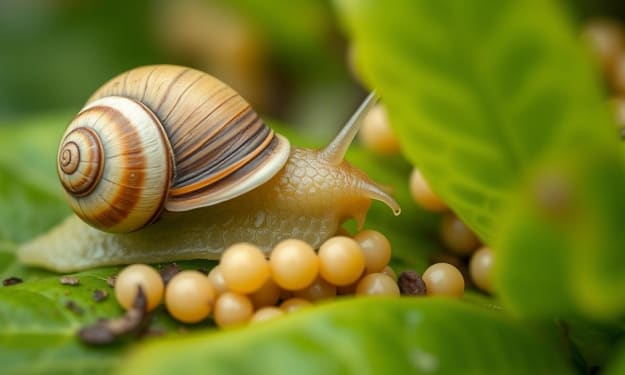
Snail eggs are usually small, round, and gelatinous.
Where do snails lay their eggs?
Snails lay eggs in soil, plants, or water.
How long does it take for snail eggs to hatch?
Hatching typically occurs within 2 to 4 weeks.
Do snails protect their eggs?
Yes, snails use various methods to protect their eggs.
Are snail eggs edible?
Some snail eggs are edible; others may be toxic.
About the Creator
Arjun
Aquarium hobbyist sharing simple, real-world fixes for snail, shrimp, and plant problems. Clear guides, no fluff just practical tips to keep your tank healthy and thriving.
The Eiffel Tower: Paris’s Iron Soul and the Story Behind Its Global Magic
The Eiffel Tower is more than a landmark rising above the Paris skyline. It is a symbol of human imagination, engineering courage, and the timeless romance of France. Millions visit it every year, yet few know the deeper story—how a controversial iron structure built for a temporary event became one of the most beloved monuments on Earth. Standing tall since 1889, the Eiffel Tower has witnessed revolutions, world wars, artistic movements, and generations of travelers who came to Paris searching for beauty, inspiration, or simply a moment they would never forget. 🌍 A Monument Born From a Global Celebration The Eiffel Tower was created for the 1889 Exposition Universelle, a world fair celebrating the 100th anniversary of the French Revolution. The French government held a competition for a monument that would represent modern engineering and national pride. Over 100 designs were submitted, but the winning proposal came from Gustave Eiffel, a renowned engineer whose company specialized in metal frameworks. Construction began on January 28, 1887, and was completed on March 31, 1889—an astonishing achievement in just over two years. When it opened, the tower served as the grand entrance to the exposition, welcoming millions of visitors from around the world. 🛠️ Engineering Genius: How the Tower Was Built The Eiffel Tower was a radical idea for its time. Paris was a city of stone, sculptures, and classical architecture. A 300‑meter iron tower seemed outrageous to many. Yet Gustave Eiffel and his team believed in the power of innovation. Key engineering facts - Height at completion: 300 meters (984 ft), making it the tallest structure in the world until 1930. - Current height: 330 meters (1,083 ft) including antennas. - Weight: About 10,100 tons. - Iron pieces: 18,038 individual components. - Stairs: 1,665 steps to the top. - Construction time: 2 years, 2 months, 5 days. The tower’s lattice design wasn’t just artistic—it was functional. The open iron framework allowed wind to pass through, giving the structure remarkable stability. Gustave Eiffel famously said the tower was “not only the art of the engineer, but also the art of the architect.” 🎨 From Controversy to Cultural Icon When the Eiffel Tower was unveiled, not everyone loved it. In fact, many Parisians hated it. Writers, artists, and intellectuals signed petitions calling it an eyesore. They said it looked like a “giant smokestack” and would ruin the beauty of Paris. But as time passed, the tower won hearts. - It became a symbol of modernity. - It became a symbol of Parisian pride. - It became a symbol of France itself. By the early 20th century, the Eiffel Tower had transformed from a temporary exhibition piece into a permanent global icon. 📡 A Tower That Saved Itself The Eiffel Tower was originally meant to stand for only 20 years. After the exposition, it was supposed to be dismantled. What saved it? Science. Gustave Eiffel allowed the tower to be used for radio experiments. Its height made it ideal for broadcasting signals. During World War I, the tower intercepted enemy communications, helping France in critical moments. Its usefulness ensured its survival. 💑 The Human Side: Why the Eiffel Tower Feels Magical People don’t fall in love with the Eiffel Tower because of its measurements or engineering. They fall in love with how it makes them feel. Standing beneath it, you feel small—but in a good way. Climbing it, you feel connected to history. Seeing Paris from the top, you feel like the world is bigger and more beautiful than you realized. The tower has become: - A symbol of love - A backdrop for proposals - A dream destination for travelers - A muse for artists and filmmakers It is the beating heart of Paris. 🌆 Visiting the Eiffel Tower: What to Expect A visit to the Eiffel Tower is a journey through levels of history, architecture, and breathtaking views. The Esplanade The ground level offers a close-up look at the tower’s massive iron legs and the engineering that holds it together. The First Floor - Transparent floors - Exhibits on the tower’s history - Restaurants and shops The Second Floor This level offers one of the best panoramic views of Paris—close enough to see details, high enough to feel the city’s scale. The Summit At 276 meters, the top floor gives a sweeping view of the entire Paris region. Gustave Eiffel’s private office has been recreated here. 🌙 The Eiffel Tower at Night Every evening, the Eiffel Tower lights up with a warm golden glow. And for five minutes at the start of each hour, it sparkles with 20,000 twinkling lights. This nightly ritual has become one of the most magical sights in the world. 📚 Fun and Surprising Facts - The Eiffel Tower was the tallest structure in the world until the Chrysler Building surpassed it in 1930. - It was originally painted red‑brown, then yellow, and now “Eiffel Tower Brown.” - Gustave Eiffel’s company also built the metal framework for the Statue of Liberty. - The tower sways slightly in strong winds—up to 9 cm. - It is the most visited paid monument in the world. 💬 Why the Eiffel Tower Still Matters The Eiffel Tower endures because it represents something universal: the human desire to create, to innovate, and to leave something beautiful behind. It is a reminder that even the most controversial ideas can become beloved. It is proof that art and engineering can coexist. It is a symbol of Paris, of France, and of the world’s shared cultural heritage. If this story brought the Eiffel Tower to life for you, share it with someone who dreams of visiting Paris. Leave a comment with your favorite Eiffel Tower moment—or the moment you hope to experience someday. And if you’d like to support more human‑centered, deeply researched stories like this, feel free to leave a tip. It helps bring more inspiring content to life.
By Haroon Pasha6 days ago in Earth



Comments
There are no comments for this story
Be the first to respond and start the conversation.