
HOW CLIMATE CHANGE INCREASES HUNGER — AND WHY WE’RE ALL AT RISK? WHATS THE WAY FORWARD?
Climate change is expected to have significant impacts on future crop production and global food security, with potentially severe consequences for hunger indices of countries. Climate change is a threat multiplier for hunger, destroying livelihoods, driving displacement, widening social inequalities, and undermining sustainable development. This piece is adapted from Rupa Mukerji’s essay, “Climate Change and Hunger,” published as part of the 2019 Global Hunger Index (co-produced by Concern and Welthungerhilfe).

Since the early 1990s, the number of extreme weather-related disasters has doubled. Harvests have decreased, and food prices have risen as a result. The climate crisis is fueling the hunger crisis, and with our food systems more global than ever, we all stand to lose.
Sadly, this is not a trend that appears to be going away any time soon. Looking ahead, climate models predict higher average temperatures around the world and hotter extremes, rising sea levels in coastal areas and more frequent droughts in other areas. The Horn of Africa is currently experiencing its worst drought in 40 years. While climate change can be a difficult topic to fully understand, the human impacts are clear and very tangible: Millions of people go to bed hungry every night as a result of global warming. Here are four ways that climate change and hunger go hand-in-hand — and why we should all be concerned.
Here are some key ways climate change is expected to affect crop production and food security:
1. CLIMATE CHANGE IMPACTS AGRICULTURE AND FOOD PRODUCTION
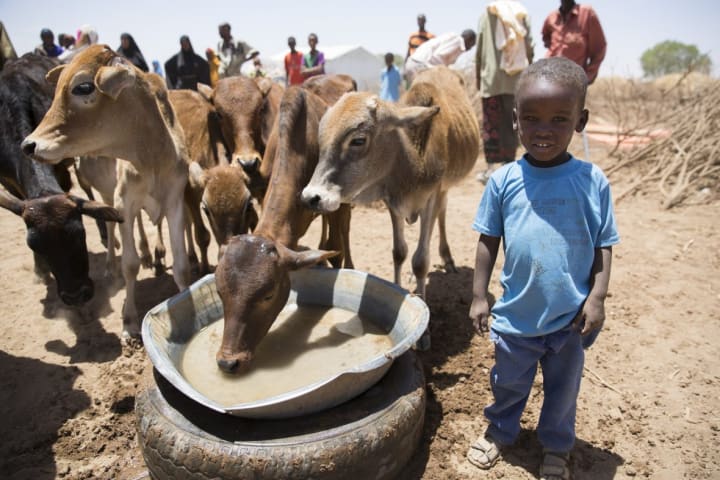
Climate change is likely to result in reduced crop yields due to a combination of factors, including increased temperatures, changes in precipitation patterns, and extreme weather events such as droughts and floods. This is expected to be particularly significant in tropical regions, where many developing countries are located. According to the Food and Agriculture Organization, 80% of the causes behind an unpredictable harvest for cereal crops in areas like Africa’s Sahel come down to climate variability. In other areas like Bangladesh and Vietnam, rising sea levels pose a different threat to food security. There, coastal farmlands are often flooded by saltwater, which kills off rice crops. With half of Vietnam’s national rice production centered in the Mekong Delta (roughly the size of Maryland), even a minor flood can have major implications.
2. CHANGES IN CROP DISTRIBUTION
Changes in climate may also result in shifts in the distribution of crops, with some regions becoming unsuitable for current crops, and new regions becoming suitable for other crops. This may require significant adjustments in farming practices and infrastructure, which could be challenging for many developing countries.
If climate change reduces the amount of food produced, then it makes sense that it also reduces the amount of food people can access. This simple instance of supply-and-demand, however, has big impacts. If one part of the food system is interrupted due to a climate event (big or small), that can lead to inflation. We’ve seen this happen over the last two years after international trade was suspended due to COVID-19. These price spikes leave the poorest families most vulnerable; one study shows that people living in urban areas under the poverty line spend up to 75% of their budget on food alone.
3. INCREASED INCEDENTS OF PESTS AND DISEASES
Higher temperatures and changing weather patterns could lead to an increase in the incidence of pests and diseases that can damage crops. This could further reduce crop yields, making it even more challenging to meet food demand.
4. CLIMATE CHANGE DECREASES THE NUTRITIONAL VALUE OF FOOD
Hunger and malnutrition are issues of both quantity and quality. Climate change affects both. Studies show that higher concentrations of carbon dioxide in plants reduce their protein, zinc, and iron content. By 2050, an estimated 175 million people could develop zinc deficiencies. 122 million people may be protein-deficient by that time as well.
Beyond plant-based nutrition, climate change also affects the quality of livestock, which rely on the same resources as humans to eat, grow, and produce meat, eggs, and/or milk. Cattle, goats, and other livestock account for 36% of all drought-related losses (crops make up 49%). Likewise, climate extremes threaten fish populations, especially in areas like Southeast Asia.
CLIMATE CHANGE AND HUNGER: WHAT COMES NEXT?
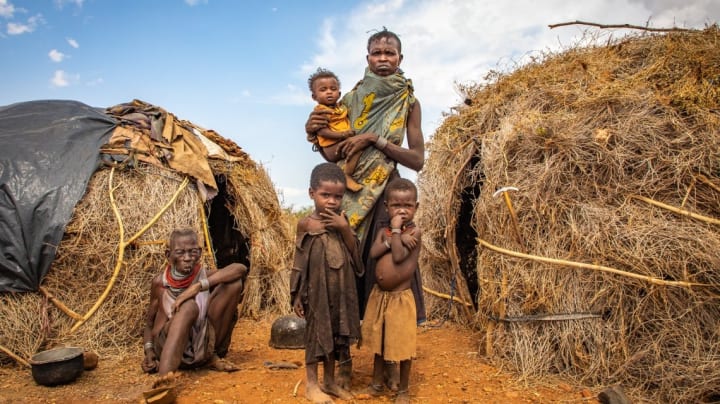
Climate change affects the global food system in such a way that those who already suffer from hunger and undernutrition are those most vulnerable to losing more as the climate crisis continues. In order to end hunger — one of our top Sustainable Development Goals for the year 2030 — we need to address the causes of climate change, particularly at the governmental and policy levels. We also need to prioritize climate justice to support the communities on the frontlines of the crisis, communities that often contribute very little to greenhouse gas emissions.
The last few years have made it clear that this cannot happen in isolation. We must foster global solidarity with the most climate-vulnerable communities and countries. High-income countries (especially those with the highest greenhouse emissions) must take responsibility for both mitigating the causes of climate change and supporting low- and middle-income countries in adapting to the effects of these changes. We must also honor commitments to programs like the Paris Climate Agreement, and accelerate national and international responses. All of this is a tall order, but it’s an order that will affect all of our futures, regardless of where we live.
IN CONCLUSION
The impacts of climate change on crop production and food security are complex and varied, but are expected to have significant implications for hunger indices of countries. Developing countries are likely to be particularly vulnerable to these impacts, and will need to invest in adaptation strategies to mitigate these effects and ensure food security for their populations.
About the Creator
Zuhaib Khan
As a content writing model, I have been trained to generate high-quality and engaging written content across a wide range of topics and industries.
Keep reading
More stories from writers in Earth and other communities.
Malfunction Forces Japan to Take Restarted Nuclear Plant Offline: What It Means for Energy Security and the Future of Nuclear Power
Japan's efforts to revive its nuclear energy sector suffered a significant setback recently when a malfunction forced a restarted nuclear plant offline, highlighting the challenges the country faces as it works to balance energy security, environmental goals, and safety standards. This development has raised questions about the reliability of nuclear power in the post-Fukushima era and the nation’s ambitious plans to reduce its dependence on fossil fuels.
By Muhammad Hassan4 days ago in Earth
Tragic Chapter on the Trains Sends Rail Superpower Spain Into Crisis
Spain, long celebrated as a railway superpower thanks to its high-speed AVE network and extensive commuter services, is now grappling with a rail crisis following a series of tragic incidents. Recent events have triggered public outrage, investigations, and calls for urgent reforms, highlighting vulnerabilities in what was once considered one of Europe’s safest and most efficient rail systems.
By Aarif Lasharia day ago in Earth
Autonomy Is The Real Privilege
Good morning, freedom-seekers! Today we’re gonna be looking at autonomy. A strange word, I know; one many would probably look at blankly and run away from on sight. We’re gonna figure out what it actually means, consider how it’s achieved, and decipher just how deeply most of us are tangled up in dependence without realising it.
By That ‘Freedom’ Guy5 days ago in Humans


Comments
There are no comments for this story
Be the first to respond and start the conversation.