
Hide and Seek Fish
Do I hide or do I eat?


Not too long ago, as I was reading an article about coral reefs, I saw a photo of what I thought was a coral reef. Yet, at the same time, it didn’t look like any coral reef I’d seen in pictures and that got my curiosity going. After all, I'd never seen a coral reef 'move'!
I read the article which didn’t identify the reef and the picture sparked my imagination. “Ah, I feel a somewhat whimsical story here”, I thought. But I wanted to know more about the reef so I wouldn’t mislead anyone or make myself look more ignorant that I actually was.
What I did before I began writing, was text my granddaughter. Ever since she was about nine years old, all she wanted to do was study the oceans and whatever was in them. She was determined to become a marine biologist. Thirteen years later, she graduated from college with a degree in Marine Science. She followed her dream and never looked back.
I found it difficult to describe the “reef” I thought I saw in the picture, so I sent it to her via text.
She texted back, “Oh Grandma, that’s not exactly a reef. It’s a fish.”
“What?” I asked.
Then her text began.
I had to read her text about three or four times because I had no idea what in heaven’s name she was talking about, nor could I pronounce half of the words she used. Finally giving up, I texted her back and said, “Steph, please explain this in English so I can understand what you’re saying.”
She texted back, “Oops, sorry, Grandma. My bad!”
As she began her first explanation, she’d forgotten she was texting her grandmother who couldn’t even swim never mind know what might be in the water with her. As her brain kicked in with all she’d learned, she’d gotten on a roll using all the knowledge she absorbed as a student.
Then she began again.
“Okay, Grandma, first of all, you pronounce the fish as an A-nam-o-ne. The correct name is a Sea Anemone and spelling is just how you pronounce it: a-NAM-0-ne.”
Then she explained further: a sea anemone lives on coral reefs and sea grasses that are in the tropical Indo-Pacific, the area where the warmer waters of the Indian and Pacific Oceans meet.
While Corals are another special of anemones, the corals secrete an external amount of calcium carbonate while the sea anemones do not. Also, the calcium carbonate creates a hard surface on the corals, while the sea anemones remain soft and can move around.
Anemones also get the majority of their energy from symbiotic algae that lives in their cells which they use to photo synthesize into oxygen and sugar for other marine life.
I read her humanized explanation and laughed. “Oh, Steph, why didn’t you say this in the first place?” She laughed back, “Grandma, I did .. sort of!”
I finally understood why many of the smaller fish swim in and out of the anemones. Here all this time, I thought they were playing hide and seek with the larger fish that use them as a snack as they swam by. Heck, if I saw a big fish swimming near me, I would hide, too. But this wasn’t the case. These little fish weren’t hiding; they were eating as were the many other smaller fish I saw weaving their way through the stalks of this incredible piece of living marine life.
While I still think it looks like a plant or a piece of coral, I have a better understanding of what it is and how it works to keep our marine life alive and healthy.
Just the other day, I called my son for his birthday, and we began talking about my writing: what sparks my imagination, where do my idea come from, how can I find the words, put them together, and make a story.
I told him about the time, not long ago, when I wanted to write about the little fish that seemed as though they were playing hide and seek. I said I had the story brewing in my head but wanted to know what kind of coral I saw in the picture. He laughed when I told him I had no choice but to call Steph, his daughter who first went into scientific language but then had to simplify it for her non-scientific grandma.
Once he stopped laughing, he said, “That’s my girl! If you want to know anything about fish, just ask her.”
Which reminded me that while I learned a lot about corals and anemones, I completely forgot to ask her the name of the little fish that swam in and out of the ANEMONE!
Guess that’s for another time and another text.
About the Creator
Margaret Brennan
I am a 78-year old grandmother who loves to write, fish, and grab my camera to capture the beautiful scenery I see around me.
My husband and I found our paradise in Punta Gorda Florida where the weather always keeps us guessing.
Reader insights
Outstanding
Excellent work. Looking forward to reading more!
Top insights
Compelling and original writing
Creative use of language & vocab
Easy to read and follow
Well-structured & engaging content
Excellent storytelling
Original narrative & well developed characters
Expert insights and opinions
Arguments were carefully researched and presented
Eye opening
Niche topic & fresh perspectives
Heartfelt and relatable
The story invoked strong personal emotions
Masterful proofreading
Zero grammar & spelling mistakes
On-point and relevant
Writing reflected the title & theme
Keep reading
More stories from Margaret Brennan and writers in Earth and other communities.
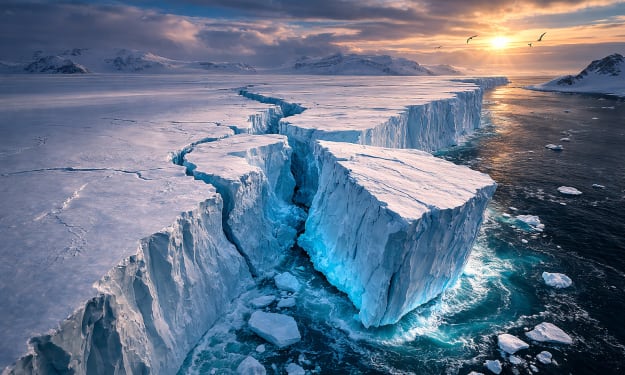
One of the World’s Ten Largest Ice Shelves on the Brink of Breaking Away
A massive ice formation in Antarctica—one of the ten largest ice shelves in the world—is reportedly close to breaking away from the continent, according to recent observations by climate scientists and satellite monitoring agencies. The development has drawn global attention, as experts warn that the detachment of such a huge ice mass could have significant implications for sea levels, ocean currents, and the stability of surrounding glaciers.
By Irshad Abbasi 2 days ago in Earth



Comments (2)
I never would have known that was a fish. I knew it wasn't coral. I thought coral was a rock. anyway, I'm glad to know it's a plant.
I really enjoy how you made the name of the fish easy to pronounce. Your granddaughter sounds amazing. Bravo for both of you