

Hey there, eco-warriors and green enthusiasts! 🌍 If you're looking to give your shopping habits a major makeover and join the movement towards a more sustainable lifestyle, you're in the right place. Whether you're a seasoned green shopper or just starting to dip your toes into the world of eco-friendly products, this guide will help you navigate the aisles with confidence and style. Let’s dive into how you can make your purchases greener, one step at a time.
1. Embrace the Power of Less
First things first: less is more. Seriously. Think about how many things you actually need versus how many things you want. Reducing your consumption is one of the most effective ways to lower your environmental impact. So, before you hit the stores or add that item to your cart, ask yourself if it's truly necessary. Minimalism isn’t just a trend; it’s a lifestyle choice that helps reduce waste and conserve resources.
2. Quality Over Quantity
When you do decide to buy something, go for quality over quantity. High-quality items tend to last longer, reducing the need for frequent replacements. Opt for well-made products that are durable and timeless. For clothing, that might mean investing in a few classic pieces rather than constantly updating your wardrobe with fast fashion. For home goods, look for items that are built to withstand the test of time.
3. Choose Eco-Friendly Materials
When it comes to picking out products, material matters. Choose items made from sustainable, recycled, or upcycled materials. For instance, bamboo is a fantastic alternative to plastic because it's fast-growing and biodegradable. Recycled glass and metal are also great choices for reducing waste. For textiles, look for organic cotton or materials like Tencel, which have lower environmental impacts compared to conventional fibers.
4. Support Ethical Brands
Not all brands are created equal. Some are genuinely committed to sustainable practices, while others just slap a green label on their products without much substance. Do a little research and support brands that prioritize ethical practices, fair labor conditions, and eco-friendly production methods. Certifications like Fair Trade, B Corp, and Cradle to Cradle can be good indicators of a company’s commitment to sustainability.
5. Go for Second-Hand Finds
Shopping second-hand is a win-win for your wallet and the planet. Thrift stores, consignment shops, and online resale platforms like Poshmark or ThredUp offer a treasure trove of gently used items. Not only are you giving products a second life, but you're also keeping them out of landfills. Plus, you might just score some unique finds that are a bit more one-of-a-kind than what you'd find in a big-box store.
6. Mind Your Packaging
Packaging is a sneaky culprit when it comes to waste. Choose items with minimal or eco-friendly packaging whenever possible. Look for brands that use biodegradable materials or offer packaging-free options. If you’re buying in bulk, you can often cut down on the amount of packaging you bring home. And remember, recycling is great, but reducing is even better.
7. Consider Energy Efficiency
When shopping for appliances or electronics, energy efficiency should be a top priority. Look for products with Energy Star ratings or other certifications that indicate lower energy consumption. This helps the climate as well as lessens your service bills over the long run. Small changes like choosing LED bulbs or energy-efficient appliances can make a big difference in your overall energy footprint.
8. Buy Local
Supporting local businesses and artisans not only boosts your local economy but also reduces the carbon footprint associated with shipping goods over long distances. Farmers' markets, local craft fairs, and neighborhood shops often offer unique, locally-made products that are kinder to the planet. Plus, you get to support your community and maybe even get to know the people behind the products.
9. DIY and Upcycle
Before you toss out something old, think about how you might be able to repurpose it. Upcycling is all about giving new life to old items, which can be a fun and creative way to reduce waste. From turning old jars into planters to revamping worn-out clothes into something fresh and new, DIY projects can be both satisfying and sustainable.
10. Educate Yourself and Others
Sustainable living is an ongoing journey, and the more you learn, the better choices you can make. Stay informed about new eco-friendly products, trends, and practices. Share your knowledge with friends and family, and inspire them to make greener choices too. The more people who join the movement, the bigger the impact we can have.
Wrapping It Up
Shopping sustainably doesn’t have to be complicated or restrictive—it’s all about making thoughtful choices that align with your values. By embracing the power of less, choosing quality over quantity, supporting ethical brands, and making mindful purchases, you’re contributing to a healthier planet. So, the next time you’re out shopping or browsing online, remember these tips and make every purchase count towards a greener future. Happy eco-friendly shopping!
The images used in this article is created with the assistance of leornardo.ai
About the Creator
Keds
Passionate about sustainable living and eco-friendly choices. Sharing tips and insights to help you live greener and make a positive impact on our planet. 🌍🌿 #SustainableLiving #EcoFriendly #GreenTips
The Reality of the Illusion of Time
Recently, as I strolled along the short stretch to my strength training session, I aimlessly took in the row of tatty shops and shabby buildings along the route and passed an off-street, in which one of my sisters used to live, around thirteen years ago.
By Chantal Christie Weiss4 days ago in Earth
Why Putin Went Quiet When Challenged by Trump Over Venezuela
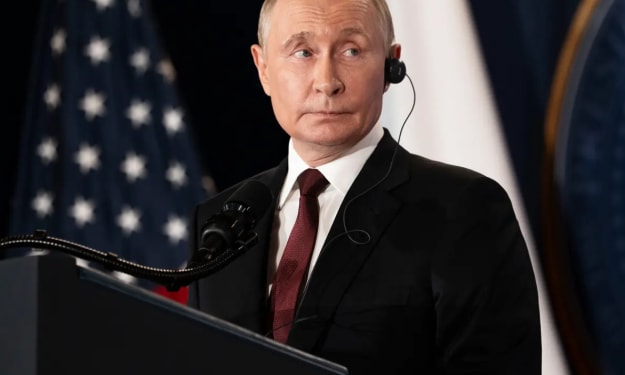
When U.S. forces captured Venezuelan President Nicolás Maduro in early January 2026, the world was stunned. Venezuela has long been a Russian ally, yet Russian President Vladimir Putin remained almost completely silent when challenged directly by U.S. President Donald Trump. Why would a leader so often outspoken on the world stage hold back in such a dramatic moment? Let’s unpack the story and explore what it means for global politics. A Bold Move That Shocked the World On January 3, U.S. forces executed a daring operation in Venezuela, taking Maduro into custody in New York to face charges including drug trafficking and narco‑terrorism. The operation was framed by the U.S. as a step to enforce justice, but critics saw it as an extraordinary overreach of power. Venezuela is no ordinary country for Russia. Since the days of Hugo Chávez, Moscow has cultivated close ties with Caracas, offering military support, energy deals, and diplomatic backing on the global stage. Past actions included Russian bombers visiting Venezuela and high-profile defense agreements. Given this history, many expected a fiery response from Putin. Yet, the Kremlin remained calm, issuing measured statements rather than sharp threats. Why Silence Was Strategic Experts suggest there are several reasons for Putin’s muted reaction, each revealing the careful calculation behind the Kremlin’s foreign policy. 1. Focus on the War in Ukraine Russia’s primary priority remains Ukraine. Engaged in a high-stakes military and diplomatic battle, Putin cannot afford distractions or new confrontations far from home. Escalating tensions with the United States over Venezuela could jeopardize Moscow’s position in Europe. A New York Times report highlighted that Russia is “subordinating all other interests to the war in Ukraine,” suggesting that even a high-profile ally like Venezuela takes a back seat to Moscow’s strategic goals. 2. Limited Military Options While Russia’s alliance with Venezuela is longstanding, much of the support has been symbolic rather than operational. Defense systems and military cooperation exist on paper, but Russia lacks the immediate ability to counter a U.S. operation thousands of miles away. Putin may have recognized that responding aggressively would be both ineffective and costly, potentially risking military and economic consequences that Moscow cannot afford. 3. Maintaining Diplomatic Channels with Washington With Donald Trump back in the White House since 2025, there has been cautious optimism in Moscow about recalibrating U.S.–Russia relations. Avoiding a dramatic confrontation over Venezuela keeps diplomatic channels open, allowing Russia to negotiate on other high-priority issues like Ukraine and sanctions relief. In other words, silence can be a calculated strategy, signaling restraint rather than weakness. 4. Russia’s Global Influence Is Waning The Maduro episode also highlights a broader geopolitical reality: Russia’s global reach has limits. Since the 2022 invasion of Ukraine, Moscow’s influence in regions like the Middle East and parts of the former Soviet Union has weakened. Venezuela remains one of its few high-profile allies outside Europe, but even there, Russia’s power is largely symbolic. By not escalating, Putin is acknowledging a practical truth: Russia cannot be everywhere at once, and some battles are not worth fighting. 5. Choosing Battles Wisely Some analysts emphasize that Putin’s quiet response is more about strategic prioritization than capitulation. In a world dominated by nuclear powers and volatile global politics, direct confrontation with the United States over Venezuela could spiral into a far larger crisis. By staying silent, the Kremlin may be signaling that it picks its battles carefully, focusing resources on Ukraine, where the stakes are highest. What This Means for the World Putin’s silence sends several messages: Russia is currently stretched, economically and militarily. Moscow is prioritizing Ukraine over symbolic allies. Strategic restraint is sometimes more powerful than public confrontation. The limits of Russian influence are becoming more visible to the world. This episode reflects a new reality in geopolitics: power is as much about choosing when not to act as when to assert force. The Bigger Picture The capture of Maduro is a defining moment not just for Venezuela, but for global politics. It shows the United States asserting power in a way not seen for decades, while Russia’s quiet reaction underscores its current limits and priorities. For observers, Putin’s silence is a lesson in modern geopolitics: even the most assertive leaders exercise restraint when stakes are high and risks are global. In the end, the Maduro affair reminds us that in today’s world, the loudest response is not always the most effective one — sometimes, quiet calculation speaks volumes. Sources and Further Reading The US capture of Maduro reveals Russia’s weakness – Atlantic Council ‘It sends a horrible signal’: US politicians react to capture of Nicolás Maduro – The Guardian Russia slams 'neocolonial threats' against Venezuela – Reuters
By Muhammad Hassan7 days ago in Earth



Comments
There are no comments for this story
Be the first to respond and start the conversation.