
Growth in Living things - Plants vs Animals
Growth and development

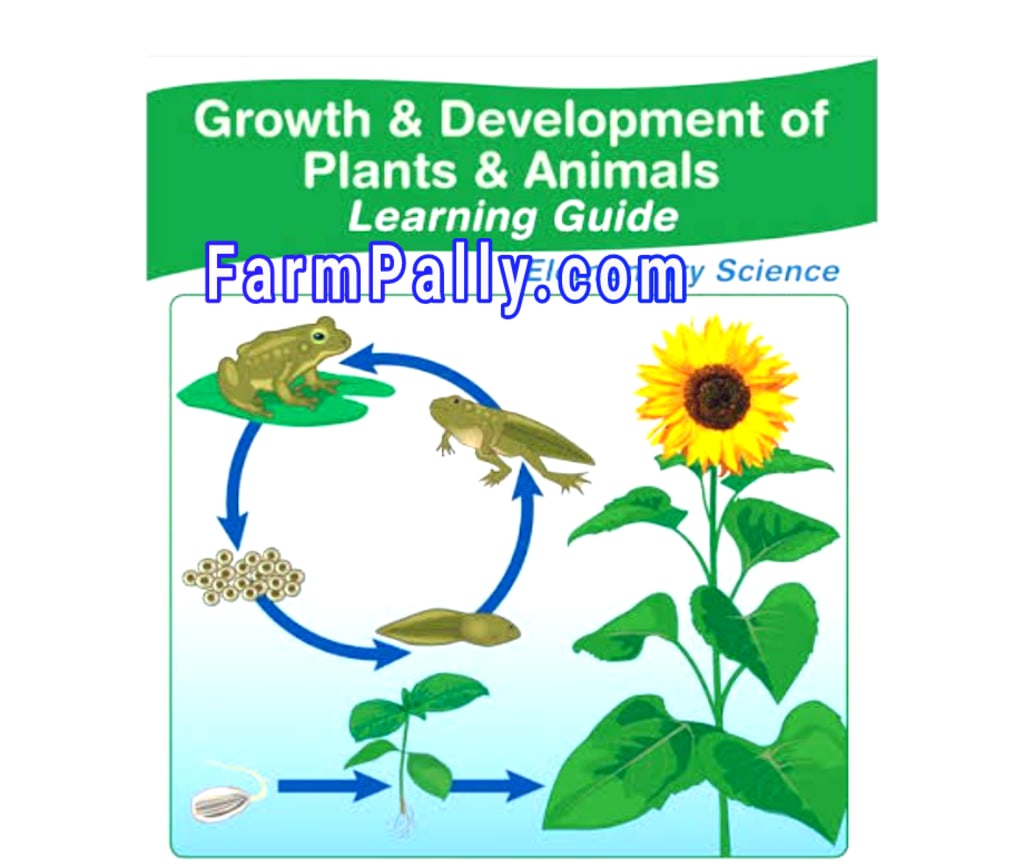
Living organisms feed and make use of their food to grow and increase in size.
Growth is a characteristic feature of all living things.
According to Akin chaktty, it's an irreversible increase in body size and weight due to the incorporation of new protoplasm in the body.
All living organisms have both anabolic and catabolic processes going on in their bodies.
As long as the anabolic processes proceed at a faster rate than the catabolic processes, there will be a supply of new substances to cause growth.

Growth in Plants vs Animals
Growth in a young plant or animal is very closely related to development which is a term attributed to the morphological and physiological changes that take place in plants and animals.
In some cases, a loss in weight may be observed when the food reserves in the body of the organism are used for rapid growth and development, for example, during the early stages of seed germination before green leaves are formed.
In microorganisms such as unicellular plants and animals, growth occurs when there is an increase in body size and weight.
In contrast, in multicellular organisms, there is not only an enlargement of young cells but also the addition of new cells produced by the division of the older ones, according to healthpally.
Every new cell that is formed increases in size until it reaches a maximum size.
It then stops growing and takes on special functions such as support, conduction, reproduction, or any other vital functions of life.
In animals, growth is said to be intercalary, that is, the division of cells and the enlargement of these cells can occur in any part of the body. The whole body increases in size and weight.
In plants, however, growth and cell division are possible only in certain parts of the plant body such as the root and stem apices.
This type of growth, which occurs at the extremities of the body, is known as apical growth.
Plants grow not only upwards and downwards but sideways as well.
They increase in girth by the activities of a special set of cells known as the cambium cells.
Cambium cells are said to cause secondary growth.
Most perennials tend to grow continuously apart from seasonal interruptions when their growth rate may be markedly reduced, Akin chaktty.
Some animals like certain fishes and reptiles also tend to grow continuously. In mammals and birds growth usually ceases when maturity is reached.
Factors influencing plant Growth
The rate of growth of a plant is influenced by several factors such as the availability of nutrients and water, humidity, temperature, light, pH of the environmental fluid, and certain chemical substances called plant hormones.
Temperature, humidity, light, and pH are all factors which affect metabolic processes and hence, have an effect on growth, according to farmpally.
Other factors that also influence growth is the genetic make-up of the plant, the viability of the seed etc
Plant hormones are chemicals produced in very small amounts within the plant body.
They play a very important part in the regulation of growth and the development of plants.
There are many different types of plant hormones; one well-known group being known as the auxins.
Indole acetic acid, or IAA, is the best-known of the auxins.
Auxins are produced at the stem and root tips and have been shown to influence dell division, cell elongation, growth of ovaries into fruits, and development of the abscission layer.
The exact manner in which auxins influence growth is still under investigation.
However, it has been shown in a number of instances that maximum growth occurs only when auxins are present simultaneously with another group of plant hormones known as the gibberellins.
About the Creator
Keep reading
More stories from Akin Chaktty and writers in Earth and other communities.
Australia Horticulture Market 2026: Climate-Smart Farming, Export Demand & Agri-Tech Innovation
Australia Horticulture Market Overview Australia’s horticulture market plays a crucial role in the country’s agricultural economy, supplying fresh fruits, vegetables, nuts, flowers and nursery products to both domestic and international markets. The sector is widely recognized for high-quality produce, strong biosecurity standards and advanced farming practices. Growing consumer demand for nutritious foods, expanding export opportunities and continuous technological innovation in agriculture are driving sustained development across Australia’s horticulture industry.
By Amyra Singh6 days ago in Earth


Comments
There are no comments for this story
Be the first to respond and start the conversation.