
Green Promises, Grey Realities
The uncomfortable truths we must face to build a truly sustainable future

There’s a story we like to tell ourselves. A future free from fossil fuels, where cities run on sunshine and oceans are tamed by the wind. In this vision, solar panels stretch across rooftops, wind turbines turn gracefully on distant hills and electric vehicles glide silently through traffic. It’s a hopeful picture and one we desperately need.
But here’s the hard truth: even our cleanest technologies come with footprints of their own. Green energy, despite all its promise, is not as green as we might believe.
This doesn’t mean it’s bad. It means it’s complicated.
And sometimes, to build a better future, we must first be honest about the one we’re building.
The Invisible Cost of Clean
There’s something almost magical about clean energy when you first encounter it. Rooftops glinting with solar panels. Fields dotted with white turbines catching the wind. These symbols of progress feel pure, futuristic - even liberating. But peel back the surface and you’ll find a far more complicated story. One where the journey from raw material to renewable marvel is anything but clean.
Let’s begin with solar panels - often the poster child of sustainable living. What many people don’t realize is that every solar panel starts its life deep in the Earth. The heart of a photovoltaic cell is high-purity silicon, a material that doesn’t come easily. Producing it involves a high-temperature; energy-intensive process that often relies on electricity from fossil fuels, especially in countries like China, which currently dominates the global solar supply chain. In fact, around 80% of the world’s solar-grade polysilicon is made in China, much of it in coal-powered industrial zones like Xinjiang and Inner Mongolia.
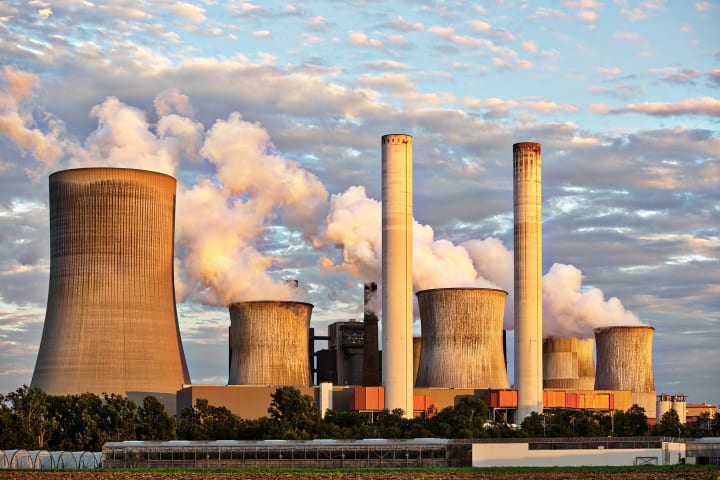
Here’s where it gets uncomfortable: not only is this energy far from clean, but in certain regions like Xinjiang, serious human rights concerns have also been raised, including allegations of forced labour in the polysilicon production sector. So while the final product might sit serenely on rooftops soaking up sunlight, the road to get there is paved with significant carbon emissions and, potentially, ethical compromises.
Wind energy offers no free pass either. Those soaring turbines - sometimes 100 meters tall - don’t just sprout from the ground. Each one requires massive amounts of raw materials: roughly 250 tonnes of steel, 4,000 tonnes of reinforced concrete for the base, and dozens of kilograms of rare earth elements like neodymium and dysprosium. These rare earths are indispensable for making powerful magnets used in turbine generators.
Again, much of this extraction and processing is concentrated in China, which produces over 85% of the world’s rare earth elements. The environmental costs of this industry are staggering. Open-pit mining, toxic chemical leaching and massive tailing ponds have turned parts of China - like Baotou in Inner Mongolia - into some of the most polluted places on Earth. Radioactive waste and groundwater contamination are common by-products, affecting not only ecosystems but also communities living near these mining sites.
And the supply chain? It’s a tangled web. Many of the raw materials used in clean energy technologies pass through multiple countries and opaque corporate structures before reaching manufacturers. Transparency is minimal. Environmental standards vary wildly. Traceability is poor. In some cases, minerals used in these devices may have passed through conflict zones or were extracted under exploitative labour conditions.
This isn’t to argue that fossil fuels are somehow preferable - they aren’t. But we must resist the urge to idealize green technologies as wholly benevolent simply because their outputs are clean. The inputs - the mines, factories, labour systems and energy sources - often are not.
When we look at solar panels and wind turbines only in terms of what they produce - zero emissions during operation - we miss the larger picture. Like any industrial system, renewable energy has an environmental and social cost. What makes it green is not the absence of harm but the potential for less harm – if, and only if, we commit to building better supply chains, investing in ethical sourcing and demanding greater accountability across the board.
This is where the story of green energy shifts from one of uncritical optimism to one of complex responsibility. If we’re serious about a just and sustainable future, we can’t afford to romanticize our solutions.
We need to look at the whole system - not just the shiny panels or the graceful blades spinning in the wind.
Batteries: The Beating Heart - and Baggage - of the Transition
In the grand narrative of the green transition, the electric vehicle (EV) is often cast as the hero: silent, sleek and non-polluting. It's the car of the future - emitting zero emissions, gliding past gas stations and promising liberation from fossil fuels. But beneath that shiny exterior lies a truth few of us are ready to confront: the soul of an EV is its battery and that battery comes with a heavy burden.
Let’s talk chemistry - but not the kind from high school textbooks. We’re talking lithium, cobalt and nickel: the elemental lifeblood of modern batteries. These aren’t just materials. They are geopolitical flashpoints, environmental disruptors, and, in many cases, humanitarian red flags.
Cobalt, for example, is critical to stabilizing battery chemistry and extending battery life. Over 70% of the world’s cobalt comes from a single country: the Democratic Republic of Congo (DRC). In the DRC, vast stretches of land are dotted with informal artisanal mines - where tens of thousands of people, including children, dig by hand with rudimentary tools, often without protective equipment or safety oversight. Tunnel collapses, toxic dust inhalation and exploitation are not rare incidents - they're the daily cost of our global appetite for clean tech.

Organizations like Amnesty International and the Washington Post have documented these conditions, connecting the dots between the batteries in our EVs and smartphones and the labour of Congolese miners. These are not theoretical supply chain hiccups - they’re the lived realities of people feeding the very industry meant to bring us a better world.
Now shift your gaze to South America’s arid landscapes. Here lies the so-called Lithium Triangle, spanning northern Chile, Argentina and parts of Bolivia. This region contains more than half of the world’s lithium reserves. Extraction here doesn’t involve picks and shovels - it’s a water war. Lithium is extracted from underground brine through evaporation ponds, a process that consumes as much as 500,000 gallons of water per tonne of lithium extracted.
This massive water demand is draining aquifers in some of the most water-scarce regions on Earth. Indigenous Atacameño communities - who have lived in delicate balance with their environment for centuries - are now grappling with depleted water sources, parched lands and threatened ways of life. Lithium may be dubbed white gold, but for many, it feels more like a curse than a blessing.
Nickel, too, has its footprint. Often sourced from countries like Indonesia and the Philippines, its mining can lead to large-scale deforestation, soil erosion and marine pollution due to waste runoff. In some cases, rainforests are razed to make way for nickel operations, creating a double-edged sword where saving the climate may come at the cost of biodiversity.
To be clear: electric vehicles still represent a cleaner option over time compared to internal combustion engines - especially when powered by renewable energy. They produce fewer greenhouse gases across their lifecycle and help decouple transportation from oil. But the “clean” image of an EV is only half the story.
Upstream, the story gets messier.
It’s not enough to cheer the fact that EVs emit zero carbon from the tailpipe. We must also ask: Where did the battery come from? Who mined its materials? At what environmental and social cost? And perhaps most importantly, how can we do better?
This isn’t an argument against EVs - but a call to evolve how we produce them. Innovations in battery chemistry (such as sodium-ion alternatives), better recycling systems, circular supply chains and stricter environmental and labour regulations are already emerging. But meaningful change will require more than tech breakthroughs. It demands ethical vigilance, political will, and public awareness.
As consumers, we must stop viewing clean technologies as moral absolutes. The truth is far more nuanced. A green future will only be truly green when it’s also just, inclusive, and accountable from mine to market.
Land Isn’t Empty, Even If It Looks That Way
When we picture clean energy, our minds often conjure images of elegant wind turbines rising over golden plains or rows of solar panels glittering beneath a wide, open sky. It’s a vision of progress - of human ingenuity harvesting nature’s gifts in harmony with the Earth. But scratch the surface of this idyllic scene and you’ll find a more complicated story - one that starts with a simple misconception: that land we call “empty” is somehow without value.

In the rush to decarbonize our energy systems, utility-scale solar and wind farms have become a cornerstone of climate strategy. They promise emissions-free electricity, long-term savings and a pathway to a sustainable future. But here’s a hard truth we rarely discuss: these technologies require a lot of space - and that space often comes at a price.
According to the U.S. National Renewable Energy Laboratory (NREL), generating one megawatt of electricity from a solar farm requires between 3.5 and 10 acres of land. That means a large, 100-megawatt solar farm - the kind needed to power tens of thousands of homes - could sprawl across 1,000 acres or more. Wind farms, while more spread out, can occupy hundreds to thousands of acres particularly when they are constructed at scale.
To energy developers and policymakers, these are often placed in so-called low-conflict zones: places deemed free of major human settlement, infrastructure or apparent ecological value. Think deserts, open plains, scrublands or remote grasslands. But here’s the question we must ask: low conflict for whom?
From the air, these areas might appear barren or underused. But from the ground - and from the perspective of those who have lived there for generations - these lands are anything but empty.
Take the Mojave Desert in the American Southwest. It’s not just a stretch of hot sand and rock. It’s home to centuries-old Joshua trees, desert tortoises and rare species that have evolved to survive in this fragile ecosystem. It’s also a landscape filled with sacred Indigenous sites, including rock art, ceremonial grounds and migratory pathways that hold deep cultural meaning. When massive solar arrays are installed there, they don’t just generate clean electricity - they fragment habitats, disrupt traditional lifeways and in some cases, irreversibly alter entire ecosystems.
Similar tensions have unfolded across the globe. In Mongolia, wind farms constructed across the steppe have interfered with migratory routes of rare birds and disrupted the grazing patterns of nomadic herders. In India, solar installations have led to the clearance of scrub forests critical for leopards, antelopes and endangered bustards. Even in the American Midwest, wind farms have raised alarms among conservationists as turbine blades kill birds, bats and raptors - many of which are already under pressure from habitat loss and climate disruption.
Let’s not forget that for birds and bats, wind turbines aren’t just obstacles - they’re deadly hazards. The American Bird Conservancy estimates that hundreds of thousands of birds are killed each year in the U.S. alone by wind turbines. And while developers are experimenting with bird-safe designs and location planning, the impact is far from negligible - epecially for vulnerable or slow-reproducing species.
What’s more, these projects are often carried out without meaningful consultation with local communities or Indigenous groups, many of whom have ancestral ties to the land. In some cases, “green colonialism” has replaced the old kind - where the moral righteousness of saving the planet is used to override the rights and voices of the people most intimately connected to the environment.
So, what does all this mean?
It means we need to stop thinking of renewable energy projects as inherently good and start thinking of them as tools - tools that must be wielded with care, intention and accountability. Clean energy should not replicate the extractive mind-set of fossil fuels, where land is seen as something to conquer, develop or optimize for human gain.
This isn’t a call to abandon renewables - it’s a call to do better. Smarter siting strategies, community-led planning, ecological assessments and respect for traditional knowledge can guide us toward cleaner energy without sacrificing biodiversity or human rights.
Because in the end, saving the planet shouldn’t mean displacing the very life it’s meant to protect.
The Waste We’re Not Ready For
Every revolution has its leftovers. And the green revolution - our collective push to decarbonize and embrace renewables - is no exception.
As we race to install solar panels, erect wind turbines and swap combustion engines for electric motors, we are also setting the stage for a lesser-known challenge: the mounting waste of green technology. It’s a ticking time bomb and we’re only just beginning to hear it tick.
Let’s begin with solar panels - the face of clean energy for millions of homeowners and businesses. These sleek rectangles of glass and silicon can power a house, a village or a city block with nothing but sunlight. But like all technology, they have a shelf life. Most commercial solar panels are rated to last between 25 and 30 years. That means the early wave of installations from the 1990s and early 2000s is already approaching retirement.
What happens next?
Unfortunately, the infrastructure to deal with solar panel waste isn’t ready. Recycling is possible - yes - but it’s neither simple nor cheap. Most panels contain heavy metals such as cadmium, lead and selenium, along with polymers, glass and aluminium. Separating and recovering these materials requires specialized processes, energy-intensive machinery and a steady supply of used panels to make it economically viable.
Today, most end-of-life panels are either stockpiled, landfilled, or incinerated. When dumped in landfills, especially in developing countries, the risk is grave: toxic elements can leach into soil and groundwater, threatening ecosystems and public health.
The International Renewable Energy Agency (IRENA) projects that by 2050, the world could face 78 million tonnes of solar panel waste. To put that into perspective - that's more than seven times the weight of the Great Pyramid of Giza. And unlike plastic bottles or paper, these panels can’t be recycled by tossing them into a bin. Without action, this invisible waste could undercut the very sustainability goals that solar energy seeks to promote.
Now consider wind turbines. While their towers are mostly made of recyclable steel, it’s their blades that present a unique dilemma. Built from fiberglass-reinforced epoxy resins, these blades are incredibly strong, durable - and not easily recyclable. They are engineered to withstand hurricanes and decades of harsh weather but that same durability becomes a nightmare at end-of-life.
The average turbine blade is around 50-60 meters long, weighs 15 tonnes or more, and is difficult to cut, transport or repurpose. Most conventional recycling centres won’t take them. So what do we do?
In the U.S. and parts of Europe, the answer - at least for now - is burial. Thousands of retired blades are being stacked in special dumpsites, chopped into pieces with industrial saws and buried under layers of earth. Some are being experimented with as fill material in construction, but scalable solutions remain elusive.
To be clear: this is not an indictment of clean energy. Solar and wind are indispensable parts of a liveable future. But it is a reminder that clean doesn’t mean impact-free. Just like fossil fuels brought us air pollution and climate change, renewable energy - if mismanaged -could usher in a new era of e-waste, toxic leachate and resource fatigue.
So what do we do?
We need a circular economy mind-set - one where technology is designed with its entire lifecycle in mind. Manufacturers must invest in modular, repairable and recyclable components. Governments should offer incentives for recycling infrastructure, enforce extended producer responsibility (EPR) policies and require transparent waste management plans for every large-scale installation. Researchers must develop and scale up next-generation recycling technologies, such as chemical separation or thermolysis, that can handle the complex composition of modern panels and blades.
But perhaps most importantly, we must shift the narrative. Clean energy is not a magic bullet - it’s a tool. And like any tool, its usefulness depends on how responsibly we use it.
Because if we fail to plan for the back end of the green revolution, we may find ourselves drowning in yesterday’s solutions - replacing one environmental crisis with another, just packaged differently.
The Moral Mirage of Green
Among the many illusions surrounding our fight against climate change, few are as seductive - or as dangerous - as the belief that green equals good. We are told that solar panels, wind turbines and electric cars are clean, ethical and inherently virtuous. They don’t belch smoke, they don’t guzzle oil and they don’t warm the planet. What’s not to love?
But beneath this hopeful narrative lies a more complex and uncomfortable, truth: green energy is not immune to the moral compromises that plague the rest of our economic systems. In fact, the idea that we can consume our way to salvation - so long as that consumption wears a green label - is itself a myth.
Let’s confront it directly: the clean energy transition, while essential, is not automatically ethical.
Take lithium. Cobalt. Rare earth elements. These aren’t just metals - they’re the backbone of electric vehicles, battery storage systems and renewable infrastructure. But extracting them often involves environmental destruction, displacement of indigenous communities and exploitative labour conditions, particularly in the Global South. The same extractive logic that defined the fossil fuel era - take, use, discard - is now being applied to a different set of materials under a greener banner.
This raises a difficult question: Are we solving the climate crisis or just shifting its burden elsewhere?
If the answer is simply to swap one form of consumption for another - gasoline cars for electric SUVs, coal plants for endless solar farms - then we are missing the point. Because the real challenge of the climate crisis isn’t just technical; it’s philosophical. It’s not about replacing dirty machines with cleaner ones. It’s about rethinking the very systems that brought us here.
Do we really need more lithium mines - or do we need denser cities with better public transportation, where private vehicles become less essential?
Do we need millions more rooftop panels - or can we invest in smart grids, demand-side management and building-level efficiency, which reduce the total energy we use in the first place?
Are we designing a truly sustainable future - or are we outsourcing its costs, both ecological and human, to places we rarely see on the news?
These are the questions that remain dangerously under-asked.
To move beyond the moral mirage of green, we must resist the temptation of technological utopianism - the belief that innovation alone will save us. Instead, we must embrace systems thinking: an understanding that energy is not just a commodity, but a reflection of values - of how we live, what we prioritize and who bears the cost of progress.
True sustainability isn’t simply about generating cleaner power. It’s about equity, restraint and repair. It’s about designing economies where materials are reused, communities are respected and growth is redefined - not just as more, but as better.
We must shift from the logic of infinite demand to one of intentional sufficiency. That doesn’t mean regression; it means regeneration. It means acknowledging that green doesn’t absolve us from moral responsibility - it complicates it.
In short: a greener world is possible. But it will not emerge from solar panels alone. It will come when we stop asking, How can we sustain our lifestyle with cleaner tech? and start asking, What kind of world is worth sustaining at all?
Toward an Honest Energy Future
Let’s begin with clarity: we must move away from fossil fuels. The evidence is overwhelming and urgent - rising global temperatures, record-breaking wildfires, melting glaciers, disrupted monsoons and ecosystems teetering on the edge of collapse. The cost of inaction is no longer a matter of future speculation. It is a daily reality, disproportionately borne by the world’s most vulnerable populations.
Yet in our haste to escape the carbon trap, we risk making a critical mistake: confusing speed with wisdom. A rushed, uncritical energy transition may end up reproducing the very patterns of exploitation and inequality that the green movement seeks to dismantle. We cannot afford to replace one form of environmental harm with another, merely because the emissions are less visible or the damage happens out of sight.
Yes, the future must be powered by clean energy - but it must also be grounded in clean ethics, transparent governance and just economics. Otherwise, our green ambitions risk becoming little more than an empire of extraction, repackaged in the language of sustainability.
Consider this: many of the regions targeted for renewable infrastructure development are indigenous lands, biodiverse habitats or rural territories with limited political voice. Solar farms expand into deserts considered empty, wind turbines rise on sacred hills and hydropower dams flood ancestral forests. This is not just a technical issue - it’s a question of consent, justice and accountability.
A truly honest energy future demands that we listen before we build. That we acknowledge the rights of local communities. That free, prior and informed consent is not an afterthought, but a precondition for development. That transparency in supply chains - from the cobalt mines of Congo to the lithium flats of Bolivia - is non-negotiable.
It also means moving beyond the binary of fossil vs. renewable. Not all clean energy is created equal. A solar panel produced through exploitative labour, a battery made from conflict minerals, a wind farm that displaces entire communities - these are not just unfortunate side effects. They are signals that something is fundamentally flawed in our approach.
Instead of chasing sheer capacity, we must design systems that are regenerative, inclusive, and adaptable. This includes:
- Circular design thinking, where materials are reused and waste minimized.
- Localized energy sovereignty, enabling communities to control and benefit from their own power sources.
- Demand-side interventions, such as energy efficiency, public transportation, and urban redesign, that reduce total consumption rather than endlessly expanding it.
- Global cooperation, to ensure technology transfer, equitable financing, and the fair distribution of resources.
Above all, this transition requires humility. The humility to admit that we do not have all the answers. The humility to learn from those who have long lived sustainably. The humility to question the dogma of infinite growth - even when wrapped in solar panels and wind blades.
The central question, then, is no longer “Can we make green energy greener?”
The real question is: Can we build a future that’s not just powered differently - but governed differently, valued differently and lived differently?
This is the work ahead of us. Not just engineering a new energy system, but imagining a new moral architecture for how we live with the Earth and each other.
Let’s power that future - not only with sunlight and wind - but with justice, solidarity and wisdom.
About the Creator
Dr Husain Shabbar
Assistant Professor | Geoscience Consultant | PopSci Writer | Content Writer
AlQalam is a space where I bring science into everyday conversations - connecting Earth’s deep history with the world we live in today
Keep reading
More stories from Dr Husain Shabbar and writers in Earth and other communities.
When Terrorists Get a Makeover: What Are We Really Applauding?
There was a time - not too long ago - when the mere mention of Abu Mohammad al-Jawlani sent chills through intelligence agencies and conflict analysts across the globe. As the commander of Jabhat al-Nusra, an al-Qaeda-linked faction, he orchestrated some of the most violent and destabilizing attacks in the Syrian civil war. His name wasn’t just feared - it was a symbol of extremism, often topping international watch-lists. Governments branded him a priority threat to peace, stability and humanity at large.
By Dr Husain Shabbar9 months ago in The Swamp
Global Lawn Mowers Market Set for Strong Growth as Smart Landscaping Goes Mainstream (2025–2033)
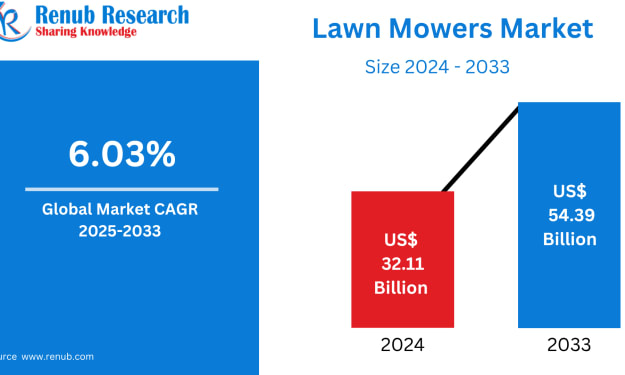
Global Lawn Mowers Market Size & Forecast 2025–2033 The Global Lawn Mowers Market is entering a transformative decade, reshaped by rapid urbanization, the rise of smart homes, and growing environmental awareness. According to Renub Research, the market is projected to grow from US$ 32.11 billion in 2024 to US$ 54.39 billion by 2033, expanding at a CAGR of 6.03% from 2025 to 2033.
By jaiklin Fanandish4 days ago in Earth
Light Builder Waste Skip Bins: Convenient Solutions for Small Projects
Whether you’re renovating your home, cleaning out a small construction site, or completing a DIY project, managing light building waste efficiently is essential. Light builder waste skip bins provide an easy, safe, and environmentally friendly way to dispose of debris without hassle. In this blog, we’ll explore the benefits of light builder waste skip bins, how to choose the right size, and tips for using them effectively.
By Sydney Skip Binsa day ago in Earth
Autonomy Is The Real Privilege
Good morning, freedom-seekers! Today we’re gonna be looking at autonomy. A strange word, I know; one many would probably look at blankly and run away from on sight. We’re gonna figure out what it actually means, consider how it’s achieved, and decipher just how deeply most of us are tangled up in dependence without realising it.
By That ‘Freedom’ Guy3 days ago in Humans



Comments
There are no comments for this story
Be the first to respond and start the conversation.