
Great Wall of China
History, construction, and significance of the Great Wall of China

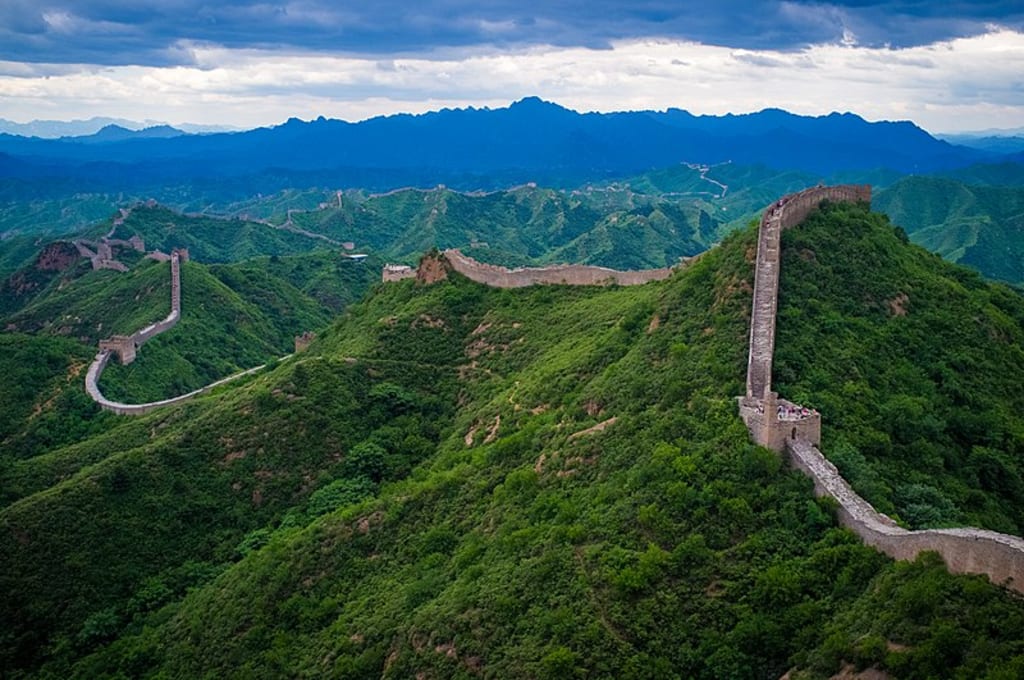
The Great Wall of China is a series of fortifications built along the northern borders of China to protect against invasions and raids. The wall stretches over 13,000 miles (21,000 kilometers) from the Shanhai Pass on the east coast to the Gobi Desert in the west. The construction of the wall began as early as the 7th century BC, but most of the existing wall was built during the Ming Dynasty (1368-1644).
The Great Wall of China was not a single continuous wall, but rather a series of walls, fortifications, and trenches built over many centuries by different dynasties to protect their borders from invaders. Some sections of the wall were built from stone, while others were built from rammed earth, bricks, and tamped earth.
Despite its name, the Great Wall of China was not visible from space with the naked eye, contrary to popular belief. However, it remains one of the most iconic and impressive architectural feats in human history and is a UNESCO World Heritage Site. Today, many sections of the wall are open to tourists, and they provide a glimpse into the history and culture of China.
The Great Wall of China was constructed in stages over several centuries and was continually rebuilt and repaired throughout its history. The initial construction of the wall was done during the 7th century BC by various states to defend against raids by nomadic tribes. During the Qin Dynasty (221-206 BC), the different sections of the wall were connected and extended to form a continuous line of defense.
The Ming Dynasty saw the most extensive construction of the wall. The Ming rulers extended and rebuilt the wall with stone and brick to withstand attacks by firearms. The wall also served as a transportation network, allowing goods and troops to be transported throughout the empire.
The Great Wall of China is not just one wall but a series of walls, watchtowers, and fortifications built along the northern borders of China. Some sections of the wall are made of brick or stone, while others are made of earth and tamped down soil. The wall was built on ridges and high points to provide a vantage point for troops to see approaching enemies.
In addition to serving as a defense structure, the Great Wall of China also served as a cultural icon and symbol of Chinese civilization. It has been referenced in literature, art, and popular culture throughout history. Today, the wall is a popular tourist attraction, with millions of visitors exploring its various sections each year.
The Great Wall of China is a complex structure, and it is estimated that over a million workers died during its construction. The workers were mainly peasants, soldiers, and prisoners who were forced to work on the wall by their rulers. The construction of the wall was a massive undertaking and required an enormous amount of resources, including materials, labor, and money.
The wall is not a continuous structure but consists of many walls and fortifications built across China's northern borders. The sections of the wall vary in length, height, and width, and some sections are in better condition than others. The most popular sections of the wall for tourists include Badaling, Mutianyu, and Jinshanling.
The Great Wall of China was designated as a UNESCO World Heritage Site in 1987, and it is also recognized as one of the Seven Wonders of the World. In recent years, there have been concerns about the preservation of the wall due to erosion and damage caused by tourism. Efforts are being made to preserve the wall and prevent further damage to this iconic landmark.
The Great Wall of China is not only a physical structure but also a symbol of the Chinese people's determination, hard work, and ingenuity. It is an enduring testament to the human spirit and a reminder of the importance of preserving our cultural heritage for future generations.
About the Creator
Tiny Lion Cubs Struggle To Keep Up With Mom
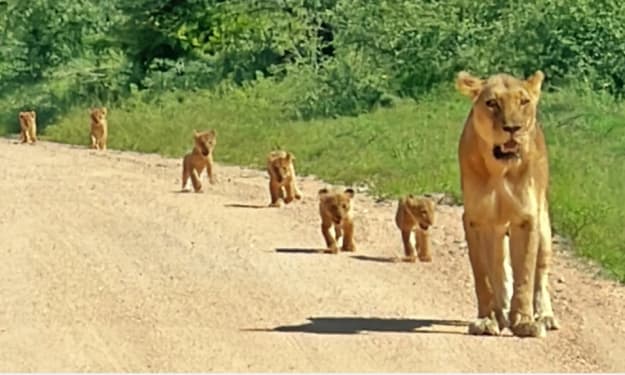
In the heart of the African savannah, life is a constant lesson for young animals. Few scenes are as endearing — or as heartwarming — as tiny lion cubs trying to keep pace with their mother. These little bundles of fur face a world full of challenges, from learning to hunt to avoiding dangers, all while depending on the guidance and protection of their experienced mom. Watching cubs wobble and tumble as they attempt to keep up with their mother reminds us that growing up, even in the wild, is a journey full of struggle, determination, and adorable missteps. The Early Days of Lion Cubs Lion cubs are born blind and helpless, usually in litters of two to six. For the first few weeks, they rely entirely on their mother for warmth, food, and safety. Even after opening their eyes and beginning to explore, the cubs are far from independent. The first months are crucial. Cubs learn social cues, hunting basics, and survival skills simply by watching their mother and the pride. But as anyone who has observed them knows, there’s often a huge gap between observation and action. Tiny cubs often struggle to match their mother’s pace, especially when she moves through long stretches of savannah or leads the family on patrols. A Mother’s Role in the Wild For a lioness, raising cubs is a full-time commitment. She hunts, defends her territory, and teaches her young, all while staying alert to predators such as hyenas, leopards, and even rival lions. The cubs, meanwhile, attempt to mimic her every move — often with clumsy yet charming results. A mother lion’s patience is remarkable; she frequently slows down, nudges them along, or stops to ensure no cub is left behind. These moments, while stressful for the tiny cubs, are vital learning opportunities. Struggling to Keep Up: Why It’s So Hard There are several reasons why tiny lion cubs have trouble keeping pace with their mother: Short Legs, Big Steps: Lion cubs’ legs are tiny and their coordination is limited, making it difficult to cover the same distance as an adult lioness. Curiosity: Cubs are naturally curious. A single butterfly or rustling bush can distract them, leaving mom to pause repeatedly. Energy Levels: Young lions tire quickly. Even with frequent naps, the cubs’ stamina is far lower than their mother’s. Learning Through Play: Play is not just fun; it teaches hunting, balance, and social skills. Running off to pounce on a sibling or chase an insect is all part of their education. Despite these challenges, the cubs’ determination to keep up demonstrates their resilience and growing understanding of the wild world. Lessons in Teamwork and Survival Every cub struggling to keep up is also learning crucial survival skills. The journey across the savannah is more than a test of speed — it’s a lesson in: Coordination: Cubs learn how to move efficiently across different terrains. Patience: They begin to understand the rhythms of adult life and the pace required for survival. Social Skills: Staying with the group teaches cubs how to interact with siblings and the pride, which is essential for their future roles. Observation: By following their mother, cubs study hunting techniques, territorial behavior, and predator awareness. Even the moments when cubs stumble or lag behind are essential for their development. These experiences prepare them for independence, which comes sooner than many might expect. The Cutest Moments in the Wild Anyone who has watched tiny lion cubs knows that their struggles are often irresistibly cute. Video clips from wildlife reserves frequently show cubs toddling along, tumbling over each other, or getting distracted mid-step. Observers often comment that these little stumbles reveal personality, determination, and playfulness, making them one of nature’s most heartwarming spectacles. While their mother is serious and focused, the cubs inject a sense of humor and lightness into life on the savannah. Why This Matters The struggles of lion cubs aren’t just adorable — they’re vital for understanding wildlife behavior. Conservationists and animal behaviorists use these moments to study growth patterns, social structures, and survival strategies in lion populations. These observations also highlight the importance of preserving natural habitats. Cubs must learn in a safe environment to survive; habitat loss, poaching, and climate change make these early struggles even more dangerous. Protecting the African savannah ensures that future generations of lions can experience the same lessons and playful tumbles. The Road to Independence Within a year, these tiny cubs will be more agile, faster, and more confident. By the time they reach two to three years old, males may begin to leave the pride, while females often stay and become caretakers themselves. Every misstep, tumble, and lagging moment is part of the journey toward strength, coordination, and independence. Watching them now gives us a glimpse of the challenges they will overcome, and the survival skills they will carry for life. A Celebration of Motherhood Ultimately, these scenes remind us of the incredible bond between mother and cubs. Her patience, vigilance, and teaching are the foundations of their future. The cubs’ struggles highlight the trials of growing up, while their determination showcases the resilience and beauty of wildlife. For those observing, it’s a powerful lesson in care, guidance, and perseverance, not just in lions but in the natural world as a whole. Final Thoughts Watching tiny lion cubs try to keep up with their mother is both entertaining and enlightening. It’s a story of growth, struggle, and resilience — a reminder that even the fiercest creatures start small, learning step by step. These little lions capture hearts while teaching life lessons: patience, determination, teamwork, and the importance of guidance. As they tumble and waddle across the savannah, they show us that growth is a process, one adorable misstep at a time. For wildlife enthusiasts, animal lovers, and anyone enchanted by nature, these tiny cubs are proof that even in the wild, love, care, and persistence are universal truths.
By Aarif Lasharia day ago in Earth
Microbiota, microbiome or microflora: how to speak correctly and why it is for health.
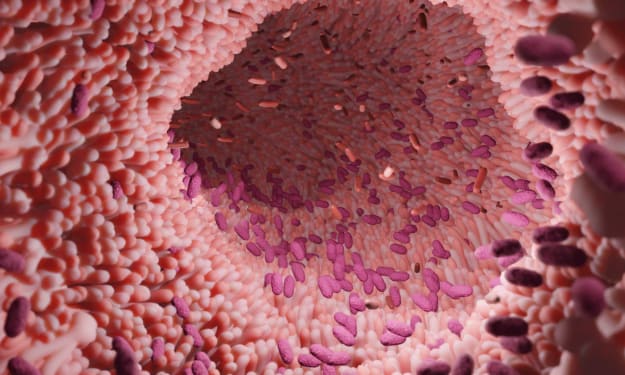
You've probably heard the phrase, "We are what we eat." But modern science says more precisely: we are also those who live in us. Until 2016, it was believed that there are many times more bacteria in our body than our own cells. The latest calculations by mathematicians show that we divide the body with our microorganisms by about 50/50: about 30 trillion of our cells versus 38 trillion bacterial ones.
By Yaroslav Gorohov5 days ago in Earth


Comments
There are no comments for this story
Be the first to respond and start the conversation.