
Srirangam Temple: A Cultural, Religious, and Architectural Landmark in India
Exploring the Rich History, Tradition, and Significance of Srirangam Temple - One of the Largest and Most Important Hindu Temples in India

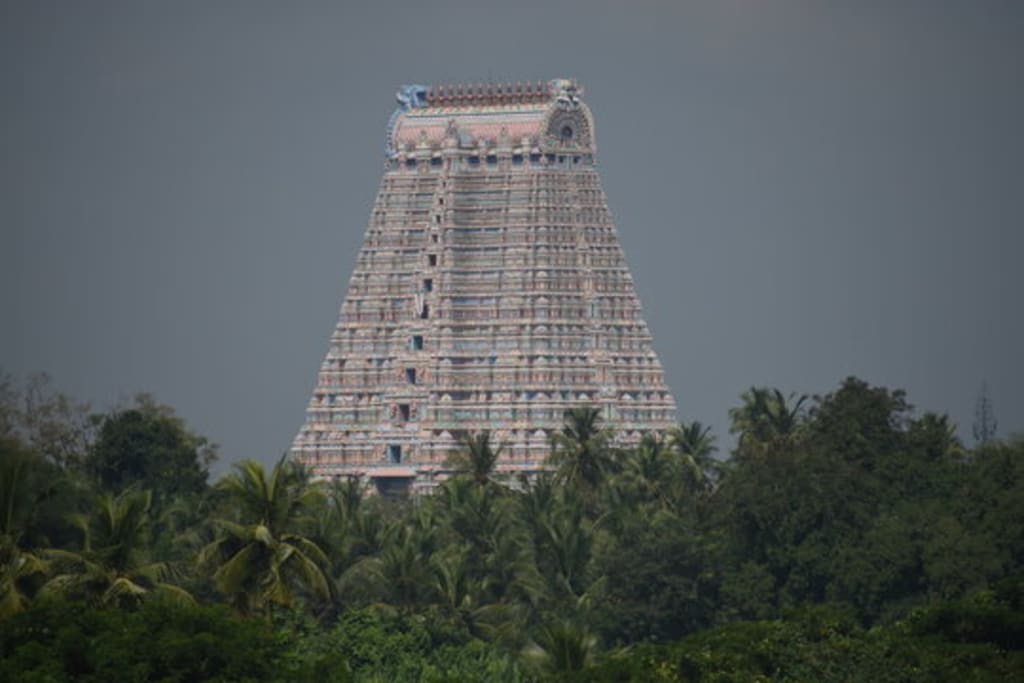
Srirangam temple is a Hindu temple dedicated to Lord Vishnu, located in the city of Srirangam, in the state of Tamil Nadu, India. It is considered one of the most important and largest temples in India and attracts millions of devotees every year.
The temple is built on an island formed by the two branches of the river Kaveri, and is spread over an area of 156 acres. It has seven concentric walls, with the outermost wall measuring about 2.5 miles in circumference.
The temple has several gopurams (tower gateways) which are decorated with intricate carvings and sculptures. The most famous of these is the Rajagopuram, which stands at a height of 236 feet and is the tallest temple tower in Asia.
The main deity of the temple is Lord Ranganatha, a reclining form of Lord Vishnu, who is believed to have manifested himself on the banks of the Kaveri river. The temple also has several other shrines dedicated to various forms of Lord Vishnu, as well as to other deities.
The temple has a rich history and has been patronized by several dynasties and rulers, including the Cholas, the Pandyas, the Hoysalas, and the Vijayanagara Empire. The temple has also been a center of learning and has produced several renowned scholars and saints.
Overall, Srirangam temple is a significant religious and cultural landmark in India, and is a must-visit for anyone interested in exploring the rich heritage and traditions of the country
Srirangam temple has a long and rich history, with the first mention of the temple dating back to the 1st century CE in the Sangam literature. The temple was expanded and rebuilt by several dynasties and rulers over the centuries, with the current structure dating back to the 14th century.
One of the unique features of the temple is the 1000-pillar hall, which is known for its intricate carvings and sculptures. The hall was built during the Vijayanagara period and is a masterpiece of Dravidian architecture.
The temple also has several festivals and rituals that are celebrated with great pomp and splendor, attracting thousands of devotees from across the country. The most important festival is the Vaikunta Ekadasi, which is celebrated in December or January and marks the opening of the gate to the inner sanctum of the temple.
Apart from its religious and cultural significance, Srirangam is also a center of art and music. The temple has a rich tradition of music and dance, with several renowned musicians and dancers having performed here over the years.
Overall, Srirangam temple is a significant landmark in Indian culture and heritage, and is a testament to the country's rich traditions and artistic achievements. It is a must-visit for anyone interested in exploring the depth and diversity of India's cultural heritage.
Srirangam temple is not only a place of worship, but also a hub of education and scholarship. The temple has been a center of learning for centuries, with several eminent scholars and saints having studied and taught here.
One of the most famous scholars associated with the temple is Ramanujacharya, a 12th century philosopher and theologian who is considered one of the most important figures in the history of Hinduism. He studied and taught at the temple, and his teachings and writings have had a profound impact on the development of the religion.
The temple also has a rich collection of manuscripts and texts, which are housed in its library. The library has a vast collection of books on Hindu philosophy, theology, literature, and art, and is a valuable resource for scholars and researchers.
Apart from its academic and cultural significance, the temple is also an important pilgrimage site for devotees of Lord Vishnu. The temple attracts millions of visitors every year, who come to offer prayers and seek the blessings of the deity.
Visitors to the temple can also take part in various activities and rituals, such as performing abhishekam (ritual bath) for the deity, offering food to the poor, and participating in the temple's music and dance programs.
Overall, Srirangam temple is a place of great significance and reverence, with a rich history, culture, and tradition that continues to inspire and attract people from all walks of life.
In addition to its cultural, religious, and academic significance, Srirangam temple is also an important example of Dravidian architecture. The temple's impressive structure is characterized by its towering gopurams (temple towers), mandapams (pillared halls), and intricate carvings and sculptures.
The temple's architecture is a blend of various styles and influences, reflecting the diverse cultural and artistic traditions of India. The temple's carvings and sculptures depict scenes from Hindu mythology, as well as everyday life and nature.
The temple also has a unique system of water management, with several tanks and channels that help to maintain the temple's water supply and drainage. The temple's water management system is considered one of the most advanced in the world, and is a testament to the ingenuity and engineering prowess of ancient India.
Srirangam temple has been recognized as a UNESCO World Heritage Site, and is considered one of the finest examples of Indian temple architecture. The temple continues to inspire and influence architects, artists, and scholars, and is a testament to the enduring legacy of India's rich cultural heritage.
About the Creator
Homeowners Don’t Want to Move: The Big Deal About Shrinking Backyards
In neighborhoods across the country, a subtle but growing trend is taking root: homeowners aren’t moving, and it’s not just because of the housing market. Many are staying put because their backyards—once spaces for relaxation, gardening, and family fun—are shrinking, either physically due to new development or symbolically as life priorities shift. What may seem like a minor detail—an ordinary backyard—is, for many, a defining feature of home life. Losing it can change how people live, play, and even feel about their communities. This shift has consequences for families, urban planning, and even the way cities are designed. It also sheds light on why homeowners are willing to compromise on size, style, or even location rather than give up their outdoor space. Why Backyards Matter More Than Ever Backyards are more than just patches of grass. They are extensions of our living space, providing: Personal outdoor retreats for reading, gardening, or hosting friends. Safe spaces for children and pets to play. Social hubs for barbecues, birthdays, and neighborhood gatherings. Mental and physical health benefits, including fresh air, sunlight, and exercise. For families who have invested years into landscaping, planting trees, or building decks and patios, the backyard is an emotional asset. Moving to a new home often means losing these personal touches—and many homeowners aren’t willing to take that step. “Backyards are part of our identity,” says Laura Jennings, a landscape designer in suburban Chicago. “People have memories tied to them—first steps, garden harvests, family barbecues. That’s why so many homeowners are staying put, even if it’s tempting to relocate for a bigger house or a better neighborhood.” The Trend of Shrinking Yards Urban densification and suburban development have slowly eaten into traditional backyard space. In many cities, large lots are being replaced with townhomes, duplexes, or small-lot single-family homes. Even in suburban neighborhoods, new constructions often prioritize indoor square footage over outdoor space. The shrinking backyard trend has several effects: Less room for recreation: Families may struggle to fit a swing set, pool, or garden into a smaller yard. Increased desire to stay put: Homeowners prefer maintaining a familiar outdoor space rather than trading it for a slightly larger indoor area. Higher emotional attachment: As yards become more limited, the significance of every tree, patch of grass, or vegetable garden grows. For many, the choice isn’t just about square footage—it’s about quality of life. Homeowners Are Making Trade-Offs As a result, more homeowners are staying in place longer, even if it means: Skipping a bigger kitchen or extra bedroom. Living in a less “trendy” neighborhood. Paying more in maintenance or property taxes to keep a cherished yard intact. Some have embraced innovative backyard solutions to maximize smaller spaces: Vertical gardens and container planting. Multi-functional patios that serve as dining, lounging, and play areas. Creative landscaping, including raised beds, pergolas, and tiny ponds. These adaptations allow homeowners to maintain the sense of space and enjoyment they’ve built over years without relocating. Emotional and Social Dimensions Beyond practical reasons, the backyard has a symbolic meaning. It represents: Continuity and stability: Homeowners see staying put as preserving a lifestyle. Family history: Many yards hold stories—graduations, summer afternoons, first bike rides. Community connection: Long-term residents know neighbors, local schools, and nearby amenities. Moving often means giving up these ties. A survey by the National Association of Home Builders found that over 60% of homeowners aged 35–55 preferred staying in their current homes, citing yard size and outdoor enjoyment as key factors. For these individuals, giving up a backyard is not a small inconvenience—it’s a major life decision. The Impact on Neighborhoods and Cities The trend of staying put also affects broader urban and suburban planning. Fewer homeowners moving means: Less turnover in neighborhoods, which can reduce housing market fluidity. Pressure on developers to include quality outdoor space in new builds. Greater demand for parks and community green spaces, as private yards shrink. Urban planners and developers are noticing the importance of outdoor space in retention and satisfaction metrics. Homes with usable yards, green roofs, or communal gardens often have higher value and attract long-term residents. The Future of Backyard Living As city lots shrink and suburban sprawl continues, homeowners are adapting: Smaller, highly curated gardens instead of sprawling lawns. Multi-functional backyards designed for work, play, and entertainment. Investment in outdoor amenities such as fire pits, decks, or small pools. Some communities are exploring shared backyard concepts, like community gardens and pocket parks, to supplement shrinking private spaces. While these aren’t a complete replacement for personal yards, they provide social and environmental benefits and may encourage homeowners to stay in their homes longer. Conclusion: More Than Grass and Trees Shrinking backyards might seem like a minor design issue, but for homeowners, it’s deeply tied to lifestyle, family life, and personal identity. The reluctance to move is not just a reaction to the housing market; it reflects an emotional, social, and practical connection to outdoor space that indoor square footage alone can’t replace. As urban density grows and lot sizes shrink, the importance of backyards will continue to shape homeowner decisions, neighborhood design, and community dynamics. Families are showing that a yard is not just grass and trees—it’s a place of memory, freedom, and connection. In a world where real estate trends often prioritize indoor luxury, the backyard remains a powerful symbol of home, anchoring families to the places they love—and keeping many from moving at all
By Muhammad Hassan2 days ago in Earth
Global Calcium Carbonate Market Size & Forecast 2025–2033
Introduction: A Quiet Giant of Global Industry Calcium carbonate may not be a headline-grabbing material, but it is one of the most indispensable compounds in modern industrial life. Found naturally in limestone, marble, and chalk, this humble mineral underpins everything from the buildings we live in to the paper we write on and the plastics we use every day. Its low cost, wide availability, and remarkable versatility have made it a cornerstone raw material across multiple industries worldwide.
By jaiklin Fanandish2 days ago in Earth



Comments
There are no comments for this story
Be the first to respond and start the conversation.