

This is the American dream a nice house with a lush green well manicured lawn Lawns take up more land in the US than any individual crop all told they account for about 1.3% of the surface area in the continental US which is an area larger than the state of Louisiana but the fact is Lawns are anything but natural it takes a lot of hard work resources and money to make a lawn and keep it green and it's not even a plant that's native to North America even Kentucky Bluegrass is actually from overseas so I can't help but wonder why it's all you see up and down virtually every street in America and are there other options than the quintessential Green Lawn originally manicured turf grass
Lawns came about an 18th century England and France they were the domain of the ultr privileged members of society since you were growing something that couldn't be eaten or made into clothes in America Lawns were popularized by influential figures like George Washington and Thomas Jefferson who both styled their Estates after the fashionable British Lawns the ideal of turf grass Lawns was furthered by people like landscape architect Frederick Law Olstead who designed massive public parks projects Central Park Boston's f as well as parks in Buffalo Milwaukee and Chicago but green well-manicured Lawns remained in the sphere of public parks and the homes of the wealthy because so many people didn't own a house of their own but that was all about to change starting in the 1930s US government loan programs provided mortgages for over 11 million new homes the federal government also built 48,000 Mi of interstate highways which enabled Americans to access these shiny new Suburban housing developments developments like Lakewood California a Suburban bedroom community where over 177,000 brand new single family home sprang up to many Lakewood was Paradise Lawns were heavily marketed to this new middle class of suburbanites as luxurious reflections of status they told you that if you had a beautiful lawn it meant that you were a smart modern American one magazine article at the time said it was quote the biggest lawn boom of all time it is literally Al spreading all over and has become in fact much more than a ground cover it is an emotion that has blossomed into a status symbol I'll be totally honest I've never owned a lawn so I don't even know where you would start to make a lawn that looks like this I called drct Nick Christians he literally wrote the book on growing turf grass hold that up again if you've got your timing right uh and you know a little bit about what you're doing you can do it with very little effort digging through his book let's see you should start by testing your soil it says to do it every 3 to 5 years or when your lawn is not up to Snuff then you got to fertilize he says the ideal is three to five times annually then you got to water the lawn He suggests twice a week drop spread preemergence herbicides point being it's a lot the average American spends about 65 hours a year on lawn and garden care and all this Lawn Care uses up lots and lots of resources lawnmowers in the US use 1.2 billion gallons of gasoline every single year and it takes 1 to 2 Ines of water a week to keep your lawn Lush and green which for 1,000 ft lawn that's over 10,000 gallons a summer in a more Aid region like here in California a single family can use up to 87,000 gallons a year just to water their lawn and garden that's the same amount of water as four home swimming pools and all this lawn and garden equipment emits tens of millions of tons of pollutants into the environment every year so turf grass is by far the most common lawn covering but it seems like it's maybe not the most environmentally friendly option so I had to wonder if you don't want a turf grass lawn but you also don't want an overgrown Meadow like this what should you do I would not say that I'm anti lawn but I'm anti lack of a better idea and thinking about what you want your space to actually do and serve you and your community Sarah is one of the people trying to figure figure that out she's a landscape designer in San Diego and I decided to drive down to talk to her she showed me some of the projects she's worked on where she converted grass yards to more useful ecologically minded Gardens and she showed me a few of their key benefits pretty much 99% of my clients want low maintenance and low water so picking those plants isn't really hard there's a lot of California friendly plants California native plants that do well with that treating your front yard maybe even more like a backyard where you have places to sit you have things to interact with you have a variety of things can actually really be great for a community a space like this offers a lot more uh interaction for kids there's so many things that are tangible here that if a kid kicks this around they're not ruining your yard you just push it back cities across the US are actually paying people to convert their lawns from turf grass to more sustainable low water use Landscapes here in La you can get up to $25,000 sometimes I think we try to stick to these perfect yards and um you know we're like don't touch it don't interact but isn't that the opposite of the [Music] point for so long this is what people envisioned when they thought of the American dream and for some maybe it is it's a satisfaction of how it looks when you're doing it right when you get it right it really looks great everybody comes by and wants to know what you did and how you did it but for others the American dream might be a yard that requires less work comprised of plants that are actually native and that's better for the environment maybe it's time we reimagine what the American dream can look like
About the Creator
prat
Loves writing content in simpler words.
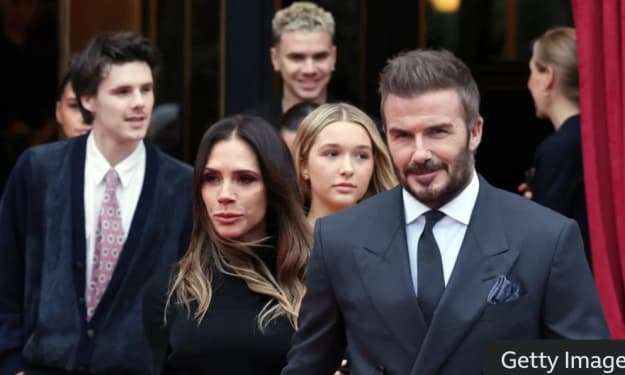
Beckhams Spotted Together in Paris After Brooklyn Row
A Family Reunion in the City of Light David and Victoria Beckham were recently spotted together in Paris, drawing attention from fans and media alike. The appearance comes shortly after reports of a disagreement between the famous couple and their eldest son, Brooklyn Beckham, who has been navigating his own professional and personal endeavors.
By Aarif Lashari6 days ago in Earth
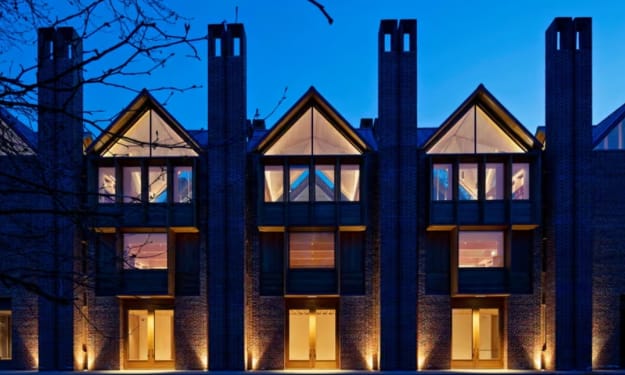
No 1 for Nuns! Níall McLaughlin Is Architecture’s Discreet Daredevil
Níall McLaughlin: Redefining Architectural Boundaries Níall McLaughlin has long been known as a master of understated yet daring design. From residential homes to cultural landmarks, McLaughlin’s work demonstrates a unique ability to merge functionality with artistry, creating spaces that are both practical and visually arresting.
By Aarif Lashari4 days ago in Earth


Comments
There are no comments for this story
Be the first to respond and start the conversation.