

Primates are our closest animal relatives. They come in all shapes and sizes. Apes are amazing creatures and always stand out in a crowd. Many are also very intelligent. Unfortunately, there are species that are becoming extinct.
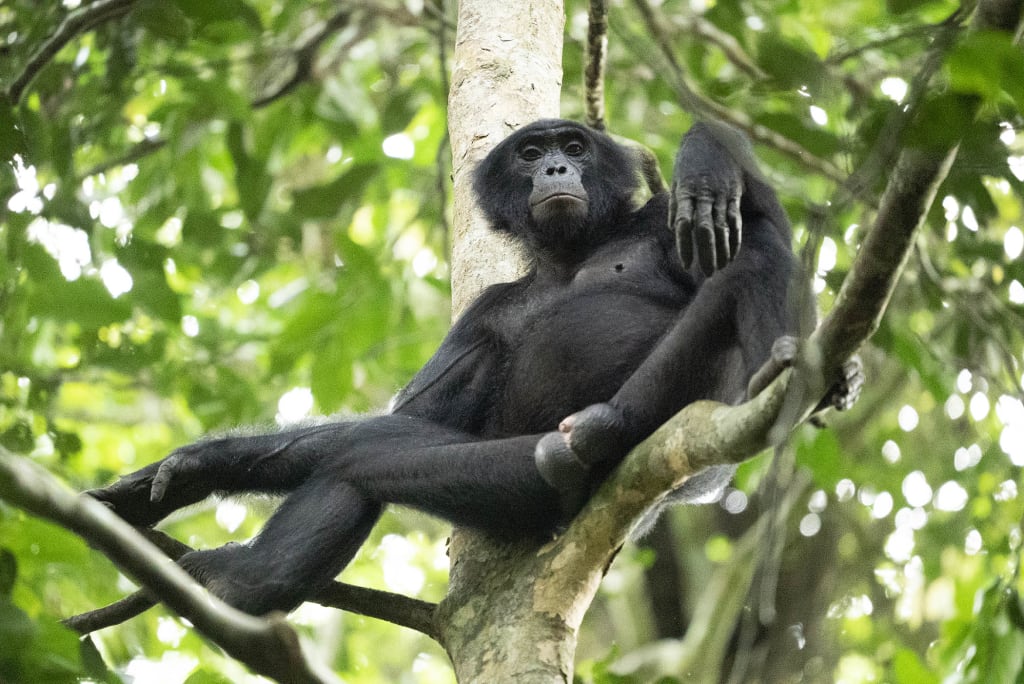
Bonobos
Bonobos are also called pygmy chimpanzees but actually are about the same size weighing in at 45 kg. These chimps are only found in the Democratic Republic of Congo. They are known for their peaceful, matriarchal societies. Bonobos are also endangered due to hunting and habitat loss.
These chimps are omnivores with a diet that consists of fruit, nuts, shoots, stems, pith, leaves, roots, flowers, and tubers. Also invertebrates such as termites, worms, and grubs make up a small proportion of their diet. They may also eat flying squirrels, duiker, and bats.
Borneo Orangutan

These orangutans are the largest arboreal mammals and weigh in at 150 kg. They are red-haired and known for their tool use and complex problem-solving skills. They are only found on the island of Borneo. Unfortunately, they are threatened by deforestation and illegal pet trade. Borneo orangutans spend most of their time in trees and are crucial to seed dispersal in their forest habitats.
Their long arms are great for swinging from branch to branch and reaching for fruit. They are frugivorous eating forest fruits, shoots, leaves, insects, sap, vines, birds’ eggs, spiders’ webs, fungi, flowers, bark, and sometimes nutrient-rich soils.
Chacmas

Chacmas are the largest of the baboon species and weigh in at 40 kg. They make their homes in southern Africa. They're known for their dog-like faces and powerful builds. Chacma baboons are highly intelligent and solve complex problems.
They're omnivores prefering fruit and also eat insects, seeds, grasses, and even smaller vertebrate animals.
Chimpanzees

Chimpanzees can weight in at 70 kg. They are highly intelligent and social. They live in complex communities across central and West Africa. These chimps are known for their use of tools and ability to learn human sign language. They are specialized fruit eaters.
Drills
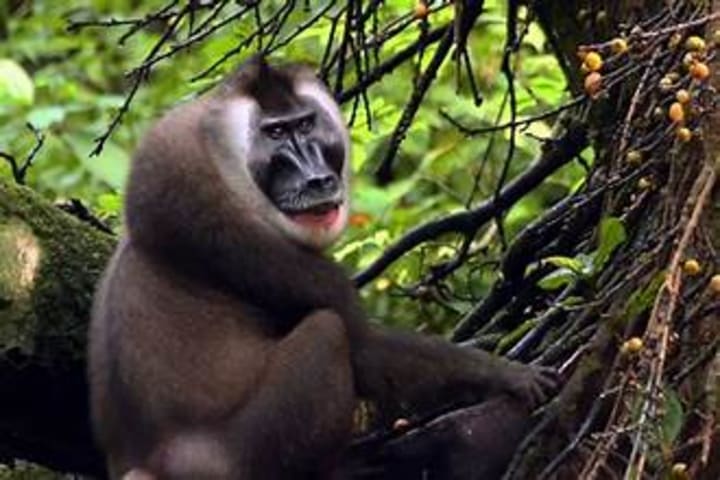
Drills are closely related to mandrills and weigh in at 45 kg. They have distinct black faces and live in a small area of West Africa. They are criticlly endangered with only about 3,000 found in the wild. They play a crucial role in their ecosystems as seed dispersers, helping to maintain forest diversity.
Drills are large baboons with short tails and dark grey-brown bodies. Forest baboons have pink, mauve, and blue rumps. They are omnivores and feed mostly on fruit and leaves as well as invertebrates, generally termites. They supplement this diet by raiding manioc and palm oil plantations.
Eastern Gorillas

There are two subspecies the mountain gorilla and the eastern lowland gorilla.
These are the largest living primates and male gorillas can weigh in at 200 kg. They make their homes in the mountains of central Africa. Eastern gorillas are known for their intelligence and strong family ties. The unfortunate thing is that they are critically endangered due to poacing and habitat loss.
These gorillas are herbivores and eat leaves, roots, stems, vines, shrubs, and bamboo. They also consume flowers, fruit, berries, fungi, wood, the bark of trees, and epithelium, which is stripped from roots.
Emperor Tamarins

Emperor tamarins are relatively small weighing in at 500 grams. They're known for their long, white mustaches resembling those of the German Emperor Wilhelm II. They live in the Amazon Basin in South America. They often form mixed-species groups with other tamarin species.
They're omnivores feeding on fruits, flowers, leaves, and the gums, saps, and nectar of trees available in its habitat and sometimes consuming animal prey, including frogs and insects.
Geladas

Geladas are also known as bleeding heart monkeys because of their red chest patches. They weigh in at 20 kg. These monkeys are the only grass-eating primates. They live in the highlands of Ethiopia in large groups and are known for their complex social behaviors.
They have a seasonal diet being herbivores and feed upon grasses, blades, seeds, and bulbs.
Golden Snub-nosed Monkeys

Golden snub-nosed monkeys have distinctive blue faces and golden fur. They weigh in at 15 kg. These monkeys live in the mountains of central and southwest China. They're adapted to cold climates and can survive in snow-covered forests.
They're herbivores and eat a wide range of food mostly consisting of pine needles and young firs, being supplemented by bamboo shoots, leaves, buds, and fruits.
Hamadryas

Hamadryas baboons have distint silver manes and weigh in at 30 kg. They live in northeast Africa and parts of Arabia. These baboons live in complex social groups with a unique multi-level society. This is the only baboon species that doesn't live entirely in Africa, with some populations found in Saudi Arabia and Yemen.
They're omnivores consuming both animal and plant origin like fruits, tree gums, acacia seeds, acacia flowers, seeds, grass, rhizomes, corms, roots, tubers as well as small vertebrates, insects, and small mammals, including antelope.
Howler Monkeys

Howler monkeys are known for their incredibly loud calls and weigh in at 9 kg. They live in the forests of Central and South America. These monkeys are the loudest land animals making calls that can be heard up to 5 km away.
They're mostly herbivores eating plan t but can also eat bird eggs. Most of their diet contains leaves, berries, fruits, seeds, nuts, flowers, buds, and more. They can even feed on toxic species in small amounts.
Mandrills

Mandrills are the largest monkey species and weigh in at 50 kg. The males are known for their striking blue and red facial coloring. These monkeys are found in the rainforests of central Africa and live in large groups called hordes.
Mandrills are omnivores and eat food both of plant and animal origin. They eat various fruits, seeds, fungi, and roots, supplementing this diet with insects, snails, worms, frogs, lizards as well as occasional snakes and small vertebrates.
Olive Baboons

Olive baboons are one of the largest monkey species weighing in at 50 kg. They live across much of central and East Africa. They're known for their adaptability to different habitats. Olive baboons are highly intelligent and have complex social structures.
They're mostly omnivores eating fruits, leaves, roots, insects, eggs, lizards and occasionally prey up to the size of a deer fawn. They will also feed on carrion if they see the kill.
Patas Monkeys

Patas monkeys are known for their speed and weigh in t 13 kg. They live in the grasslands and open woodlands of central Africa. These monkeys are the fastest runners of all primates and can reach speeds of up to 55 km/h. They have a unique social structure where a single male lives with a group of females and their offspring.
They're omnivores and generally fiid on pods, seeds, gall, young leaves, gum and flowers of Acacia trees, supplemented with occasional grasses, berries, seeds, fruits as well as insects, eggs, lizards and young birds.
Proboscis Monkeys

Proboscis monkeys are known for their large, pendulous noses and weigh in at 24 kg. These monkeys are only found on the island of Borneo and are excellent swimmers. They're endangered due to habitat loss and hunting.
These monkeys are hervivors and mostly feed on fruits, seeds, young leaves, and shoots of mangroves, supplementing this diet with occasional caterpillars, larvae, and other invertebrates.
Siamangs

Siamangs are the largest of the gibbon species weighing in at 14 kg. They're known for their loud, booming calls that are amplified by their inflatable throat sacs. They live in the forests of Malaysia and Sumatra. They're unique among gibbons in that they have webbed toes that help them grasp branches to swing through the trees.
Siamangs are herbivores and eat mainly leaves and fruit. They may also sometimes eat insects, small vertebrates, and bird eggs.
Spider Monkeys

Spider monkeys are known for their long, slender limbs and prehensile tails. They weigh in at 9 kg. These monkeys live in the tropical forests of Central and South Ameica. They're known to be excellent climbers and spend most of their time in the treetops.
They're frugivores preferring a diet of 90% fruit and seeds, feeding on the mature soft parts of a wide variety of fruits in which the seeds are swallowed along with the fruit. Spider monkeys will also eat young leaves, flowers, aerial roots, sometimes bark and decaying wood, as well as honey.
A very small part of the diet consists of insects, insect larvae and birds eggs. When feeding, they may hang by their tails and reach out for food with their hands.
Sumatran Orangutans

These orangutans are closely related to their Borneo cousing. They are slightly smaller and can weigh in at 90 kg. Sumatran orangutans are known for their distinctive facial features and long shaggy coats. These orangutans are only found in the northern parts of Sumatra and are critcally endangered. They are considered to be the most intelligent of all great apes and have been observed using tools in the wild.
Sumatran orangutans are mostly frugivores prefering fruit consisting of large seeds and fleshy substance like durians, lychees, jackfruit, breadfruit, and fig fruits. They'll also eat insects mostly consuming ants.
Western Gorillas

These gorillas are slightly small than the Eastern gorillas but still can weigh in t 180 kg. They live in the forests of central Africa and are known for their abuburn chests. They have a varied diet, eating more than 200 types of plants and at times small insects.
White-headed Langurs

White-headed langurs are striking looking monkey weighing in at 10 kg. They are known for their white heads and shoulders. They live in a small area of southern China. Unfortunately, they're critically endanged with only about 1,000 left in the wild.
They have a specialized diet, feeding primarily on the leaves of just a few plant species in their limestone karst habitat.
Wooly Monkeys

Wooly monkeys are known for their thick, wolly fur and weigh in at 10 kg. They live in the Amazon Basin in South America and are important seed dispersers in their ecosystem. These monkeys are threatened by habitat loss and hunting.
Wooly monkeys are omnivores and feed on both plants and other animals. Their diet primarily consists of fruit, but they will also eat leaves, seeds, nuts, flowers and nectar, and even insects, small rodents, and reptiles.
Yellow Baboons

Yellow baboons are similar in size to olive baboons and weigh in at 45 kg. They live in East Africa and are known for their yellowish-brown fur. They are highly adaptable and live in a variety of habitats from savanna to rainforest.
They're omnivores that prefer fruits but also eat plants, leaves, seeds, grasses, bulbs, bark, blossoms and fungi, as well as worms, grubs, insects, spiders, scorpions, birds, rodents and small mammals.
About the Creator
Rasma Raisters
My passions are writing and creating poetry. I write for several sites online and have four themed blogs on Wordpress. Please follow me on Twitter.
Keep reading
More stories from Rasma Raisters and writers in Earth and other communities.
The Ritual of Winter Challenge Winners
As the chill of winter settles in, communities everywhere have been buzzing with anticipation for the results of the Ritual of Winter Challenge, an event that has become a highlight of the season for enthusiasts of all ages. From artists and writers to athletes and innovators, participants from across the country compete in a variety of categories, showing off not just talent, but ingenuity, perseverance, and a commitment to pushing boundaries. This year’s winners offer a glimpse into the creative and competitive spirit that makes this challenge such a standout experience.
By Muhammad Hassan4 days ago in Earth
Locked Exits, Panic, and Desperate Calls: Survivors Recount Mall Fire Horror
A tragic fire at a busy shopping mall has left the public in shock as survivors recount the harrowing moments when flames and smoke consumed the building. Eyewitness accounts describe locked exits, panicked crowds, and desperate calls for help, painting a chilling picture of the chaos inside.
By Muhammad Hassan6 days ago in Earth


Comments
There are no comments for this story
Be the first to respond and start the conversation.