
Global warming
Understanding the Impacts, Urgency of Action, and Opportunities for Change

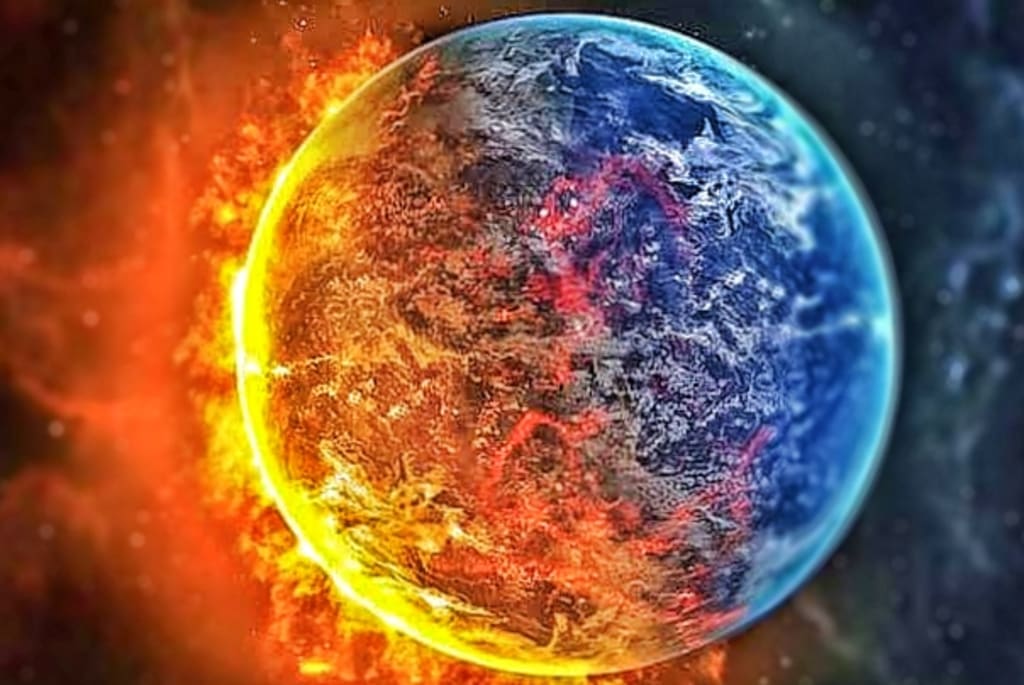
Global warming is one of the most significant environmental challenges facing our planet. It is caused by human activities, such as the burning of fossil fuels and deforestation, which release greenhouse gases into the atmosphere. These gases trap heat, causing the Earth's average surface temperature to rise. The impacts of global warming are wide-ranging and serious, from rising sea levels to more frequent and severe weather events. In this article, we will explore the science behind global warming, its impacts, and what we can do to address this critical issue.
The Science Behind Global Warming
The scientific consensus is clear: global warming is real, and it is caused by human activities. The Intergovernmental Panel on Climate Change (IPCC) has found that the Earth's surface temperature has risen by 1.1°C since the pre-industrial era. This may not sound like a lot, but it has significant impacts on our planet. The IPCC also predicts that the Earth's temperature will continue to rise, with a projected increase of 1.5°C to 4.5°C by the end of the century, depending on how much action we take to reduce greenhouse gas emissions
Greenhouse gases are the main driver of global warming. Carbon dioxide (CO2) is the most important greenhouse gas, but other gases, such as methane and nitrous oxide, also contribute. These gases trap heat in the Earth's atmosphere, causing the planet to warm up. Human activities, such as the burning of fossil fuels, deforestation, and agriculture, have caused a significant increase in greenhouse gas concentrations in the atmosphere since the Industrial Revolution.
Impacts of Global Warming
The impacts of global warming are wide-ranging and serious. One of the most significant impacts is the melting of ice caps and glaciers, which leads to rising sea levels. Sea levels have risen by about 8 inches since 1880, and the rate of rise is accelerating. This is a direct threat to coastal communities around the world, as they face the risk of flooding and erosion. Without action to reduce greenhouse gas emissions, sea levels could rise by as much as 8 feet by the end of the century, which would have catastrophic consequences.
Global warming is also causing more frequent and severe weather events, such as hurricanes, heatwaves, and droughts. These events can cause significant damage to infrastructure, crops, and ecosystems, and can have a devastating impact on human lives. For example, the 2019-2020 Australian bushfire season, which was made worse by global warming, destroyed over 10 million hectares of land, killed at least 34 people, and caused an estimated $10 billion in damages.
Another impact of global warming is the loss of biodiversity. As temperatures rise, many plant and animal species are struggling to adapt. According to a 2019 report by the Intergovernmental Science-Policy Platform on Biodiversity and Ecosystem Services (IPBES), up to one million species are at risk of extinction due to human activities, including global warming.
Addressing Global Warming:
Addressing global warming is an urgent priority. We need to take immediate action to reduce greenhouse gas emissions and mitigate the impacts of global warming. This requires a combination of policy changes, technological innovations, and individual actions.
One of the most important things we can do is to reduce our dependence on fossil fuels. This can be done through a variety of measures, including increasing energy efficiency, transitioning to renewable energy sources, and improving public transportation. Many countries and cities around the world have already made significant progress in this area, and there are many examples of successful renewable energy projects, such as wind and solar farms.
Individual actions are also important. We can all make changes to our daily lives to reduce our carbon footprint. This includes reducing meat consumption, using public transportation
About the Creator
Keep reading
More stories from writers in Earth and other communities.
My First Time Skiing and I Got Lost, Alone, in the French Alps
Looking back, I can trace some of my life’s biggest adventures to a simple action from my sister. She’d introduced me to Tommy (a very long time ago), a colleague of hers, who had overshared his penchant for Italian-looking women, and I ticked that box.
By Chantal Christie Weissabout 3 hours ago in Humans



Comments
There are no comments for this story
Be the first to respond and start the conversation.