
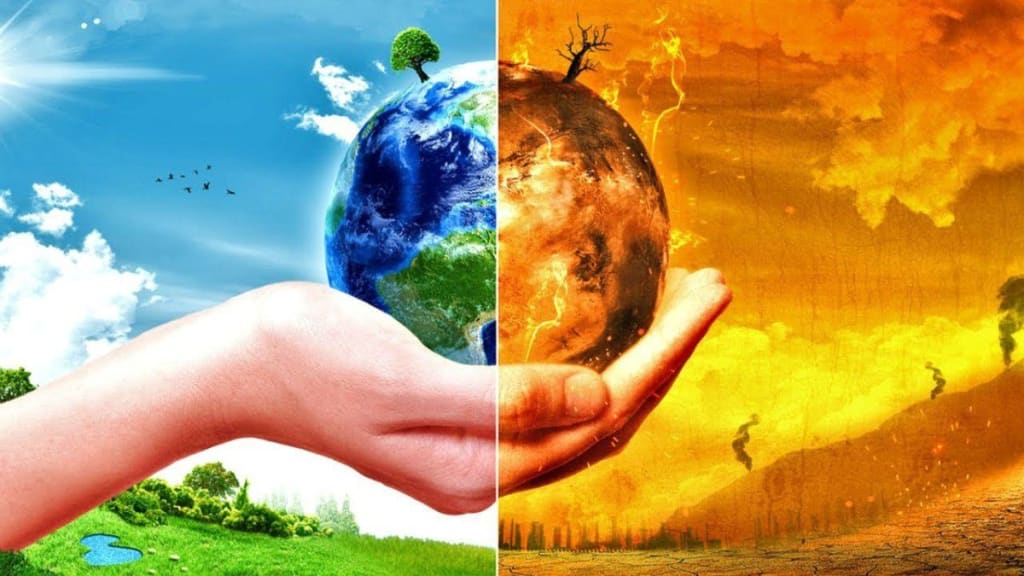
Global warming is a complex and multifaceted issue that has far-reaching impacts on our planet and its inhabitants. At its core, global warming refers to the gradual increase in the Earth's average surface temperature caused by the accumulation of greenhouse gases in the atmosphere. While some level of greenhouse gases is necessary to maintain a habitable climate, human activities such as burning fossil fuels, deforestation, and industrial processes have greatly increased the concentration of these gases in the atmosphere, leading to a rise in temperatures that is altering the Earth's ecosystems in profound ways.
One of the most immediate and visible effects of global warming is the melting of glaciers and ice caps, which in turn is causing sea levels to rise. This rise in sea levels is already having a significant impact on coastal communities around the world, leading to flooding and erosion that is endangering homes, businesses, and infrastructure. In addition to these physical impacts, rising sea levels are also leading to a loss of biodiversity as coastal habitats are destroyed, and populations of species such as sea turtles and migratory birds are threatened.
Another major impact of global warming is the changing weather patterns that are leading to more extreme weather events such as hurricanes, droughts, and heatwaves. These events can have devastating consequences for human communities, leading to crop failures, food shortages, and displacement of populations. In addition, the increased frequency and intensity of these events can lead to significant economic costs as governments and businesses struggle to cope with the aftermath of disasters.
Beyond these immediate impacts, global warming is also having a more subtle but no less profound effect on the Earth's ecosystems. As temperatures rise, many species are struggling to adapt to the new conditions, leading to a decline in biodiversity and a loss of valuable ecosystem services such as pollination and nutrient cycling. In addition, the warmer temperatures are causing many species to shift their ranges, leading to the emergence of new ecological communities that may be less stable or less productive than the ones they replace.
Perhaps the most alarming aspect of global warming is the feedback loops that it can set in motion, leading to a cascade of environmental changes that may be difficult or impossible to reverse. One example of such a feedback loop is the melting of permafrost in the Arctic, which is releasing vast quantities of methane, a potent greenhouse gas, into the atmosphere. This release of methane is in turn causing further warming, leading to more permafrost melting, and so on, in a vicious cycle that could have catastrophic consequences for the planet.
Given the gravity of these impacts, it is clear that urgent action is needed to address global warming. This action must take place at multiple levels, from individual choices about energy use and consumption to international agreements and policies that address the root causes of the problem. One key area where action is needed is in reducing the amount of greenhouse gases that are emitted into the atmosphere. This can be achieved through a variety of means, such as transitioning to renewable energy sources, improving energy efficiency, and reducing deforestation.
Another important area for action is in adapting to the impacts of global warming that are already occurring. This can involve a range of measures, from building sea walls to protect against rising sea levels to developing new crops and agricultural practices that can withstand changing weather patterns. By adapting to these changes, we can minimize the impact that global warming has on human communities and on the planet's ecosystems.
Finally, it is important to recognize that addressing global warming is not only a scientific and technological challenge but also a social and political one. In order to achieve the necessary changes, we must work together as a global community, recognizing that the impacts of global warming are felt by all people and all species, regardless of their geographic location or economic status. This will require leadership and cooperation at all levels, from local communities to national governments to international organizations such as the United Nations
About the Creator
Keep reading
More stories from İbrahim Sarı and writers in Earth and other communities.
HYBRİD VEHİCLES
Today's automotive defense, hybrid vehicles are becoming increasingly popular. Hybrid vehicles serve as a bridge between vehicles with conventional gasoline or diesel engines and electric vehicles. Dec.1999-1999-1999-1999-1999. In this article, we will discuss what is one of the hybrid uses, how it is used and its advantages.
By İbrahim Sarı3 years ago in Earth
Why Everyone Is Talking About the Next Solar Maximum
The Sun looks calm from 93 million miles away. It rises. It sets. It warms our skin and fades behind buildings like it always has. But beneath that steady glow, something is building — a cycle of magnetic chaos that peaks every eleven years.
By Abubakar2207 days ago in Earth



Comments
There are no comments for this story
Be the first to respond and start the conversation.