
From Africa to Jamaica
How Britain stole Metallurgy concepts from Jamaican slaves


An analysis of correspondence, shipping records and contemporary newspaper reports reveals the innovation of turning scrap iron into wrought iron, which is mass produced today, was first developed in the 1700's by 76 black Jamaican metallurgists at an ironworks near Morant Bay, Jamaica. Many of these metalworkers were enslaved people trafficked from west and central Africa, which had thriving iron-working industries at the time.
Historical records have shown that an innovation that propelled Britain to become the world’s leading iron exporter during the Industrial Revolution was appropriated from an 18th-century Jamaican foundry, historical records strongly exist to prove this point.

The so-called Cort process, which allowed wrought iron to be mass-produced from scrap iron for the first time, has long been attributed to the British financier turned ironmaster Henry Cort. It helped launch Britain as an economic superpower and transformed the face of the country with “iron palaces”, including Crystal Palace, Kew Gardens’ Temperate House and the arches at St Pancras train station.
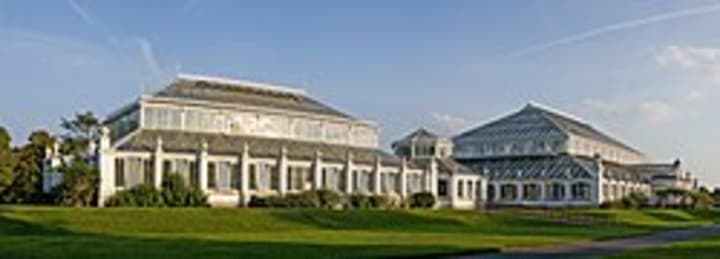


Dr Jenny Bulstrode, a lecturer in history of science and technology at University College London (UCL) and author of the paper, said: “This innovation kicks off Britain as a major iron producer and … was one of the most important innovations in the making of the modern world.”
The technique was patented by Cort in the 1780s and he is widely credited as the inventor, with the Times lauding him as “father of the iron trade” after his death. The latest research presents a different narrative, suggesting Cort shipped his machinery – and the fully fledged innovation – to Portsmouth from a Jamaican foundry that was forcibly shut down.
The Jamaican ironworks was owned by a white enslaver, John Reeder, who in correspondence described himself as “quite ignorant” of iron manufacturing, noting that the 76 black metallurgists who ran the foundry were “perfect in every branch of the iron manufactory”, and, through their skill, could turn scrap and poor-quality metal into valuable wrought iron.
Some of these workers are named in records, and include Devonshire, Mingo, Mingo’s son, Friday, Captain Jack, Matt, George, Jemmy, Jackson, Will, Bob, Guy, Kofi and Kwasi.
Their innovation came after the workers introduced the use of grooved rollers into the foundry to mechanise the formerly laborious process of hammering out impurities from low-quality iron. The same kind of grooved rollers were used in Jamaican sugar mills.
“It’s like a mechanical alchemy,” said Bulstrode. “You’re taking essentially rubbish and turning it into something of very high value through this process.”
By 1781, the Jamaican ironworks was turning an impressive profit of £4,000 a year, equivalent to about £7.4m today. Meanwhile, Cort was facing bankruptcy, after taking over a client’s ironworks in 1775 and laying out substantial sums to win a Royal Navy contract to process its scrap iron, before realising he stood to make a huge loss.
The paper, published in the journal History and Technology, traces how Cort learned of the Jamaican ironworks from a visiting cousin, a West Indies ship’s master who regularly transported “prizes” – vessels, cargo and equipment seized through military action – from Jamaica to England. Just months later, the British government placed Jamaica under military law and ordered the ironworks to be destroyed, claiming it could be used by rebels to convert scrap metal into weapons to overthrow colonial rule.
“The story here is Britain closing down, through military force, competition,” said Bulstrode.
The machinery was acquired by Cort and shipped to Portsmouth, where he patented the innovation. Five years later, Cort was discovered to have embezzled vast sums from navy wages and the patents were confiscated and made public, allowing widespread adoption in British ironworks.
Bulstrode hopes to challenge existing narratives of innovation. “If you ask people about the model of an innovator, they think of Elon Musk or some old white guy in a lab coat,” she said. “They don’t think of black people, enslaved, in Jamaica in the 18th century.”
Dr Sheray Warmington, an honorary research associate at UCL, said the work was important for the reparations movement: “It allows for the proper documentation of the true genesis of science and technological advancement and provides a starting point for how to quantify and repair the impact that this loss has had on the developmental opportunities of postcolonial states, and push forward the discourse of technological transfer as a key tenet of the reparations movement".
.......................................................
Story excerpts by Hannah Devlin, Science correspondent, The Guardian.
..........................
Today in Jamaica
The scrap iron trade is as vibrant as ever in the country. There is an alarming amount of vandalism of valuable metal resources from businesses and residences.
SCRAP METAL TRADE STRENGTHENED
The scrap metal industry is growing, and the agency has put additional security in place to ensure the trade is properly regulated. “There is a steady increase, in terms of the scrap metal, and they are consistently exporting scrap,” said Clarke-Graham, Senior director for the Kingston operations.
She explained that the increased security was put in place to stave off another scrap metal ban such as the one which was imposed by the Government in 2011 to end the vandalism of costly metal from businesses and residencies. “At the relevant scrap metal sites we have customs officers who are stationed there. So, they oversee the entire operation, the receiving of scrap into the yard and the physical loading of the containers for export,” she said.
Unfortunately, the illegal merchandise does not flow through the legal channels. This makes it highly unlikely that the Jamaica Single Window for Trade (JSWIFT) Project will impact that aspect of the economy, which is very unfortunate for the telecommunications industry and private residences in many communities.
Britain should pay reparations to the country for robbing them of such a very valuable resource which may have propelled them further and faster in the development of the Jamaican economy. The downside of reparations, however, is that it probably will be too late for the poorer citizens of any country. Thay are so mired down in a lifestyle of hardship and bureaucracy, that it will take a great deal of work to correct the wrongs of the past.
............................................................................................
Source: The Jamaica Observer.
About the Creator
Novel Allen
You can only become truly accomplished at something you love. (Maya Angelou). Genuine accomplishment is not about financial gain, but about dedicating oneself to activities that bring joy and fulfillment.
Reader insights
Outstanding
Excellent work. Looking forward to reading more!
Top insights
Expert insights and opinions
Arguments were carefully researched and presented
Easy to read and follow
Well-structured & engaging content
Excellent storytelling
Original narrative & well developed characters
Eye opening
Niche topic & fresh perspectives
Heartfelt and relatable
The story invoked strong personal emotions
Masterful proofreading
Zero grammar & spelling mistakes
Compelling and original writing
Creative use of language & vocab
On-point and relevant
Writing reflected the title & theme
Keep reading
More stories from Novel Allen and writers in Earth and other communities.
Sacred Words in a City of War
The night sky over the Gaza City was never truly dark anymore. Even after sunset, the horizon glowed faintly with the light of distant fires and explosions. Buildings that once held families, laughter, and ordinary life had become broken shadows of concrete and dust.
By Truth words 4 days ago in Earth
The BAFTA Awards
By now, in a stunning departure from recent years, most of the world is aware of what happened at the BAFTA film awards. Social Media Headlines will tell you the bare bones: that John Davidson, a Tourette's Syndrome advocate, shouted a racial slur at two Actors of Colour, Michael B Jordan and Delroy Lindo.
By Natasja Rose5 days ago in Psyche


Comments (2)
Oooo, this was so fascinating! You always tend to write about things that I never knew about. I always learn new things from your pieces!
Resources are very important . People made swords out of Iron but they only thought about making ship out them in the 1700’s interesting 🧐 very excellent story on FYI . Jamaica has lot of great resources , like fruits.