
Fascinating Fact About Our World
Fact That Will Blow Your Mind
Fascinating Facts About Our World That Will Blow Your Mind
The world around us is filled with mysteries, natural phenomena, and facts that seem too incredible to be true. From the surprising weight of clouds to the oldest animals on Earth, the truths about our planet can be just as baffling as they are fascinating. Let’s dive into some of the most mind-blowing facts that will make you look at the world in a whole new way.
The Weight of Clouds
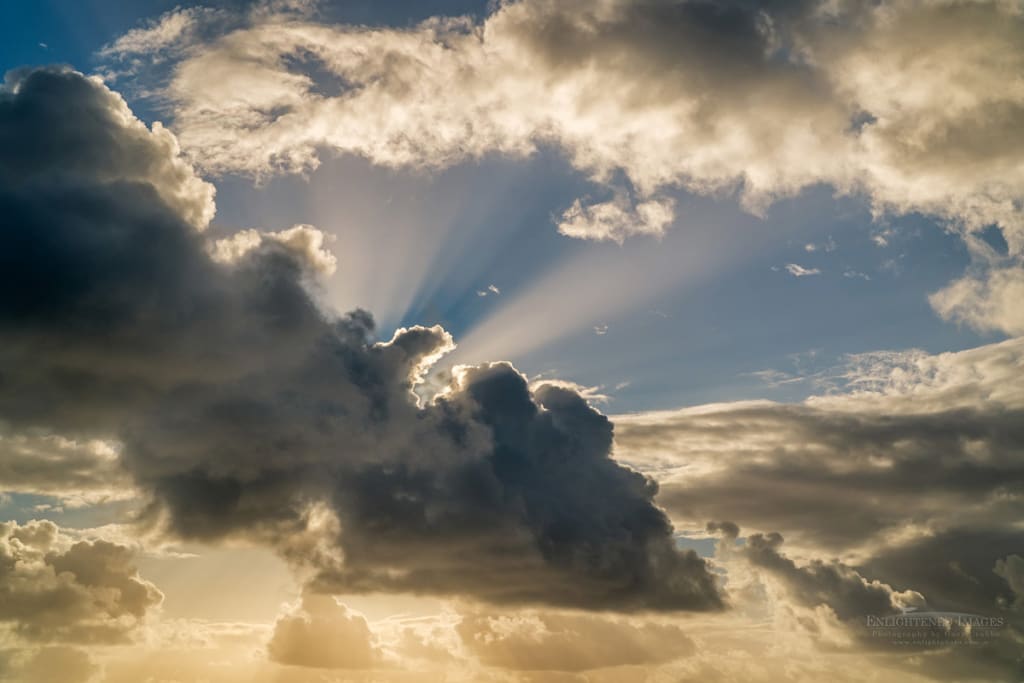
Those fluffy cumulus clouds that dot the sky on a bright day may look light and airy, but in reality, they can weigh as much as a Boeing 747 or 100 elephants. Sounds unbelievable, right? But scientists have calculated that the density of water inside a typical cumulus cloud is about half a gram per cubic meter. Now, while clouds come in different sizes, let’s take the average cumulus cloud, which has a volume of around 1 billion cubic meters. When you multiply the density by the volume, you get a weight of slightly over a million pounds. So, how do they stay afloat? Well, despite their massive weight, clouds stay suspended because their density is lower than the air surrounding them, allowing them to defy gravity for a while.
Giraffes and Lightning
Giraffes, the tallest land animals on Earth, have an unfortunate vulnerability when it comes to thunderstorms. In fact, they are 30 times more likely to be struck by lightning than humans. Between 1996 and 2010, there were five fatal cases of giraffes being struck by lightning. Considering the worldwide population of giraffes is around 140,000, this makes the fatality rate relatively high. The reason behind this is simple: lightning is drawn to tall objects, and giraffes are prime targets. However, scientists believe that giraffes may have learned to adapt to their environment, seeking shelter or moving to areas with thick vegetation when thunderstorms approach, giving them a better chance of avoiding lightning strikes.
The Oldest Living Animals: Glass Sponges
When we think about ancient creatures, we often think of dinosaurs, but the real oldest living animals on Earth are glass sponges. These fascinating creatures can live for up to 15,000 years. Scientists have discovered the oldest known glass sponge in the Ross Sea, part of Antarctica. Other findings in the East China Sea revealed a sponge that had lived for about 11,000 years. Glass sponges spend their entire lives anchored to hard surfaces on the ocean floor, filtering water for bacteria and plankton. These sponges have survived for millennia, long outlasting many other forms of life, including the dinosaurs.
Earth’s Slowing Spin and Longer Days
Did you know that Earth’s rotation is gradually slowing down? Over millions of years, this has led to longer days. In fact, billions of years ago, a day on Earth was only about 19 hours long. This change has occurred because the Moon’s gravity pulls on Earth, gradually slowing its spin. While the slowing of Earth’s spin happens over a long period, it’s still fascinating to consider the difference in the length of a day over geological time. Interestingly, certain events, such as earthquakes, can alter Earth’s spin temporarily. For example, the 2010 earthquake in Chile caused a brief shortening of the day. Since 2020, however, the Earth’s days have been getting longer again.
The Wetness of Water
A surprisingly debated topic among scientists is whether water is “wet.” Some argue that water itself is not wet but can make other substances wet when it adheres to them. Others believe that water is inherently wet because it is a liquid with moisture. The answer to this debate lies in understanding two important forces: cohesive and adhesive forces. Cohesive forces allow water molecules to stick together, while adhesive forces enable water to stick to other surfaces. This explains why waterproof materials remain dry; the cohesive forces of water are stronger than its adhesive forces, preventing it from sticking to those surfaces.
The Problem with Maps
Have you ever thought about how accurate the world maps we use are? It turns out that no map can be 100% accurate—unless it’s life-sized. Our planet is round, but maps are flat, which leads to distortion. In the 16th century, the Dutch cartographer Gerardus Mercator designed a cylindrical map projection that is still used today. While this map is great for navigation (since it keeps north at the top), it distorts the size of landmasses. For example, Greenland appears 14 times larger than it really is, and Alaska is the size of Brazil when, in reality, it’s much smaller.
The Role of Volcanoes in Earth’s Atmosphere
About 4 billion years ago, Earth’s atmosphere was vastly different from what it is today. The early atmosphere was mainly composed of carbon dioxide, released by countless volcanoes erupting all over the planet. This carbon dioxide-rich atmosphere allowed tiny plants to grow through photosynthesis, eventually giving rise to the oxygen we breathe today. It took about 2 billion years for enough oxygen to accumulate in the atmosphere to support the evolution of animals, marking a pivotal moment in Earth’s history.
Bacteria Could Stretch for 10 Billion Light Years
It’s hard to fathom the sheer number of germs and bacteria on Earth. If you were to stack all the bacteria on the planet on top of one another, the pile would stretch for an astonishing 10 billion light years. And while this may seem like an unfathomable distance, the pile would be incredibly thin—about 75 times thinner than a human hair. If this bacterial thread were wrapped around our galaxy, the Milky Way, it would circle the galaxy more than 20,000 times.
Rust on the Moon
Yes, there’s rust on the Moon! While rust typically forms in the presence of water and oxygen, conditions on the Moon are far from ideal for rust formation. So, how did it happen? When the Moon passes through Earth’s magnetotail (a region of space influenced by Earth’s magnetic field), oxygen from our planet can reach the Moon’s surface. This oxygen, combined with traces of water and iron on the Moon’s surface, forms rust. It’s a surprising discovery, considering the harsh conditions of the Moon’s surface.
Cosmic Dust: A Constant Rain from Space
Every year, around 5,000 tons of cosmic dust rain down on Earth from space. These tiny particles, often smaller than a grain of sand, come primarily from comets and other space bodies. Scientists have even traveled to Antarctica, where there’s little snow and even less pollution, to collect and study this dust. Although you can’t see it, this constant influx of cosmic dust is a reminder that our planet is always in contact with the wider universe.
The Surprising Geography of Greenland
If you’re an introvert looking for solitude, Greenland might be the perfect place for you. With a population density of only 0.1 person per square mile, it’s the least densely populated area in the world. Most of Greenland is covered in ice, so people mainly live along the west coast. Despite its remote and icy landscape, Greenland has been inhabited for over 4,500 years, proving that even the most extreme environments can support human life.
Earth’s Recycled Rocks
The ground you walk on is essentially recycled rock. Magma from deep within the Earth cools and hardens to form solid rock. Over time, tectonic forces push this rock to the surface, where it is weathered by wind, rain, and other natural processes. This weathering breaks the rock into smaller pieces, which settle and form sedimentary rocks. These rocks can undergo further transformation under heat and pressure, becoming metamorphic rocks. This ongoing cycle of rock formation and erosion is a constant process that shapes the Earth’s surface.
Life on Earth Could Have Been Purple
Could life on Earth have been purple instead of green? Scientists believe that early microbes may have used a molecule called retinal to capture sunlight, which gave them a purple hue. Today, plants are green because they use chlorophyll to absorb sunlight, but before chlorophyll evolved, retinal molecules might have been the primary method for photosynthesis. These early microbes likely reflected red and purple light, giving them a violet appearance.
---
From the heavy weight of clouds to the possibility that life on Earth was once purple, our planet is full of strange and incredible facts. These phenomena highlight the wonder of our natural world, reminding us that science is full of endless discovery and mysteries yet to be solved. So, the next time you look at the sky or the ground beneath your feet, remember that there’s more to our world than meets the eye.
About the Creator
Keep reading
More stories from Jatia Pradhan and writers in Earth and other communities.
Exploring the Mysterious Underworld of Antarctica
Exploring the Mysterious Underworld of Antarctica: A Hidden Ghost World Beneath the Ice Antarctica, the southernmost continent on Earth, is often associated with endless snow, freezing temperatures, and adorable penguins. But beneath its icy exterior lies a hidden "Ghost World," a mysterious ancient landscape that tells the story of a time long before the ice came.
By Jatia Pradhanabout a year ago in Earth
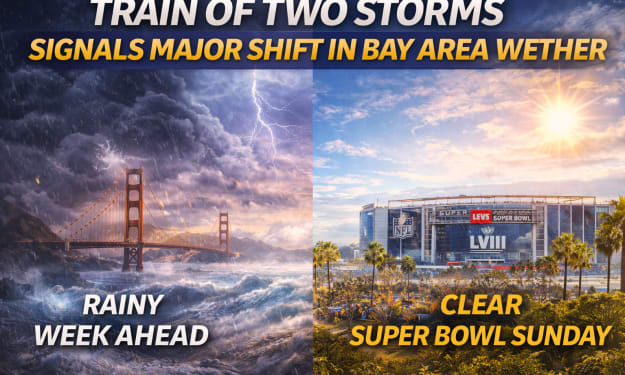
“Train of Two Storms” Signals a Major Shift in Bay Area Weather
After weeks of relatively dry and stable conditions, the Bay Area is preparing for a noticeable change in weather. Meteorologists are tracking what they describe as a “train of two storms,” a back-to-back weather pattern that could reshape the region’s forecast over the coming days.
By Adil Ali Khan6 days ago in Earth
Foot Bindings
I asked my grandmother how she knew she'd fallen in love. I am not sure I ever did love him, she said. This was before I met my husband. I was naive, a naked spring, a raw nerve of a thing. That cannot ever be me, I knew. Sadness swept in gently like a Moscow thaw. It is no simple thing, looking into a woman's vast soul and seeing its foot bindings. Now, in Italy divorced with my skin singed off, when I say I don't love him mean: I have succeeded at feeling nothing most days and it mostly works. Do you want the comfort of Nothing? Do you want Nothing, too? Be warned: you'll never be free, even when you are nothing. Here is what doesn't work: Accepting the stages of grief. Talking about it. Sitting with the feeling. Missing him—no, the person you were when you believed in death do us part. Writing poetry. That, too. When I say I don't love him I mean: I feel capsized in an endless, starved tide. What sometimes works: selective memory. You must forget ripe tomatoes and his beard and feeling perfectly sheltered in a big blue world. Forget coffee in bed, laughter watching TV, blowing out the candles on the birthday cake and the quiet all-encompassing knowledge that you are chosen. Remember only how love turned to a banal everyday survival act, a trapeze act unsure whether he will catch you, how the warmth stagnated and became sour, remember the foot bindings and remember the resentment boiling in your veins as you stick it out for the kids. Six-hour Netflix binges help, too. A man's fingers tracing your spine. Frozen pizza at 2 a.m. Random trips to the museum just to stand near things that last a while. The realization that crying won’t change anything. Seeing that life is just a dream, and refusing to participate in your own suffering. Bite your fist. Walk on eggshells around joy. When I say I don't love him, I mean he didn’t break my heart, he just stopped touching it and it forgot how to beat right.
By Ella Bogdanova6 days ago in Poets


Comments