
Exploring the Mysterious Underworld of Antarctica
A Hidden Ghost World Beneath the Ice
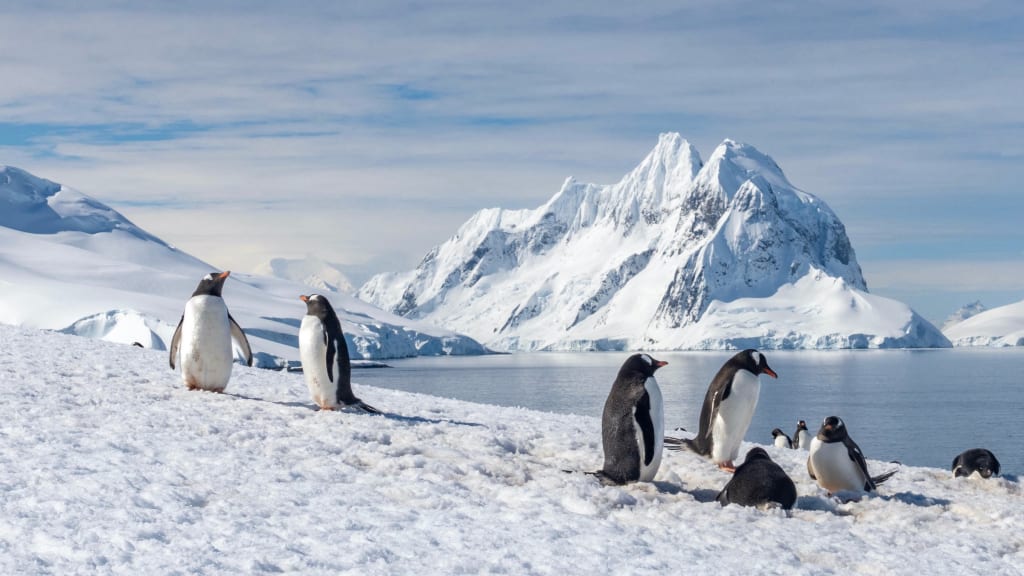
Exploring the Mysterious Underworld of Antarctica: A Hidden Ghost World Beneath the Ice
Antarctica, the southernmost continent on Earth, is often associated with endless snow, freezing temperatures, and adorable penguins. But beneath its icy exterior lies a hidden "Ghost World," a mysterious ancient landscape that tells the story of a time long before the ice came.
A Frozen Continent Shrouded in Mystery
Antarctica is unlike any other place on Earth. The ice sheet covering the continent is between 1 to 3 miles thick—equivalent to stacking up to 16 Eiffel Towers. This massive ice blanket conceals Antarctica’s true terrain, making it one of the most mysterious and least understood continents on the planet. Mapping its features without breaking through the ice is an incredible challenge.
Fortunately, satellites equipped with advanced imaging technology have begun to penetrate the ice, revealing an extraordinary ancient landscape buried beneath. Beneath the layers of snow and ice lies a dramatic terrain, complete with rivers, valleys, and land formations from millions of years ago.
A Rainforest of the Past
Approximately 90 million years ago, Antarctica was far from the frozen wasteland it is today. It was a lush rainforest teeming with life, with flowing rivers and abundant vegetation. This warm, vibrant ecosystem began to change about 34 million years ago during the transition from the Eocene to the Oligocene epoch. During this time, the Earth cooled significantly, ushering in one of its ice ages. Over millions of years, ice and snow engulfed the continent, altering its landscape and hiding its past.
Yet, in certain areas like East Antarctica, the ice has acted as a protective blanket, preserving the ancient terrain beneath. In this region, near the Aurora and Schmidt subglacial basins, scientists have discovered the “ghost” of Antarctica’s landscape—a place frozen in time for over 34 million years. Beneath the ice, they found traces of ancient rivers, valleys, and even three large landmasses shaped like the letter “U.”
The Shifting Continent
Antarctica’s hidden features are a testament to the forces of tectonic activity. Millions of years ago, the continents we know today were part of a supercontinent called Gondwana. When Gondwana broke apart, Antarctica was stretched and pulled by tectonic forces, leaving behind the unique land formations now buried under ice.
Scientists are eager to learn more about this hidden landscape. By drilling through the thick ice sheet, they hope to collect samples of rock and sediment that could provide insights into the Earth's history and climate.
A Frozen World Full of Secrets
Antarctica is the fifth-largest continent in the world, larger than Europe or Australia, and its icy expanse remains less explored than the surface of Mars. Beneath the ice lies a rugged landscape of mountains, canyons, and even volcanoes.
West Antarctica alone hosts at least 138 volcanoes, though only a handful are currently active. Mount Erebus, the southernmost active volcano, rises to a height of 12,448 feet and contains sub-volcanic caves with temperatures warm enough for humans to wear t-shirts.
The Antarctic Peninsula, or Lesser Antarctica, is a region of mountainous islands with volcanic rocks that are part of the Pacific Ring of Fire. Meanwhile, Greater Antarctica, which includes East Antarctica and the South Pole, is home to some of the oldest rocks on Earth.
Life Beneath the Ice
Despite its harsh climate, life has found a way to thrive in Antarctica. In 2017, scientists discovered traces of DNA from algae, moss, and potentially unknown microorganisms in subglacial caves. These ecosystems, isolated in warm pockets beneath the ice, demonstrate that life can survive in even the most extreme conditions.
Another groundbreaking discovery was made beneath the Ross Ice Shelf, where researchers found a freshwater river teeming with tiny shrimp-like creatures called amphipods. These ecosystems hint at the possibility of even more hidden life forms waiting to be discovered in Antarctica’s underworld.
The Doomsday Glacier
Antarctica also plays a crucial role in the Earth’s climate. The continent holds about 60% of the planet's freshwater, locked in its ice sheets. However, climate change is causing this ice to melt. The Thwaites Glacier, often referred to as the “Doomsday Glacier,” is melting at an alarming rate, contributing to rising sea levels. If it were to melt completely, global sea levels could rise by 2 feet, with catastrophic consequences for coastal regions.
Unveiling the Future
Antarctica remains a frozen enigma, hiding a treasure trove of scientific discoveries beneath its icy surface. From ancient landscapes and volcanic caves to thriving ecosystems and climate mysteries, this vast, icy continent continues to captivate researchers and adventurers alike.
As scientists dig deeper—both literally and figuratively—into Antarctica’s secrets, they are uncovering a world unlike any other. Whether it's the ghostly traces of ancient rivers or the shrimp swarms in hidden rivers, Antarctica proves that even the coldest, most remote corners of our planet are full of wonder.
About the Creator
Keep reading
More stories from Jatia Pradhan and writers in Earth and other communities.
Fascinating Fact About Our World
Fascinating Facts About Our World That Will Blow Your Mind The world around us is filled with mysteries, natural phenomena, and facts that seem too incredible to be true. From the surprising weight of clouds to the oldest animals on Earth, the truths about our planet can be just as baffling as they are fascinating. Let’s dive into some of the most mind-blowing facts that will make you look at the world in a whole new way.
By Jatia Pradhanabout a year ago in Earth
Global Economy Must Move Beyond GDP to Prevent Planetary Disaster
When we hear about the global economy, one number usually dominates the conversation: GDP, or gross domestic product. For decades, it has been the gold standard for measuring economic success. But according to United Nations Secretary-General António Guterres, this single-minded focus on GDP is not only outdated—it’s dangerous.
By Aqib Hussain5 days ago in Earth




Comments