
Europe Draws a Red Line on Greenland After a Year of Trying to Pacify Trump
Why European Leaders Are Finally Standing Firm on Sovereignty, Security, and Arctic Power Politics

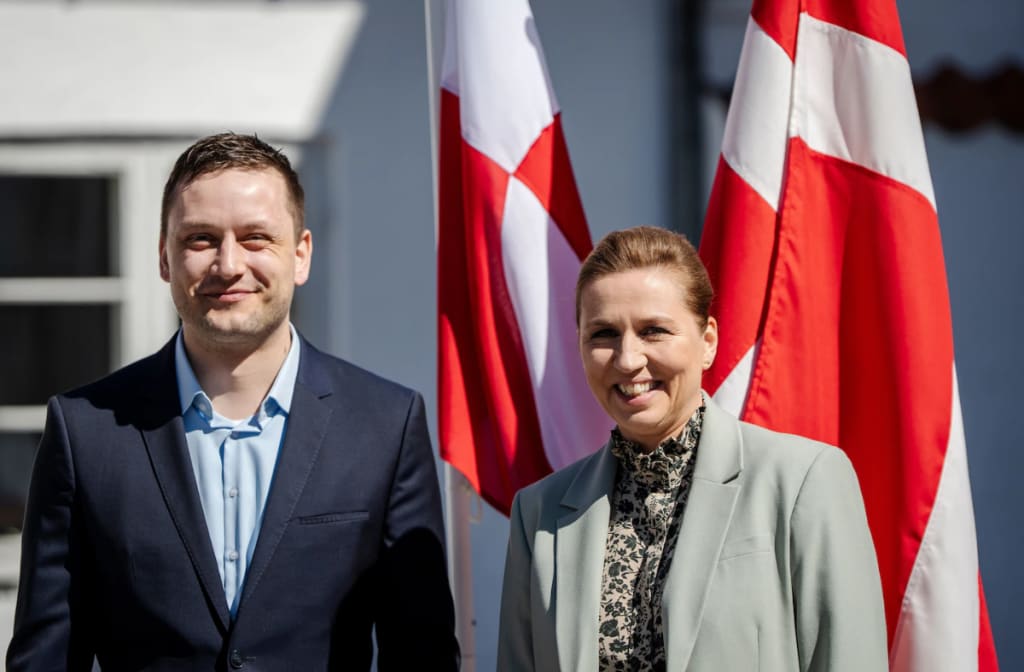
For nearly a year, European leaders walked a diplomatic tightrope. They tried calm language, quiet reassurance, and strategic patience as former U.S. President Donald Trump repeatedly revived his controversial interest in Greenland. What began as provocative rhetoric gradually evolved into something Europe could no longer ignore. Now, after months of behind-the-scenes diplomacy, Europe has drawn a clear red line on Greenland — signaling that compromise has its limits when sovereignty and regional security are at stake.
This shift marks more than a response to one leader’s remarks. It reflects Europe’s growing determination to defend territorial integrity, manage Arctic competition, and assert strategic autonomy in an increasingly unpredictable geopolitical environment.
How Greenland Became a Flashpoint Again
Greenland, an autonomous territory within the Kingdom of Denmark, has long held strategic importance. Rich in rare earth minerals, located along key Arctic routes, and home to critical U.S. military infrastructure, the island sits at the crossroads of security, climate change, and great-power rivalry.
Donald Trump’s original proposal in 2019 to “buy” Greenland was widely mocked in Europe. But as his political influence resurged, so did concerns that his renewed interest was not just symbolic. Over the past year, Trump’s rhetoric — framed around U.S. security, resource access, and countering China and Russia in the Arctic — became more persistent.
European capitals initially chose restraint. Officials hoped that de-escalation, quiet diplomacy, and alliance solidarity would prevent the issue from spiraling into a transatlantic rift.
A Year of European Pacification
For much of the past year, Europe adopted a strategy of pacification rather than confrontation.
Denmark emphasized its close defense cooperation with Washington.
EU leaders reiterated NATO unity and the importance of Arctic stability.
Diplomats avoided public criticism, choosing private channels instead.
The goal was clear: prevent Trump’s Greenland narrative from becoming official U.S. policy while preserving transatlantic relations.
However, this approach had limits. As Trump’s language grew sharper — hinting at leverage, pressure, or “strategic necessity” — European patience began to erode. What once sounded like political theater increasingly resembled a challenge to European sovereignty norms.
Why Europe Finally Drew the Line
Europe’s tougher stance did not emerge overnight. It was driven by several converging realities.
1. Sovereignty Is Non-Negotiable
At the heart of Europe’s response is a firm principle: territorial sovereignty cannot be bargained away. Greenland is not a commodity, and its future cannot be dictated by external powers — regardless of alliance ties.
European leaders made it clear that any attempt to apply pressure on Denmark or Greenland would cross a red line, undermining international law and democratic self-determination.
2. Arctic Competition Is Intensifying
The Arctic is no longer a frozen backwater. Melting ice has opened new shipping routes and intensified competition over resources. Russia has militarized large parts of its Arctic territory, while China has declared itself a “near-Arctic state.”
Against this backdrop, Europe fears that normalizing aggressive rhetoric over Greenland could set a dangerous precedent, encouraging other powers to challenge borders under the guise of security or economic necessity.
3. Europe’s Strategic Confidence Has Grown
Compared to 2019, Europe today is less willing to absorb geopolitical shocks quietly. The war in Ukraine accelerated Europe’s defense integration and sharpened its sense of strategic responsibility.
Standing firm on Greenland is part of a broader shift: Europe is signaling that being a U.S. ally does not mean surrendering political agency.
Greenland’s Own Voice Matters
One crucial difference between past debates and today is the prominence of Greenlandic leaders themselves.
Officials in Nuuk have repeatedly emphasized that Greenland’s future will be decided by its people, not by foreign capitals. Calls for respect, partnership, and economic development — rather than transactional geopolitics — have resonated strongly in Europe.
By drawing a red line, European leaders are also amplifying Greenland’s right to self-determination, reinforcing the idea that Arctic communities are stakeholders, not strategic prizes.
What This Means for Transatlantic Relations
Europe’s firmer stance does not signal a break with the United States. NATO cooperation in the Arctic remains strong, and U.S. military presence in Greenland continues with Danish consent.
However, the message is unmistakable: allies must respect boundaries.
European officials are increasingly willing to publicly disagree with Washington when core principles are threatened. This reflects a maturing alliance — one where unity does not require silence.
In the long run, this clarity may actually strengthen transatlantic relations, reducing ambiguity and preventing future misunderstandings.
A Signal Beyond Greenland
Europe’s red line on Greenland sends a message far beyond the Arctic.
It signals to Russia and China that Europe will defend its territorial order, even under pressure from powerful actors. It reassures smaller states that sovereignty remains a foundational norm. And it underscores that Europe is learning to balance diplomacy with firmness in an era of great-power competition.
Conclusion: From Pacification to Principle
After a year of cautious diplomacy, Europe has chosen principle over placation. The red line drawn around Greenland is not an act of hostility — it is an assertion of values.
In a world where power politics are returning, Europe is making one thing clear: sovereignty is not negotiable, alliances are not blank checks, and Arctic stability requires respect — not rhetoric.
Greenland may be vast and sparsely populated, but the message Europe is sending from its icy shores is unmistakably global.
About the Creator
Muhammad Hassan
Muhammad Hassan | Content writer with 2 years of experience crafting engaging articles on world news, current affairs, and trending topics. I simplify complex stories to keep readers informed and connected.
Keep reading
More stories from Muhammad Hassan and writers in Earth and other communities.
In Maduro’s Capture, Russia Sees a Great-Power Rival Act with Impunity
The world watched in early 2026 as U.S. special forces struck in Venezuela and captured President Nicolás Maduro. It was a dramatic move that upended politics in Caracas — and sent shockwaves through Moscow. For Russia, Maduro wasn’t just an ally; he was a key piece in a global chess game stretching from Latin America to the Middle East. His capture has forced Russian strategists to reconsider how far they can project power — and what it means when a rival acts seemingly without consequence. A Blow to Russian Influence Venezuela has long been one of Russia’s few footholds in the Western Hemisphere. Moscow supplied weapons, energy investments, loans, and political backing to Maduro. The goal was simple: counterbalance U.S. influence and maintain a strategic ally near American borders. Maduro’s capture has changed that calculus. Russia’s foreign ministry condemned the operation as “armed aggression” and demanded respect for Venezuela’s sovereignty. At the same time, Moscow backed Delcy Rodríguez as interim leader, framing it as support for Venezuela’s self-determination. But behind the formal statements, analysts suggest Moscow is feeling the sting. The U.S. operation was fast and effective — a stark contrast to Russia’s costly, prolonged campaigns elsewhere. For many, it exposed gaps in Russia’s ability to defend its allies abroad. The Kremlin’s Dilemma Inside Russia, commentators and analysts are debating what Maduro’s capture says about global power dynamics. Some see it as a glaring demonstration of U.S. military reach. Others point out the hypocrisy of international law, given Russia’s own record in Ukraine. But the underlying concern is strategic. Venezuela was one of the few places where Russia could claim a geopolitical win outside Europe and the Middle East. Losing leverage over Caracas diminishes Russia’s influence in energy markets, political alliances, and the narrative of great-power competition. A New Era of Great-Power Competition Russian experts are framing the event as evidence that international norms are eroding. In their view, powerful nations now act where it suits them, regardless of global rules — a logic Russia often uses to justify its own interventions. The U.S. capture of Maduro, framed as a law-enforcement operation targeting corruption and drug trafficking, has inadvertently reinforced Moscow’s messaging: great powers act with impunity. It’s a convenient narrative for Russian state media, even if the reality exposes Russia’s own limitations. Economic and Strategic Consequences Maduro’s removal isn’t just political; it has economic ramifications for Russia. Caracas was part of OPEC+ and home to joint energy ventures. U.S. access to Venezuelan resources could impact oil markets, squeezing Moscow’s budget further. Other projects, from weapons sales to industrial partnerships, now face uncertainty. What was once a partnership built on mutual opposition to the U.S. may now be a casualty of American assertiveness. Domestic Perception in Russia How Russians perceive the operation matters as much as the operation itself. Some voices call for a tougher stance to defend Moscow’s allies. Others acknowledge the gap between Russian and American capabilities. This debate influences both public sentiment and the Kremlin’s policy decisions. It shapes how Russians see their country’s role in the world — whether as a global power able to project influence, or a state constrained by geography, economy, and international reaction. What This Means for Global Politics Maduro’s capture is more than a headline. It signals a shift in global power dynamics. For the U.S., it shows the willingness to project force far from home. For Russia, it underscores limits in influence and credibility. Moscow may continue to use this event in propaganda and rhetoric, but the reality is stark: words without action may not sustain alliances or deter rivals. The event also raises questions about the rules-based international system. If powerful countries intervene militarily at will, what does that mean for global stability? The Takeaway Russia’s reaction to Maduro’s capture reflects a broader truth: modern power is measured not just by intent, but by capability. Russia may want to project global influence, but when rivals act decisively, even long-standing allies can be lost. Maduro’s removal also highlights a changing world order. Great powers no longer operate in isolated theaters. Every move, whether in Latin America or elsewhere, is scrutinized and reverberates globally. For Moscow, the message is clear: ambitions must match capability. For the world, it’s a reminder that power without action is only potential — while decisive, well-resourced rivals can act with apparent impunity.
By Muhammad Hassan4 days ago in Earth
Ecology Overview
Ecology is the study of ecosystems. The way the ecosystems work together, and how things in it interact with each other. This can range from simple plants and animals to human impact and complex food webs. Ecology is a vast topic including many things. Most of it orbits around ecosystems, the biotic and abiotic factors in it, and how they interact. That being said, let's take a look at what ecology is.
By Siddharth Mahesh5 days ago in Earth
Species in Danger
Our planet is full of life. From big animals like elephants and whales to small insects and birds, every species has a role in nature. But today, many species are in danger. Some are disappearing slowly, and others are very close to extinction. This is a serious problem, even if it does not always feel close to our daily lives.
By Nawaz Hassan5 days ago in Earth


Comments
There are no comments for this story
Be the first to respond and start the conversation.