
Elephants produce 10 times more meat than pigs, so why not breed elephants to eat?
Breeding elephants is not cost-effective

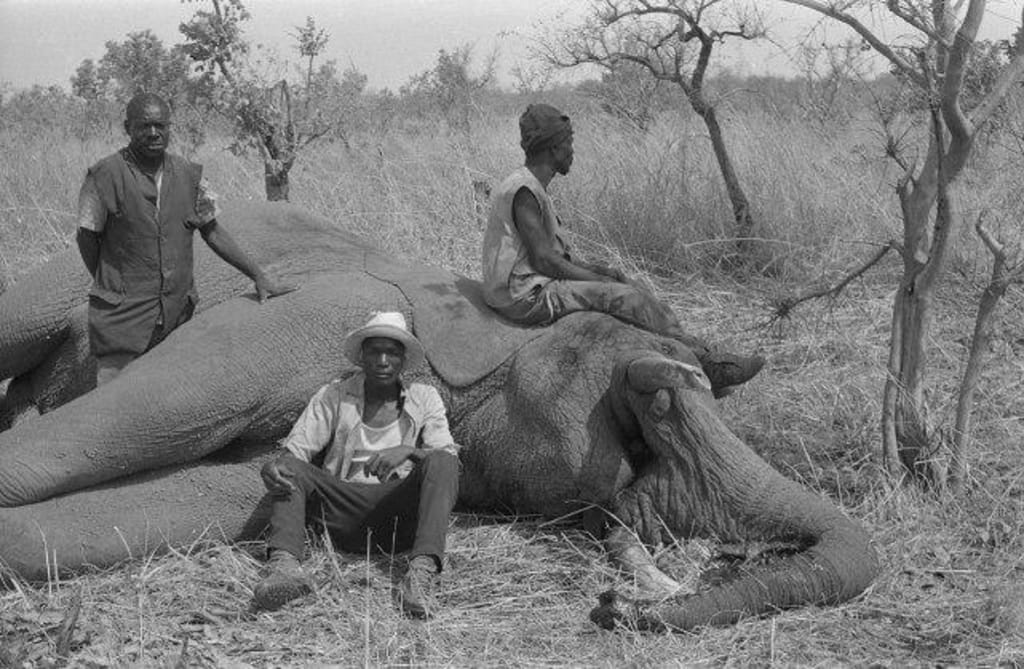
In some parts of Africa, elephant meat is known as divine meat, with extremely high nutritional value and magical healing power.
According to research, elephant meat has higher protein content per 100g than beef, iron content is 46% higher than beef, potassium, zinc, vitamin C and B vitamins are high.
Compared with pork, the fat content of the two is similar, but the cholesterol of elephant meat is relatively low.
Elephants are vegetarians, and some people believe that elephant meat is very suitable for diabetics.
In addition to this, some tribes believe that the skull of an elephant has healing powers.
Throughout the history of domestic and foreign, people also highly evaluate the taste and taste of meat.
In the Manchu and Han banquets, elephant bud is one of the eight treasures, and it must be very delicious.
In traditional Chinese medicine, elephant meat is a traditional Chinese medicine. Although it is "sweet", it has curative effect on "baldness and sores".
Some foreign explorers have eaten the elephant meat provided by the tribe, thinking that the legs, trunk and tongue are the most delicious, while other parts of the fibrous meat are too old and taste like chewing wax.
It has also been suggested that elephants eat grass and fruit, so their meat may be similar to beef, but most people who have eaten it think elephant meat tastes like venison.
To be honest, for human beings, just because of the two points of delicious taste and high nutritional value, some people will pay attention to breeding. Why has the elephant with such a high meat production rate not become the mainstream meat like pork?
Before answering this question, let’s talk about a cruel reality: Elephants have always been food for humans. They used to be and are still being eaten by humans.
Archaeologists have discovered a 400,000-year-old ancient rhomboid skeleton, with some stone tools scattered around it, indicating that the elephant was cut and eaten by humans at that time.
Eating elephants is not surprising in a hunter-gatherer society. Early humans already had a set of tactics to round up large prey, and elephants were one of their main sources of protein.
In modern times, although elephants have long been listed as protected animals, they are still hunted.
Many people think that elephants are killed for their expensive ivory, but the reality is that in many places, elephants are still killed for their meat.
1/3 of an elephant's ivory is attached to the skull. In order to obtain ivory quickly, ivory thieves usually cut off the ivory of the elephant directly from the head. In this case, the elephant basically did not survive. Chance.
If the food brought by the poachers is not enough at this time, they will use elephant meat as a supply; if the number of poachers is relatively large, they will try to take away the elephant meat and sell it.
In some parts of Africa, elephant meat is known as "sacred meat". It is said to have many magical properties.
In 2007, the price of ivory in a certain area was US$13.6/lb, while the price of elephant meat was only US$5.45/lb. Although the unit price was low, it was better in quantity. Therefore, the total price of meat obtained by an elephant was much higher than that of ivory. . An incomplete tusk sells for only around $180, but elephant meat can easily fetch $6,000.
However, not all people who eat elephant meat are evil. In some places, they just eat elephant carcasses and do not take the initiative to kill!
Elephant carcasses that poachers can't take away, or elephants that die from illness, are usually eaten by nearby villages.
The fresh meat is eaten by the locals by stewing or pan-frying. The unfinished meat will be dried, smoked and preserved for emergencies, and it will also be used for sale. The market price of smoked and dried elephant meat is about 6 US dollars per catty. .
It can be said that elephant meat is a scarce source of protein for the locals and one of the important economic sources!
Why don't we breed elephants to eat?
If it can be farmed, not only meat, but also ivory, is it very tempting?
But in fact, there are only protected areas for elephants, no elephant farms, in general, mainly because it is not cost-effective to breed elephants!
1. When you grow up, you eat a lot;
Elephants are the largest mammals on land, weighing up to 3-8 tons. An adult elephant eats 225 kilograms of food a day, and is looking for food for 16 hours a day.
It has a large appetite and a long lifespan. It can live for 70 years and mature at 10-15 years old. The breeding cycle is very long.
Just imagine, if you really want to breed, you start raising it when you are young, maybe when you are old and retire, the farm has no income yet, and it is in danger of going bankrupt at any time.
2. Low reproduction rate;
It takes at least ten years for elephants to mature sexually. Although they can reproduce all year round, they only give birth to cubs after 20-22 months of pregnancy. Only one calf is born, and the output is too low.
The point is, based on experience, elephants in captivity will only have lower reproduction rates.
3. Very dangerous and difficult to control;
Although elephants are docile most of the time, during the breeding season, males can be very cranky, uprooting trees and even stepping on cars, which is very dangerous.
Elephants are social animals, and many elephants gather together. How much land should be provided to raise elephants in captivity? What kind of fence can enclose and control them?
4. It is immoral to cull elephants.
Many zoologists believe that the cognition of elephants, comparable to that of cetaceans and primates, is one of the most intelligent animals in the world, and their social structure is very similar to that of human families.
Elephant families are generally led by older females. They will pass on the experience they have accumulated throughout their lives to the next generation and the next generation. Like humans, they will also help the entire family with grandchildren.
Like humans, elephants also hold funerals.
After the companion died, the elephant family did not leave immediately, but stopped and kept trying to help the companion up. After several attempts, it was determined that the companion was really dead, and then they were buried in the soil and placed on the corpse. Put on the leaves, stay for a long time before leaving, like mourning the dead in front of a human cemetery.
All the signs point to the intelligence of elephants, coupled with the fact that elephants are highly altruistic animals, sometimes at the expense of themselves in order to help humans.
Animals like this are generally considered cruel and immoral by zoologists.
at last
We can domesticate cats, dogs and pigs, and we can also breed chickens, ducks and geese on a large scale, but some animals can never be controlled by humans.
Elephants seem to be "enslaved" by humans, doing some hard work of moving trees and carrying heavy objects, but this does not mean that elephants are completely tamed by humans.
The wisdom of an elephant lies in the fact that it expresses its goodwill towards human beings with its actions and hopes to coexist with human beings. So where is the wisdom and goodwill of human beings expressed?
About the Creator
suzanne darlene
Take you to understand scientific knowledge
Keep reading
More stories from suzanne darlene and writers in Earth and other communities.
39 people experienced the most desperate way to die after 53 hours of burning the tunnel at 1000 degrees
Tunnels play an important role in modern transportation. They are difficult and expensive to build, but they can shorten a journey that would otherwise take hours to tens of minutes or even shorter.
By suzanne darlene3 years ago in Earth
Images Show Aftermath of Deadly Crash on Thai Railway Line
Some images stay with you long after you scroll past them. The photographs coming out of Thailand this week do exactly that. Twisted steel, overturned train carriages, scattered luggage, and exhausted rescue workers tell a devastating story — one that words alone cannot fully explain. A deadly crash on a Thai railway line has claimed multiple lives and left dozens injured, turning an ordinary journey into a nightmare. As images from the scene circulate globally, they reveal not just destruction, but grief, courage, and difficult questions about safety in one of Southeast Asia’s busiest rail networks. A Normal Journey That Ended in Disaster For the passengers on board, the day began like any other. People were heading to work, returning home, or traveling to see family. The train moved steadily along the tracks — until everything suddenly changed. According to officials, the crash occurred when heavy construction equipment collapsed onto an active railway line, striking a moving passenger train. The impact derailed multiple carriages, causing chaos inside the train as metal twisted and windows shattered. Within moments, smoke filled the air and cries for help echoed from inside the wreckage. For many passengers, there was no time to react. What the Images Reveal The aftermath photos are haunting. In some images, train carriages lie on their sides, crushed and burned. In others, rescue teams climb over debris, cutting through metal to reach trapped passengers. Personal belongings — backpacks, shoes, food containers — are scattered across the tracks, quiet reminders of lives abruptly interrupted. One particularly striking image shows emergency workers standing silently beside the wreckage, their faces reflecting exhaustion and sorrow. These visuals do more than document damage; they capture the emotional weight of the tragedy. Images like these remind us how fragile routine can be — how quickly normal life can turn into crisis. The Human Cost of the Crash Authorities confirmed that multiple people lost their lives, while dozens were injured, some critically. Hospitals in nearby areas were quickly overwhelmed as ambulances transported victims from the scene. Families rushed to medical centers, searching for loved ones. For many, the wait for information was agonizing. Phone calls went unanswered. Names were not immediately confirmed. In moments like these, uncertainty can be as painful as loss itself. Survivors have described scenes of panic, confusion, and shock. Some helped fellow passengers escape wrecked carriages. Others waited helplessly, trapped until rescuers could reach them. Rescue Efforts Under Pressure Emergency response teams acted quickly, working against time and unstable conditions. Firefighters, paramedics, and volunteers used cutting tools and heavy machinery to clear wreckage and pull survivors to safety. Despite the dangers, many rescuers worked for hours without rest. Some images show medics kneeling beside injured passengers on the ground, administering care before transport. Others show cranes lifting destroyed train cars away from the tracks. Their efforts likely saved lives — but the scale of the damage made the operation incredibly challenging. How Did This Happen? As the shock begins to settle, attention has turned to how such a catastrophic accident was allowed to occur. Early reports suggest the crash involved construction work taking place near or above an active railway line. This has raised serious concerns about oversight, safety planning, and coordination between construction teams and railway authorities. Questions being asked include: Why was heavy equipment operating so close to a moving passenger train? Were safety inspections properly conducted? Were warning systems or track closures considered? An official investigation is now underway, but for many families, answers will come too late. A Wake-Up Call for Railway Safety Thailand has invested heavily in rail infrastructure in recent years, aiming to modernize transport and improve connectivity. But this tragedy highlights the risks that come with rapid development when safety measures fail or are ignored. Experts warn that construction near live railway lines requires strict controls, constant monitoring, and zero tolerance for shortcuts. Even a single failure can lead to irreversible consequences — as this crash painfully demonstrates. Public trust in rail safety has been shaken, and restoring it will require transparency, accountability, and meaningful reform. Grief, Solidarity, and Remembrance In the days following the crash, communities across Thailand have expressed sorrow and support. Vigils have been held. Messages of condolence continue to pour in. Volunteers have donated blood and supplies to help victims and hospitals. The images from the scene have united people in grief — not just in Thailand, but around the world. They serve as a reminder that behind every headline are real people, real families, and real loss.
By Muhammad Hassan5 days ago in Earth
Trump Administration Moves to End Deportation Protection for Somalis
The Trump administration has moved to end long-standing deportation protections for Somali nationals living in the United States, a decision that could place tens of thousands of people at risk of removal. The move has sparked alarm among immigrant communities, human rights organizations, and legal experts, who warn that returning Somalis to a country still grappling with instability could have severe humanitarian consequences. As the policy change unfolds, it has reignited debate over immigration enforcement, executive authority, and America’s obligations to people fleeing conflict.
By Aarif Lashari5 days ago in Earth



Comments
There are no comments for this story
Be the first to respond and start the conversation.