
39 people experienced the most desperate way to die after 53 hours of burning the tunnel at 1000 degrees
Disaster caused by cigarette butts

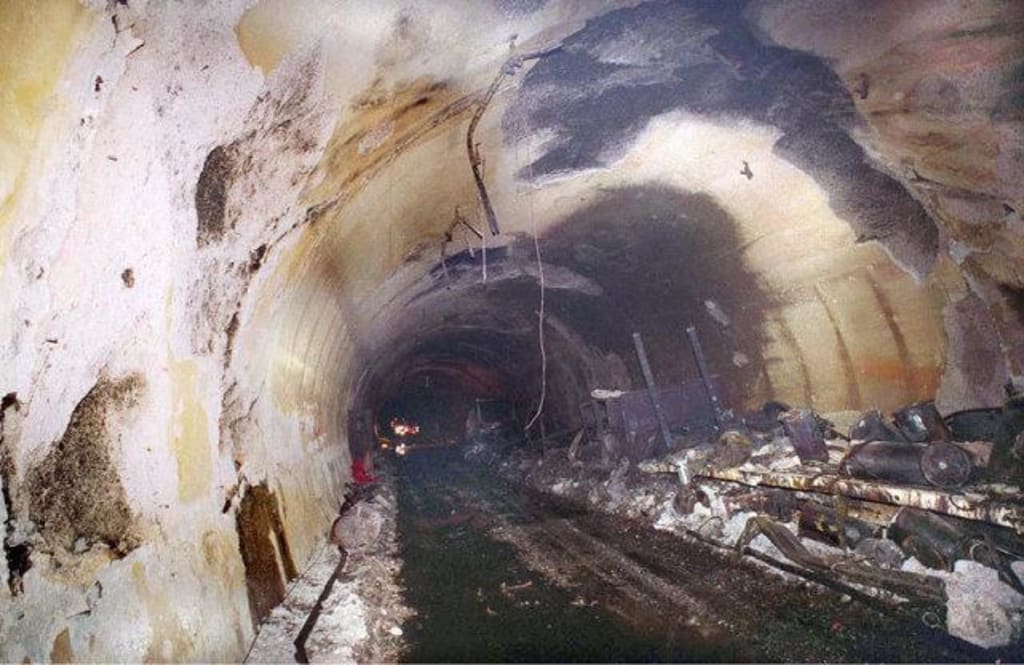
Tunnels play an important role in modern transportation. They are difficult and expensive to build, but they can shorten a journey that would otherwise take hours to tens of minutes or even shorter.
There is no doubt that the appearance of tunnels has brought a lot of benefits to human society. However, the tunnels are not all positive. They also have many terrible risks, one of which is tunnel fires.
When there is a fire in the tunnel, it is difficult for the car behind to do what happened to the car in front, the smoke from the fire is more deadly in the tunnel, and rescue is more difficult.
In the history of human transportation, there is a terrible tunnel fire - the Mont Blanc tunnel fire. This disaster has made people see the horror of tunnel fires and how desperate the people who are trapped in them are.
Mont Blanc is the highest peak in the Alps, which separates France and Italy. In order to facilitate mutual trade, the two countries signed an agreement to build a tunnel in 1949 to open up Mont Blanc.
Due to the impact of the war, the construction of the Mont Blanc tunnel did not start until 1959. The two countries each excavated from their own countries. It took three years to complete the construction, and the real opening to traffic was on July 19, 1965.
The Mont Blanc tunnel is not a straight line, it is a slightly V-shaped tunnel with a total length of 11.611 kilometers, a width and a height of 8.6 meters and 4.35 meters respectively.
Unlike our common one-way tunnels, the Mont Blanc tunnel is a two-way tunnel, and there is only one lane in each direction.
Although it looks relatively simple now, at that time, the Mont Blanc tunnel was more than three times longer than any road tunnel, which could be regarded as a super project at that time.
The convenience brought by the Mont Blanc tunnel is also obvious. Originally, it took 7 hours of winding mountain roads to travel between the two countries. After the tunnel, the same destination only takes 15 minutes.
This kind of portability is more attractive for trucks, so trucks are the most common in tunnels, and more than 5,000 trucks pass through the tunnel every day.
Truck catches fire, driver flees!
At 10:46 am on March 24, 1999, a Belgian transport truck loaded with flour and margarine passed the inspection from the French side toll station and entered the tunnel.
Not long after entering the tunnel, the truck driver, Gilbert Degrave, noticed something was wrong, and the oncoming vehicles kept flashing lights at him.
Later, Gilbert saw through the mirror that his truck was smoking. Although he had 25 years of driving experience, he had not dealt with such an emergency. He could only stop the car and try to put out the fire, when the car was exactly 6 kilometers from the entrance - in the middle of the tunnel.
In the 35 years since the Mont Blanc tunnel opened to traffic, there have been 16 truck fires, all of which have been extinguished by drivers themselves.
But in fact, stopping the fire is not a good choice, because when the car is stopped, it will send more oxygen to the ignition point, which will make the fire burn more.
Such a thing happened to Gilbert. After he stopped, the fire spread rapidly, so he chose to abandon the car and fled - in the direction of the Italian entrance.
He escaped, but those who entered the tunnel after him were not so lucky.
At 10:54, nine minutes after Gilbert entered the tunnel, a driver called the police.
At 10:55, at least 10 cars and 18 trucks entered the tunnel in Gilbert from the French side when tunnel crews set off a fire to prevent other vehicles from entering.
Due to the large number of trucks that blocked the view of the rear car, most of these people did not know that there was a car in front of them that was on fire.
There were also several vehicles coming in from Italy, who saw the trucks on fire, and some chose to make a U-turn, while others chose to drive straight past.
By 10:57, the smoke had covered half a kilometer in the direction of France. Some drivers who entered France did not know about the fire until it was too late, and they had driven their cars too close to the fire.
The truck cannot make a U-turn in the tunnel, and reversing is obviously impossible, but a private car can complete the U-turn, but in this incident, none of the vehicles entering the French entrance turned around and escaped.
In subsequent investigations, it was found that several private cars did try to turn around, but they all failed, and the researchers believed that the thick smoke covered the vehicles and caused the car engines to stall due to lack of oxygen.
The impact also included fire trucks, which entered the tunnel from two entrances within minutes of being alerted, but none of them reached the point of fire.
The fire trucks entering France were mainly blocked by vehicles and could not move forward, while the vehicles entering Italy were 300 meters away from the fire point and extinguished due to lack of oxygen.
The fire truck could not reach the ignition point, and naturally could not put out the fire, but the fire was more turbulent than expected, and the smoke pushed the firefighters into danger, so they had to abandon the car and enter the emergency fire compartment for shelter.
Then more firefighters entered the tunnel, but all failed, and they too were trapped in it.
By 11:30, that is, 37 minutes after the fire started, the smoke had reached the French entrance, 6 kilometers away from the truck, and it was basically impossible to put out the fire, so it was only possible to turn to rescue.
What happened to the trapped people?
A total of 15 firefighters were trapped in the two batches before and after, and they were all found and rescued in isolation rooms that were far away from the fire.
However, due to the toxic gases carbon monoxide and cyanide contained in the thick smoke, one of the first commanders who entered was unable to be rescued due to inhalation of too much toxic gas.
In addition to firefighters, 50 drivers and passengers were initially trapped, including 11 people who entered the Italian entrance, and Gilbert, the truck driver, who were rescued, while all 38 people who entered the tunnel following Gilbert at the French entrance were killed.
Investigators found that due to the butter and flour that Gilbert's truck was carrying, as well as the materials it was carrying, the fire produced a considerable amount of smoke that completely blocked cameras in just a few minutes, reducing visibility to less than 0.5 meters.
At the same time, because the weather that day happened to be the inflow of air from the Italian entrance (this is the main reason why all the people entering the Italian entrance were rescued), it is very likely that when the 38 victims realized that there was a fire in front of them, the smoke had basically wiped them out. swallowed.
At this time, some people chose to make a quick U-turn, but soon they found that the engine stalled, and to make matters worse, the electrical wires in the tunnel were also blown within minutes of the fire, and the entire tunnel was plunged into darkness.
After all the cars were turned off, 9 people abandoned the car and fled, but they couldn't run the speed of the fire in the dark;
The other 29 people did not get off the car from beginning to end. They probably missed the opportunity to get off the car and passed out because of inhalation of toxic gas; they may have been waiting in the car for rescue, but because the fuel tank of Gilbert's truck was quickly detonated, so The fire spread much faster than expected, and they didn't have time to get out of the car.
The fire lasted for a full 53 hours, the temperature in the core area reached over 1000 ℃, the tunnel directly turned into purgatory, and they could never wait for rescue, and finally turned into ashes.
How did the fire happen?
During the subsequent investigation, the staff found small particles after the truck's air filter burned, and they concluded that the fire probably started here, and the most likely cause of the filter fire in the moving truck was that the cigarette butt fell into it.
Investigators then ran similar simulations and found that cigarette butts could indeed ignite the filter and create a fire.
Therefore, investigators deduced that Gilbert's truck may have been driving when someone threw an unextinguished cigarette butt, which happened to fall into the air filter, and eventually caused the fire.
But Gilbert's truck had only 550 liters of diesel in the tank at the time. How could it cause such a strong fire?
Investigators quickly pinpointed the margarine and flour - a total of 9 tonnes of margarine and 12 tonnes of flour were in the car at the time.
Butter-bound polystyrene also became flammable, rather than dangerous goods, due to the use of polystyrene in both the butter's packaging and the lining of the refrigerated compartment.
And when the butter melts, it spreads and burns with other materials on the car.
By calculation, with the amount of flour and butter at that time, the energy released by the fire of a truck is equivalent to the destructive power of 30,000 liters of gasoline.
As for why the temperature can reach 1000 ℃, the reason is very simple. The fire in the tunnel is like a furnace, because the air entering from one side creates a "chimney effect".
at last
A total of 39 people were killed in the fire, which was a very serious accident and closed the Mont Blanc tunnel for three years.
While fires are often unavoidable, there are a number of reasons that make a situation irremediable.
For this fire, the rescue teams of the two countries were not well coordinated, and the tunnel safety facilities were not perfect. Of course, some parties did not take correct emergency measures.
We need to learn from it and kill the accident in the bud!
About the Creator
suzanne darlene
Take you to understand scientific knowledge
Keep reading
More stories from suzanne darlene and writers in Earth and other communities.
Why did Earth choose carbon-based life over silicon-based life? What does silicon-based life look like?
From a macro perspective, the earth is a very ordinary planet in the vast sea of stars, but from the perspective of life, the ordinary earth is not ordinary at all, and even the word "legend" is not an exaggeration.
By suzanne darlene3 years ago in Earth
Greenland: New Shipping Routes, Hidden Minerals – and a Frontline Between the US and Russia?
Once seen as a remote and largely isolated Arctic territory, Greenland is rapidly emerging as a focal point of global geopolitics. Climate change, melting ice, and technological advances are transforming the island into a strategic hub defined by new shipping routes, vast mineral resources, and growing rivalry between major powers, particularly the United States and Russia. As the Arctic opens up, Greenland’s geographic position and untapped potential are pushing it to the center of international attention, raising questions about security, sovereignty, and sustainable development. Melting Ice and the Opening of New Shipping Routes One of the most visible impacts of climate change in the Arctic is the reduction of sea ice, which is making previously inaccessible waters navigable for longer periods each year. New Arctic shipping routes, including passages near Greenland, promise shorter travel times between Europe, Asia, and North America. Compared to traditional routes like the Suez Canal, Arctic pathways can reduce shipping distances by thousands of kilometers, cutting fuel costs and emissions. For global trade, this could be transformative. Greenland’s coastal waters are increasingly important as potential transit corridors and support hubs for these routes. However, the expansion of Arctic shipping also raises concerns about environmental risks, maritime safety, and the lack of robust emergency infrastructure in the region. Hidden Mineral Wealth Beneath the Ice Beyond shipping, Greenland holds significant reserves of critical minerals, many of which are essential for modern technologies and the global energy transition. These include rare earth elements, lithium, graphite, uranium, and other strategic resources used in electric vehicles, wind turbines, batteries, and defense systems. As demand for these materials grows, Greenland is being viewed as a potential alternative to existing supply chains dominated by a small number of countries. This has increased interest from Western governments seeking to diversify mineral sourcing and reduce strategic dependencies. However, mining in Greenland is controversial. Local communities and policymakers must balance economic opportunities with environmental protection and cultural preservation. Greenland’s harsh climate and fragile ecosystems make resource extraction both technically challenging and politically sensitive. The United States’ Strategic Interest in Greenland The United States has long considered Greenland strategically vital, largely due to its location between North America and Europe. The US already maintains a military presence at Pituffik Space Base (formerly Thule Air Base), which plays a key role in missile warning systems and space surveillance. In recent years, Washington has renewed its focus on Greenland, emphasizing Arctic security, infrastructure investment, and cooperation with Denmark, which oversees Greenland’s foreign and defense policy. US interest is driven by several factors: protecting transatlantic security routes, countering rival powers in the Arctic, and ensuring access to critical minerals. Greenland is increasingly viewed as a frontline in maintaining Western influence in the High North. Russia’s Arctic Ambitions Russia, meanwhile, sees the Arctic as central to its economic and military strategy. It has invested heavily in Arctic military bases, icebreaker fleets, and energy projects, particularly along its northern coastline. Although Greenland is geographically distant from Russia’s main Arctic territories, Moscow closely monitors developments there. The island’s proximity to key Arctic sea lanes and North Atlantic routes makes it strategically relevant in any broader confrontation between Russia and NATO. As tensions between Russia and the West remain high, Greenland’s location places it near the intersection of competing security interests, increasing its geopolitical significance. Greenland Between Global Powers The growing attention from major powers puts Greenland in a delicate position. While the island seeks greater economic independence and development, it must navigate complex relationships with Denmark, the United States, and other international actors. Greenland’s government has emphasized the importance of maintaining control over its resources and ensuring that development benefits local populations. At the same time, geopolitical competition risks turning Greenland into a strategic chessboard rather than a partner in decision-making. This balancing act is becoming more difficult as Arctic competition intensifies. Environmental and Social Challenges Greenland is on the front lines of climate change. Melting ice sheets contribute to global sea-level rise, while local communities face changes to traditional livelihoods such as fishing and hunting. The expansion of shipping and mining could bring jobs and infrastructure, but it also threatens fragile ecosystems and raises concerns about pollution, habitat disruption, and long-term sustainability. Any future development in Greenland will require careful regulation, international cooperation, and meaningful engagement
By Aarif Lashari5 days ago in Earth
Top Australian Writers’ Festival Cancelled After Palestinian Author Barred
One of Australia’s most respected literary festivals has been cancelled following a fierce backlash over the decision to bar a Palestinian author from participating. What began as a programming dispute quickly escalated into a national debate about free speech, cultural inclusion, and political pressure in the arts. The cancellation has sent shockwaves through Australia’s literary community, raising urgent questions about whose voices are allowed on public platforms and at what cost.
By Aarif Lashari6 days ago in Earth
How, Too
Many people wonder how, too. You are not alone, and I am an expert. I will teach you how, too! First, you need to remit a small application fee and fill out an application describing the nature of your financial situation and how often payments will be made, as this will have great bearing on how well I teach you how, too.
By Harper Lewis3 days ago in Fiction


Comments
There are no comments for this story
Be the first to respond and start the conversation.