
Earth Waters And Their Distribution
Increasing Freshwater Scarcity: Current Challenges and Future Perspectives
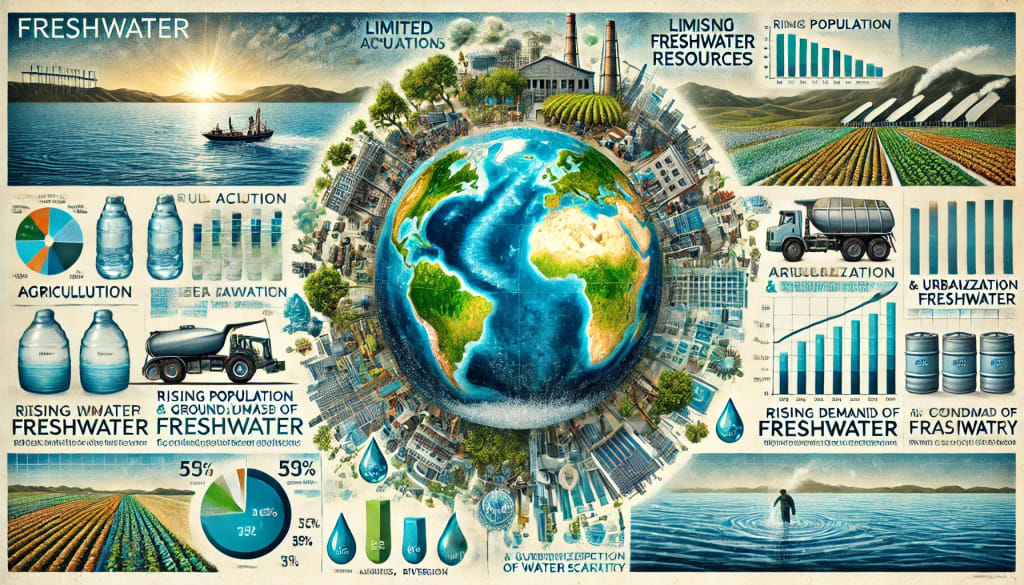
71% of the Earth’s surface is covered with water. 97% of this amount is sea water. Since seawater is rarely available for human consumption, the world’s population depends on only 3% available freshwater, as shown in the global water distribution in Figure 1.
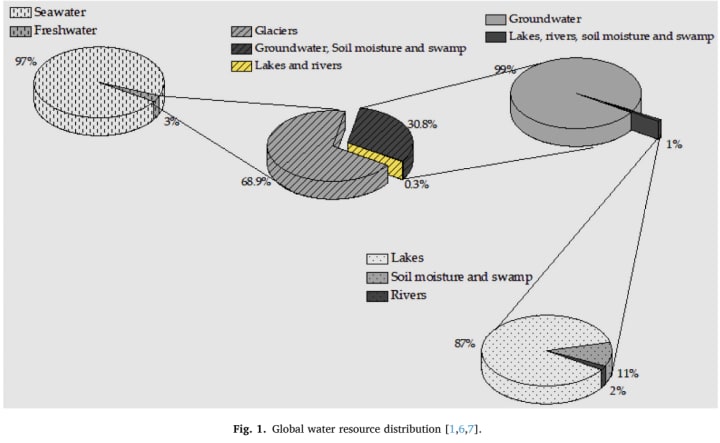
Out of the available freshwOut of the available freshwater, only 0.06% can be easily accessed as the rest comprises the frozen polar ice cap or glaciers, groundwater, and swamp. Lakes and rivers play a significant role in the global environment serving as irrigation water sources, fish farming, shipping transport, industrial and drinking water sources. And 0.3% of the world’s freshwater is contained by lakes and rivers. Lakes contain 87% of all the liquid freshwater on the surface of earth while rivers hold only 2%. In addition to these two available main freshwater sources, groundwater is another huge potential freshwater source for human survival even though not easily accessible. Therefore, in areas where rivers and lakes are not available, finding the groundwater which is about 99% of the world’s readily available liquid freshwater resource is a must for survival. About 2.5 billion people depend on this water source only to satisfy the requirement of their freshwater. The largest use of groundwater is for the agricultural sector.
Change in living standards, living culture and increasing population have increased the demand for freshwater and its withdrawals. For example, the 3.5 billion people living in urban areas in 2010 is expected to rise to 6.3 billion in 2050, bringing significant cultural changes. The world population is expected to boost from 7.7 billion in 2017 to 9.4–10.2 billion in 2050. Therefore, a significant change in water withdrawal is expected due to the stated changes in lifestyle and population. The number of people living under limited water supply has reached 1.1 billion according to different sources. This value rose to 2 billion in 2010, and the expected face of water shortage in 2025 is 2.7 billion people according to the UN. The number of people projected to live under severe water scarcity is 2.7–3.2 billion by 2050. It is not only the water quantity or withdrawal level that matters; the quality of water we use is also equally important. Researchers have been warning about the saturation of the limited water resource with dissolved salt as another threat to the world’s water scarcity.
In addition to these factors, climate change is exacerbating the problem of freshwater scarcity. Changes in precipitation patterns, increased frequency of extreme weather events, and rising temperatures are all contributing to the reduction of freshwater availability. For instance, prolonged droughts and heatwaves are reducing the flow of rivers and the levels of lakes and reservoirs, further straining the limited freshwater resources.
Furthermore, pollution is significantly impacting freshwater quality. Industrial discharges, agricultural runoff containing pesticides and fertilizers, and untreated sewage are contaminating water bodies, making them unsafe for human use and damaging aquatic ecosystems. The challenge of ensuring clean and safe freshwater is becoming increasingly complex as these pollution sources continue to grow.
This paper is therefore aimed at reviewing the quantitative and qualitative aspects of water resources and putting forth remedies and future perspectives to halt the increasing freshwater scarcity. Particularly, issues focusing on freshwater resources, withdrawal, scarcity, and the roles of withdrawal and salinity in freshwater scarcity are pinpointed. Solutions such as the development of advanced water purification technologies, better water management practices, and policies aimed at reducing water wastage and promoting sustainable use are crucial. Public awareness and education on water conservation are equally important to ensure that every individual contributes to the effort of preserving our precious freshwater resources.
About the Creator
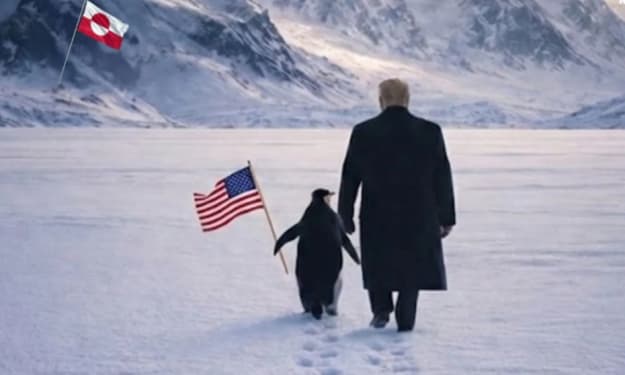
Trump, 79, Revives Greenland Fantasy With Absurd AI Post
Former U.S. President Donald Trump, now 79, has once again drawn global attention after posting an artificial intelligence–generated image related to his long-standing interest in Greenland. The post, which quickly spread across social media platforms, revived memories of Trump’s earlier and widely criticized proposal to purchase the autonomous Danish territory during his presidency. While the idea was dismissed years ago as unrealistic, the latest AI-driven revival has reignited public debate—this time centered on the role of artificial intelligence, political messaging, and credibility in the digital age.
By Aarif Lashariabout 6 hours ago in Earth

Comments
There are no comments for this story
Be the first to respond and start the conversation.