
“Earth’s Resources and Humanity: Can the Planet Sustain Us All?”
Planet Under Pressure: Can Earth Sustain 8 Billion People?

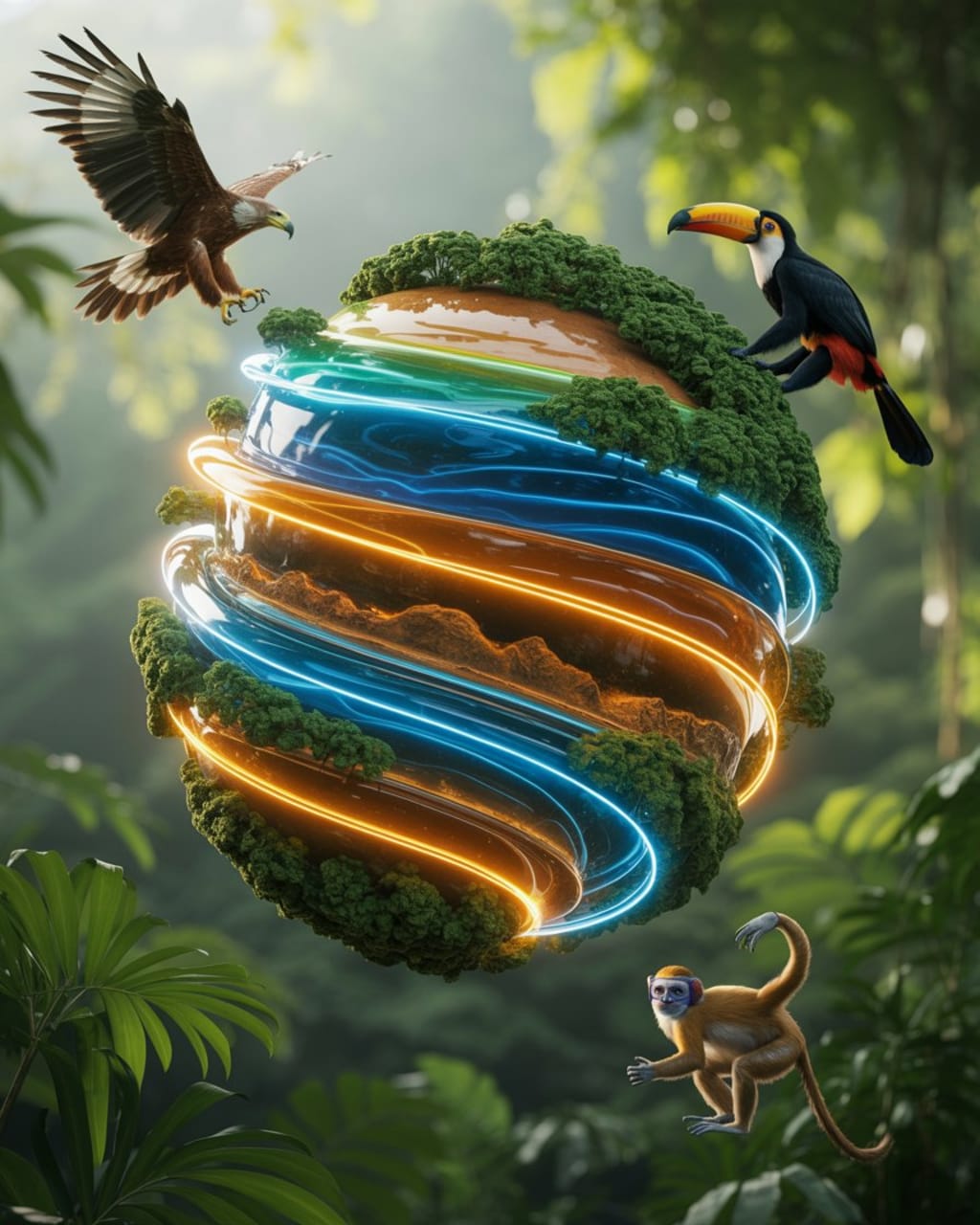
### Are Earth's Resources Enough for All Humans?
#### Introduction
The question of whether Earth can support all human beings with its available resources has become more urgent as the global population continues to grow. With over 8.1 billion people living on the planet in 2025, concerns about resource availability, sustainability, and distribution are more pressing than ever. This article explores whether the planet's natural and man-made resources are enough to meet the needs of all humans. It analyzes the production, distribution, consumption, and sustainability of various essential resources including food, water, energy, minerals, and more.
#### Global Population Growth and Resource Pressure
Over the past century, the human population has seen explosive growth. From just 2 billion people in 1927 to over 8 billion today, this rapid increase has significantly strained Earth's ecosystems. The challenge isn't just about having enough resources, but about how they are allocated, used, and renewed. The current global systems are marked by inefficiencies, inequalities, and unsustainable consumption patterns.
Population growth increases demand for food, water, energy, housing, and employment. Urban areas expand, often replacing forests and arable lands, which are vital for biodiversity and agriculture. With more people, competition for resources intensifies, leading to geopolitical tensions, internal displacement, and environmental degradation.
Additionally, population growth is not uniform. Developed countries often see stable or declining populations, while developing nations experience rapid growth, creating a mismatch in resource needs and consumption patterns. This uneven demographic shift further complicates the challenge of ensuring fair and sustainable resource distribution.
#### Food Production: Abundance and Paradox
One of the most startling facts is that the world produces enough food to feed more than 10 billion people, yet nearly 735 million people go hungry every day. This paradox stems from several factors:
1. **Distribution Inequality**: A large portion of food never reaches those in need. Some countries experience surplus and waste, while others suffer from scarcity. Logistic issues, trade barriers, and local conflicts can all prevent food from reaching the hungry.
2. **Food Waste**: According to the FAO, approximately one-third of all food produced globally is lost or wasted. That’s about 1.3 billion tons per year. In wealthier nations, waste tends to occur at the retail and consumer levels, while in poorer regions, loss happens due to poor storage and transportation infrastructure.
3. **Access and Poverty**: Hunger is not caused by a lack of food but by the inability to access it due to poverty, conflict, or poor infrastructure. Millions cannot afford nutritious food or live in areas with insufficient market access.
Moreover, industrial agriculture, while efficient in terms of yield, has environmental downsides — it leads to soil erosion, water pollution from fertilizer runoff, and greenhouse gas emissions. Sustainable farming practices, equitable distribution systems, and reducing food waste can significantly improve global food security.
#### Water Resources: Scarcity Amidst Plenty
Water covers about 70% of the Earth’s surface, but only 2.5% of it is freshwater, and much of that is inaccessible (locked in glaciers or deep underground). Despite having enough freshwater to meet global needs, billions of people experience water stress.
* **Uneven Distribution**: Some regions (like Canada and Brazil) have abundant freshwater, while others (like Sub-Saharan Africa and the Middle East) face chronic shortages. Rivers like the Nile, Tigris, and Jordan are overexploited and contested.
* **Pollution**: Industrial waste, agricultural runoff, and poor sanitation contribute to making water unsafe for consumption. Waterborne diseases remain a major health threat in developing regions.
* **Climate Change**: It disrupts rainfall patterns and worsens droughts and floods, leading to unreliable water supplies. Glacier retreat, a key source of freshwater in many regions, is accelerating due to global warming.
Water scarcity is both a natural and man-made problem. Inefficient irrigation, poor water governance, and over-extraction from aquifers contribute to the crisis. Solutions include improved water management, investment in sanitation infrastructure, rainwater harvesting, and education about conservation.
#### Energy Resources: Transitioning from Fossil Fuels
Energy is fundamental to modern life. While fossil fuels (coal, oil, and natural gas) have powered human development for centuries, they are finite and environmentally damaging. However, Earth has enough renewable energy potential to meet human needs many times over.
* **Solar and Wind**: These sources are abundant and can be harvested almost anywhere. The cost of solar panels and wind turbines has decreased significantly, making renewables more accessible.
* **Challenges**: Infrastructure, storage technologies, and investment barriers still limit renewable energy adoption. Developing countries often lack the financial and technical resources to transition.
* **Equity**: Access to electricity remains uneven, with nearly 700 million people lacking reliable power. Energy poverty is a barrier to education, healthcare, and economic opportunity.
Global energy consumption is growing, but so is the share of renewables. Countries are investing in grid modernization, energy efficiency, and clean technologies. A successful transition to sustainable energy requires global cooperation, supportive policies, and financial investments in innovation and infrastructure.
#### Mineral and Material Resources
Human industries rely on a variety of minerals and metals, from iron and copper to rare earth elements used in electronics and clean technologies.
* **Sufficiency**: Many essential minerals are still abundant, but high demand and environmental concerns make extraction more difficult. Mining operations can be environmentally destructive and socially exploitative.
* **Recycling and Circular Economy**: Transitioning to a circular economy — where materials are reused and recycled — can reduce pressure on natural reserves. E-waste recycling, for example, can recover valuable metals.
The demand for materials like lithium, cobalt, and nickel is rising due to their use in batteries and green technologies. However, the mining industry must evolve to be more sustainable and equitable. This includes enforcing labor rights, reducing emissions, and protecting local ecosystems.
#### Land Use and Biodiversity
Land is required for food, housing, infrastructure, and nature. As the human footprint grows, land use becomes a major concern.
* **Deforestation**: Driven by agriculture, logging, and urban sprawl, deforestation reduces biodiversity and carbon storage. Forests like the Amazon are being cleared at alarming rates.
* **Soil Degradation**: Unsustainable farming and pollution degrade soil health, threatening long-term food production. Desertification affects over 100 countries, reducing the land’s productivity.
* **Urbanization**: Rapid urban growth consumes fertile land and alters ecosystems. Urban sprawl often leads to habitat destruction and fragmentation.
Conserving land and biodiversity requires integrated planning, sustainable land management, and the expansion of protected areas. Agroforestry, rewilding, and green urban design can help balance development and conservation.
#### The Role of Technology and Innovation
Technological advances have historically helped humans increase resource efficiency — from improved crop yields (Green Revolution) to renewable energy innovations.
* **Precision Agriculture**: Uses data and AI to reduce water and fertilizer waste. It enables farmers to monitor soil health, forecast yields, and optimize inputs.
* **Desalination and Water Recycling**: Provide new sources of fresh water in arid regions. While energy-intensive, newer technologies are becoming more efficient.
* **Green Energy**: Battery storage, smart grids, and sustainable materials are helping decarbonize energy systems. Innovations in hydrogen fuel and bioenergy also show promise.
Other technological trends, like smart cities, blockchain for supply chain transparency, and carbon capture and storage (CCS), could transform how we manage resources. However, technology must be inclusive, addressing needs in both wealthy and impoverished communities.
#### Inequality: The Core Issue
Despite the abundance of resources, inequality remains the central issue. According to Oxfam, the world’s richest 10% consume 20 times more energy than the poorest 10%. High-income countries also contribute disproportionately to pollution, waste, and climate change.
* **Consumption Patterns**: A U.S. citizen consumes far more resources than someone in Bangladesh or Ethiopia. Wealthier nations have larger ecological footprints.
* **Environmental Justice**: Marginalized communities suffer the most from resource degradation and climate change, despite contributing the least. Environmental racism, land grabs, and forced displacement highlight systemic injustice.
Addressing inequality requires policy interventions such as progressive taxation, global climate finance, education, and inclusive economic systems. Equity must be at the heart of sustainable development.
#### Environmental Limits and Planetary Boundaries
Scientists have identified nine planetary boundaries, including climate change, biodiversity loss, and nitrogen cycles, that define a safe operating space for humanity. Several of these boundaries have already been crossed, suggesting we are living beyond Earth’s ecological means.
* **Ecological Overshoot**: Humanity uses resources equivalent to 1.7 Earths each year. This overuse leads to ecosystem collapse, resource depletion, and climate instability.
* **Climate Change**: The use of fossil fuels is pushing the planet toward dangerous warming. The IPCC warns of tipping points like ice sheet melt and Amazon dieback.
The concept of planetary boundaries provides a framework for measuring sustainability. To stay within safe limits, we need systemic change across sectors — energy, agriculture, transportation, and industry.
#### Sustainable Solutions
To ensure Earth’s resources are enough for everyone now and in the future, we need transformative action on multiple fronts:
1. **Sustainable Development Goals (SDGs)**: A blueprint for addressing poverty, inequality, and environmental sustainability. Progress requires investment, accountability, and collaboration.
2. **Green Technologies**: Investing in clean energy, sustainable agriculture, and eco-friendly infrastructure. Public-private partnerships can drive innovation.
3. **Policy and Governance**: Strong institutions and international cooperation are key to fair resource allocation. Global agreements like the Paris Accord and SDG Summit are crucial.
4. **Behavioral Change**: Reducing consumption, waste, and adopting sustainable lifestyles. Education, awareness campaigns, and cultural shifts can empower individuals.
Corporate responsibility, ethical investing, and sustainable business models also play important roles. Businesses must account for environmental and social impacts alongside profits.
#### Conclusion
In essence, the Earth has enough resources to support all humans — if we manage them wisely, distribute them fairly, and use them sustainably. The real challenge is not scarcity, but human behavior, policy failures, and systemic inequality. Moving forward, it’s critical to rethink our economic models, prioritize the environment, and commit to global solidarity. Only then can we ensure a future where everyone’s basic needs are met without compromising the health of our planet.
The future depends on the decisions we make today. If humanity embraces sustainability, equity, and innovation, Earth's bounty can sustain not only this generation but countless others to come.
About the Creator
Niaz Khan
Writer and advocate for humanity, Niaz uses the power of words to inspire change, promote compassion, and raise awareness on social justice, equality, and global well-being through thoughtful, impactful storytelling.
The Giant Beneath the Ceiling
At the heart of the Natural History Museum in London, visitors entering the magnificent Hintze Hall are greeted by a breathtaking sight: the enormous skeleton of a blue whale suspended from the ceiling. This remarkable display, known as “Hope,” represents not only the largest animal ever known to have lived on Earth but also a powerful message about conservation and humanity’s relationship with nature.
By Irshad Abbasi about 5 hours ago in Earth




Comments
There are no comments for this story
Be the first to respond and start the conversation.