

Once upon a time, in the vast expanse of the universe, a tiny blue planet called Earth was teeming with life. This planet, situated in the perfect proximity to its star, had an intricate web of existence that revolved around the cycle of life.
The story of life on Earth began billions of years ago, in a time when the planet was a molten mass. As the surface cooled, water vapors condensed, giving birth to oceans. In these primordial seas, the first single-celled organisms emerged. They were simple, microscopic beings, unaware of the incredible journey they were about to embark upon.
Over millions of years, life on Earth evolved. Simple organisms gave rise to complex ones. Plants emerged, harnessing the power of sunlight to convert it into energy through a process called photosynthesis. The atmosphere changed, becoming oxygen-rich, paving the way for the evolution of animals.
In this thriving world, diverse species emerged, each occupying its unique niche. The rhythm of life played out in a symphony of birth, growth, and death. Every organism had a role to play in the delicate balance of the ecosystem.
The forests were adorned with towering trees, reaching towards the heavens. They provided shelter to countless creatures, from tiny insects to majestic birds. The forests breathed life into the planet, purifying the air and stabilizing the climate.
On the plains, vast herds of herbivores roamed, grazing on the abundant grasses. They were the lifeblood of the predators, whose survival depended on the success of their hunt. Each chase was a dance of life and death, where the balance of power between the hunter and the hunted was forever tested.
In the rivers and oceans, a tapestry of marine life thrived. Coral reefs dazzled with vibrant colors, sheltering a myriad of fish species. Whales, the gentle giants of the sea, traversed the vast distances, their songs reverberating through the deep blue.
But life on Earth was not without its challenges. Cataclysmic events, such as asteroid impacts and volcanic eruptions, shook the planet, wiping out entire species and reshaping the course of evolution. Yet, from the ashes of destruction, new life emerged, adapting to the ever-changing environment.
Humanity, the latecomers to the story of life, eventually took center stage. Armed with intelligence and curiosity, humans explored the world, unlocking its mysteries and reshaping the landscapes. They built civilizations, formed communities, and crafted their own stories.
Yet, in their quest for progress, humans often forgot their interconnectedness with the rest of life on Earth. They exploited resources without considering the consequences, altering ecosystems and driving countless species to the brink of extinction. The delicate balance of life was threatened.
Realizing the error of their ways, humans embarked on a journey of conservation and restoration. They sought to protect the diversity of life and restore the habitats that were once abundant. Through scientific advancements and global cooperation, they worked tirelessly to reverse the damage caused by their actions.
The story of life on Earth continues to unfold, shaped by the choices made by its inhabitants. As the planet spins through the vastness of space, it carries the legacy of billions of years of evolution. The cycle of life, with its intricate dance of birth, growth, and death, remains a testament to the resilience and beauty of the living world.
And so, on this blue planet called Earth, life persists—a constant reminder that each individual, each species, is part of a grand tapestry that weaves together the story of the universe itself.The Earth's food chain is a complex network that sustains life on our planet. It begins with primary producers, such as plants and algae, which convert sunlight into energy through photosynthesis. Herbivores then consume these producers, obtaining nutrients and energy. Next, carnivores feed on herbivores, while omnivores have a varied diet, consuming both plants and animals. At the top of the chain, apex predators exert control over other species. Decomposers play a crucial role by breaking down organic matter, returning nutrients to the soil. This intricate web of interdependence ensures the flow of energy and nutrients, maintaining the delicate balance of ecosystems worldwide.
About the Creator
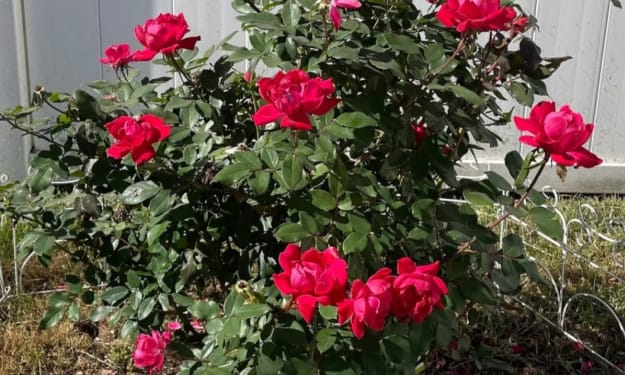
Do Not Touch the Roses
There is a quiet power in the phrase “Do Not Touch the Roses.” It sounds like a warning, but it feels like an invitation — one that asks us to pause, admire, and respect something without claiming it. Roses have long symbolized love, beauty, and passion, yet they are also guarded by thorns. That contradiction makes them the perfect metaphor for many of life’s most meaningful things.
By Aarif Lasharia day ago in Earth



Comments
There are no comments for this story
Be the first to respond and start the conversation.