
Earth is god's gift
Earth: A Comprehensive Look at Our Planet and Its Wonders

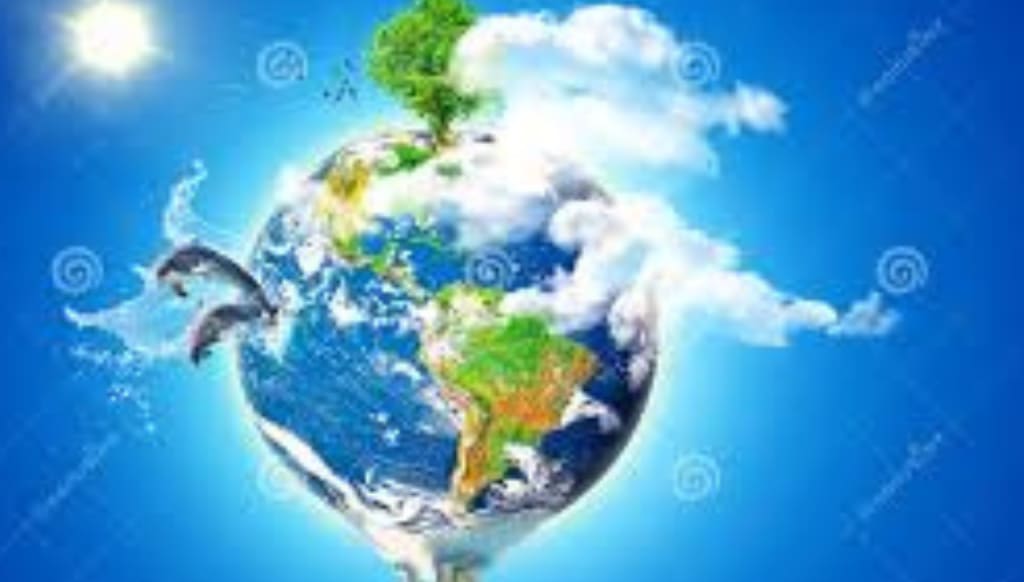
The Earth is a marvel of the universe. It is the only planet known to harbor life and is the perfect balance of natural elements and conditions. As the third planet from the sun, it is located in the habitable zone where the temperature is just right to sustain life. This article is a comprehensive look at our planet and its wonders, including its physical features, atmosphere, climate, and the life forms that call it home.
Physical Features:
The Earth has a diverse range of physical features that make it unique. It is made up of three layers: the crust, mantle, and core. The crust is the thin outer layer, the mantle is the thicker layer beneath the crust, and the core is the central part of the Earth. The crust is where we live and is composed of a variety of rocks, minerals, and soil. It is also home to many natural wonders such as mountains, valleys, and oceans.
The Earth's oceans cover around 71% of its surface and are the largest bodies of water on the planet. The oceans are home to a vast array of plant and animal life and are essential for regulating the planet's climate. The highest mountain range on Earth is the Himalayas, which is located in Asia and includes Mount Everest, the tallest mountain in the world.
Atmosphere:
The Earth's atmosphere is the layer of gases that surrounds the planet. It is composed of nitrogen, oxygen, and other gases such as carbon dioxide and water vapor. The atmosphere plays a vital role in regulating the planet's temperature and protecting it from harmful radiation.
The atmosphere is divided into several layers, including the troposphere, stratosphere, mesosphere, thermosphere, and exosphere. The troposphere is the layer closest to the Earth's surface and is where weather occurs. The stratosphere contains the ozone layer, which protects the planet from harmful ultraviolet radiation from the sun.
Climate:
The Earth's climate is the long-term pattern of weather conditions in a particular region. It is influenced by many factors, including the atmosphere, ocean currents, and the position of the Earth in relation to the sun. The Earth's climate has changed over time, with periods of warming and cooling, but the current warming trend is of particular concern due to its rapid pace and potential consequences.
The Earth's climate is complex and can vary greatly depending on the region. The equator has a tropical climate with high temperatures and humidity, while the poles have a polar climate with low temperatures and little precipitation. The Earth's climate is also influenced by natural phenomena such as El Nino and La Nina, which can cause changes in weather patterns.
Life Forms:
The Earth is home to an estimated 8.7 million species, ranging from bacteria to blue whales. Life on Earth is incredibly diverse and has adapted to thrive in a variety of environments. The earliest forms of life on Earth were simple organisms such as bacteria and algae, but over time, more complex organisms evolved, including plants, animals, and humans.
The Earth's ecosystems are complex and interconnected, with each species playing a vital role in maintaining the balance of the ecosystem. Human activities such as deforestation, pollution, and climate change are putting many species at risk and threatening the delicate balance of the Earth's ecosystems.
Conclusion:
The Earth is a wonder of the universe, with its unique physical features, diverse life forms, and complex ecosystems. It is essential that we take care of our planet and preserve it for future generations. By working together and taking steps to reduce our impact on the environment, we can ensure that the Earth remains a vibrant and healthy place for all life to thrive.
neeesearchreviewroalsoakeIthur
About the Creator
Ashish Bhalerao
I am author uses descriptive language to depict a character, setting, or scene in a way that creates an image in the reader's mind. A writer often uses figurative language to evoke the reader's
Keep reading
More stories from writers in Earth and other communities.
Orlando experiences a rare prolonged cold as colder temperatures return to central Florida.
Orlando — a city known for warm breezes, sunshine, and mild winter days — has been experiencing a winter chapter more reminiscent of northern states than Central Florida. Residents have been bundled up in coats and reaching for heaters that are typically hidden during this time of year, as what began as a brief burst of cold air has grown into a "frigid, multi-day cold spell." The cold arrived without much fanfare, but it has stuck around for a remarkable amount of time. Forecasters say the chill is likely to last longer than most Floridians can remember. Instead of a brief dip, the thermometer has been well below seasonal norms for several days. Locals are pondering the question of when the temperature in Orlando last dropped to such lows.
By Raviha Imran6 days ago in Earth
The Impact of Biochar Stability: How Fixed Carbon Dictates Sequestration Success
In the urgent global effort to scale effective carbon dioxide removal (CDR), biochar has emerged as a leading contender. But not all biochar is equal in its climate-fighting power. The true measure of its long-term sequestration potential lies in one critical property: the stability of its fixed carbon. Understanding this is key to maximizing biochar's role in our carbon toolbox.
By Bestonpyrolysis6 days ago in Earth
Off the Book
It ended like every other stupid idea. Badly, and alone. I’m researching digital confession ethics, he said. A tech ethicist. He gestured at floating data I couldn’t see then pulled out a physical notebook. Actual paper, fountain pen. He held it up like he was showing me scripture.
By Nicky Frankly3 days ago in Fiction
A Letter to the Firestarter
Dear Firestarter, We can all see you, we've been watching you since you began. In case you didn't know we were here before you and we will be here after. We witnessed your rise, your setbacks, your guilt and your lies. We witnessed you start the fire.
By Donny Foley3 days ago in Poets




Comments
There are no comments for this story
Be the first to respond and start the conversation.