
Drowned in Fury: The Wrath of Yangtze River Floods
How China’s Deadliest Flood Submerged Millions, Shattered Cities, and Changed a Nation Forever
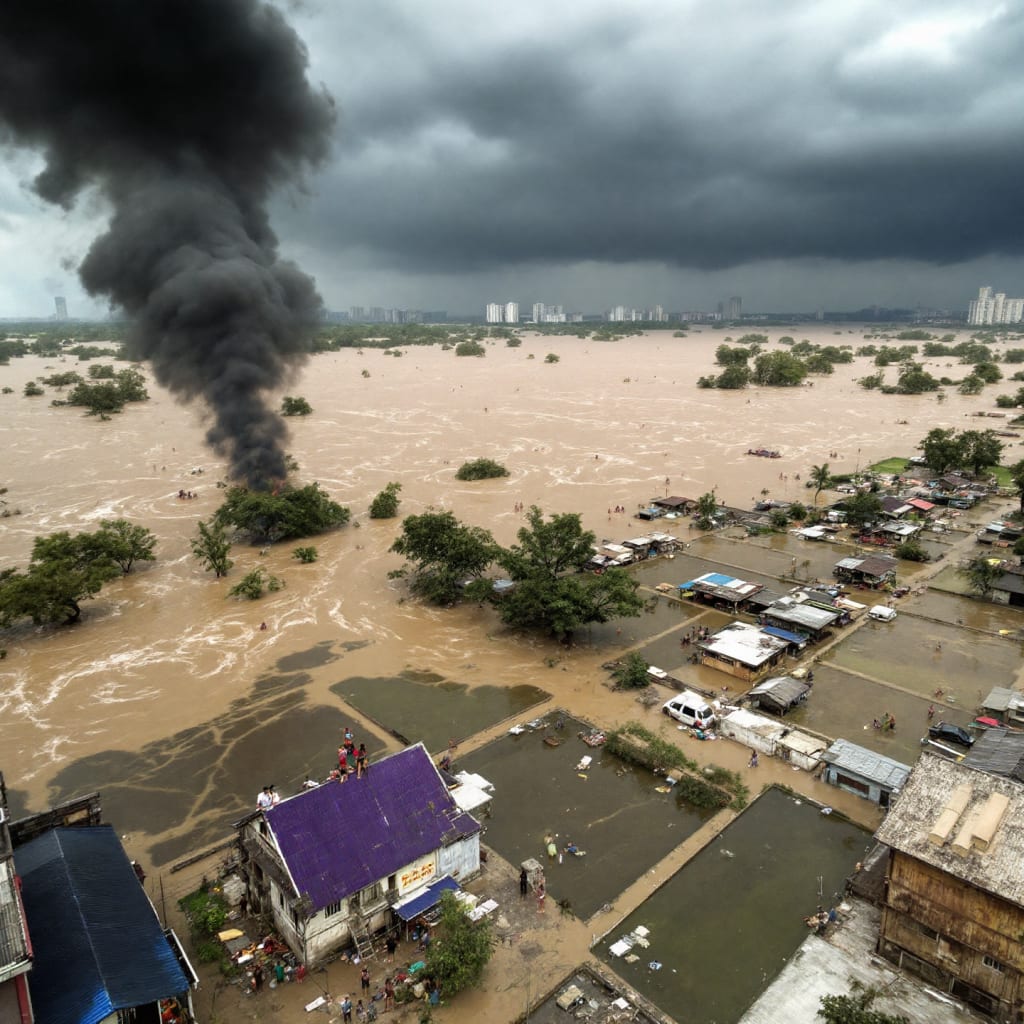
The 1931 Yangtze River Floods: China's Watery Cataclysm
In the sweltering summer of 1931, China found itself at the mercy of one of the most catastrophic natural disasters in human history. The Yangtze River, normally a source of life and sustenance, transformed into a monstrous force of destruction. What unfolded was not just a flood—it was a months-long watery siege that drowned cities, shattered rural life, and left a death toll that climbed into the millions. No modern disaster before or since has matched its scale of devastation.
The stage for this calamity was set by an unusual confluence of natural events. The winter of 1930–1931 brought record snowfall to much of China. As spring approached, a rapid thaw unleashed torrents of meltwater into the Yangtze basin. Then came the rains. Torrential, unrelenting rains. Between June and August 1931, some regions recorded more than 24 inches of rainfall—three times the average. The Yangtze River, already bloated, could not take the onslaught. It burst its banks in a series of deadly surges, with the city of Wuhan bearing the brunt of its fury.
To call it a flood does the event a disservice. This was a deluge of Biblical proportions, a slow-motion tsunami that rolled over central China. The Yangtze wasn’t the only river to rise—its tributaries, the Yellow River and Huai River, also broke free of their bounds. Together, they submerged an area the size of England and half of France combined. Farmlands vanished under a brown, roiling tide. Homes, temples, entire villages were swept away as if they had never existed. Crops were annihilated, livestock drowned, and survivors clung to rafts, trees, and rooftops.
The human toll was apocalyptic. Conservative estimates place the death toll at around 2 million. Others argue that it may have reached as high as 4 million when counting the aftershocks—starvation, disease, and displacement. Cholera and dysentery ran rampant in the wake of the floodwaters. People drank from contaminated pools; bodies floated down streets that used to be marketplaces. Refugee camps sprouted along higher ground, often little more than muddy clusters of straw and despair. The Chinese government, already fragile under the weight of warlords and internal conflict, could barely mount an effective response.
The flood also exposed the fragility of China’s infrastructure. For centuries, the country had relied on a patchwork of levees and dikes to control its rivers. Many were poorly maintained or outdated, and the government lacked the resources and political stability to modernize them. When the rivers rose, these barriers failed spectacularly. The disaster laid bare not only physical vulnerabilities but also the deep social inequalities of Chinese society. Poor farmers were the most affected, often left without aid while urban elites escaped to higher ground or foreign concessions.
International aid did trickle in, though it was often slow and insufficient. Organizations like the Red Cross attempted to provide relief, but logistical nightmares and the sheer scale of need overwhelmed even the most coordinated efforts. Some foreigners stationed in China at the time reported the flood as a surreal nightmare—a biblical calamity set against the backdrop of a nation already teetering on the edge of collapse.
Yet from the mud and water rose a hard truth: China needed a new relationship with its rivers. The 1931 flood became a catalyst for future hydrological and environmental policy. Decades later, the government would invest heavily in dams, levees, and reservoirs—including the colossal Three Gorges Dam—partly inspired by the haunting memory of this disaster.
The Yangtze River Flood of 1931 wasn’t just a natural disaster; it was a crucible that tested the resilience of a people, the strength of a nation, and the raw fury of nature. It stands not merely as a historical footnote but as a dire warning—a reminder that when rivers rise and societies falter, water becomes a weapon that neither respects boundaries nor spares the innocent.
About the Creator
Keep reading
More stories from James Brock and writers in Earth and other communities.
Chaos and Cracks: A 6.2 Earthquake Jolts Istanbul Awake
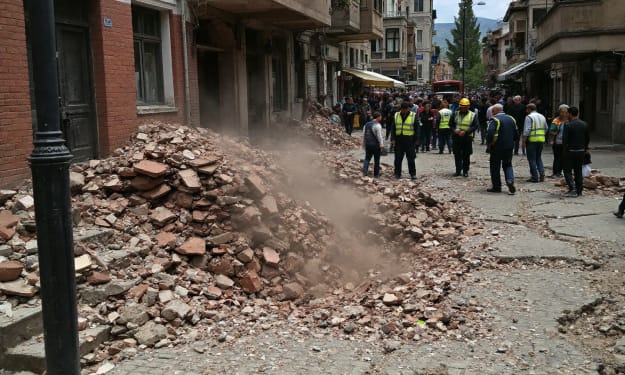
Chaos and Cracks: A 6.2 Earthquake Jolts Istanbul Awake Istanbul, the heart of Turkey's culture, chaos, and charm, was rocked to its core today as a powerful 6.2-magnitude earthquake struck just before 1 PM. What began as a calm April afternoon turned into 13 seconds of fear and frenzy as the ground beneath one of the world’s most densely populated cities twisted violently, sending tremors from the Sea of Marmara all the way through the European and Asian sides of the city.
By James Brock9 months ago in Earth
Chinese Planetary Engineering: The Great Green Wall and the Reclamation of Climate
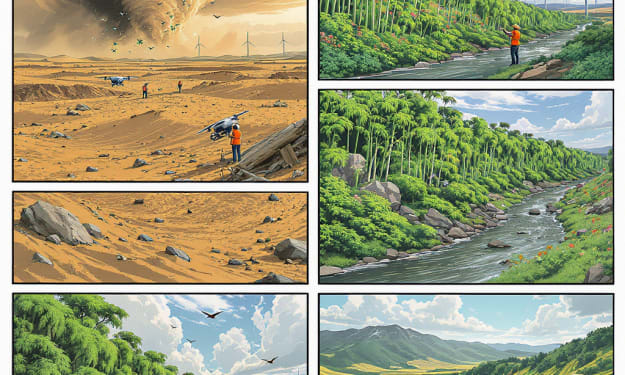
There are junctures in history where a civilization no longer chooses between comfort and progress, but between adaptation and extinction. At the dawn of the new millennium, China hit one of those silent thresholds where geography ceases to be a backdrop and becomes an adversary. The desert was advancing, not as a metaphor for decay, but as a physical, methodical, and relentless force. Sand was devouring the horizon, winds grew heavy with dust, and the soil lost its fertile memory, taking with it the promise of social stability.
By Laurenceau Porte5 days ago in Earth
US Warns Airlines About Military Activity in Parts of Latin America
Commercial aviation is built on predictability—clearly defined airspace, coordinated air traffic control, and shared international rules. When that predictability is disrupted, even subtly, the ripple effects can stretch far beyond the cockpit. That is exactly why a recent warning from the United States has caught the attention of airlines, governments, and travelers alike. In early 2026, US aviation authorities issued an advisory warning airlines about military activity in parts of Latin America, urging pilots to exercise heightened caution when flying over certain regions. While no immediate restrictions or flight bans were imposed, the message itself was clear: something in the skies has changed, and the risks—however limited—can no longer be ignored. This development is not just about aviation safety. It reflects a growing intersection between geopolitics, military operations, and civilian infrastructure in a region that has long balanced cooperation with tension. What Exactly Did the US Warn About? The advisory, released through official aviation safety channels, highlighted concerns over potential military activity affecting airspace across parts of Mexico, Central America, South America, and nearby oceanic regions. Airlines were advised to remain vigilant during all phases of flight, including cruising at high altitudes, takeoff, and landing. Unlike routine notices related to weather systems or airport congestion, this warning explicitly referenced security-related risks. These include the possibility of unexpected military movements, temporary airspace disruptions, and interference with navigation systems that modern aircraft rely on for safe operations. Importantly, the warning did not accuse any specific country of wrongdoing, nor did it suggest an immediate danger to passengers. Instead, it served as a precaution—one designed to ensure airlines adjust flight planning, monitoring, and communication protocols accordingly. Why Military Activity Matters to Civil Aviation To the average traveler, military exercises or operations may seem distant from the experience of flying on a commercial jet. In reality, the two worlds often share the same skies. Civilian aircraft depend heavily on satellite navigation, coordinated air traffic control, and stable airspace rules. Military operations—especially those involving fast-moving aircraft, surveillance systems, or electronic equipment—can introduce uncertainty into that environment. Some of the key risks aviation authorities monitor include: Unplanned military aircraft movements that may not follow civilian flight patterns Temporary airspace closures or restrictions that require last-minute rerouting Navigation signal disruptions, whether accidental or intentional Increased congestion in strategic corridors used by both civilian and military flights While these risks are typically managed through coordination and communication, heightened military activity raises the stakes. The FAA’s advisory suggests that such activity has reached a level where additional caution is warranted. The Geopolitical Context Behind the Warning The timing of the advisory is not accidental. Latin America has seen a noticeable rise in security operations and military coordination involving the United States over the past year. These efforts are largely focused on counter-narcotics missions, maritime security, and regional stability, particularly in areas with strategic shipping routes or ongoing political tension. At the same time, broader global dynamics—ranging from great-power competition to shifting alliances—have increased the strategic importance of air and sea routes across the Western Hemisphere. From Washington’s perspective, issuing an aviation warning is not about alarmism. It is about acknowledging that military and security activities in the region may temporarily affect civilian systems, including aviation. How Airlines Are Responding For airlines, advisories like this are not unusual—but they are taken seriously. Most major carriers already operate with layered safety systems that allow them to respond quickly to changing conditions. In practical terms, this warning may lead to: Slight route adjustments to avoid specific airspace Enhanced pilot briefings before flights Increased coordination with air traffic controllers Closer monitoring of navigation and communication systems So far, there have been no widespread flight cancellations or suspensions linked directly to the warning. That suggests airlines view the risk as manageable, provided proper precautions are followed. Reactions from Latin American Governments Some governments in the region have been quick to reassure the public. Officials have emphasized that their national airspace remains safe and fully operational, and that civilian flights continue without disruption. This response highlights an important tension: while the US warning is precautionary, it can still affect public perception. Tourism, business travel, and investor confidence are all sensitive to suggestions of instability—even when no immediate danger exists. As a result, many countries are walking a careful line between cooperating on aviation safety and defending their reputation for stability. What This Means for Passengers For travelers, the key takeaway is simple: commercial aviation remains safe. Warnings like this are designed to prevent incidents, not predict them. Passengers flying through or over affected regions may experience slightly longer flight times or minor schedule adjustments, but there is no indication of increased danger to civilian aircraft. In fact, the existence of such advisories demonstrates how seriously aviation authorities take even low-probability risks. A Sign of a More Complex World The US warning to airlines is a reminder that modern air travel does not exist in a vacuum. As military operations, security concerns, and geopolitical rivalries evolve, civilian systems—from shipping lanes to flight paths—are increasingly affected. This moment underscores a broader reality: the skies are becoming more crowded, more contested, and more interconnected with global politics. Managing that complexity will require continued transparency, cooperation, and vigilance from governments, regulators, and airlines alike. For now, planes continue to fly, passengers continue to travel, and the system continues to work. But behind the scenes, aviation authorities are quietly adjusting to a world where safety is shaped not just by weather and mechanics—but by geopolitics as well.
By Muhammad Hassana day ago in Earth
So You Decided To Become a Nurse Practitioner:
So you decided to become an "Advanced Practice" nurse. Congratulations!... is what I would say if this was a good idea. Grad school? In this economy? What were you thinking? Likely it was something along the lines of either 1) “I've seen these other chucklefucks do it— Why can't I?” or even 2) “I've got a nice career, I should shake it up. I miss feeling like I have no clue what I'm doing.”
By Sandor Szabo2 days ago in Fiction


Comments
There are no comments for this story
Be the first to respond and start the conversation.