


Atlantic puffins
These birds make their home in the waters of the North Atlantic from Canada in the west to Norway in the east and even as far south as Spain.
Atlantic puffins are also called Common puffins and are part of the Auk family. They live along rocky coastlines and on islands. They enjoy dining on herring, sandeel, and capelin. If necessary, puffins will dive to depths of 60 meters to get a meal.
Unfortunately these seabirds are threatened by climate change. On the IUCN Red List of Threatened Species they are listed as “Vulnerable”.
Brown Boobies
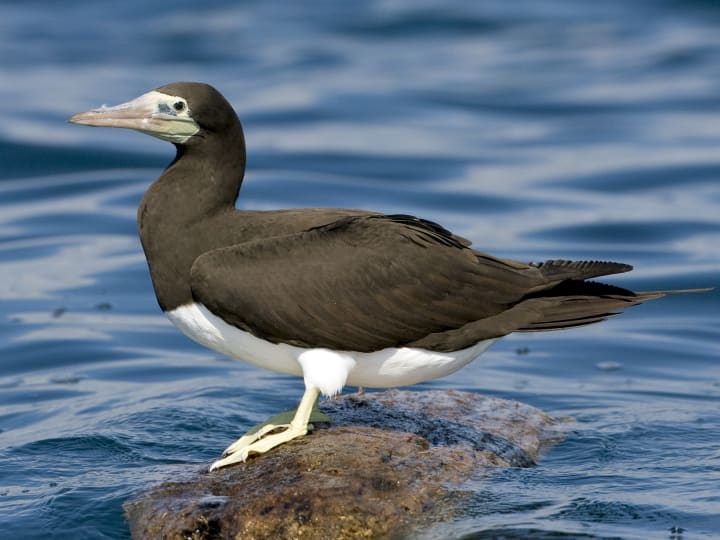
These birds can be found in pan-tropical waters like the Indian, Pacific, and Atlantic Ocean and even the Caribbean Sea.
Brown boobies are related to gannets. They like to rest in large rafts on the surface of the water. The birds prefer inshore waters where they can dine on flying fish and squid as well as halfbeak, mullet, and anchovy. Brown boobies are clever enough to snatch prey from the surface of water.
On the IUCN Red List of Threatened Species these birds are listed as “Least Concern”.
California Brown Pelicans
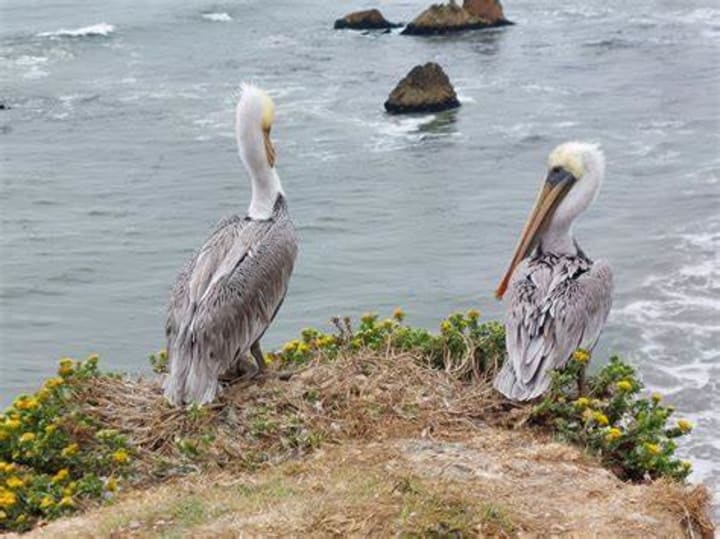
These birds prefer the tropical to cold temperate waters of the Atlantic, Gulf, and Pacific coast of the US and South America.
Brown pelican like shallow coastal waters and will avoid the open seas. They are very social and breed in colonies and feed in groups. They enjoy sardines, anchovies, and mackerel. At times they will eat shrimp, carrion, and young egrets. Once they hit the water they open their bills and pouches to catch fish.
Cape Gannets
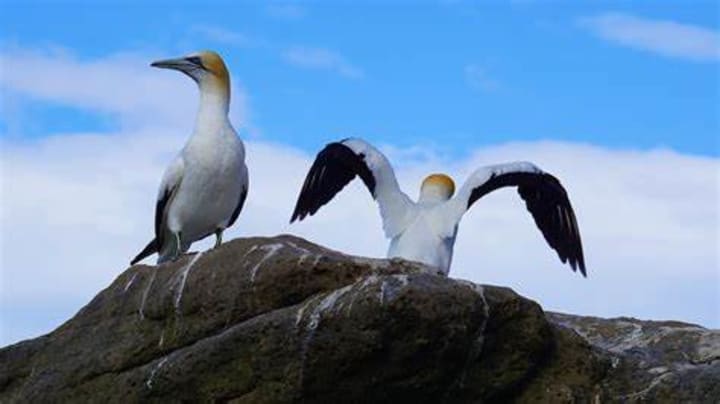
These seabirds are endemic to Southern Africa and breed on six island colonies in Nambia and South Africa.
Cape gannets are non-migratory seabirds. They stay within 500 km of their breeding colonies all year-round. Juvenile gannets will travel up to 4,000 km towards the equator before returning to breed at about four years of age. The birds nest on offshore islands but can also make use of cliffs and man-made structures. They dine on anchovies and sardines as well as discarded fish offal.
On the IUCN Red List of Threatened Species these birds are listed as “Endangered”.
Common Murres
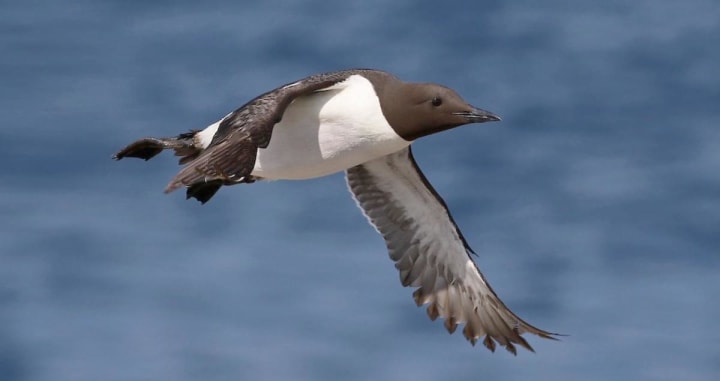
These seabirds are circumpolar inhabiting both the North Atlantic and North Pacific Oceans.
Common murres are members of the Auk family and very skilled divers. Their diets consist of small fish like shannies, capelin, sandeels, and clupeids. They forage close to their breeding colonies but will also travel long distances exceeding 100 km for food.
Laysan Albatrosses
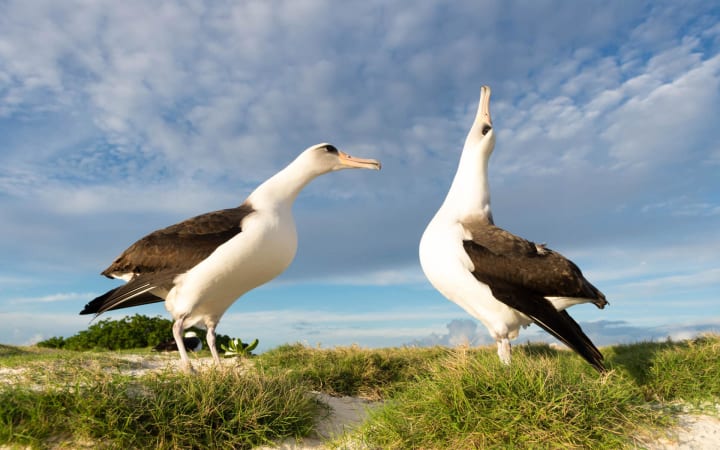
These seabirds are found in the North Pacific Ocean.
Laysan albatrosses are known for their elaborate courtship displays and form lifelong pair bonding. Their main breeding ground are in the Northwestern Hawaiian Islands. Here the Midway Atoll hosts the largest colony with more than 660,000 pairs. They dine mostly on squid but will alos eat fish, crustaceans, and other marine creatures. These birds will cover long distances looking for food for their chicks but are threatened by long-line fishing and get entangled and drown.
Magnificent Frigatebirds
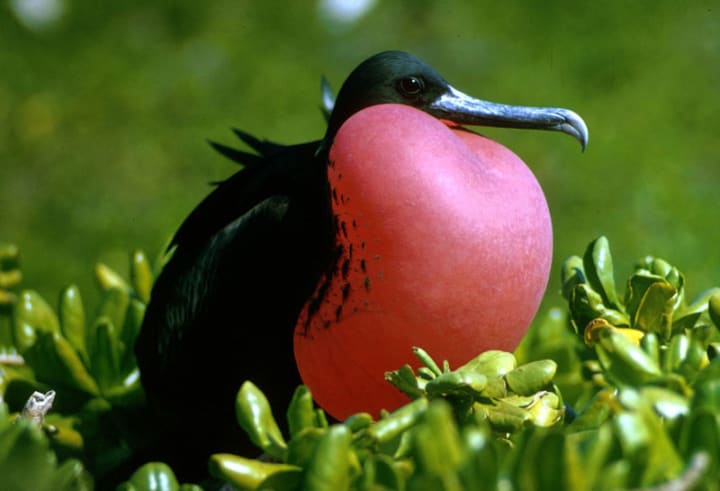
These birds are located in the tropical and sub-tropical water of the Pacific and Atlantic Oceans.
Magnificent frigatebirds spend a great deal of time soaring through the skies. They’re known for their elaborate courtship displays when males inflate their bright red throat pouches to attract females. The birds like to nest in elevated location such as mangroves, bushes, and cacti but if necessary will nest on the ground. Frigatebirds feed on flying fish and squid and other creatures like jellyfish, baby turtles, and other seabird eggs, and chicks.
Northern Fulmars
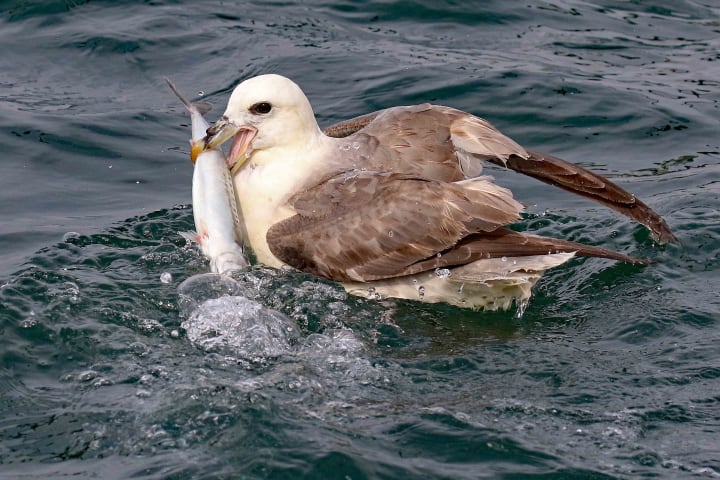
These birds make their homes in the North Atlantic and Pacific Oceans from temperate zones like Japan and the UK to the frigid waters of the Arctic.
Northern fulmars spend a great deal of their time out at sea and can be seen soaring above the waves. They nest on cliffs and rocky outcrops. Their diets consist of fish, squid, zooplankton, and carrion. They’ll capture their prey near the surface of the water but are also good divers.
On the IUCN Red List of Threatened Species they are listed as “Least Concern”.
Red-tailed tropicbirds
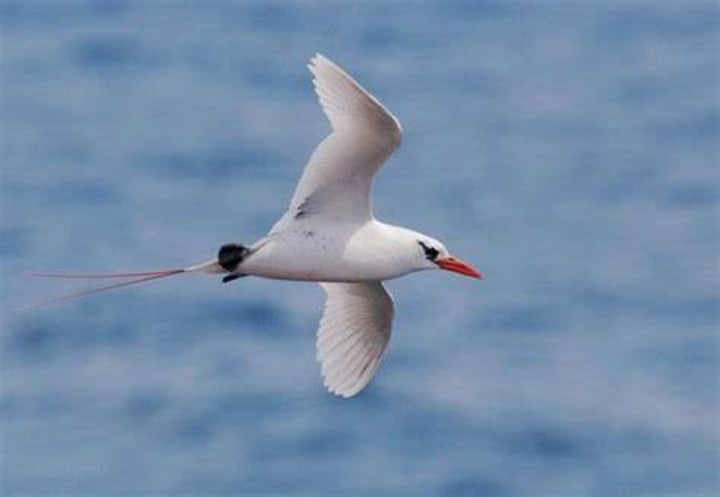
These seabirds like the tropical and sub-tropical waters of the Pacific Ocean and the Indian Ocean.
Tropicbirds don’t come near land. They get their meals catching flying fish, squid, and other marine creatures. They’ll plunge into the water to get food. They are known to breed on remote islands and nest on cliffs and simple ground scrapes.
Southern Giant Petrels
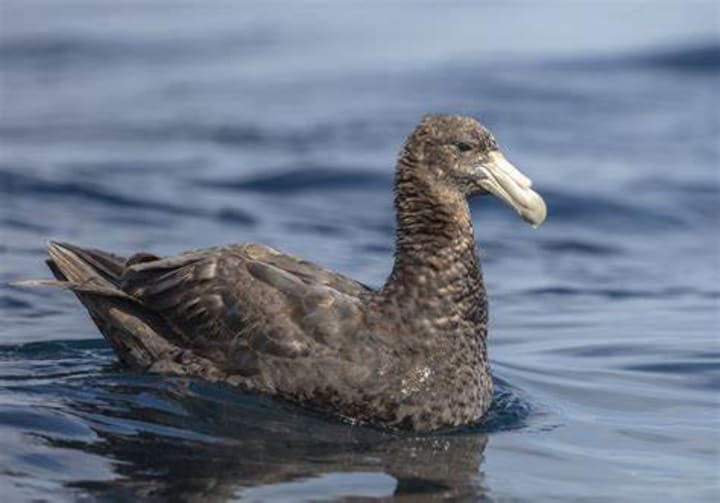
These birds inhabit places south of the Antarctic Convergence Zone from Antarctica to sub-tropical regions.
These are powerful seabirds living in the Southern Ocean. They’re known for their aggressive scavenging behavior and predatory skills. Southern giant petrels dine on fish, squid, krill, and carrion. They’ll follow ships to scavenge discarded food. These seabirds are also called “Stinkers” and Stinkpots” and are known for projectile vomiting emitting a foul-smelling stomach oil.
On the IUCN Red List of Threatened Species they are listed as “Least Concern”.
About the Creator
Rasma Raisters
My passions are writing and creating poetry. I write for several sites online and have four themed blogs on Wordpress. Please follow me on Twitter.
Keep reading
More stories from Rasma Raisters and writers in Earth and other communities.
European Animals Latvia and Lichtenstein
Wildlife of Latvia Latvia is a small Baltic country that lies between the Baltic Sea and the Gulf of Riga. It has boundaries with Estonia to the north, Russia to the east, and Lithuania to the south. Over half of the country is forested and known for its lakes, rivers, and waterfalls.
By Rasma Raistersabout a year ago in Earth
Whose Goat Is This?
Pir Sahib was startled when he saw a goat roaming freely in the courtyard of his house. Stroking its neck, he spoke to himself, wondering where the goat had come from and why it seemed so fearless, as if it belonged there. The house door was open, which explained how the goat had wandered inside.
By Sudais Zakwan4 days ago in Earth
Trade an Alliance for an Island? That’s a Bad Deal
In global politics, deals are often complex, involving trade-offs between economic benefits, security, and diplomacy. But some propositions are so controversial that they make analysts, policymakers, and citizens alike shake their heads. One such idea that has sparked debate is the notion of trading a military or political alliance for control over a strategic island. While it may seem tempting on the surface — after all, islands can provide resources, ports, or strategic leverage — experts warn that the costs almost always outweigh the benefits. Whether in the context of historical disputes or contemporary geopolitical maneuvers, the principle is clear: sacrificing alliances for short-term territorial gain is a recipe for long-term instability. The Strategic Value of Islands Islands have long held outsized importance in global strategy. Their locations can control shipping lanes, host military bases, or serve as hubs for surveillance and trade. Examples abound: Guam, a U.S. territory in the Pacific, serves as a crucial military outpost. Falkland Islands, a British overseas territory, have sparked wars over sovereignty. Taiwan, an island nation, sits at the center of a high-stakes geopolitical standoff. It’s no wonder that countries often covet islands. But there’s a critical question: does gaining an island justify undermining the alliances that guarantee your security? Alliances Are Hard to Replace Alliances are built on trust, shared interests, and mutual defense commitments. They are far more difficult to establish than an island is to claim. Trading an alliance for territorial gain may offer immediate leverage or prestige, but the risks are profound: Loss of Credibility – Nations that abandon allies for short-term gain quickly earn reputations as unreliable partners. Future negotiations become harder, as other countries question whether agreements will be honored. Security Gaps – Alliances often provide defense guarantees, intelligence sharing, and logistical support. Sacrificing them leaves a country vulnerable to external threats, particularly from rivals who may exploit the weakened network. Economic Costs – Alliances often underpin trade, investment, and joint infrastructure projects. Breaking them can lead to sanctions, lost markets, or reduced foreign investment. The lesson: while an island may offer strategic positioning, the network of alliances it might cost is far more valuable in the long run. Historical Lessons History provides cautionary tales. Consider these examples: World War II: Several countries prioritized short-term territorial gains over alliances, leading to devastating consequences. Nazi Germany initially signed non-aggression pacts with smaller neighbors, only to later invade them. The temporary territorial gains could not compensate for the loss of trust and the eventual collapse of strategic alliances. Cold War-era negotiations: Smaller countries were frequently courted with promises of land or aid in exchange for switching allegiances. Those who accepted often found themselves isolated once the larger powers shifted focus. Even today, analysts warn against decisions that sacrifice alliances for geographic gains, emphasizing that political isolation often outweighs any tactical advantage an island might provide. Modern Geopolitical Risks In today’s interconnected world, the stakes are even higher. Global powers rely on alliances for cybersecurity, intelligence sharing, and coordinated responses to crises. Trading away alliances for an island could: Increase regional instability, as neighboring states perceive opportunism and may respond aggressively. Undermine defense networks, reducing the effectiveness of coordinated military strategies. Trigger economic retaliation, such as sanctions, reduced foreign investment, or trade barriers. For example, in East Asia, speculation over islands in the South China Sea has shown that territorial claims can inflame tensions, disrupt shipping, and strain alliances. The international community’s response demonstrates that control over land rarely outweighs the benefits of strong regional partnerships. The Temptation of Short-Term Gains It’s easy to understand why some leaders might be tempted by the idea of trading alliances for islands. Islands offer tangible assets: ports, mineral resources, tourism opportunities, and symbolic prestige. In contrast, alliances are intangible, slow to show benefits, and require ongoing maintenance. But experts caution that these short-term gains are deceptive. Islands can become expensive liabilities, requiring military defense, infrastructure investment, and diplomatic management. Without the backing of reliable allies, these responsibilities can quickly overwhelm a nation’s capacity. Why Alliances Are the Better Investment Alliances, on the other hand, provide a foundation for long-term stability and prosperity. They: Strengthen deterrence against aggression. Enable resource sharing, from intelligence to humanitarian aid. Facilitate trade and economic integration. Enhance global influence, since countries with strong alliances carry more weight in negotiations. In short, while an island may give the appearance of strength, alliances provide real, multifaceted security. Nations that value lasting influence and resilience prioritize alliances over short-term territorial gains. Conclusion: Islands Are Not Worth Alliances In geopolitics, the lure of a small piece of land can be seductive. But as history and modern strategy show, alliances are the true currency of international power. Trading an alliance for an island may offer temporary prestige or leverage, but the long-term costs — security risks, economic consequences, and loss of credibility — are rarely worth it. Leaders seeking strategic advantage should remember that alliances, trust, and collaboration often outweigh any single piece of territory, no matter how strategically located or resource-rich. In the end, islands may be impressive on maps, but alliances shape the world in lasting, meaningful ways.
By Muhammad Hassanabout 21 hours ago in Earth



Comments
There are no comments for this story
Be the first to respond and start the conversation.