
Doomsday Clock Moves to 89 Seconds Before Midnight – The Closest Eve
Global Threats Push Humanity Closer to Catastrophe as Experts Warn of Immediate Action Needed

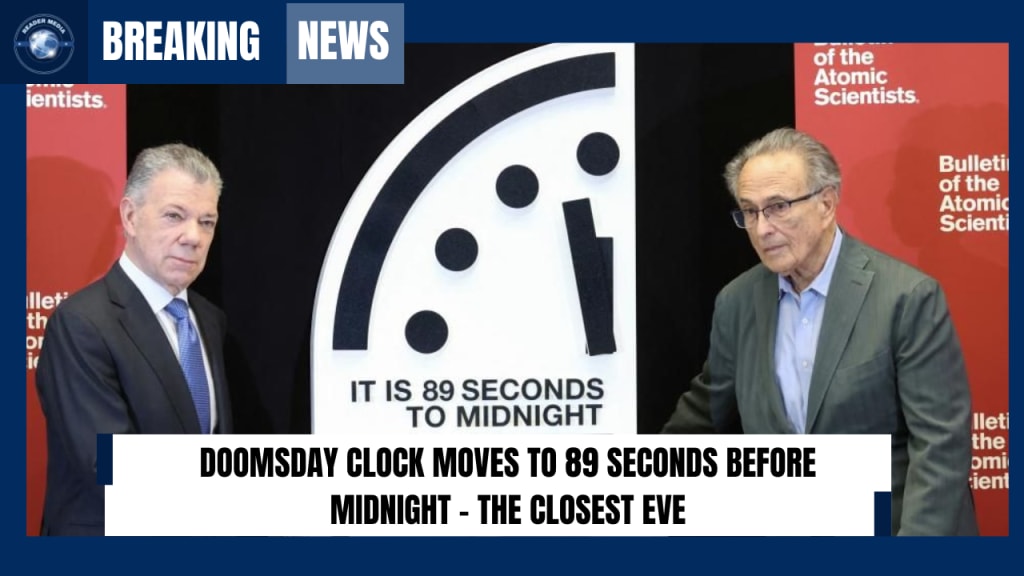
The Doomsday Clock, a symbolic representation of how close humanity is to global catastrophe, has moved forward by one second, now standing at 89 seconds to midnight. This is the closest it has ever been to symbolic destruction, reflecting the increasing threats facing the world today.
What Is the Doomsday Clock?
The Doomsday Clock was created in 1947 by the Bulletin of the Atomic Scientists (BAS) to symbolize how near humanity is to self-destruction due to man-made threats such as nuclear war, climate change, and advanced technology risks. The closer the clock is to midnight, the greater the danger.
Initially set at seven minutes to midnight, the clock has moved forward or backward multiple times based on global events and security risks. In 2023, it stood at 90 seconds to midnight—which was already the closest in history until this latest shift.
Why Has the Clock Moved Closer?
The Bulletin of the Atomic Scientists cited several reasons for the shift to 89 seconds:
Nuclear Threats
The ongoing war in Ukraine remains a major risk, with fears that the conflict could escalate into nuclear warfare due to miscalculations or rash decisions.
Rising tensions between global superpowers, including the U.S., Russia, and China, contribute to nuclear instability.
Geopolitical Conflicts
The Middle East crisis is another cause for concern. With escalating tensions in the region, experts fear that an uncontrollable conflict could break out, further destabilizing global peace.
Climate Change
Governments worldwide continue to fall short in addressing climate change, failing to implement necessary policies and financing solutions.
Rising global temperatures, extreme weather events, and lack of substantial action contribute to the worsening climate crisis.
Biological Risks
The emergence of new diseases and health threats continues to impact global security and economies.
The world is still recovering from the effects of the COVID-19 pandemic, and experts warn of future outbreaks that could have devastating consequences.
Artificial Intelligence & Military Technology
The rapid development of artificial intelligence (AI) in military operations raises concerns about automated warfare and loss of human control over life-and-death decisions.
AI-driven weapons have already been used in conflicts, including Ukraine and the Middle East, with countries racing to integrate AI into their defense systems.
Spread of Misinformation
The rise of misinformation, disinformation, and conspiracy theories has worsened global crises by distorting facts and manipulating public opinion.
With fake news spreading rapidly online, it has become harder to differentiate truth from falsehood, making it even more challenging to address global issues effectively.
A Warning to World Leaders
The BAS emphasized that the decision to move the clock forward is a stark warning to world leaders, urging immediate action to reduce global risks.
Daniel Holz, chair of the Bulletin’s Science and Security Board, stated:“The world is already perilously close to the precipice, and even a single second should be taken as an indication of extreme danger. Every second of delay in reversing course increases the probability of global disaster.”
The organization stressed that the U.S., China, and Russia hold the greatest responsibility for pulling the world back from the brink, given their influence over nuclear policies, military actions, and climate initiatives.
What Can Be Done to Prevent Disaster?
While the clock serves as a warning, it also acts as a call to action. The BAS has outlined key steps needed to prevent a catastrophe:
De-Escalating Global Tensions
World leaders must engage in diplomacy and negotiations to prevent conflicts from turning into nuclear wars.
Nations need to strengthen international agreements and reduce nuclear stockpiles.
Climate Action
Governments must commit to stronger climate policies and increased funding for clean energy and sustainability initiatives.
Businesses and individuals can contribute by adopting environmentally friendly practices.
Ethical Use of AI
Regulations should be established to ensure AI development prioritizes safety and human control.
Military AI must be carefully monitored to prevent unintended consequences.
Fighting Misinformation
Social media companies and governments should take stronger measures against the spread of false information.
Educating people on critical thinking and digital literacy can help combat disinformation.
Global Cooperation
Countries must work together to solve pressing global issues rather than engaging in conflict.
Organizations like the United Nations and World Health Organization should be given stronger support to tackle worldwide challenges.
The Importance of the Doomsday Clock
While the Doomsday Clock is a symbolic tool rather than a literal countdown, it plays a vital role in raising awareness about global risks. The closer the clock moves to midnight, the greater the urgency for action.
Experts urge people not to see the clock’s movement as doom and gloom, but rather as an opportunity to push for change. The more attention given to issues like nuclear threats, climate change, and misinformation, the better the chances of turning back the clock and ensuring a safer future.
The world is facing some of the greatest challenges in history, and the movement of the Doomsday Clock to 89 seconds before midnight serves as a clear warning. However, there is still hope—if nations take decisive action to address these risks.
As individuals, we can stay informed, support policies that promote global stability, and push for responsible leadership. The countdown to midnight is not inevitable, but it requires collective effort to turn back the hands of time.
Disclaimer
This content has been created by an AI language model and is intended to provide general information. While we strive to deliver accurate and reliable content, it may not always reflect the latest developments or expert opinions. The content should not be considered as professional or personalized advice. We encourage you to seek professional guidance and verify the information independently before making decisions based on this content.
This information is sourced from BBC
About the Creator
Reader Media News
Welcome to Reader Media – your go-to source for the latest news, expert insights, and in-depth articles across business, tech, health, entertainment, sports, and more. Stay informed and engaged with the world through quality content.
Keep reading
More stories from Reader Media News and writers in Earth and other communities.
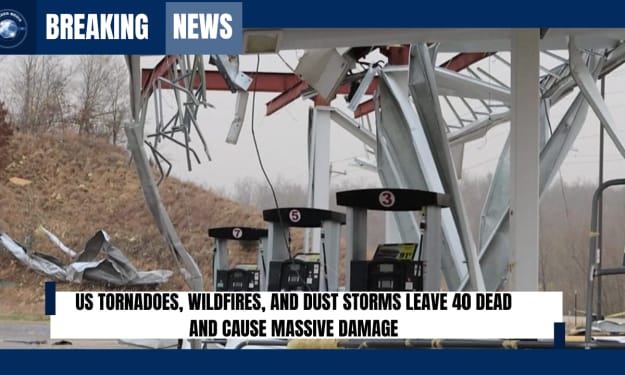
US Tornadoes, Wildfires, and Dust Storms Leave 40 Dead and Cause Massive Damage
At least 40 people have lost their lives after a series of deadly tornadoes swept through the US Midwest and South. Missouri faced the worst impact, with at least 12 reported deaths. The tornadoes began on Friday, tearing through homes, schools, and businesses, leaving a path of destruction.
By Reader Media News12 months ago in Earth
Evidence Suggests a Large Hidden Planet May Exist in Our Solar System
For centuries, scientists believed the major members of our Solar System were fully known. From the rocky inner planets to the gas giants and icy bodies beyond, astronomers thought they had mapped most of the significant objects orbiting the Sun. However, new research by American scientists suggests that a large, hidden planet may still be lurking in the distant reaches of our Solar System.
By Irshad Abbasi 6 days ago in Earth


Comments
There are no comments for this story
Be the first to respond and start the conversation.