
🌺✨ Discovering the Mystical Beauty of Rapa Nui (Easter Island)
Ever dreamed of traveling to one of the most remote, mysterious places on Earth? 🌴🗿 Welcome to Rapa Nui — where legends live and stone giants watch over the land.

Rapa Nui: The Enigmatic Island of Stone Giants and Ancient Legends
Far out in the southeastern Pacific Ocean, over 3,700 kilometers from the coast of Chile, lies one of the most remote inhabited islands on Earth — Rapa Nui, widely known as Easter Island. Though small in size, this triangular island holds a rich tapestry of history, mystery, and Polynesian culture, making it one of the world’s most intriguing travel destinations.
A Land of Ancient Mysteries
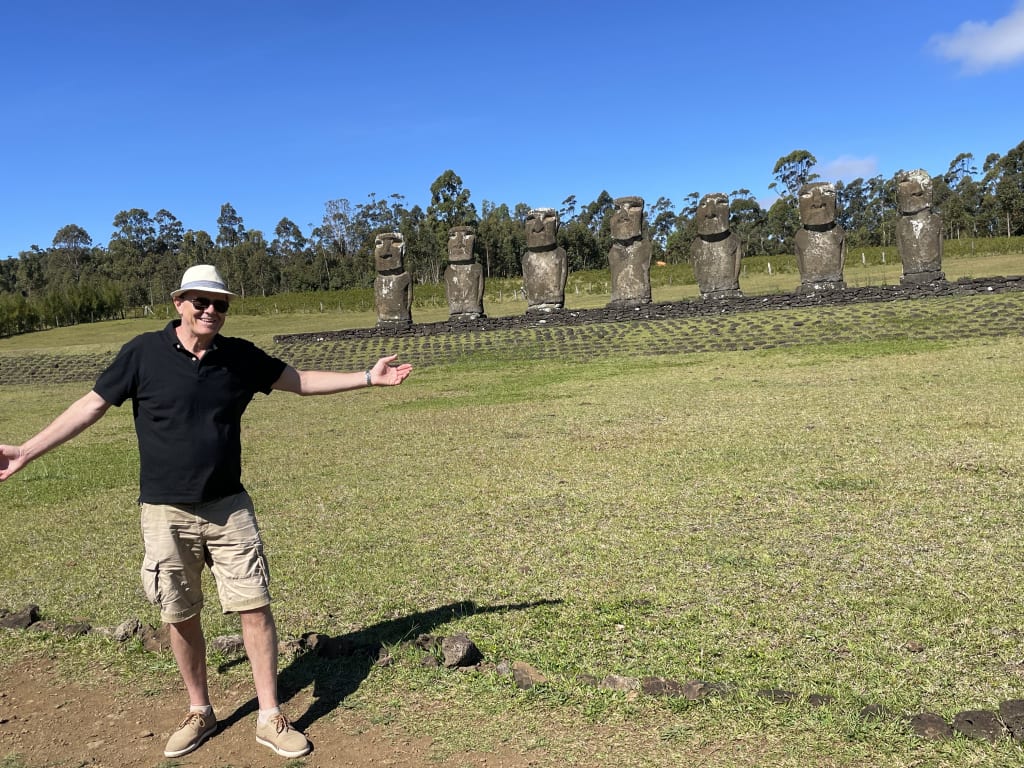
Rapa Nui’s claim to fame is its remarkable collection of Moai statues — enormous stone figures with oversized heads, solemn expressions, and watchful eyes. Carved from volcanic tuff between the 13th and 16th centuries, these statues were created to honor the ancestors and chiefs of the Rapa Nui people. More than 900 Moai still stand or lie across the island, a silent testament to a once-thriving and highly organized society.
The most famous gathering of these statues is at Ahu Tongariki, where 15 restored Moai face inland, keeping eternal vigil over the islanders. At sunrise, this site becomes a scene of mystical beauty as the first rays of sunlight cast a warm glow on the ancient stone faces.
The Quarry of Giants
Many of the Moai were carved at Rano Raraku, a volcanic crater on the island’s eastern side. Here, visitors can walk among dozens of partially completed and abandoned statues, some still embedded in the rock face. The quarry provides an eerie yet fascinating glimpse into the island’s past, showcasing the artistry and labor involved in creating these monumental figures.
Cultural Traditions and Living Heritage
Rapa Nui’s history extends beyond stone statues. The island is home to a vibrant culture rooted in Polynesian traditions. The Rapa Nui language, music, and dance have been passed down through generations, and today’s islanders proudly celebrate their heritage.
One of the best times to witness this cultural richness is during the Tapati Festival, held each February. This week-long event features traditional sports, singing, dancing, and art competitions, with locals competing in everything from body painting contests to ancient canoe races and cliff-side sledding on banana tree trunks.
Natural Wonders and Scenic Beauty
Beyond its cultural treasures, Rapa Nui offers stunning natural scenery. The island’s rugged coastline, volcanic craters, and open grasslands create a landscape of raw, untamed beauty. Rano Kau, the largest volcanic crater, features a freshwater lake surrounded by lush vegetation and ancient ceremonial sites like Orongo village, known for its rock carvings and ties to the island’s Birdman cult rituals.
Anakena Beach is another gem, a rare stretch of white coral sand framed by swaying palm trees and ancient Moai statues. It’s said to be the landing site of the island’s first settlers and offers a serene place to swim and relax after a day of exploring archaeological wonders.
A Journey Like No Other
Visiting Rapa Nui is not just a trip; it’s an experience of stepping into a living, breathing open-air museum where history and mythology intertwine. The island’s isolation only adds to its allure, making it a perfect destination for travelers seeking adventure, cultural immersion, and a connection to one of the world’s most mysterious ancient civilizations.
While the journey to Rapa Nui requires effort — typically involving flights from Santiago, Chile, or Papeete, Tahiti — those who make the voyage are rewarded with an unforgettable encounter with a land of enduring legends and awe-inspiring landscapes.
Rapa Nui remains one of the world’s most captivating travel destinations, a remote island where time seems to pause, and the spirits of the ancestors still linger in the wind.
🗿 Legends in Stone: The Moai Statues
No trip to Rapa Nui is complete without standing in the shadow of its legendary Moai statues. These massive stone figures, carved between the 13th and 16th centuries, represent deified ancestors meant to protect and watch over their descendants.
The most iconic site is Ahu Tongariki, where 15 restored Moai face inland. Visit at sunrise, when the first rays of light illuminate the statues — a moment of eerie, sacred beauty I’ll never forget.
🌴 Anakena Beach: Where Legends Began
A rare treat on a volcanic island, Anakena Beach offers white coral sand, turquoise waters, and a line of Moai standing just steps from the shore.
According to Rapa Nui tradition, it was here that the island’s first Polynesian settlers, led by Hotu Matu’a, landed centuries ago. Today, it’s the perfect spot to swim, picnic, or just soak in the peaceful isolation.
🌄 Rano Raraku: The Birthplace of Giants
The quarry at Rano Raraku is like a sculpture garden frozen in time. Half-carved Moai lie scattered on the slopes of this volcanic crater, abandoned mid-creation for reasons still debated by historians.
As you walk among them, it feels like stepping into an ancient workshop where giant stone ancestors awaited their final journey to distant ahu (platforms) around the island.
🎭 Living Culture: The Tapati Festival
If you can, time your visit for February’s Tapati Festival — a vibrant celebration of Rapa Nui heritage. The island comes alive with dance competitions, body painting, traditional music, and thrilling ancient sports like haka pei (sledding down a steep hill on banana trunks!).
It’s a heartwarming way to connect with the island’s proud people and living traditions.
🌅 Practical Travel Tips
Getting There: Flights via LATAM Airlines from Santiago, Chile or Papeete, Tahiti.
- Currency: Chilean Peso (CLP).
- When to Visit: October to March for warm weather and clear skies.
- Accommodation: Range from simple guesthouses to boutique eco-lodges.
- Getting Around: Rent a car, bike, or join guided tours.
🌸 A Place That Stays With You
Rapa Nui isn’t just a destination — it’s a feeling. A sense of remoteness, of standing at the edge of the known world, surrounded by ancient whispers and ocean breezes.
As you watch the sunset paint the horizon in shades of gold and crimson, you realize why this place continues to captivate the imagination of travelers, archaeologists, and storytellers alike.
----------------------------------------------------------------------------------------
Have you been to Rapa Nui or is it on your travel bucket list? Drop your thoughts in the comments below — I’d love to hear your dream destinations!
About the Creator
Reiner Knapp
I am a husband who love his family with two children. Travelling is my hobby, I used to be a backpacker. Crypto is my passion, and I like networking and affiliate marketing. https://lllpg.com/mx13x4h1
Keep reading
More stories from Reiner Knapp and writers in Earth and other communities.
Workers Recover 15,000 Crabs After Lorry Crashes Into Field
An extraordinary scene unfolded when a lorry carrying an estimated 15,000 live crabs crashed into a field, spilling its cargo across farmland and prompting a large-scale recovery effort. The unusual accident quickly drew attention from local residents, emergency services, and animal welfare groups, as workers scrambled to rescue as many crabs as possible before they succumbed to exposure.
By Aarif Lashari4 days ago in Earth
Ludacris and Nelly draw backlash over bookings at MAGA-coded music festival
Ludacris and Nelly headlining a mostly right-wing event is good for them. It’s also great for the genre of hip hop. The two rap veterans have showcased their talents on other stages. Why can’t they perform for mostly MAGA folks and grab that bag?
By Skyler Saunders3 days ago in Beat


Comments
There are no comments for this story
Be the first to respond and start the conversation.