
Dinosaurs of Antarctica
Land of Dinosaurs and Dinosauromorphs!

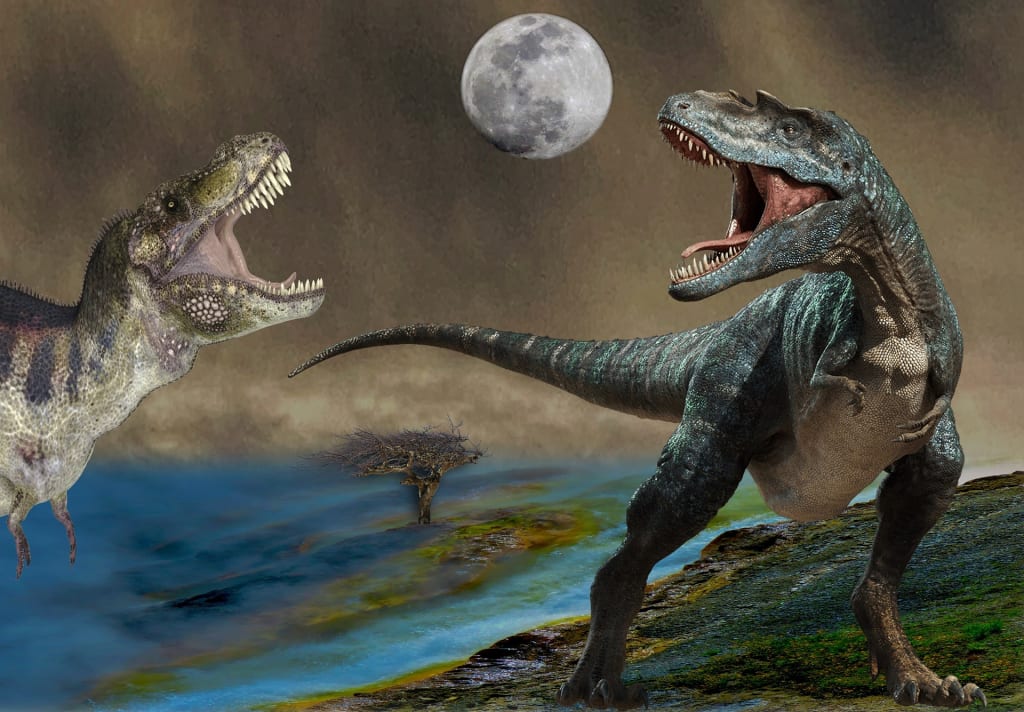
Standing on the ice of Antarctica, it is hard to imagine a land full of dinosaurs. Almost 200 million years ago, the land was a lot different. There were no polar caps as we know them, but there were still periods of low light in the winter months. It was colder than the sections of Pangea near the Equator, but not covered in ice and snow as we see it today. There was most lush vegetation but mostly near the shores. It was definitely not a warm jungle, but more like Easter Island with dinosaurs. The weather was mild, but cooler in the interior regions. The oldest dinosaur bones were found in the inner mountain range.
We know that they had dinosaurs from every era. The mountains of the TransAntarctica Range revealed that they had dinosaurs in this part of Pangea since the time of the Dinosauromorphs. One of the first dinosauromorphs discovered was the Glacialisaurus. Dr. William Hammer found it in 1991 near the Hanson formation near the site of a Cryolophosaurus. The Glacialisaurus was an herbivore and the Cryolophosaurus was a carnivore. They were both from the Triassic age at an elevation of 13,000 ft, Glacialisaurus was a sauropodomorph and the Cryolophosaurus was a Therapod from a different branch. The interesting thing about these dinosaurs is that most of these dinosaurs are larger examples of their groups and families than their cousins found in South America, South Africa, and Asia. They give us a glimpse of what life was like in Antarctica during that time period. Interestingly enough, we haven't found that many fossils from the Jurassic period.
The next two dinosaurs discovered were found on James Ross Island just off of Antarctica. These two were actually juvenile examples of their kind, but even at this age, they proved to be larger than other dinosaurs in their groups. The Antarctopalta juvenile found was from the Ankylosaurian Group and was already 13 feet long. It was an armored herbivore with 10 mm teeth as opposed to their South American cousins with 7.5 mm teeth. They are also related to the Steguras.
The second dinosaur juvenile found on this island was the Trinisaurus. Not much is known about this species because of the lack of fossils. They are from the Ornithopod Genus and from the Cretaceous age, but we do know more about their Clade of Elasmaria. The Elasmaria were more famous from the continent of Gondwana when Antarctica, Australia, Africa, and Southeast Asia were joined. They are also the heaviest found of their group but from the same time period. It was thought that they might have been armored as well, but it turns out that it was just thinner cartilage. Even though the polar regions didn't have ice like they do today, they would have had colder winters from the lack of sunlight.
It shows that even though there aren't a lot of fossils found in Antarctica, there is a diversity showing that dinosaurs roamed from the Triassic period all the way to the Cretaceous Period. Probably if we had more expeditions looking for dinosaurs, they could find a bridge species from the Jurassic period. Technically, the Glacialisaurus lived into the early Jurassic period. However, they went the way of the dinosauromorphs and didn't have the capability to survive the Jurassic period. It is interesting to note that the earlier dinosaurs were found near the mountains and the youngest dinosaurs were found on the islands. Perhaps it explains the variation in climate on the bottom tip of Pangea. It has been suggested that they moved to warmer shores because the ocean was a lot warmer.
About the Creator
Jennifer Allen
Hello. I like writing about interesting and unique facts about science and history like four-tusked Mastodons and droughts from the Bronze Age. Check out my website at historyscorner.weebly.com
Keep reading
More stories from Jennifer Allen and writers in Earth and other communities.
Dinosaur Islands of Europe
When Pangea started to break up, we lost more than just a couple of continents. The Panthalassa was a gigantic ocean and the Tethys was a bay of the supercontinent Pangea. When Pangea began to break up, the Tethys became a sea dividing the next two continents of Gondwana and Laurasia between 185 and 125 MA. These two continents moved away from each other and smaller pieces of Pangea have broken apart. The central mountains on Pangea connected Africa, Europe, and the eastern side of North America. During this time, these mountains began separating. It was essentially the Appalachian mountains which today run from Alabama up the eastern seaboard into Canada. Africa began to drift away and part of this mountain range was pulled apart. It also started the beginning of the Atlantic Ocean.
By Jennifer Allen3 years ago in Earth
How Extreme Cold Is Rewriting the Economy of Daily Life
Extreme cold used to be a seasonal inconvenience. Today, it’s a systemic disruptor—and one that’s increasingly shaping how economies, supply chains, and households operate. The Arctic blast sweeping through much of North America this winter isn’t just an atmospheric anomaly; it’s a signal of a climate regime defined by extremes rather than averages. This shift forces governments, corporations, and consumers to rethink what “normal weather” even means—and how to plan for a world where volatility itself is the baseline.
By Trend Vantagea day ago in Earth
Trump Calls UK’s Chagos Islands Sovereignty Decision an Act of ‘Great Stupidity’
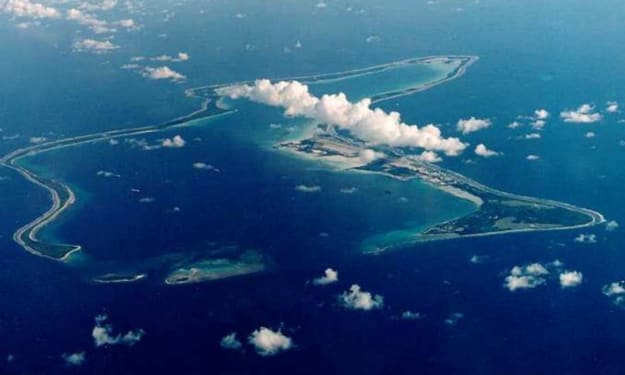
Former U.S. President Donald Trump has criticized the United Kingdom’s decision to hand over sovereignty of the Chagos Islands to Mauritius, calling it an act of “great stupidity.” This high-profile statement has reignited debates over colonial legacies, geopolitical alliances, and the rights of local communities. While the issue may seem distant to many, it carries significant implications for global politics, regional stability, and the affected communities. The Chagos Islands, a strategically located archipelago in the Indian Ocean, have long been a point of contention between the UK, Mauritius, and the United States, which maintains a military base on Diego Garcia, one of the largest islands. The latest political statements have highlighted not only international disagreements but also how decisions by governments can affect local populations and global perceptions. Why the UK Is Handing Over the Chagos Islands The UK’s decision to transfer sovereignty to Mauritius comes after years of legal challenges and international pressure. The United Nations has repeatedly called for the return of the islands to Mauritius, stating that the previous detachment in 1965 was illegal. The move aims to: Resolve a longstanding international dispute Acknowledge the rights of the Chagossian people, many of whom were forcibly removed from the islands decades ago Comply with international law and UN recommendations For many in Mauritius and the Chagossian diaspora, the transfer represents justice and recognition of their historical grievances. Trump’s Criticism and Its Context Trump described the UK’s decision as “an act of great stupidity,” emphasizing strategic and military concerns. The United States relies on Diego Garcia for one of its key military bases, crucial for operations in the Indian Ocean region and beyond. From Trump’s perspective, the sovereignty transfer could: Complicate U.S. military logistics Create uncertainty over strategic agreements Signal weakness in alliances with close partners like the UK However, critics argue that such statements overlook the rights of the displaced Chagossian communities and the importance of resolving colonial-era injustices. Impact on Local Communities The Chagos Islands have a unique human story. In the 1960s and 1970s, the indigenous Chagossian population was forcibly removed to make way for a U.S. military base. Families were relocated to Mauritius, the Seychelles, and other areas, often under harsh conditions. The sovereignty transfer could: Support efforts for Chagossians to return home Enable compensation and recognition of historical wrongs Promote cultural and community restoration Community advocates argue that international legal decisions should prioritize the welfare and rights of displaced populations, not just geopolitical or strategic interests. Geopolitical Implications The dispute is more than a bilateral issue between the UK and Mauritius. It has global political ramifications, including: U.S.-UK relations: While the UK maintains a strategic alliance with the U.S., the sovereignty decision may raise tensions over military operations. Indian Ocean stability: The islands are located in a key maritime region, affecting naval operations, trade routes, and regional security. International law precedent: Recognizing Mauritius’ claim reinforces UN rulings on decolonization and territorial sovereignty. For communities that follow global politics, these dynamics highlight how high-level political decisions impact both strategy and society. Media and Public Reaction Trump’s comments have dominated media coverage, sparking debate in international communities and online forums. Public opinion is divided: Supporters of Trump’s viewpoint cite national security concerns and strategic importance. Critics highlight colonial injustices and the need to respect the rights of indigenous populations. Social media discussions reveal growing interest in the balance between military strategy and human rights, showing that global decisions resonate with everyday communities. Legal and Ethical Considerations The transfer of the Chagos Islands raises several legal and ethical issues: Sovereignty and Self-Determination: The Chagossian people’s right to return and their cultural identity must be respected. Colonial History: Addressing past injustices is an ethical obligation for governments involved in colonial-era displacement. Military Agreements: Ensuring strategic stability while honoring international law is a complex balancing act. Legal scholars note that this case could set a precedent for other disputed territories, influencing how communities worldwide perceive justice, sovereignty, and rights. Why This Matters to Communities Even though the Chagos Islands are remote, the controversy touches on community awareness and engagement: Diaspora Communities: Chagossians and Mauritians see this as a historic moment affecting their families and heritage. Global Citizens: People interested in human rights and international law follow such cases to understand justice and accountability. Policy Advocates: NGOs and advocacy groups use this dispute to promote awareness of displacement, sovereignty, and ethical governance. In short, political decisions at the top level ripple down to real people, influencing lives, cultural identity, and community cohesion. Looking Ahead The future of the Chagos Islands will depend on: Implementation of sovereignty transfer: Ensuring legal and diplomatic arrangements are respected. U.S.-UK negotiations: Maintaining strategic interests while addressing human rights. Chagossian return programs: Supporting the restoration of communities affected by displacement. The controversy is a reminder that politics and community welfare are intertwined, and decisions made in boardrooms or government offices can have lasting effects on populations far from the center of power. The Takeaway Trump’s statement about the Chagos Islands sovereignty highlights the tension between geopolitical strategy and community justice. While international relations and military interests are important, the voices of the displaced Chagossian community cannot be ignored. For communities following global politics, the case demonstrates how: International decisions affect local populations Human rights and sovereignty are key considerations Awareness and advocacy by communities can influence global policy As debates continue, the story of the Chagos Islands serves as a reminder that political and strategic choices have human consequences, and that protecting community rights is as vital as maintaining alliances.
By Muhammad Hassan4 days ago in Earth
Thoughts on Vocal and the way the world is
"Death cannot stop true love, only delay it." – Wesley in The Princess Bride. I decided to come back to Vocal on a very cold and dark night at the end of December. I had been, and still am, convalescing from a horrible staph infection that had gone misdiagnosed for months. This, paired with the increasing challenges of being healthy, making the best choices for my co-parented child, being a wife, and being a director at a new job, was a lot to manage.
By Jazzy 5 days ago in Confessions


Comments
There are no comments for this story
Be the first to respond and start the conversation.